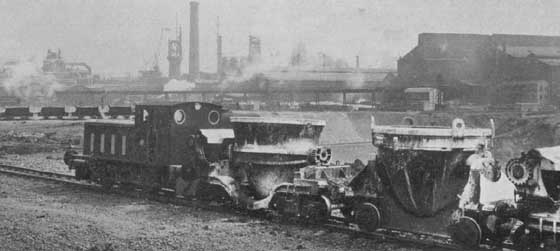
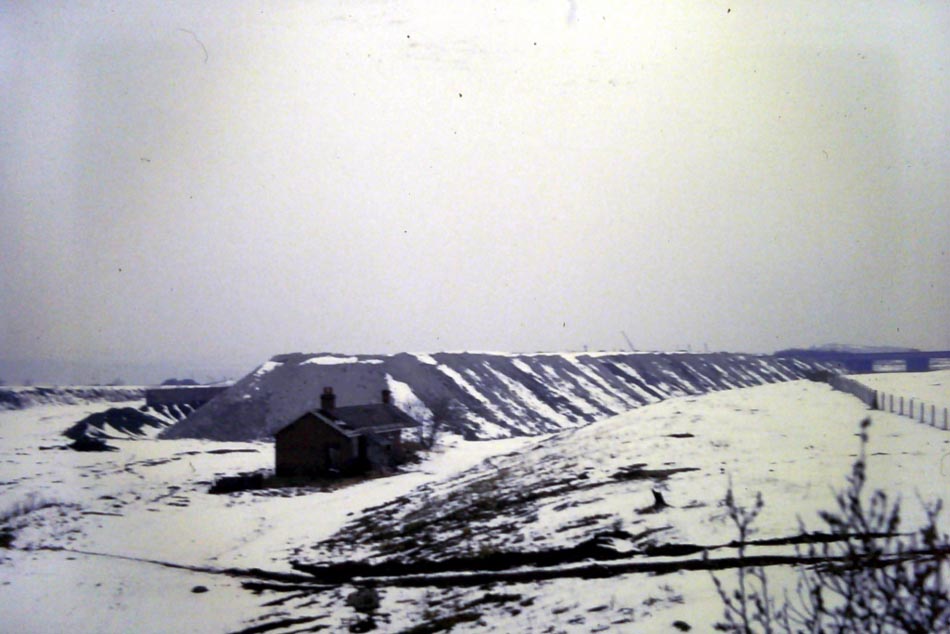
A view from 1957 with part of the Consett complex in the background and a new 0-6-0 Hunslet diesel shunter in the foreground. Consett Ironworks purchased a number of Hunslet locomotives, powered by a variety of engines:
1949 2 0-6-0 Hunslet 204hp
1950 2 0-6-0 Hunslet 204hp
1951 2 0-4-0 Crossley 300hp
1954 2 0-4-0 Mirrlees J4 ??hp
1956 7 0-6-0 Hunslet 204hp
1956 4 0-4-0 Hunslet 204hp
1956 3 0-6-0 Hunslet 300hp
The Consett Ironworks yellow liveried diesel locomotives survived until the closure of the works, with most being scrapped locally. One of the shunters reached preservation, it was towed by a Class 37 from Consett to the Monkwearmouth museum at Sunderland. It was supposed to not exceed 10 mph on its journey due to its low bufferbeam, despite the precautions the next day the S&T department had to put the locking box covers back on & repair some pulleys. The locomotive was later moved to Middle Engine Lane near Backworth along with the Kitson steam engine it replaced.

In searching the world of industrial complexes there have been larger steelworks than those at Consett and larger port facilities than those at Tyne Dock. Similarly in the world of railways there are longer, more spectacular, more heavily graded lines worked by heavier freight trains than the Tyne Dock - Consett route, with many featuring more impressive railway structures and facilities en-route. Likewise the locomotives and wagons that worked the iron ore trains to Consett were impressive but were not world record breakers. But it would be difficult to find a route as compact, all-encompassing and as breathtaking as the Tyne Dock - Consett line, which contained all of the elements previously mentioned and much more besides.
Even before the arrival of the twentieth century the reasons for the location of the steelworks and its associated industries at Consett had long since disappeared. It was at Consett that the discovery of ironstone deposits during the 1830's anchored the industry to the Consett location. The other main components of iron & steel making - coal & limestone were also available locally. The ironstone was quickly mined out and from the early 1850's ore was brought in from the Cleveland Hills. This source provided the supply for about twenty years, by the 1870's iron ore was being imported through Sunderland and later Tyne Dock, from a number of overseas locations including Spain & Sweden. The locally mined coal and limestone eventually suffered a fate similar to the iron ore, requiring it to be brought in from further afield, the coal from mines further east and limestone from the Wear Valley.
Consett is situated on top of a hill but this did not hamper the Victorian engineers from eventually constructing four lines to bring passenger and goods trains to the area. The routes were (in order of opening to Consett):
(1) Stanhope & Tyne (Consett - Annfield - South Pelaw - Washington - South Shields) (1834)
(2) Bishop Auckland - Tow Law - Consett (1858)
(3) Reilly Mill - Lanchester - Consett (1862)
(4) Blaydon - Blackhill - Consett (1867)
On a map the Stanhope & Tyne appeared the most direct route for the imported iron ore, but the continued presence of rope worked inclines on the route and the lack of a passenger service saw changes completed in 1893 with a new route from Annfield to South Pelaw. This provided a passenger service for the first time on this route and avoided the rope worked inclines. The new route was 22.5 miles from Tyne Dock to Consett. Iron ore was first imported through Tyne Dock in 1880 over the the original Stanhope & Tyne route with its rope worked inclines, from 1893 the new route was used.
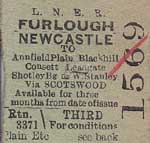 |
For just over seventy years (1867 - 1939) the routes and services remained intact, but increasing road competition in the inter-war years led to the inevitable withdrawal of passenger services commencing in 1939. During May 1939 the Darlington - Blackhill service was cut back to Tow Law, with the line northwards closed completely to Burnhill Junction. At the same time the Durham - Lanchester - Consett route lost its passenger service. The two remaining passenger services to Consett survived the war years but both succumbed during the 1950's. The service to Blackhill & Blaydon was withdrawn during February 1954 whilst the service through Annfield Plain to Newcastle disappeared a year later during May 1955. (Ticket from collection of John Bainbridge). |
The next twenty five years saw Consett remaining connected to the national rail network in order to continue to serve the steelworks and local collieries. Deliveries to the steelworks included iron ore, coke, coal and fuel oil, whilst leaving the Works were varied steel products. However goods traffic at the intermediate stations did not fair well, by August 1964 the only remaining station open for goods traffic was Consett.

The locomotives that worked the iron ore trains certainly looked like they were up for the job. A series of 0-8-0 locomotives dominated the workings from the turn of the twentieth century. These were the NER T Class, with three variants - the T1, T2 & T3 designations. The T3's dated from 1919, originally five were built, followed by ten more in 1924. These fifteen locomotives would dominate the Consett workings - they had three cylinders, produced 36,965lb of tractive effort, the locomotive & tender weighed just over 115 tons. The T3's were later reclassified as the Q7's. A pool of about four hundred 21 ton unbraked steel hopper wagons with bottom doors were used to transport the iron ore. Train loads of 22 loaded wagons and a brake van could be handled by a single locomotive, with banking assistance from a T3 the load was doubled. The large number of wagons was required because there were no storage facilities for the iron ore at Tyne Dock, immediate transhipment was required from the ship's hold to the waiting wagons. The unloading was carried out with mechanical grabs & buckets, a maximum of 3,000 tons per day could be handled by this method.
The 1950's brought a number of changes to this process, principally the modernisation of the dock facilities with major improvements to the unloading/transfer of the iron ore from ship to railway. With a minimum depth of 35 feet of water the dock was now able to handle ships up to 20,000 tons deadweight. Five 'kangaroo' type cranes were provided - each crane was equipped with a five ton grab and had the capacity to unload 300 tons per hour. The loaded grab dropped the iron ore into a hopper located at the lower front part of the crane. At the bottom of the hopper a conveyor fed the ore to a gantry structure located at the rear of the quay. The ore was received by one of ten bunkers located at the top of the structure, each of these bunkers could hold between 700 & 1,250 tons of ore. Below these bunkers were two electrically powered mobile hoppers which received ore from the bunkers above, weighed it, and if necessary sorted/blended it prior to discharging it into 18 hoppers located below. These 18 hoppers were directly above the rails and were designed to work in conjuction with the soon to be introduced bogie iron ore wagons. These hoppers were equipped with pneumatically operated doors, allowing measured loads of iron ore to be placed in to each of the wagon's two compartments. An electrically operated interlocking system required the wagons to be properly spotted under the gantry before the iron ore would be discharged into the wagons.
Since the loading gantry could not operate with the older iron ore wagons, new wagons were required to handle the estimated 1.25 million tons of ore to be handled at Tyne Dock/Consett. The origin of the Consett design can be traced back to a German design from the 1920s which became the basis for a series of bogie 40 ton coal wagons used to move coal from the Midlands to Stonebridge Park power station between 1929 & 1967.
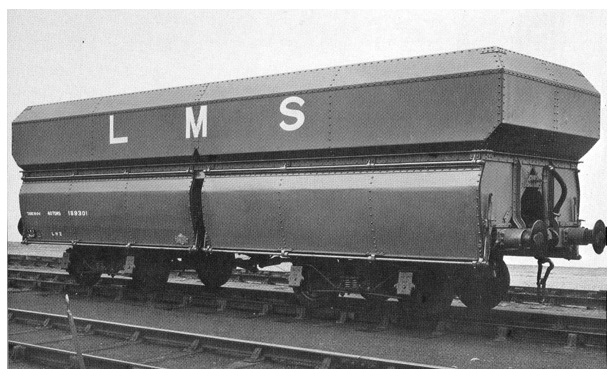
Thirty purpose built bogie wagons were constructed at Shildon with the first one sent to Marylebone for inspection by the Railway Executive on December 10th 1951. The wagons were introduced late in 1953 working alongside the old wagons until these were finally displaced in February 1954. Air operated doors allowed for rapid unloading of the wagons at Consett which required the locomotives on this service to be fitted with dedicated air pumps - five Q7's (63460/63/65/69/73) were so fitted and were joined by five air pump equipped O1 2-8-0's (63712/55/60, 63856/74) to assist the Q7's. The minimum service required ten engines handling ten trains a day, but increased to fourteen trains a day from June 1954. The train engines return to Tyne Dock shed after each trip for re-manning. The banking engines at South Pelaw work three banking trips before returning to Tyne Dock shed for servicing and re-manning.
During February 1954 British Railways and the Consett Iron Co Ltd signed a 20 year contract for the movement of iron ore from Tyne Dock to Consett.
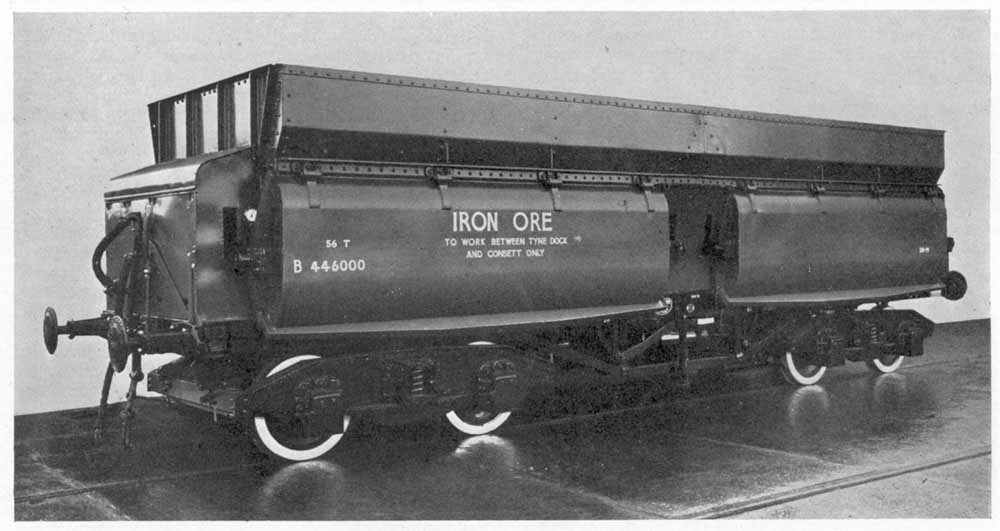
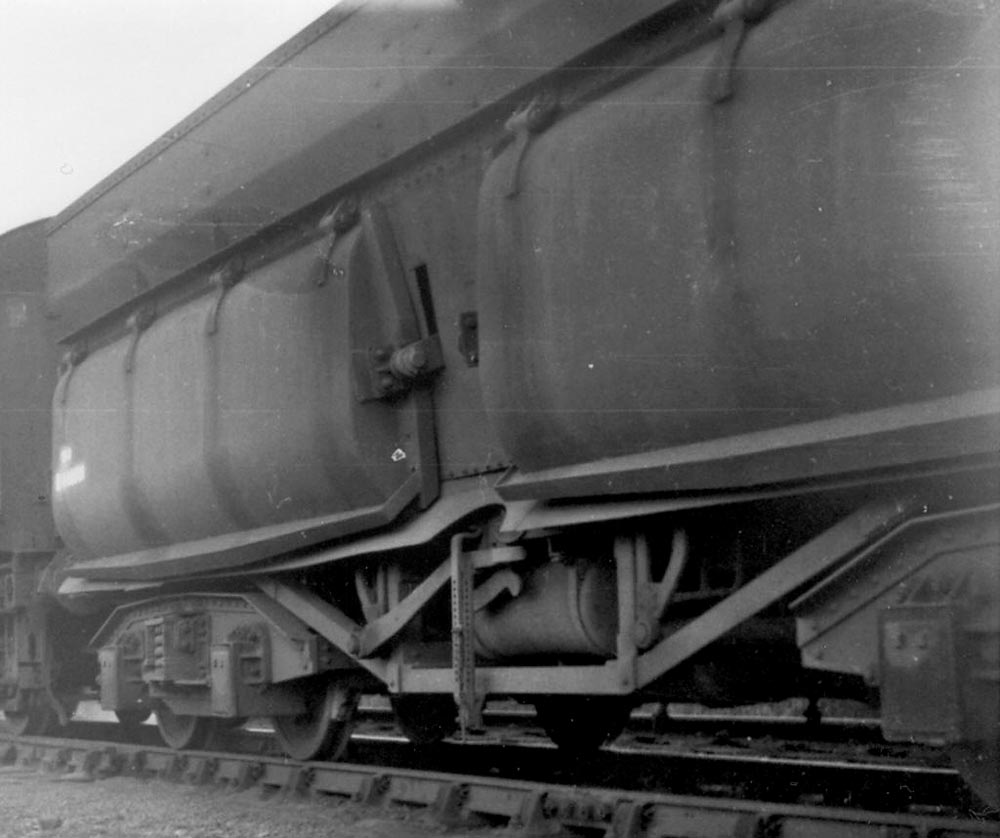
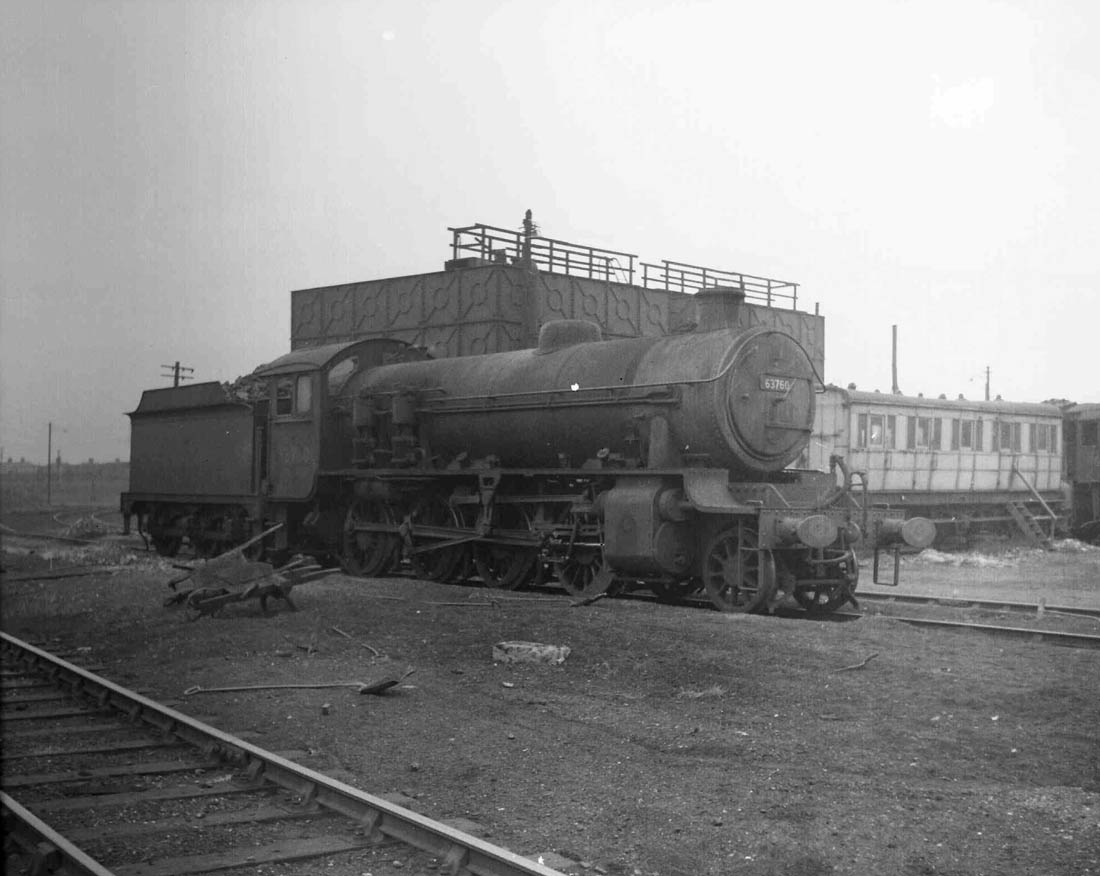
The arrival of these new wagons with their automated air-operated unloading mechanisms led to the issuance of a small booklet to assist railway staff in the handling of them. Each wagon was fitted with a vacuum operated automatic brake and four power operated side discharge doors which were under the control of the driver. Two manually operated safety lock levers were also fitted, one at each end of the wagon but both on the same side. When closed the levers were held in the bottom position by pins inserted above them. The levers were only to be raised when the wagons were being prepared for opening of the doors on arrival at the Consett unloading gantry. Each wagon had four compressed air mechanisms to operate the levers that opened the doors. Two of these mechanisms were mounted centrally on the wagon whilst one mechanism was placed at each end. Each door mechanism had a dedicated 14" and 16" cylinder.

The doors were kept closed by air pressure delivered from the locomotive through the No.1 pipe to the 14 cylinder. Compressed air pumped through the No 2 pipe and the 16 cylinder would open the doors. The discharge doors were not capable of being operated independently.
In addition to the special requirements for the operation of the discharge doors, the coupling of the wagons was also mentioned in the booklet. Three pipes ran between the locomotive and all the wagons. The most obvious was the standard vacuum pipe which ran the whole length of the train, from the locomotive, through the wagons to the brake van. The No.1 pipe - the constant air pressure pipe was fitted to end cocks located below the locomotive buffer beams and wagon headstocks. The pipe coupler heads, cocks and main pipes were painted black. The No.2 pipe, used for door opening was mounted on elevated pipes fitted to end cocks on the locomotives and wagons. This pipe was easily recogniseable on the buffers beams of the locomotives dedicated to the iron ore service. The coupler heads, stand pipes and the main pipes were painted yellow. The colour coding of the pipes and connections was an aid to the railway staff, however in practice these no doubt became covered in dirt, grime and iron ore dust.
The loading/unloading gantries were dangerous places and with the introduction of the new wagons and their automated door opening mechanisms a new hazard was introduced. Empty trains would terminate in Tyne Dock Bottom yard reception lines with the incoming locomotive immediately going to the shed. The guard s brakevan was removed by a pilot engine and placed on the van siding (or kip) at the entrance to the Bunkers line. An inspection of the wagons was carried out to ensure their suitability for the next loaded westbound trip. Defective wagons could be removed at this point. The locomotive for the westbound working would be attached at the inlet end of the reception sidings and would propel the train to the Bunkers line. The yard pilot could also carry out this function if necessary, but in no event were locomotives or brakevans allowed to travel under the loading bunkers.
Prior to the final push-back under the loading gantry C&W staff would ensure that the locomotive had all three hoses properly connected and that the air cocks were closed on the last wagon. By using a marker a railway employee would ensure that the wagons were positioned correctly under the gantry when being pushed back whilst the train crew would ensure that 86lbs psi air pressure was maintained in No.1 pipe to keep the wagon doors closed.
The Tyne Improvement Commission employees were responsible for the operation of the loading bunkers and the paperwork to accompany the train. This included details of the wagon numbers and the weight of loaded iron ore. Prior to loading the guard was to ensure that all wagon door lock handles were in place and that the safety pins were correctly fitted. Because the wagons generally ran in fixed formations the wagons were marshalled to ensure all safety catch handles were on the same side. If a wagon needed replacing the C&W staff were advised of which way round the replacement wagon had to be in order to line up all the handles. After loading of the iron ore the guard was to recheck the safety pins, and repeat this again just prior to departure. Once loaded the train would draw forward off the Bunker line and allow the brakevan to roll onto the train using gravity. Once the vacuum pipe had been connected the train drew forward a little further to allow the banking engine to be attached.
On reaching Consett the loaded trains would use the new ore gantry to unload. A single track ran over twenty two ore bunkers, each of which could hold thirty tons of ore. To reach the unloading gantry the line to the right was taken shortly after passing Carr House West Box. This line formed one side of a triange and ran to Fell Box, which was owned by the Consett Iron Company but operated by British Railways staff. Beyond Fell signalbox were three reception lines, normally the No.1 (right hand) line would receive the loaded iron ore trains.
At some point the guard would provide one set of the train's documents to the Traffic Agent and the other to the Consett Iron Company s gantry leading man. Once stopped the Consett Iron Company staff would release all the safety levers and advise the guard when this was completed. The train would then move forward onto the gantry under the control of the Gantry Leading Man. When the train was positioned correctly for unloading the guard notified the driver to open the doors. After unloading the ore into the hoppers it was then transferred to a mobile hopper and then moved on a conveyor to the storage bunkers. From here another mobile hopper fed measured amounts to steel tubs which then delivered the ore to the blast furnace.
After the wagons had emptied the guard advised the driver to close the doors. With the train set to reverse off the gantry the guard would operate the ground frame to allow the reverse move. Once clear of the gantry line Consett Iron Company staff would re-instate all the safety lock handles and pins. After this was completed a couple of ground frame operations and shunting moves would position the train for its journey back to Tyne Dock.
The thirty wagons specially built for this service were numbered 446000-29 and maintained at Tyne Dock shed. Two of the wagons, marked Y & Z were to be held as spares at Tyne Dock Bottom whilst the remaining 28 were divided into seven trainsets of four wagons each, the sets being labelled A,B,C,D,E,F & S. This letter was stencilled on the wagons (see view of wagon above). The Carriage & Wagon Dept established maintenance cycles for the four wagon sets. Each Friday one set of four wagons would be taken out of service and undergo maintenance for a week at the Tyne Dock facility. The wagon set labelled 'S' or another available set would replace the set taken out of service. Presumably if the spare wagons 'Y' & 'Z' were required for service they would be replaced as soon as repairs had been completed on the defective wagon from sets A - F or S.
The delivery of these braked wagons allowed for shorter running times on the descent from Consett back to Tyne Dock. The loading facilities at Tyne Dock allowed a complete train to be loaded in less than a minute. Unloading at Consett took about five minutes.
In traffic the different types of iron ore created problems. Heavier ores tended to settle and stick in the corners, causing problems when trying to open the doors. Easing the doors solved this issue but led to a slight loss of iron ore onto the trackbed. The light ores created a problem with the pistons of the vacuum brake, this was resolved by the fitting of gaiters. Cold weather would cause the lighter ores to freeze in the wagons and also freeze moisture in the air lines. The latter problem was resolved by the fitting of draincocks.
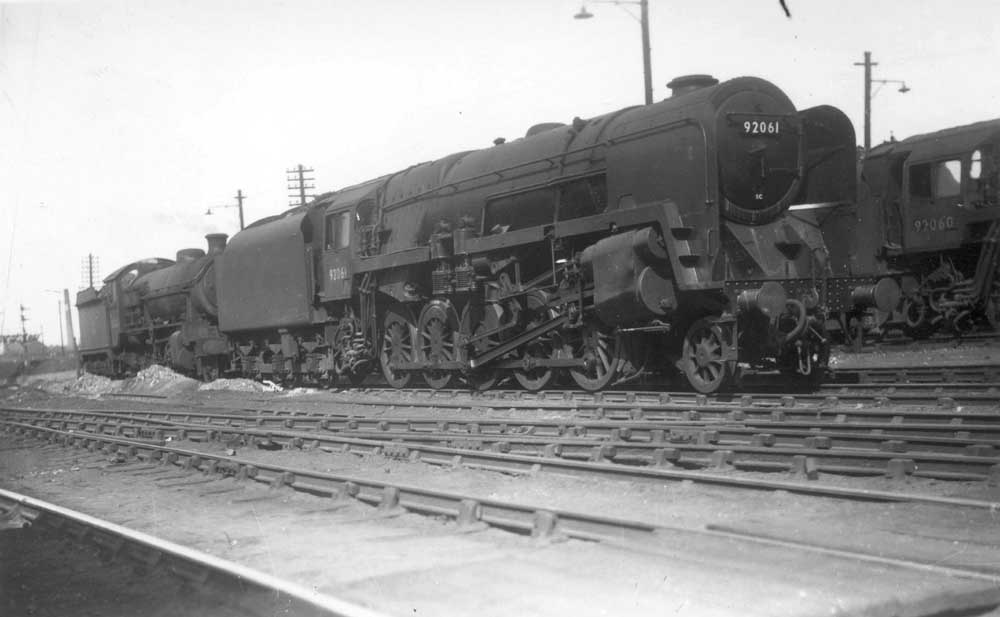
The BR Standard 2-10-0 Class 9F's (and the period 1955 - 1966)
The building program for the BR Standard 2-10-0 Class 9F's included ten for delivery to the North Eastern Region, intended specifically for use on the Tyne Dock - Consett iron ore services. These were the only Class 9F's to be delivered to the N.E. Region. The ten locomotives from the programme came from two separate orders:
92060 - 92066 authorised December 1952, as part of Crewe Lot number E490.
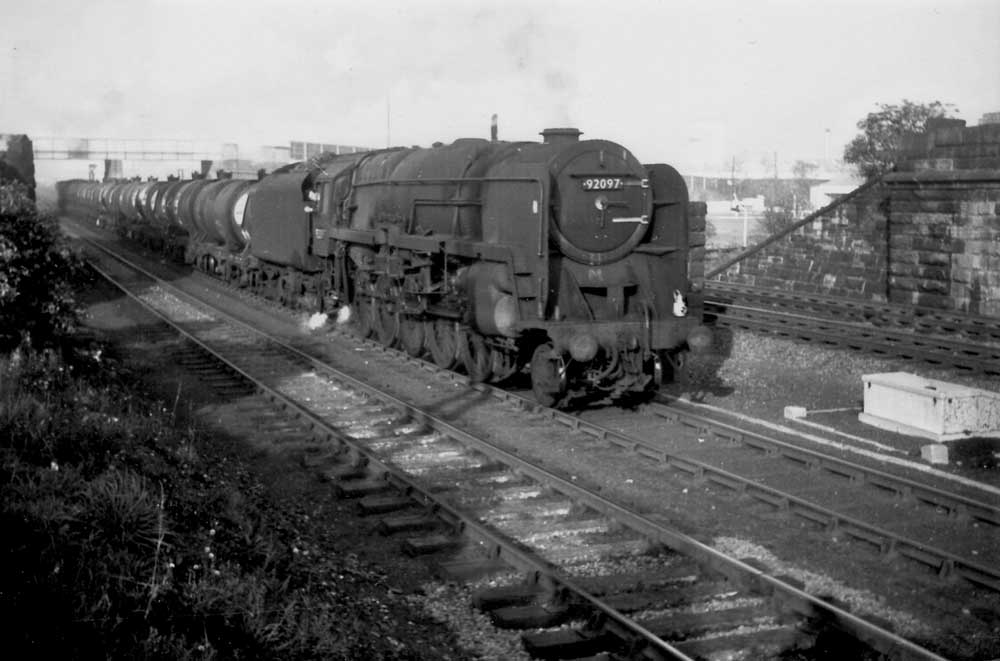
92097 - 92099 authorised February 1955, as part of Crewe Lot number E493.
Prior to the delivery of these machines, a New England allocated 9F, No. 92037 was trialled on the Tyne Dock - Consett workings during June 1955. On June 27th 1955 92037 worked the 3.15am New England - Rossington empty mineral train, then travelling light engine from Doncaster northwards. The trials proved to be a complete success despite some minor issues concerning the use of the 9F over some parts of the route.
The first batch of NER 9Fs did not reach Tyne Dock immediately after outshopping from Crewe. The recently delivered Wellingborough allocated Crosti boilered 9F's required modification, thus 92060 - 92066 were temporarily allocated to Wellingborough for a short period whilst the Crosti's were at Crewe. Whilst working out of Wellingborough the soon-to-be Tyne Dock 9F's had not yet been fitted with their twin Westinghouse air pumps, visible by gaps in the running board on the fireman's side. With the return of the modified Crosti's 92060 - 92066 visited Crewe between March & May 1956 to have the air pumps installed. Following this they made their way north-eastwards to their new home at Tyne Dock shed. The fitting of the Westinghouse air pumps and related fittings cost an additional GBP600 for 92060 - 92066 and an additional GBP1,000 for 92097 - 92099.
During the middle of May 1956 the 9F's took to their duties on the iron ore workings. The locomotives required a little mastering, suffering initially from slipping and wheel lock, which required visits to Gateshead Works for repair. But it did not take long for the crews to master their new charges, eventually resulting in the releasing of the Q7's & O1's from this service. For the crews the 9F's sported a more comfortable cab than the O1's or Q7's - something very much appreciated on the exposed lines during harsh winter weather frequently found in County Durham. The 9F's had a slightly greater tractive effort (39,670lb) which allowed the number of wagons in each train to be increased by one to nine wagons with a brake van - the unloading gantry at Consett could not handle longer trains. Banking locomotives were still required at two points on the route. The 1 in 40 gradient from Tyne Dock up to Tyne Dock shed and the 1 in 56 from South Pelaw to South Medomsley (Leadgate) saw a variety of steam locomotives used including examples from classes O1, Q6, Q7 & 9F. 350hp diesel-electric shunters were also used on the push up from Tyne Dock.
The information below is taken from a Working Timetable for the Tyne Dock - Consett route from september 1955. Thank you to John Bainbridge for sending copies of the WT containing this information.
Working Timetable Extract
Tyne Dock to Consett
September 19th 1955 until further notice
| Location | Mileage | 1557 | 1575 | 1559 | 1561 | 1563 | 1565 | 1567 | 1579 | 1569 | 1571 | 1573 | 1581 | 1587 | 1589 | 1591 | 1583 | 1593 | 1595 |
| MX | MX, Q, LE | MX, Q | MX, Q | LE | LE | LE | Q | Tyne Dock Bottom | 0.00 | 00.15ae | .. | 01.30ae | 03.15ae | 05.00ae | 06.45ae | 08.25ae | .. | 10.15ae | 12.00ae | 13.45ae | .. | 15.30ae | 17.10ae | 18.55ae | .. | 20.45ae | 22.40ae | Tyne Dock Shed | 1.69 | .. | 01.25 | .. | .. | .. | .. | .. | 10.10 | .. | .. | .. | 15.25 | .. | .. | .. | 20.40 | .. | .. | Bank Top | 4.66 | 00.21ae | .. | 01.36ae | 03.21ae | 05.06ae | 06.51ae | 08.31ae | .. | 10.21ae | 12.06ae | 13.51ae | .. | 15.36ae | 17.16ae | 19.01ae | .. | 20.51ae | 22.46ae | Pontop Crossing | 7.71 | 00.24 | .. | 01.39 | 03.24 | 05.09 | 06.54 | 08.34 | .. | 10.24 | 12.09 | 13.54 | .. | 15.39 | 17.19 | 19.04 | .. | 20.54 | 22.49 | Washington | 8.32 | 00.43 | .. | 01.58 | 03.43 | 05.28 | 07.13 | 08.53 | .. | 10.43 | 12.28 | 14.13 | .. | 15.50 | 17.38 | 19.23 | .. | 21.13 | 23.08 | South Pelaw | 12.18 | 01.00ae | 01.58 | 02.15ae | 04.00ae | 05.45ae | 07.30ae | 09.10ae | 10.43 | 11.00ae | 12.45ae | 14.30ae | 15.58 | 14.15ae | 17.55ae | 19.40ae | 21.13 | 21.30ae | 23.25ae | South Pelaw (2) | 12.18 | 01.05 | .. | 02.20 | 04.05 | 05.50 | 07.35 | 09.15 | .. | 11.05 | 12.50 | 14.35 | .. | 14.20 | 18.00 | 19.45 | .. | 21.35 | 23.30 | Annfield Plain | 22.06 | 01.40 | .. | 02.55 | 04.40 | 06.25 | 08.10 | 09.50 | .. | 11.40 | 13.25 | 15.10 | .. | 14.55 | 18.35 | 20.20 | .. | 22.10 | 00.05 | South Medomsley | 22.06 | 01.48 | .. | 03.05ae | 04.48 | 06.35ae | 08.20ae | 09.58 | .. | 11.50ae | 13.35 | 15.18 | .. | 15.05ae | 18.45ae | 20.28 | .. | 22.20ae | 00.15ae | South Medomsley (2) | 22.06 | .. | .. | 03.07 | .. | 06.37 | 08.22 | .. | .. | 11.52 | 13.37 | .. | .. | 15.07 | 18.47 | .. | .. | 22.22 | 00.17 | Carrhouse West | 26.39 | 01.53 | .. | 03.15 | 04.53 | 06.45 | 08.30 | 10.03 | .. | 12.00 | 13.45 | 15.23 | .. | 15.15 | 18.55 | 20.33 | .. | 22.30 | 00.25 | Consett Works | 26.77 | 01.59ae | .. | 03.21 | 04.59ae | 06.52 | 08.36 | 10.09ae | .. | 12.06 | 13.51 | 15.29ae | .. | 15.21 | 19.01 | 20.39ae | .. | 22.36 | 00.31 |
Working Timetable Extract
Consett to Tyne Yard and Tyne Dock
September 19th 1955 until further notice
| Location | Mileage | 1444 | 1482 | 1482 | 1446 | 1446 | 1484 | 1484 | 1448 | 1486 | 1486 | 1450 | 1488 |
| MX,Q | MX,Q,A | MX,Q,B,LE | MX,Q,CA,LE | MX,Q,D | MX,Q,EA | MX,Q,LE | MX,Q | MX,Q,A | MX,Q,LE | MX,Q | Consett Works | 0.00 | .. | 01.06 | 01.06 | 02.14 | 02.14 | 02.34 | 02.34 | .. | 03.56 | 03.56 | 05.14 | 05.34 | Carrhouse West | 0.70 | .. | 01.12 | 01.12 | .. | .. | 02.40 | 02.40 | .. | 04.02 | 04.02 | .. | 05.40 | South Medomsley | 1.28 | .. | .. | .. | .. | .. | .. | .. | 03.10 | .. | .. | .. | .. | Annfield Plain | 5.61 | 00.20 | 01.26 | 01.26 | 02.34 | 02.34 | 02.54 | 02.54 | 03.20w | 04.16 | 04.16 | 05.34 | 05.54 | Annfield Plain (2) | 12.40 | 00.30w | .. | .. | .. | .. | .. | .. | 03.25 | .. | .. | .. | .. | South Pelaw | 13.17 | 00.35 | 01.44 | 01.44 | 02.52 | 02.52 | 03.12 | 03.12 | 03.43 | 04.34 | 04.34 | 05.52 | 06.12 | Washington | 15.49 | 00.53 | 01.55 | .. | 03.02 | .. | 03.22 | .. | .. | 04.44 | .. | 06.02 | 06.22 | Pontop Crossing | 19.35 | .. | 02.08 | .. | 03.16 | .. | 03.36 | .. | .. | 04.58 | .. | 06.16 | 06.36 | King Edward Bridge | 19.76 | .. | .. | 02.08 | .. | 03.16 | .. | 03.36 | .. | .. | 04.58 | .. | .. | Pelaw | 23.01 | .. | .. | 02.21 | .. | 03.29 | .. | 03.46 | .. | .. | 05.11 | .. | .. | Boldon Colliery | 25.78 | .. | .. | 02.29 | .. | 03.37 | .. | 03.57 | .. | .. | 05.19 | .. | .. | Tyne Dock Shed | 25.78 | .. | .. | .. | 03.21 | 03.46 | .. | .. | .. | .. | .. | 06.21 | .. | Tyne Dock Bottom | 27.67 | .. | 02.17 | 02.38 | .. | .. | 03.45 | 04.06 | .. | 05.07 | 05.28 | .. | 06.45 |
(PART 1)
| Location | Mileage | 1452 | 1490 | 1464 | 1492 | 1466 | 1494 | 1468 | 1496 | 1470 | 1498 | 1472 | 1434 | 1474 | 1436 | 1476 | 1438 | 1478 | 1440 | 1440 |
| LE | LE | LE | LE | LE | LE | LE | LE | LE | F | Q GA | Consett Works | 0.00 | .. | 07.26 | .. | 09.11 | 10.24 | 10.44 | .. | 12.41 | .. | 14.26 | 15.44 | 16.04 | .. | 17.56 | .. | 19.36 | 20.59 | 21.14 | 21.14 | Carrhouse West | 0.70 | .. | 07.32 | .. | 09.17 | .. | 10.50 | .. | 12.47 | .. | 14.32 | .. | 16.10 | .. | 18.02 | .. | 19.42 | .. | 21.20 | 21.20 | South Medomsley | 1.28 | 06.40 | .. | 08.25 | .. | .. | .. | 11.55 | .. | 13.40 | .. | .. | .. | 15.10 | .. | 18.50 | .. | .. | .. | .. | Annfield Plain | 5.61 | 06.50w | 07.46 | 08.35w | 09.31 | 10.44 | 11.04 | 12.05w | 13.01 | 13.50w | 14.46 | 16.04 | 16.24 | 15.20w | 18.16 | 19.00w | 19.56 | .. | 21.34 | 21.34 | Annfield Plain (2) | 12.40 | 05.55 | .. | 08.40 | .. | .. | .. | 12.10 | .. | 13.55 | .. | .. | .. | 15.25 | .. | 19.05 | .. | 21.14 | .. | .. | South Pelaw | 13.17 | 07.13 | 08.04 | 08.58 | 09.49 | 11.02 | 11.22 | 12.28 | 13.19 | 14.13 | 15.04 | 16.22 | 16.42 | 15.43 | 18.34 | 19.23 | 20.14 | .. | 21.52 | 21.52 | Washington | 15.49 | .. | 08.14 | .. | 09.59 | 11.12 | 11.32 | .. | 13.29 | .. | 15.14 | 16.32 | 16.52 | .. | 18.44 | .. | 20.24 | 21.32 | 22.02 | .. | Pontop Crossing | 19.35 | .. | 08.28 | .. | 10.13 | 11.26 | 11.46 | .. | 13.43 | .. | 15.28 | 16.46 | 17.06 | .. | 18.58 | .. | 20.38 | 21.42 | 22.16 | .. | King Edward Bridge | 19.76 | .. | .. | .. | .. | .. | .. | .. | .. | .. | .. | .. | .. | .. | .. | .. | .. | 21.56 | .. | 22.16 | Pelaw | 23.01 | .. | .. | .. | .. | .. | .. | .. | .. | .. | .. | .. | .. | .. | .. | .. | .. | .. | .. | 22.29 | Boldon Colliery | 25.78 | .. | .. | .. | .. | .. | .. | .. | .. | .. | .. | .. | .. | .. | .. | .. | .. | .. | .. | 22.37 | Tyne Dock Shed | 25.78 | .. | .. | .. | .. | 11.31 | .. | .. | .. | .. | .. | 16.51 | .. | .. | .. | .. | .. | 22.01 | .. | .. | Tyne Dock Bottom | 27.67 | .. | 08.37 | .. | 10.22 | .. | 11.55 | .. | 13.52 | .. | 15.37 | .. | 17.15 | .. | 19.07 | .. | 20.47 | .. | 22.25 | 22.46 |
(PART 2)
| Location | Mileage | 1480 | 1442 | 1442 |
| LE | H | Q JA | Consett Works | 0.00 | .. | 23.11 | 23.11 | Carrhouse West | 0.70 | .. | 23.17 | 23.17 | South Medomsley | 1.28 | 22.25 | .. | .. | Annfield Plain | 5.61 | 22.35w | 23.31 | 23.31 | Annfield Plain (2) | 12.40 | 22.40 | .. | .. | South Pelaw | 13.17 | 22.58 | 23.49 | 23.49 | Washington | 15.49 | .. | 23.59 | .. | Pontop Crossing | 19.35 | .. | 00.13 | .. | King Edward Bridge | 19.76 | .. | .. | 00.20 | Pelaw | 23.01 | .. | .. | 00.33 | Boldon Colliery | 25.78 | .. | .. | 00.41 | Tyne Dock Shed | 25.78 | .. | .. | .. | Tyne Dock Bottom | 27.67 | .. | 00.22 | 00.50 |
At normal times three trains were in operation, taking 1hr 51min for westbounds and 1hr 11min for eastbounds. The timetable was constructed to allow on average a departure every 105 minutes, on a busy day up to fourteen trips were made. The running of the ore trains depended on the delivery of ore to Tyne Dock by ship - at busy times the Class 9F's would of course be found only on the Tyne Dock - Consett route, but at times of reduced demand they could find themselves working trains over less familiar routes, particularly the ECML between York & Edinburgh. They did occasionally find themselves on passenger workings - on August 2nd 1958 92063 worked the 08.15 Newcastle - Heads of Ayr as far as Carlisle, returning with a parcels working.
A new rolling mill was opened at Consett during 1961. In celebration of this a special was run from Kings Cross to Consett on behalf of the Consett Iron Company on April 24th. The special was worked by specially cleaned A3 60110 'Robert The Devil' and carrying blue headboards.

A stranger to the line commencing May 1962 was Saltley allocated, mechanical stoker equipped 9F No. 92167, which was tested here for about six months. It would not be fitted with air pumps so was primarily employed on banking duties between South Pelaw & Medomsley. This task was ill-suited for the most efficient operation of the mechanical stoker.
As a sign of future changes on September 28th 1962 BR/Sulzer Type 4 No. 171 was tested between Tyne Dock & Consett with a loaded nine wagon train. No bankers were used on the trip. The working was considered a very good one - the 800 ton train ran on a 78 minute schedule, instead of the normal 104 minutes. The diesel locomotive required minor modification of its air brake equipment to allow operation of the wagons doors and a Class 9F was at Consett to complete the unloading process.
The extreme weather during the winter of 1962/63 and low output from the Consett steelworks saw a number of Tyne Dock 9F's borrowed for other duties to cover the many diesel and steam failures caused by the cold weather. Five 9F's were loaned to Heaton from Tyne Dock for two weeks. They were primarily used on goods trains to Tees Yard & York. However on December 21st 92061 reached Millerhill on a special freight from Heaton, whilst on Christmas Eve 92097 handled empty stock workings between Heaton & Newcastle!

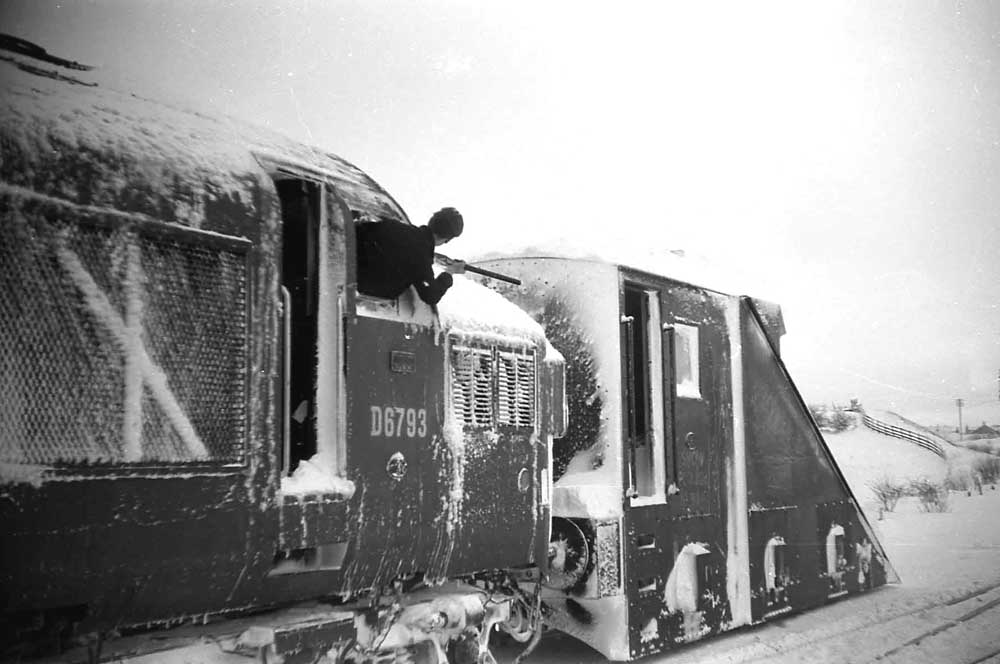
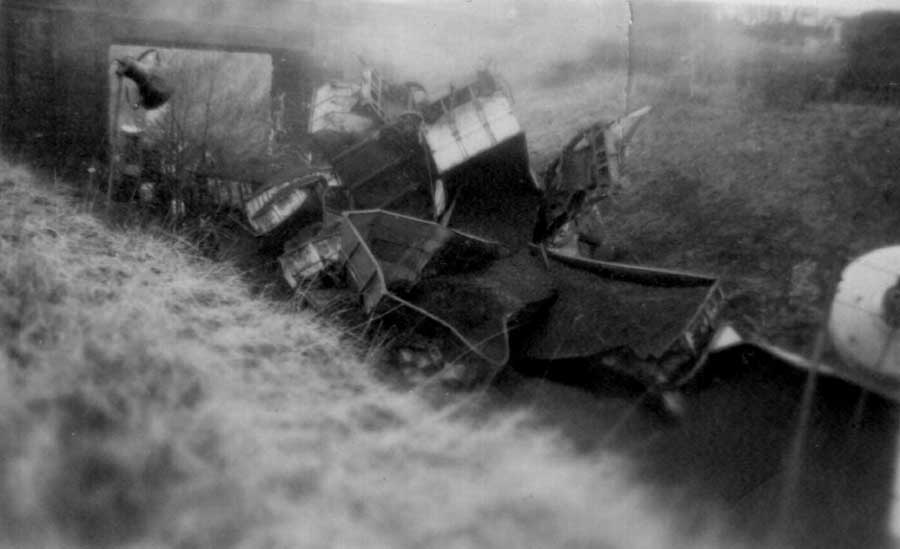
The two views above were taken by Ken Todd, who advises: The snow plough views are outside Annfield Box waiting to run up to Consett, but unable to proceed as a Q6 with coal empties is stuck at East Castle. Two locomotives with a plough at each end. I eventually went with them to Bradley. Later that evening all roads from Consett were under a few feet of snow, so I hitched a lift back. The rest is documented in newspaper articles. Basically we were running way too fast, and on the downhill approaching Annfield Station the front plough went for a trip on its own into a field, everything following derailed and we tore up a few hundred yards of track though Annfield Station. The line was closed for several weeks, with traffic coming up through Lanchester.

Another diesel class trialled on the Consett route during September 1963 when Clayton diesels D8500 & D8501 were loaned from the Scottish Region. D8536 later replaced D8500, not unexpectedly these locomotives were found not to be powerful enough for the iron ore services and so the Class 9F's continued on these workings.
December 1964 saw the arrival of Class 40s on the South Pelaw - Medomsley banking job, this turn had recently been transferred from Tyne Dock to Tyne Yard shed.
On December 9th 1964 tragedy overtook the Consett line leading to the death of one railwayman and the destruction of much freight rolling stock. A loaded coal train was being shunted at Annfield Plain junction when part of it broke away and started to run down the steep gradient towards Stanley. The Stanley signalman was not successful in diverting the 23 wagons, but the line had been cleared almost to Beamish, here an eastbound goods train was still in section and could not be contacted in time. The runaway wagons hit the rear of this train, demolishing the brakevan and killing the guard. The impact created a huge pile of derailed and splintered wagons, the front portion of the eastbound goods train remained on the track but was pushed forward with considerable force, its driver was treated for shock. It took several days to clear the wreckage and repair the damaged track, pending re-opening of the line all traffic was routed via Lanchester.
92097 saw some mainline passenger running on April 10th 1965 when it visited Consett & Darlington as part of the RCTS North Eastern No.2 railtour.
The second quarter of 1966 brought some closures significant to the area. Firstly Darlington Works closed on April 2nd, the Works had been used to repair both the Class 9Fs and the Type 2 Class 24s. Secondly Consett shed closed on May 22nd but remained as a signing on point, three diesel shunting locomotives were in use here.
On June 18th 1966 steam passenger working ended on the Alnmouth - Alnwick line. To recognise the occasion Tyne Dock 9F No. 92099 was turned out in immaculate condition, complete with its smokebox door hinges picked out in white paint to work a passenger service over the branch.
During June & July 1966 D5101 - D5106 all received Works attention, D5102 & D5103 at Crewe, the remainder at Derby. Presumably these visits were related to their modifications for the iron ore service. On May 24th D5638 was noted on the Leamside line towing D3675 & D5106, possibly on their way to Derby Works?
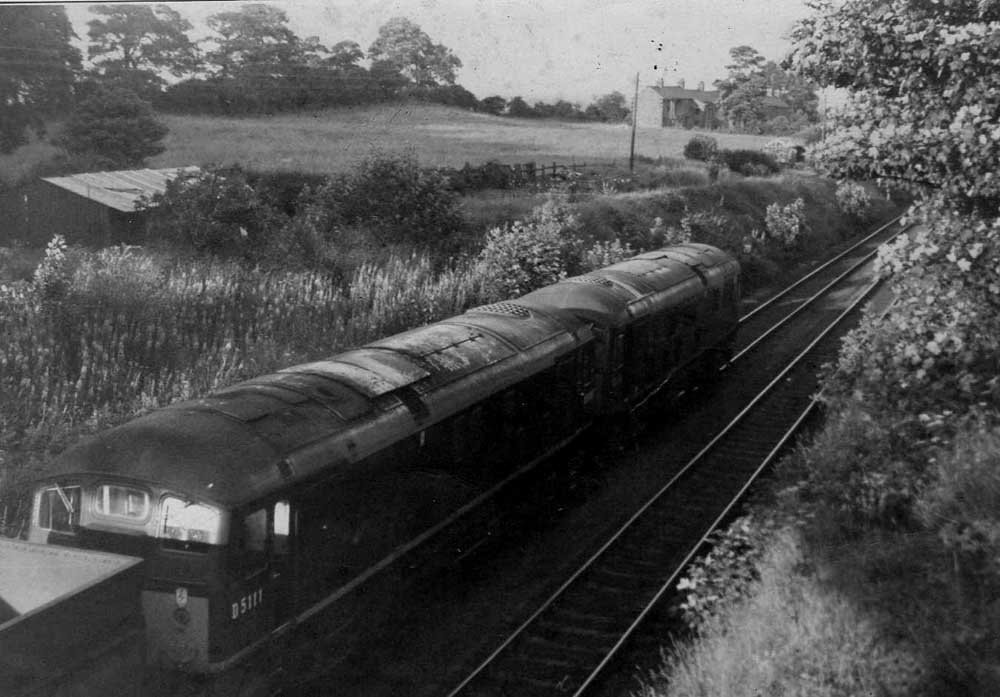
With the Type 2s gradually taking over the iron ore workings there were a number of unusual diesel workings reported during August 1966. On 15th D5149 was noted at Consett heading east with nine empty iron ore wagons and a brake van. On 24th D5111 was noted on the branch with a single coach, possibly an inspection train, at this time D5111 still retained its boiler water tank, suggesting it had not yet been fitted with the equipment necessary to work the iron ore wagons. And surprisingly on 26th a loaded iron ore train of nine wagons and a brake van headed westwards through West Stanley behind a very clean D5179 with English Electric Type 4 No.277 banking. The Type 4's were regularly employed on banking duties for a while, but the use of non-air pump fitted D5179 is most interesting.
D5179 is also reported to have worked some iron ore turns during September & October 1966.
For just over ten years the 9F's handled the iron ore services, their days ended on November 19th 1966 when 9F 92063 received a special cleaning, some fresh paint and 'The Tyne Docker' headboard in commemoration of the last day of steam operation of the iron ore service. For nine of these 9F's their working days were done, being withdrawn and sent for scrapping. Only 92065 survived a little longer, being transferred to Wakefield to work out a few more days on Yorkshire coalfield traffic. Whichever way you look at it these fine machines were thrown away after a brief career of barely eleven years.
The withdrawal of the Consett 9F's took place during the summer/autumn, presumably being retired as suitably equipped Type 2 diesels were received from the Works. Withdrawal dates were:
92060 10/66
92061 9/66
92062 6/66
92063 11/66
92064 11/66
92065 transfered to Wakefield 56A 11/66 and withdrawn 4/67
92066 5/65
92097 10/66
92098 7/66
92099 9/66
The withdrawn Tyne Dock 9Fs congregated at Tyne Dock shed until delivery could be made to scrapyards in the north-east. Disposals were:
Drapers, Hull: 92060/61/97/98/99
Hughes Bolckows Ltd, North Blyth: 92062
Thompsons, Stockton on Tees: 92063/64
Cohens, Middlesborough: 92066
After transfer to Wakefield 92065 saw five more months of service before withdrawal and sale to Arnott Young, Parkgate.
BR/Sulzer Type 2's Class 24 (and the period 1966 - 1974)
As mentioned above the replacement for the 9F's arrived in the form of ten Gateshead allocated BR/Sulzer Type 2's D5102 - D5111. These had been allocated to Gateshead since new and between 1961 & 1966 carried out a variety of duties in the North East. As detailed earlier a number of other diesel types had been tested on the Consett route but it fell to the Type 2's to take over the iron ore duties. Before taking up their duties, Works attention was required to remove their train heating boilers and water tanks and receive the necessary compressors and pipework to operate the wagon doors - these changes are reported as taking place at Crewe Works (& Derby Works?) The diesel locomotives operated in pairs with eight or nine wagons, though occasionally a single locomotive was noted with just four wagons. One result of using pairs of locomotives was that the trains had to be reversed onto the unloading gantry at Consett. The steam workings had pulled directly onto the gantry and then reversed around the north leg of the triangle to face in the right direction for the return to Tyne Dock.
Photographs taken of the diesel hauled iron ore services in the week following the last steam hauled 9F service show remarkably clean Type 2's in green livery with small yellow warning panels and reasonably clean grey roofs. Prominent was the missing boiler water tank and the addition of the air pipe mounted on the buffer beam. Some had a blanking plate over the boiler room grills, some still carried the round exhaust port in its original position near the boiler room roof. All still carried the frame level valencing
It should perhaps be noted that in other parts of the country the BR/Sulzer Type 2's were also diagrammed to work equally heavy, demanding mineral trains. A small group of Class 25's were responsible for the dieselisation of the Tunstead - Northwich ICI limestone trains whilst on the Wirral Peninsula Stoke Division allocated Class 24's were in charge of the iron ore trains running between Bidston Dock & Shotwick - these iron ore workings had previously been in the hands of Birkenhead's large fleet of 9F's.
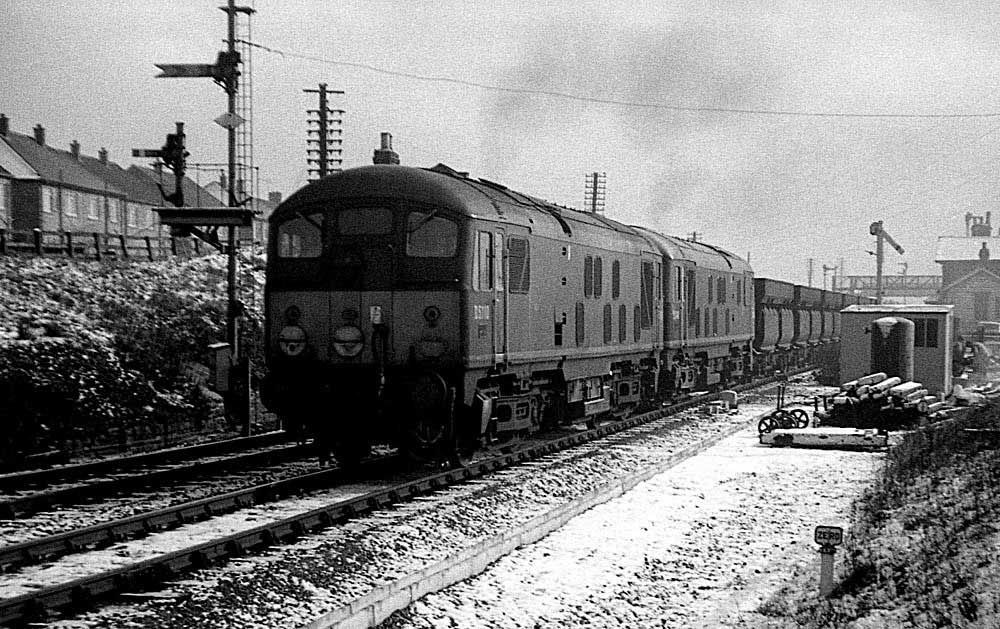
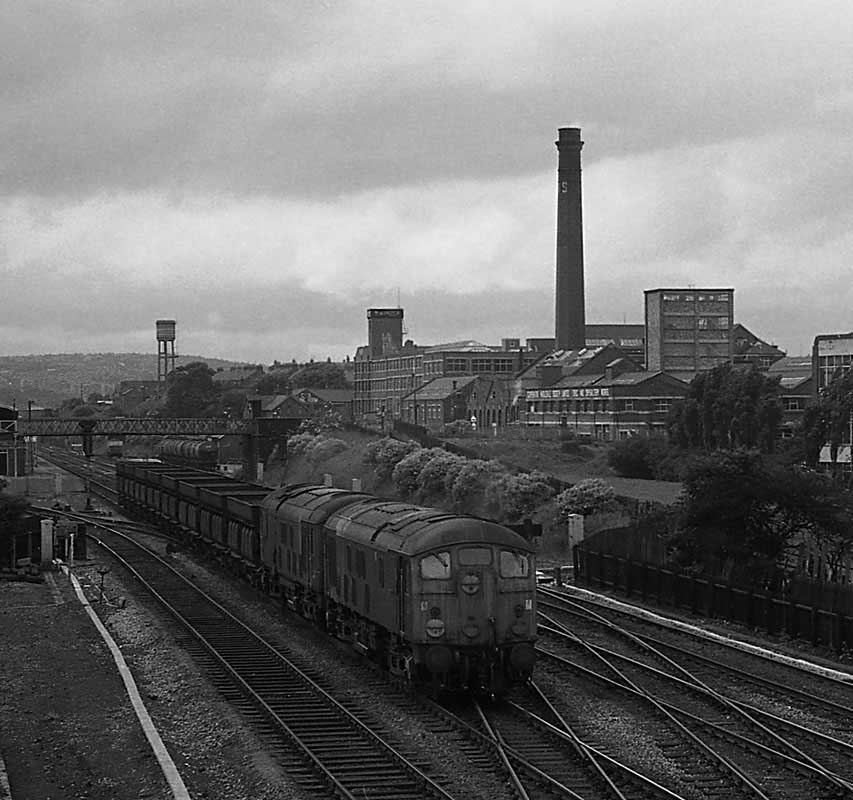
The Type 2 diesels would remain in charge of the Tyne Dock - Consett iron ore workings for seven and a half years. Although primarily dedicated to the iron ore workings (no other locomotives could operate the wagon doors) they did occasionally wander off and cover other workings operated by Gateshead allocated locomotives.
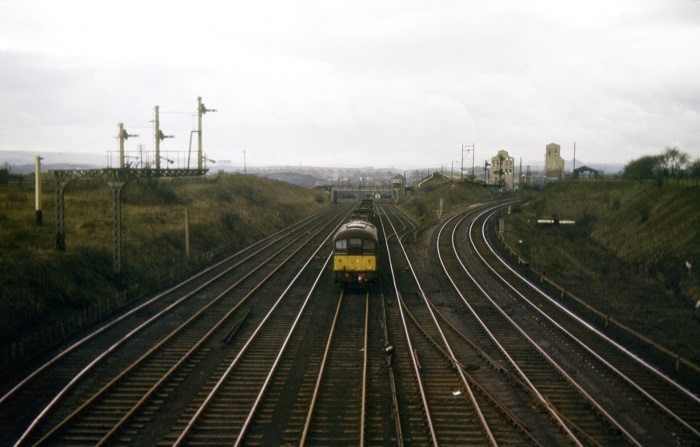
1967
Heavy repairs for the Consett Type 2's continued to be handled at Derby Works, noted were D5104 between February & March and D5106 between May & July.
Observations at Pelaw on the afternoon of July 25th, between 3.45pm & 6.30pm included some of the iron ore trains:
D240: up freight
90382: down freight
D5168: up freight
D6825: up Class H freight
D5169: down freight 8J91
D6901: down freight 8J23
D5105 & D5102: Tyne Dock - Consett
D5182: down freight 8J90
90382: up Class H freight
D5097: down light engine
D6825: down freight 8J55
D8592: up freight 8P06
D6826: up freight 8J56
D1877: up empty freightliner 7Z80
D6831: up freight 8J62
D8594: up brake van only 8P01
D5166: trip freight 8J93
D5103 & D5107 Consett - Tyne Dock empties
D1877: down light engine
D5112: up light engine
D6774: up freight 7T43
D5104 & D5110: Tyne Dock - Consett
D5182 up brake van only 8J90
D6901: up freight 8J73
D6826: down brake van only
D5166: tripper, brake van only 8J93
D5101: up parcels
D5169: up freight 8J91
D8594: down freight
D2332: up light engine.
There was also a multitude of diesel multiple units working services to/from Newcastle - Middlesborough, South Shields, Sunderland & West Hartlepool.
Reportedly the last steam hauled coal train to Consett took place on Thursday September 7th 1967 utilising special cleaned WD 2-8-0 No 90009.
1968
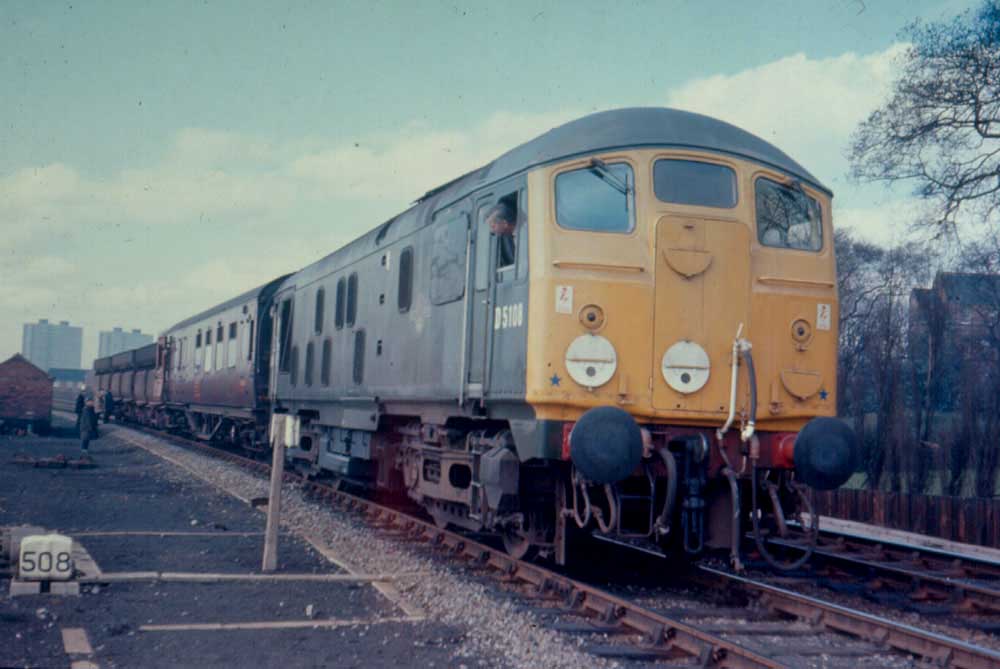
The view above clearly shows the two pipes fitted to the locomotives to operate the iron ore wagon door mechanisms. The more obvious pipe (the No.2 pipe) is at waist level with the metal portion painted white, though once placed in service the pipe quickly became covered in ore dust and other grime. The No.1 pipe occupies the position on the bufferbeam previously used by the steam pipe.
1968
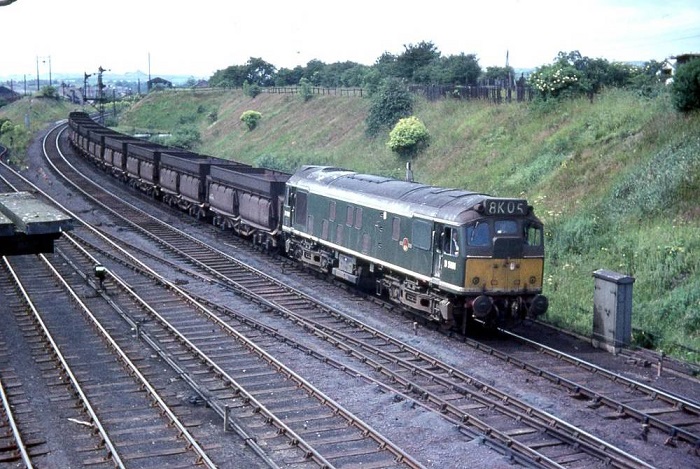
1969
From the beginning of 1969 the classified repairs for the Gateshead Class 24s was transferred to Glasgow Works.
On August 4th molten metal container trains commenced running between Cargo Fleet, Middlesborough & Consett Yard. This first train ran as the 6X93 12.30 Cargo Fleet - Consett Yard powered by 6712 & 6791 with Derby Research Center Dynamometer car No.4 (DW150192), runner wagon, Torpedo car, runner wagon, Torpedo car, runner wagon & Torpedo car. On arrival at Consett a problem was encountered with one of the Torpedo cars, the return working comprised only two Torpedo cars and the related runner wagons. Each Torpedo car could hold 130 tons of molton metal, for a gross weight of 242 tons, but for these services the load was limited to 100 tons, with a maximum speed of 20mph and more severe speed restrictions in some places. The Torpedo cars were treated as 'out of gauge' loads. The services departed Cargo Fleet at 06.10 (6X92) and 18.30 (6X93), arriving Consett at 10.07 & 22.22, departing Consett at 13.20 & 01.22 and arriving Cargo Fleet at 16.12 & 04.05 respectively.
1970
On February 9th a Stanley Level - Norwood coke works coal train with 6901 ran away down the bank from Annfield. The locomotive and fifteen wagons became derailed at Ouston Junction, regrettably killing the guard. The derailment and its associated damage required Consett trains to run via Pelaw & Washington whilst most ECML services ran via the Leamside line. Normal working was not resumed until February 13th.
Another familiar landmark fell into disuse effective February 28th when Tyne Dock shed closed, with all workings now handled from Tyne Yard or South Dock. This included the Tyne Dock - Consett iron ore workings, though the Class 24s had always been allocated to Gateshead depot. Trouble befell the 04.15 Tyne Dock - Consett working of April 7th led by 5102 & 5109, whilst standing at Tyne Yard it was run into by 6777. A quantity of iron ore spilled from the wagons, blocking the down slow line. 6777 received considerable nose end damage, requiring major surgery at Doncaster Works.
5103 & 5104 received classified repairs at Glasgow between April & June.
On November 23rd authorities did not have a dmu available for the 17.40 Newcastle - Carlisle (and 19.55 return), a scratch set of four coaches and no heat 5105 was used. The mild weather and pre-heated stock presumably kept the passengers reasonably comfortable. Locomotive haulage over this line was then currently limited to one train a day, the 23.15 SO Newcastle - Carlisle (and 02.50 SU return). A boiler equipped Class 25 was regular power, 7586/93/96 being frequently used.
The information below is taken from a Working Timetable for the Tyne Dock - Consett route. A page from the WT refers to the use of headcodes 6K00 - 6K13 for these services. Standard formaton was two Class 24s hauling 9 x 86 ton GLW ore carriers, total weight 934 tons. Thank you to John Bainbridge for sending copies of the WT containing this information.
Working Timetable Extract
Tyne Dock and Tyne Yard to Consett
5th October 1970 to 2nd May 1971
| Location | Mileage | 6K00 | 6K01 | 6K14 | 6K02 | 6K03 | 6K04 | 6K15 | 6K05 | 6K06 | 6K07 | 9K45 | 6K08 | 6K09 | 6K10 | 6K11 | 6K12 | 6K13 |
| MX | MX | MX | MX | MSO | SX | SO | SK | SK | SK | SK | SX | SX | Tyne Dock Bottom | 0.00 | 00.05 | 01.57 | 03.00 | 04.39 | 07.00 | 08.15 | 09.25 | 10.30 | 11.57 | 13.30 | .. | 15.00 | 16.29 | 17.56 | 19.30 | 20.47 | 22.30 | Boldon Colliery | 1.69 | 00.12 | 02.04 | 03.07 | 04.46 | 07.07 | 08.22 | 09.32 | 10.37 | 12.04 | 13.37 | .. | 15.07 | 16.36 | 18.03 | 19.37 | 20.54 | 22.37 | Pelaw | 4.66 | 00.19 | 02.11 | 03.14 | 04.53 | 07.14 | 08.29 | 09.39 | 10.44 | 12.11 | 13.45 | .. | 15.14 | 16.45 | 18.12 | 19.44 | 21.02 | 22.44 | High Street Junction | 7.71 | 00.27 | 02.19 | 03.22 | 05.01 | 07.22 | 08.39 | 09.47 | 10.52 | 12.19 | 13.52 | .. | 15.22 | 16.55 | 18.25 | 19.52 | 21.19 | 22.52 | King Edward Bridge Jct | 8.32 | 00.29 | 02.21 | 03.24 | 05.03 | 07.24 | 08.43 | 09.49 | 10.54 | 12.21 | 13.54 | .. | 15.24 | 16.57 | 18.27 | 19.54 | 21.23 | 22.54 | Tyne Yard arr | 12.18 | .. | .. | .. | 05.15 | .. | .. | .. | .. | .. | .. | .. | 15.36 | 17.09 | 18.39 | .. | 21.35 | .. | Tyne Yard dep | 12.18 | 00.42 | 02.32 | 03.35 | 05.17 | 07.35 | 08.55 | 09.59 | 11.07 | 12.34 | 14.05 | 15.19 | 15.38 | 17.11 | 18.41 | 20.05 | 21.44 | 23.05 | Ouston Junction | 14.50 | 00.51 | 02.38 | 03.41 | 05.25 | 07.41 | 09.03 | 10.05 | 11.16 | 12.40 | 14.11 | 15.27 | 15.46 | 17.19 | 18.49 | 20.11 | 21.52 | 23.11 | South Pelaw | 15.27 | 00.53 | 02.40 | 03.43 | 05.27 | 07.43 | 09.05 | 10.07 | 11.18 | 12.42 | 14.13 | 15.30 | 15.48 | 17.21 | 18.51 | 20.13 | 22.54 | 23.13 | Annfield | 22.06 | 01.15 | 03.02 | 04.05 | 05.49 | 08.05 | 09.28 | 10.29 | 11.40 | 13.06 | 14.35 | 15.53 | 16.10 | 17.43 | 19.13 | 20.36 | 23.16 | 23.35 | Carrhouse West | 26.39 | 01.34 | 03.15 | 04.18 | 06.02 | 08.18 | 09.41 | 10.42 | 11.53 | 13.19 | 14.48 | 16.06 | 16.23 | 17.56 | 19.26 | 20.50 | 23.29 | 23.48 | Consett Works | 26.77 | 01.38 | 03.18 | 04.21 | 06.05 | 08.21 | 09.45 | 10.45 | 11.56 | 13.22 | 14.51 | .. | 16.25 | 17.59 | 19.29 | 20.53 | 23.32 | 23.51 | Consett Low Yard | 27.67 | .. | .. | .. | .. | .. | .. | .. | .. | .. | .. | 16.15 | .. | .. | .. | .. | .. | .. |
Working Timetable Extract
Consett to Tyne Yard and Tyne Dock
5th October 1970 to 2nd May 1971
| Location | Mileage | 6K13 | 6K14 | 6K00 | 6K12 | 6K01 | 6K01 | 6K14 | 6K02 | 6K15 | 6K15 | 6K03 | 6K04 | 6K15 | 6K02 | 6K05 | 6K05 | 6K06 | 6K06 |
| MX | MX | MX | MO | MX | MX | MX | MO | SO | MSO | SX | SX | SO | SX | SO | Consett Low Yard | 0.00 | .. | .. | .. | .. | .. | .. | .. | .. | .. | .. | .. | .. | .. | .. | .. | .. | .. | .. | Consett Works | 0.70 | 00.12 | .. | 01.59 | .. | .. | 03.39 | 04.42 | 06.26 | .. | .. | 08.42 | 10.06 | 11.06 | .. | 12.17 | 12.17 | 13.43 | 13.43 | Carrhouse West | 1.28 | 00.15 | .. | 02.02 | .. | .. | 03.42 | 04.45 | 06.29 | .. | .. | 08.45 | 10.09 | 11.09 | .. | 12.20 | 12.20 | 13.46 | 13.46 | Annfield | 5.61 | 00.28 | .. | 02.15 | .. | .. | 03.55 | 04.58 | 06.42 | .. | .. | 08.58 | 10.22 | 11.22 | .. | 12.33 | 12.33 | 13.59 | 13.59 | South Pelaw | 12.40 | 00.45 | .. | 02.32 | .. | .. | 04.12 | 05.15 | 06.59 | .. | .. | 09.15 | 10.39 | 11.39 | .. | 12.50 | 12.50 | 14.16 | 14.16 | Ouston Junction | 13.17 | 00.47 | .. | 02.34 | .. | .. | 04.14 | 05.17 | 07.01 | .. | .. | 09.17 | 10.41 | 11.41 | .. | 12.52 | 12.52 | 14.18 | 14.18 | Tyne Yard arr | 15.49 | 00.55 | .. | 02.42 | .. | .. | 04.22 | 05.25 | 07.09 | .. | .. | 09.25 | 10.48 | 11.49 | .. | 13.00 | 13.00 | 14.26 | 14.26 | Tyne Yard dep | 15.49 | 00.57 | 01.50 | 03.32 | 05.20 | 06.35 | 06.35 | .. | .. | 07.47 | 08.21 | 09.27 | 10.50 | .. | 12.25 | 13.50 | .. | 15.16 | .. | King Edward Bridge Jct | 19.35 | 01.09 | 02.02 | 03.44 | 05.32 | 06.47 | 06.47 | .. | .. | 07.59 | 08.33 | 09.40 | 11.02 | .. | 12.36 | 14.02 | .. | 15.28 | .. | High Street Junction | 19.76 | 01.11 | 02.05 | 03.46 | 05.34 | 06.49 | 06.49 | .. | .. | 08.01 | 08.35 | 09.43 | 11.05 | .. | 12.39 | 14.04 | .. | 15.30 | .. | Pelaw | 23.01 | 01.19 | 02.12 | 03.54 | 05.42 | 06.57 | 06.57 | .. | .. | 08.09 | 08.43 | 09.51 | 11.13 | .. | 12.47 | 14.13 | .. | 15.41 | .. | Boldon Colliery | 25.78 | 01.26 | 02.19 | 04.01 | 05.49 | 07.04 | 07.04 | .. | .. | 08.17 | 08.50 | 09.58 | 11.20 | .. | 12.54 | 14.20 | .. | 15.49 | .. | Tyne Dock Bottom | 27.67 | 01.33 | 02.26 | 04.08 | 05.56 | 07.11 | 07.11 | .. | .. | 08.24 | 08.57 | 10.05 | 11.27 | .. | 13.01 | 14.27 | .. | 15.56 | .. |
| Location | Mileage | 6K07 | 6K08 | 9K56 | 6K09 | 6K10 | 6K11 | 6K12 |
| SX | SX | SO | SX | SX | SX | SX | Consett Low Yard | 0.00 | .. | .. | 16.50 | .. | .. | .. | .. | Consett Works | 0.70 | 15.12 | 16.46 | .. | 18.20 | 19.50 | 21.14 | 22.53 | Carrhouse West | 1.28 | 15.15 | 16.49 | 16.58 | 18.23 | 19.53 | 21.17 | 22.56 | Annfield | 5.61 | 15.28 | 17.02 | 17.12 | 18.36 | 20.06 | 21.30 | 23.09 | South Pelaw | 12.40 | 15.45 | 17.19 | 17.41 | 18.53 | 20.23 | 21.47 | 23.26 | Ouston Junction | 13.17 | 15.47 | 17.21 | 17.45 | 18.55 | 20.25 | 21.49 | 23.28 | Tyne Yard arr | 15.49 | 15.55 | .. | 18.02 | .. | .. | 21.57 | 23.36 | Tyne Yard dep | 15.49 | 16.53 | 17.30 | .. | 19.01 | 20.31 | 22.57 | .. | King Edward Bridge Jct | 19.35 | 17.05 | 17.43 | .. | 19.12 | 20.42 | 23.09 | .. | High Street Junction | 19.76 | 17.08 | 17.45 | . | 19.14 | 20.44 | 23.11 | .. | Pelaw | 23.01 | 17.17 | 17.53 | .. | 19.22 | 20.52 | 23.19 | .. | Boldon Colliery | 25.78 | 17.25 | 18.00 | .. | 19.29 | 20.59 | 23.26 | .. | Tyne Dock Bottom | 27.67 | 17.32 | 18.07 | .. | 19.36 | 21.06 | 23.33 | .. |
1971
5106 received classified repairs at Glasgow between February & April, whilst 5102 & 5110 were present between April & June.
By this time the only Class 24's not allocated to the LM or ScR were the Gateshead based 5102-11 for the Consett - Tyne Dock service.
On December 7th 5110 was noted en route to Stratford for maintenance, possibly wheel turning?
1972
An interesting visitor to March on January 23rd was 5110 whilst Stratford Works received 5106 towards the end of February. After release from the Works it was noted at Colchester on February 25th.
On November 29th a Pontop - Consett coal train with 6807 stopped at South Pelaw to reduce its load. At some point eighteen wagons and the brakevan ran away towards Ouston Junction. The catch points at Ouston Junction derailed the brakevan and eight wagons blocking both lines to Consett and the ECML down main. Diversions took place via Leamside until normal working was resumed the next day.
Former Gateshead driver Martin Oakman has graciously provided a log of a Tyne Yard - Tyne Dock - Consett iron ore working as detailed below:
Loco Numbers: 5106/5111
Driver: K.Gascoigne
Load: 9 wagons
Reporting Numbers: 6K03/6K05
Max speed 25mph
5106 leading Tyne Yard - Pelaw - Tyne Dock
5111 leading Tyne Dock - Consett
Booked times are in brackets
Tyne Yard depart 09.27 (09.30)
Pelaw arrive 09.45 Signals
Pelaw depart 10.15
Tyne Dock arrive 10.30 (10.03)
Tyne Dock depart 10.45 (10.30)
Boldon arrive 10.55 Signals
Boldon depart 11.20
via Bensham Curve and Low Fell
Tyne Yard 11.45
Ouston Junction
South Pelaw
Annfield East - Maximum speed 12mph to Annfield East
Consett Fell arrive 12.50 (11.54) - reversed onto unloading gantry
Consett Fell depart 13.05 (12.15)
Tyne Yard arrive 13.35 (12.58)
1973
At the beginning of 1973 Derby took over some of the repair work from Glasgow, 5103 was noted at Derby in January and 5107 in March.
The Consett iron ore service suffered two derailments during April, both at Ouston Junction. The resulting shortage of serviceable wagons led to 5109 working just four wagons on April 22nd.
Ilford car sheds, normally the preserve of ER multiple units recieved diesels for maintenance during August when 5111 was noted there on August 14th and 6736 the next day. These machines were present for use of the wheel lathe, the volume of work at Stratford necessitating this. 5111 was later noted on September 24 heading north with a freight through Cambridge.
1974
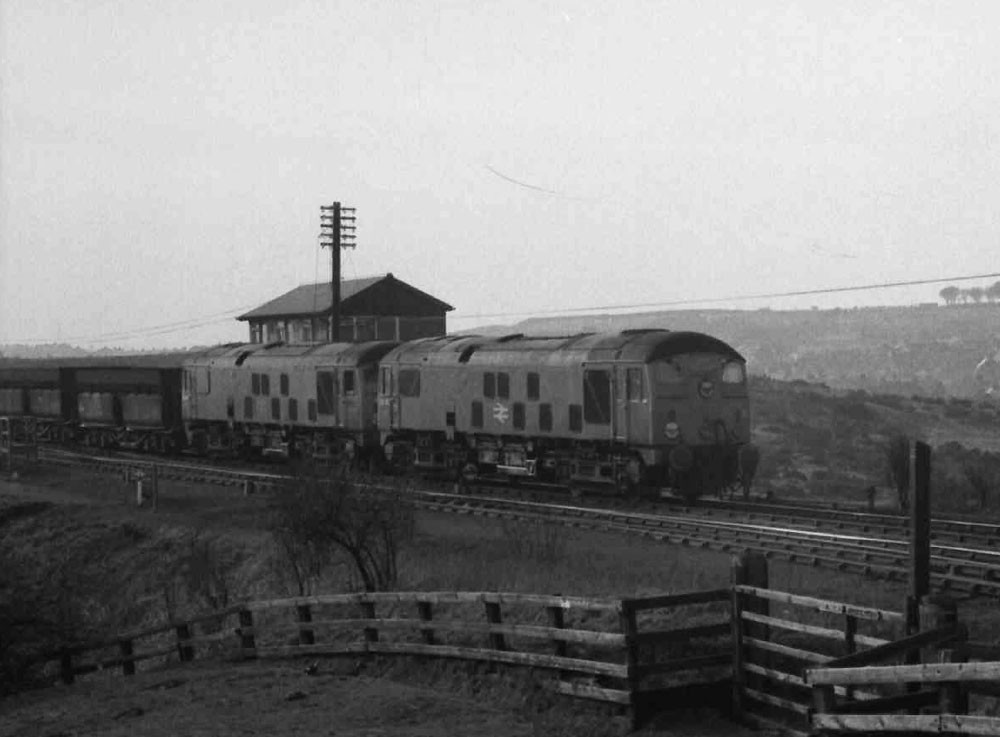
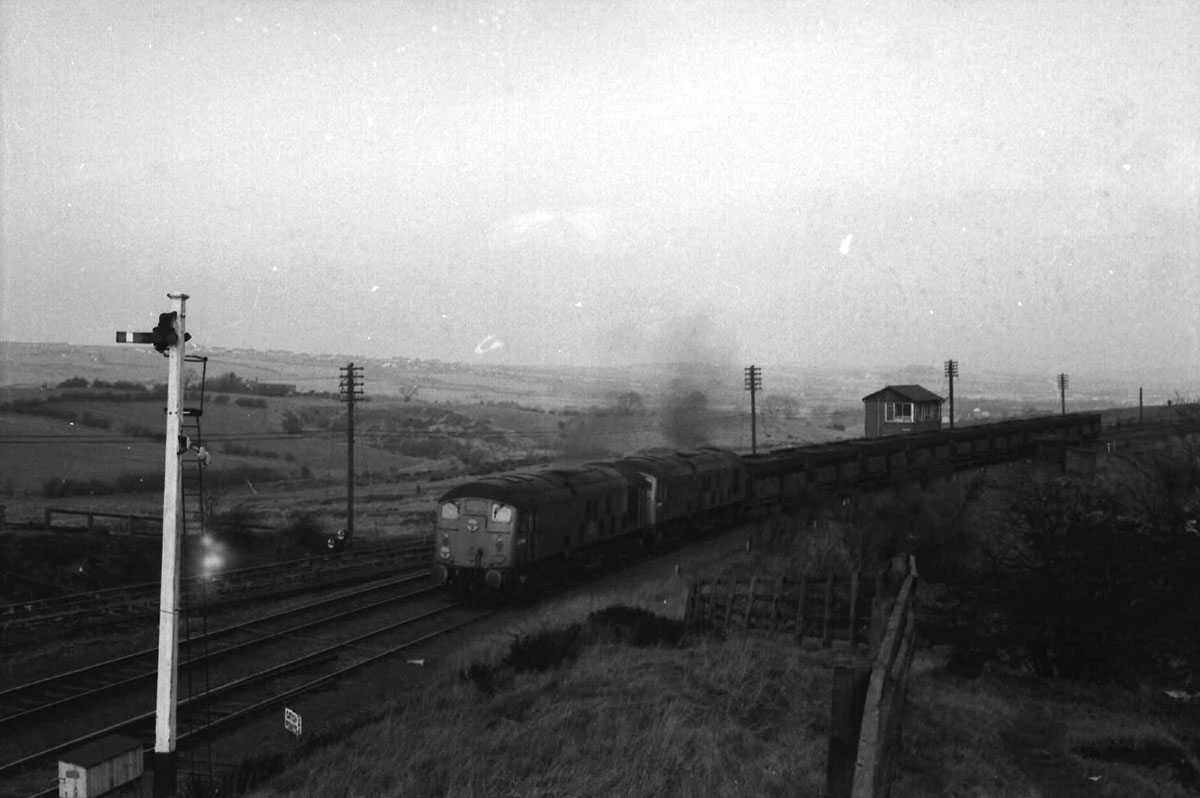

Early in 1974 the twenty year contract for the improved movement of iron ore established in 1954 ended. However the steelworks at Consett still required delivery of iron ore, upto 1.6 million tons a year. Its owners were now the British Steel Corporation (BSC) who were concentrating the import of iron ore at its Redcar facility. As a result of these changes the shipment of ore from the Tyne Dock facility ended on March 26th when two trains were used to clear the bunkers at Tyne Dock. The 10.45 working was hauled by 24106 & 24110 whilst the 12.00 working was handled by 24109 & 24103. One of the trainsets only had eight wagons so 24102 was sent from Gateshead to deliver an extra wagon. This delayed departure of the last train to about 14.00, arriving Consett two hours later.
With iron ore delivery now to be received from Redcar using more modern wagons powered by pairs of Class 37's, the need for Gateshead's fleet of specially equipped Class 24's was gone. Thus 24107/108/109/111 were quickly transferred to Haymarket, their first move since arriving at Gateshead during October/November 1960, whilst the ore wagons went to store at Heaton. After a month at Haymarket these four moved to Eastfield.
In May all the remaining locomotives moved to Scotland, 24102/03/04 to Inverness, 24105/06 to Eastfield and 24110 to Haymarket. During December 24111 moved to Inverness from Haymarket. As none of these locomotives had train heating boilers they tended to be confined to freight and parcels workings, though they could frequently be found on passenger workings in the summer months.
Consett - after the Class 24s
1974
With the Class 24s transferred to Scotland and the 1950s era wagons in store, the iron ore shipments now arrived from Redcar in block trains of nine 100 ton bogie wagons carrying a payload of 675 tons of ore, hauled by pairs of Class 37's. The loading of the wagons at Redcar was similar to that at Tyne Dock, by the use of overhead gantries that could load the nine wagon sets in about fifteen minutes. From Redcar the trains made their way through Teeside to join the East Coast mainline for a short distance before turning off at Tursdale Junction and joining the Leamside line to reach the former Tyne Dock - South Pelaw route at Washington. This route had been closed in 1970, now the section from Washington to South Pelaw was re-opened to accomodate the iron ore workings. It was necessary to run round the train at Washington. At Consett the unloading process was different - the new wagons were emptied using a rotary tippler, the wagons being equipped with rotating center couplers, allowing the train to remain coupled as each wagon was unloaded. The unloading of these trains was slower than the former method of using the gantry at Consett.
In comparison to the Tyne Dock - Consett WTT from 1971 (above) here is a sample of the Redcar - Consett WTT from 1975. Thanks to John Bainbridge for making this available.
Working Timetable Extract
Redcar Ore Terminal to Consett
5th May 1975 to 5th October 1975
| Location | Mileage | 6K48 | 6K50 | 6K52 | 6K54 | 6K56 | 6K58 | 6K60 | 6K62 | 6K48 | MX | MX | SO | Redcar Ore Terminal | 0.00 | 00.01 | 03.00 | 05.37 | 08.30 | 12.00 | 14.55 | 18.25 | 20.55 | 23.01 | Grangetown | 0.00 | 00.06 | 03.05 | 05.42 | 08.35 | 12.05 | 15.00 | 18.30 | 21.01 | 23.06 | Guisborough Jcn | 0.00 | 00.12 | 03.11 | 05.50 | 08.41 | 12.11 | 15.06 | 18.36 | 21.08 | 23.12 | Bowesfield | 0.00 | 00.19 | 03.18 | 06.00 | 08.48 | 12.18 | 15.13 | 18.43 | 21.15 | 23.19 | Stockton North Shore | 0.00 | 00.23 | 03.22 | 06.04 | 08.53 | 12.22 | 15.17 | 18.47 | 21.19 | 23.23 | Norton South | 0.00 | 00.27 | 03.26 | 06.08 | 08.57 | 12.26 | 15.21 | 18.51 | 21.23 | 23.27 | Norton West | 0.00 | 00.28 | 03.27 | 06.09 | 08.58 | 12.27 | 15.22 | 18.52 | 21.24 | 23.28 | Bishop Middleham | 0.00 | 00.47 | 03.46 | 06.28 | 09.17 | 12.46 | 15.41 | 19.11 | 21.43 | 23.47 | Ferryhill | 0.00 | 00.51 | 03.50 | 06.32 | 09.21 | 12.50 | 15.45 | 19.15 | 21.48 | 23.51 | Tursdale | 0.00 | 00.55 | 03.54 | 06.36 | 09.25 | 12.54 | 15.49 | 19.19 | 21.52 | 23.55 | Leamside | 0.00 | 01.05 | 04.04 | 06.46 | 09.35 | 13.04 | 16.00 | 19.29 | 22.02 | 00.05 | Washington South arr | 0.00 | 01.14 | 04.14 | 06.55 | 09.44 | 13.13 | 16.09 | 19.38 | 22.11 | 00.14 | Washington South dep | 0.00 | 01.29 | 04.28 | 07.10 | 09.59 | 13.28 | 16.28 | 19.53 | 22.30 | 00.29 | South Pelaw | 0.00 | 01.37 | 04.36 | 07.18 | 10.07 | 13.36 | 16.36 | 20.01 | 22.38 | 01.37 | Annfield | 0.00 | 01.59 | 04.58 | 07.40 | 10.29 | 13.58 | 16.58 | 20.23 | 23.00 | 01.59 | Carhouse West | 0.00 | 02.08 | 05.07 | 07.49 | 10.38 | 14.07 | 17.07 | 20.32 | 23.09 | 02.08 | Consett Works | 0.00 | 02.13 | 05.12 | 07.54 | 10.43 | 14.12 | 17.12 | 20.37 | 23.14 | 02.13 |
Working Timetable Extract
Consett to Redcar Ore Terminal
5th May 1975 to 5th October 1975
| Location | Mileage | 6K49 | 6K49 | 6K51 | 6K53 | 6K51 | 6K55 | 6K53 | 6K57 | 6K55 | 6K57 | 6K59 | 6K59 | 6K59 | 6K61 | 6K62 | 6K49 | MX | MX | MX | SO | SUO | Consett Works | 0.00 | 02.40 | .. | 05.40 | 08.20 | .. | 11.10 | .. | 14.40 | .. | .. | 17.40 | .. | .. | 21.20 | 23.40 | 01.04 | Carrhouse West | 0.00 | 02.45 | .. | 05.45 | 08.25 | .. | 11.15 | .. | 14.45 | .. | .. | 17.45 | .. | .. | 21.25 | 23.45 | 01.45 | Annfield | 0.00 | 02.53 | .. | 05.53 | 08.33 | .. | 11.23 | .. | 14.53 | .. | .. | 17.53 | .. | .. | 21.33 | 23.53 | 01.53 | South Pelaw | 0.00 | 03.06 | .. | 06.06 | 08.46 | .. | 11.36 | .. | 15.06 | .. | .. | 18.06 | .. | .. | 21.46 | 00.06 | 02.06 | Washington South arr | 0.00 | 03.14 | .. | 06.14 | 08.54 | .. | 11.44 | . | 15.14 | .. | .. | 18.14 | .. | .. | 21.54 | 00.14 | 02.14 | Washington South dep | 0.00 | 03.29 | .. | 06.29 | 09.09 | .. | 12.00 | .. | 15.29 | .. | .. | 18.29 | .. | .. | 22.10 | 00.29 | 02.29 | Leamside | 0.00 | 03.39 | .. | 06.39 | 09.19 | .. | 12.10 | .. | 15.39 | .. | .. | 18.39 | .. | .. | 22.20 | 00.39 | 02.39 | Ferryhill | 0.00 | 03.50 | .. | 06.50 | 09.30 | .. | 12.21 | .. | 15.50 | .. | .. | 18.50 | .. | .. | 22.31 | 00.50 | 02.50 | Bishop Middleham | 0.00 | 03.54 | .. | 06.54 | 09.34 | .. | 12.25 | .. | 15.54 | .. | .. | 18.54 | .. | .. | 22.35 | 00.54 | 02.54 | Norton West | 0.00 | 04.09 | .. | 07.09 | 09.49 | .. | 12.40 | .. | 16.09 | .. | .. | 19.09 | .. | .. | 22.50 | 01.09 | 03.09 | Norton South | 0.00 | 04.10 | .. | 07.10 | 09.50 | .. | 12.44 | .. | 16.16 | .. | .. | 19.18 | .. | .. | 22.51 | 01.10 | 03.10 | Stockton North Shore | 0.00 | 04.13 | .. | 07.15 | 09.53 | .. | 12.48 | .. | 16.20 | .. | .. | 19.23 | .. | .. | 22.54 | 01.14 | 03.13 | Bowesfield | 0.00 | 04.16 | .. | 07.19 | 09.59 | .. | 12.51 | .. | 16.25 | .. | .. | 19.26 | .. | .. | 22.57 | 01.17 | 03.16 | Signal 208 | 0.00 | 04.19 | .. | 07.22 | 10.02 | .. | 12.54 | .. | 16.28 | .. | .. | 19.29 | .. | .. | 23.00 | 01.20 | 03.19 | Tees Yard | 0.00 | 04.24 | 06.50 | 07.26 | 10.07 | 10.20 | 12.59 | 13.20 | 16.33 | 16.45 | 19.20 | 19.34 | 21.20 | 22.20 | 23.05 | 01.25 | 03.24 | Newport East Jcn | 0.00 | .. | 06.55 | .. | .. | 10.25 | .. | 13.25 | .. | 16.50 | 19.25 | .. | 21.25 | 22.25 | .. | .. | .. | Guisborough Jcnd | 0.00 | .. | 07.00 | .. | .. | 10.30 | .. | 13.30 | .. | 16.55 | 19.30 | .. | 21.30 | 22.30 | .. | .. | .. | Grangetown | 0.00 | .. | 07.07 | .. | .. | 10.37 | .. | 13.37 | .. | 17.02 | 19.37 | .. | 21.37 | 22.37 | .. | .. | .. | Redcar Ore Terminal | 0.00 | .. | 07.10 | .. | .. | 10.40 | .. | 13.40 | .. | 17.05 | 19.40 | .. | 21.40 | 22.40 | .. | .. | .. |
1975
During the Stockton & Darlington 150 Anniversary celebrations a special passenger working took place on Saturdays between July 19th and September 27th. The trips started at Darlington then on to Washington, Newcastle, Ouston Junction, Consett North (reverse), Washington, Pelaw, Sunderland, Hartlepool, Darlington, Shildon, Bishop Auckland (reverse) & Darlington. Obviously the journey over the Consett branch was one of several highlights on the trip.
The two views below, courtesy John Bainbridge show one of these workings at Consett.
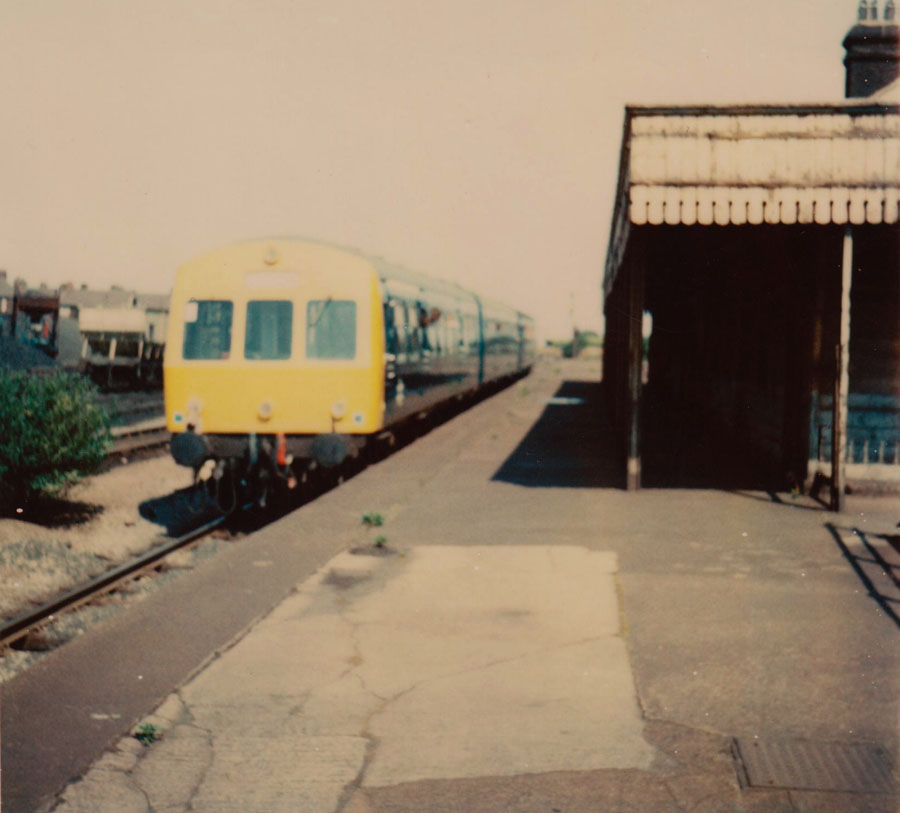
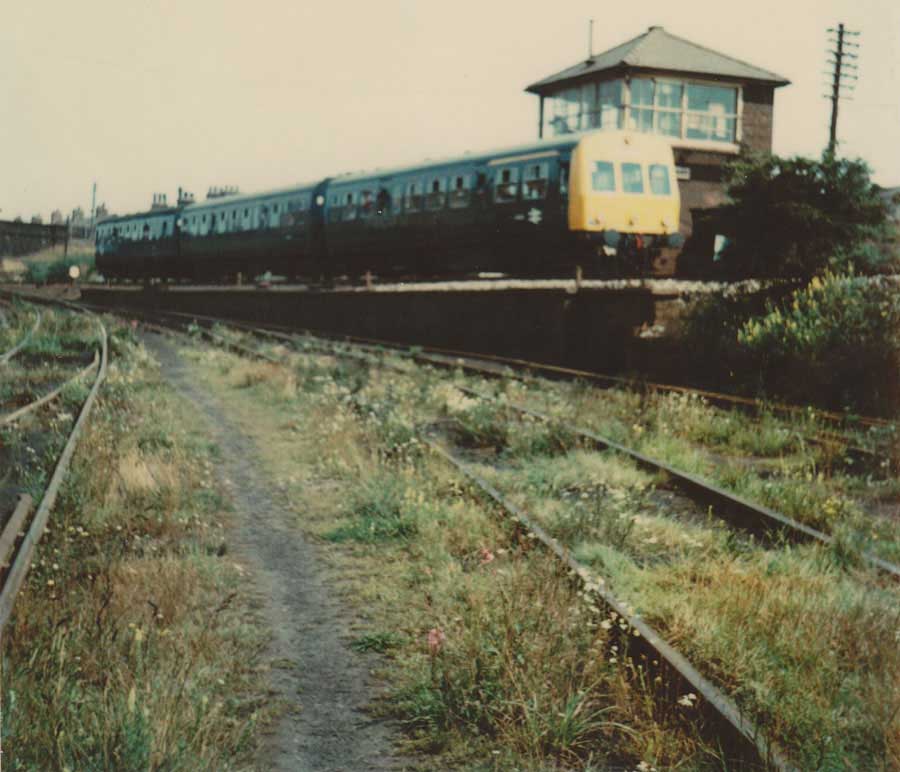
The Carr House West signalman recalled one of the 150 specials was worked by one of the older drivers who took the train on to Blackhill rather than reversing at Consett North!
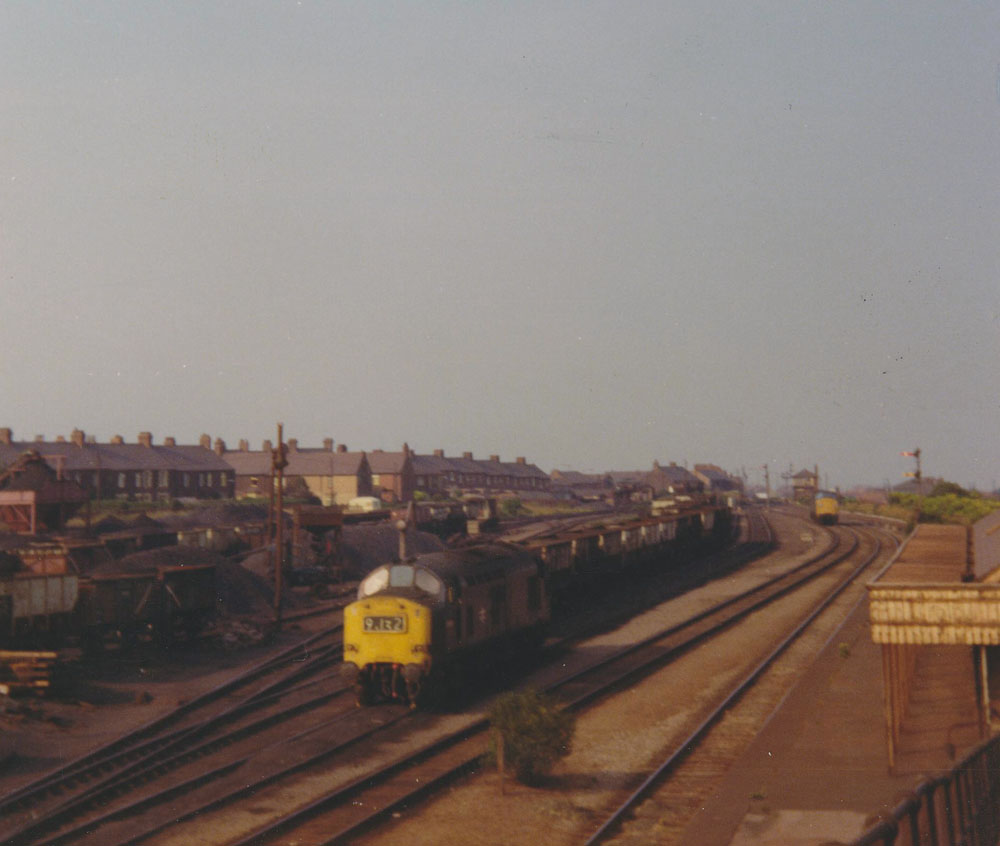
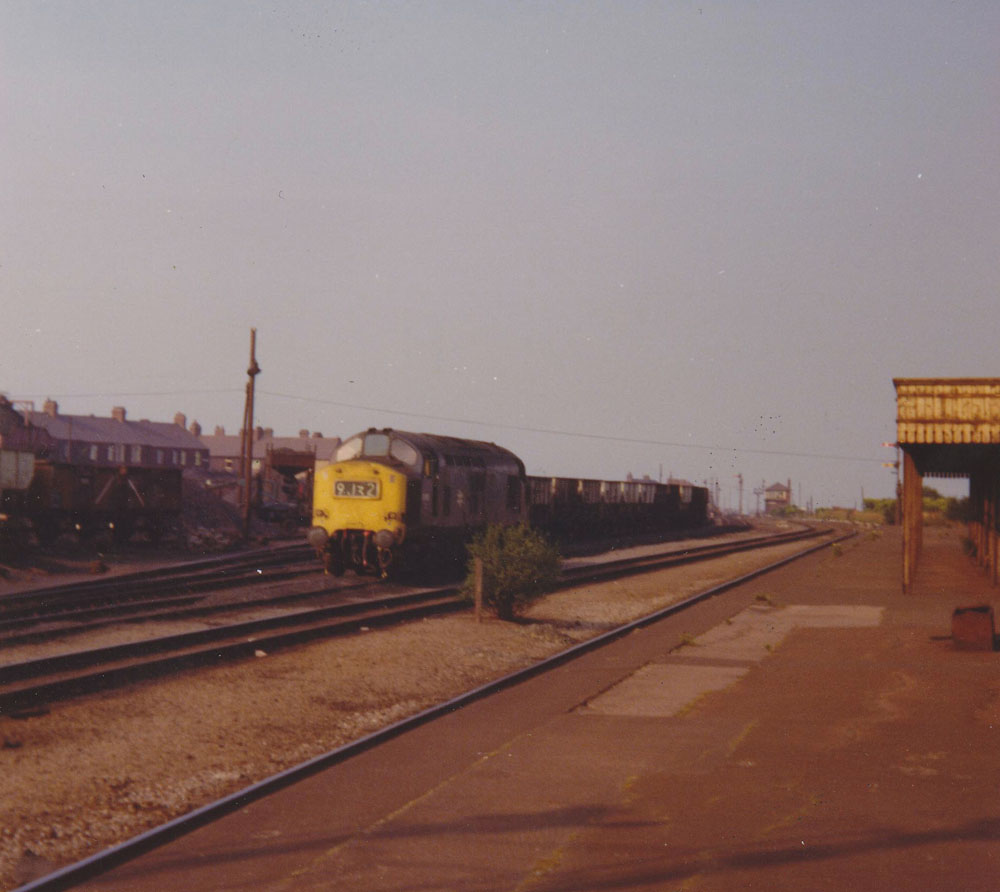
1976
On May 19th a new service was established to transfer molten metal from the North Works, Hartlepool via Norton East, Ferryhill, Washington, Pelaw & Tyne. Torpedo cars were used with the empties from Consett returning via the same route.
1979 - 1980
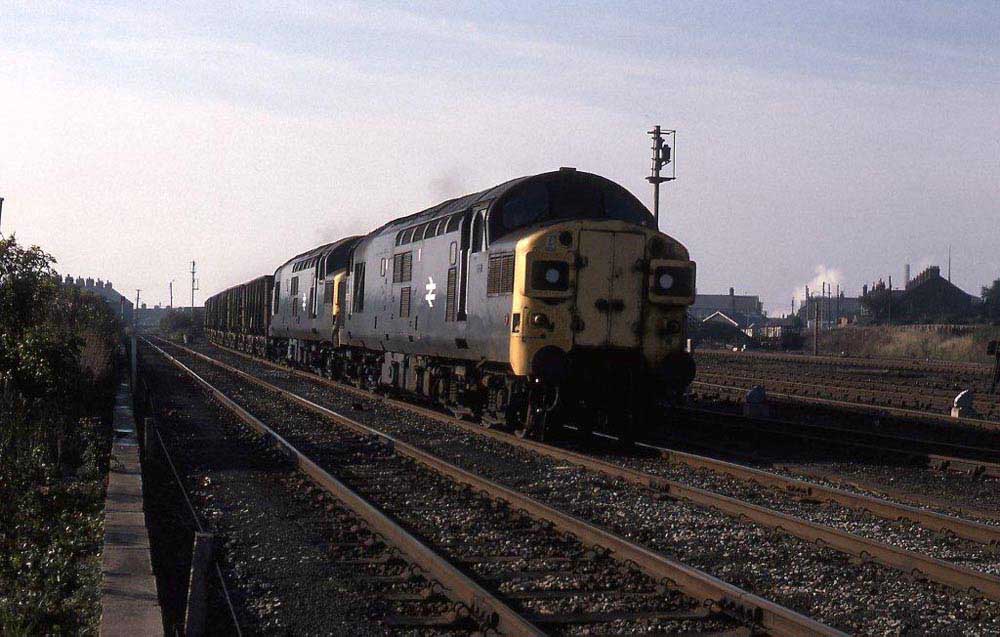
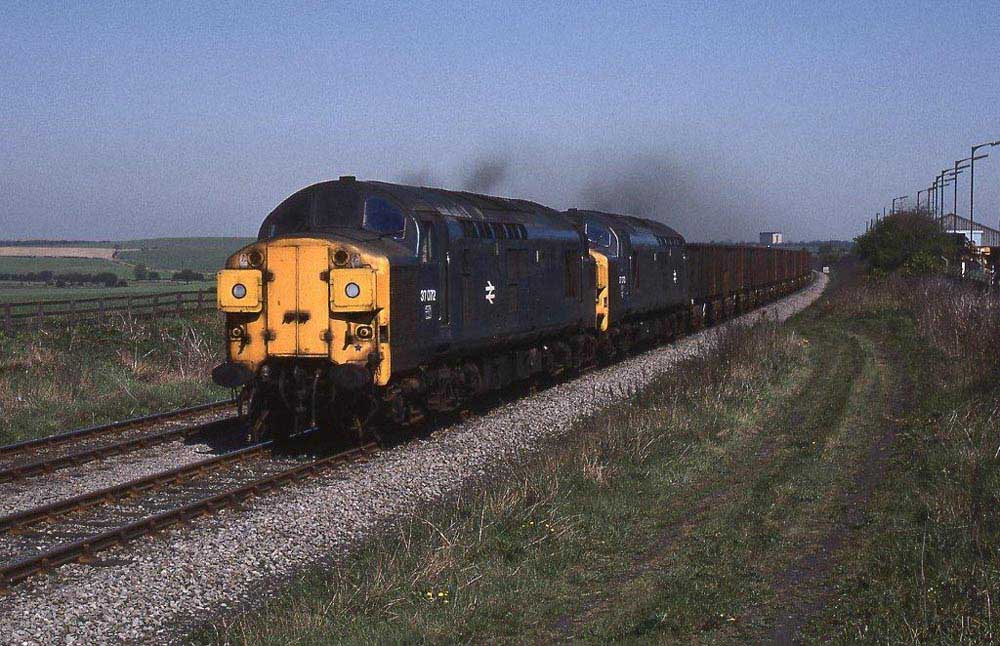
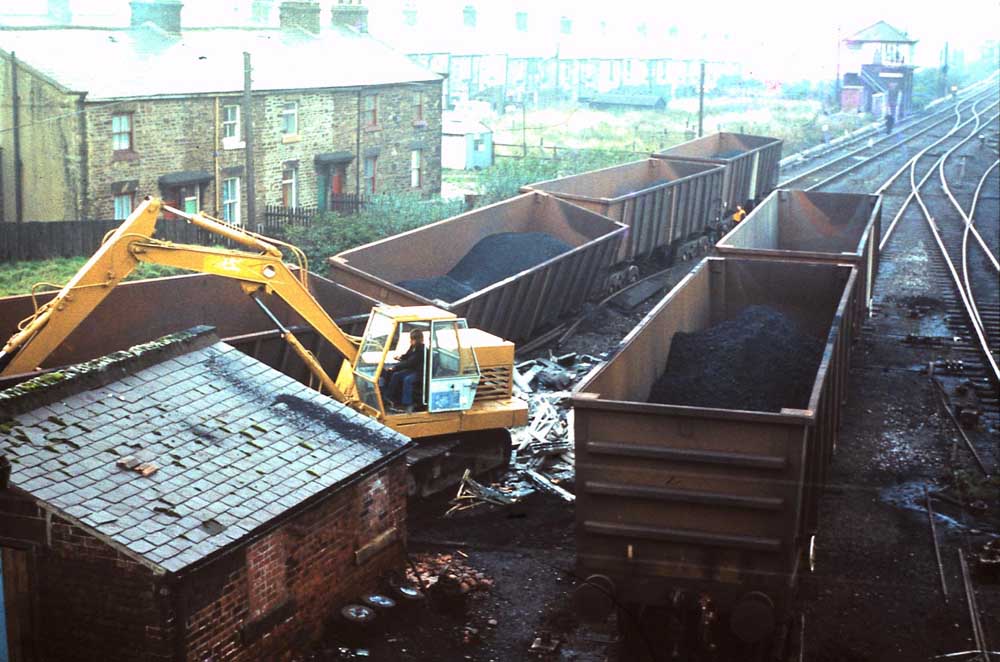
With regard to the view above of the derailed wagons, the photograph was taken while Carrhouse East box was still open as there is still a ground dolly signal to control access into the high yard from that line. When Carrhouse East closed there was no access into the high yard from the Up line & when trains left the yard the signalman had no idea if the train had a tail lamp on as he couldn't see the trains leaving the yard. Signal 27 was the old starter signal from Carrhouse East & was over quarter of a mile from Carrhouse West box. At first it was still a wire pull but after many complaints from signalmen it was changed to power. (JB)
1982
During April Consett North Box closed, with one-train working introduced between Carr House & Blackhill.
25198 was noted at Consett East with scrap wagons on May 26th 1982, possibly the last Class 25 to visit Consett.
A Royal visit to Consett on December 3rd 1982 saw the use of a Royal Train to convey Prince Charles to Consett. Class 31's No. 31415 & 31403 were allocated to the working, Prince Charles returned from Consett by other means so the return working was as empty stock.
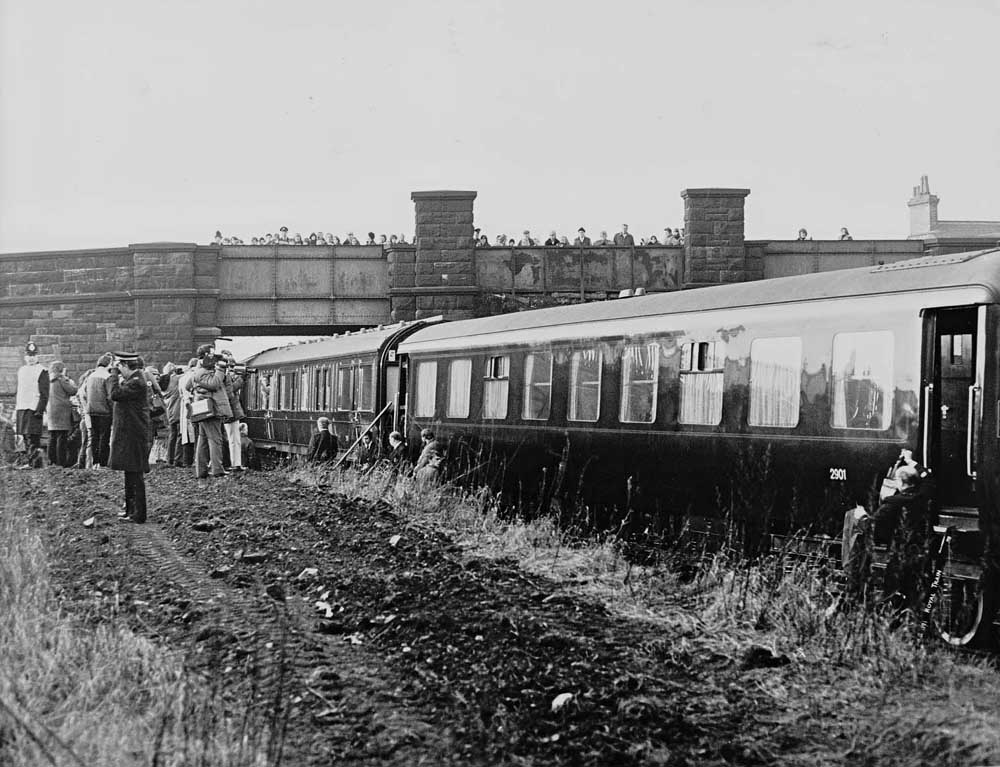
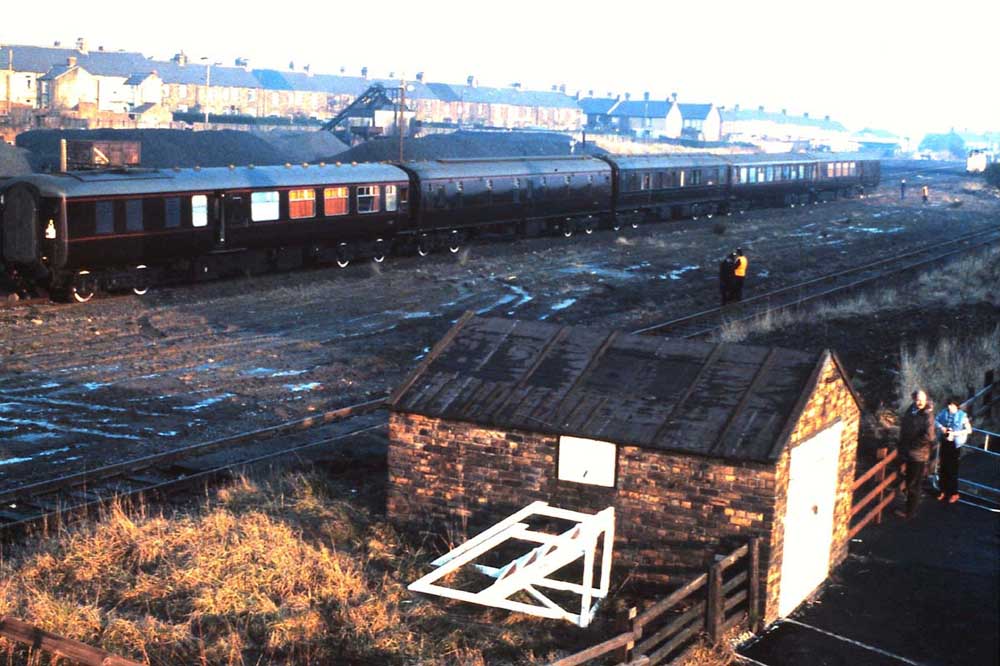
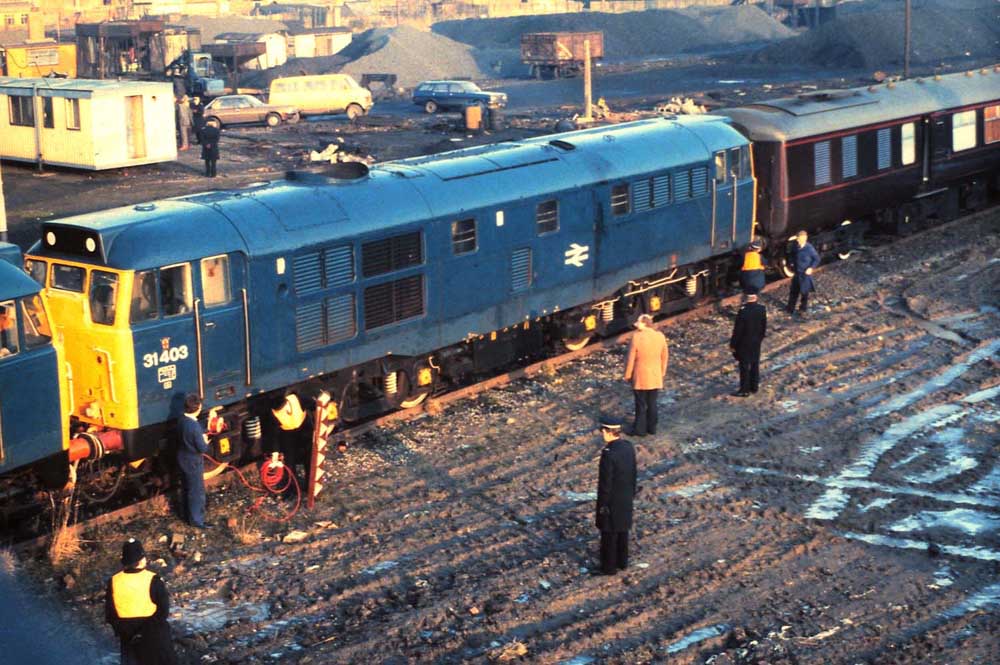
On December 13th the signalbox at South Pelaw closed, the line from Ouston Junction to Consett and Blackhill now to be worked 'one train working'. At this time a weekday Tyne - Consett freight served the coal depots, usually returning with wagon loads of scrap generated by the demolition of the steelworks.
1983
Six years after 24102 - 24111 had been laid to rest, so the giant complex at Consett fell silent for ever during 1983. As the 24's had been cut up into small pieces, so now Consett's infrastructure fell to the scrapman, with much of it being taken away by rail to the smelters in Sheffield. The last loaded scrap run took place on September 14th 1983, whilst the final clearance of five empty wagons took place on September 30th 1983 behind 37023. The train was manned by a Consett crew including chargeman Stan Sharpe and driver John Lodge.
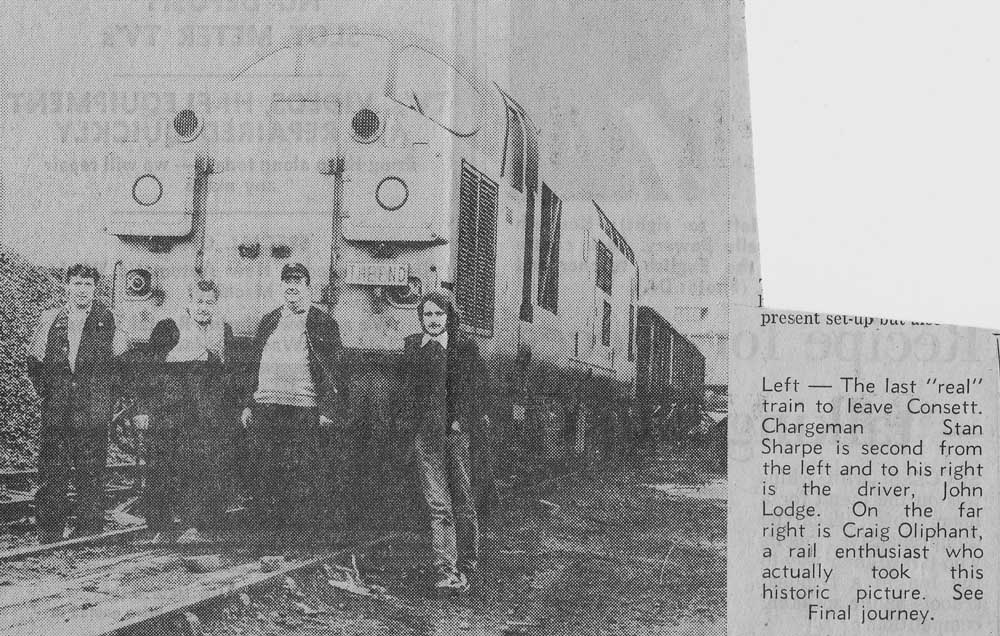
1984
The last passenger train.
On Saturday March 17th 1984 Consett received its last passenger train, chartered by the Derwentside Rail Action Group to mark the end of an era in light of the imminent removal of the track and remaining infrastructure from the branch. Originally a four car diesel multiple unit was allocated to work the special, but bookings were so heavy that a locomotive hauled set of seven Mk 1 coaches was substituted on the service. The scheduled timing was:
Newcastle depart: 11.15am
Consett arrive: 12.18pm
Consett depart: 14.52pm
Newcastle arrive: 15.55pm
The train departed from platform 10 with BR driver Bob Dodds handling the locomotive. Watching the train depart was Stan Sharp, the last BR man to work at Consett prior to his transfer to parcels at Newcastle. Two policeman were on hand to monitor the crowd, perhaps expecting a soccer crowd, but this was of a far different nature.
As part of the route the Bensham curve and the Low Fell slow lines to Ouston Junction were included in the itinerary. On the Consett branch only the Up line was available for use, contractors were already removing the Down line, its valuable sections of continuously welded rail would soon be relaid on other routes. Once the special had returned to Newcastle the branch's Up line would be removed by the contractors.
March 17th arrived overcast with snow on the ground in the Consett area. As promised hauled stock with Gateshead's only named Class 46, 46026 were provided for the trip. A substantial headboard was carried, complete with wreath and smokebox numberplate from former Tyne Dock 9F 92066. The excellent condition of the locomotive had been made possible by the fitters at Gateshead. The three views below show 46026 and its train at the site of Consett station. The left view shows the front of 46026 adorned with headboard, numberplate & wreath. The center view shows the locomotive before it has run round the train, this is the site of the former Consett station. The right view shows the train waiting to return to Newcastle, the adornments on the cab front have been transferred from the other end ready for the run down to Newcastle. The lack of a platform at Consett required the use of a number of portable wooden footsteps to allow for detraining of the passengers.
Three photographs courtesy John Bainbridge.
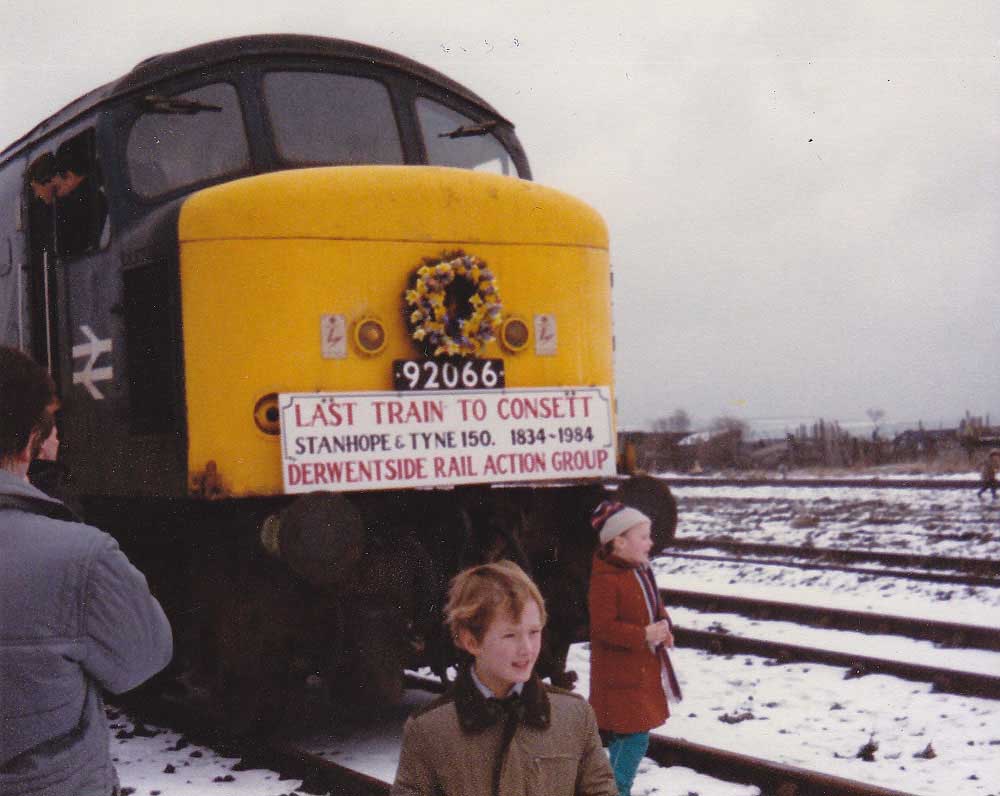

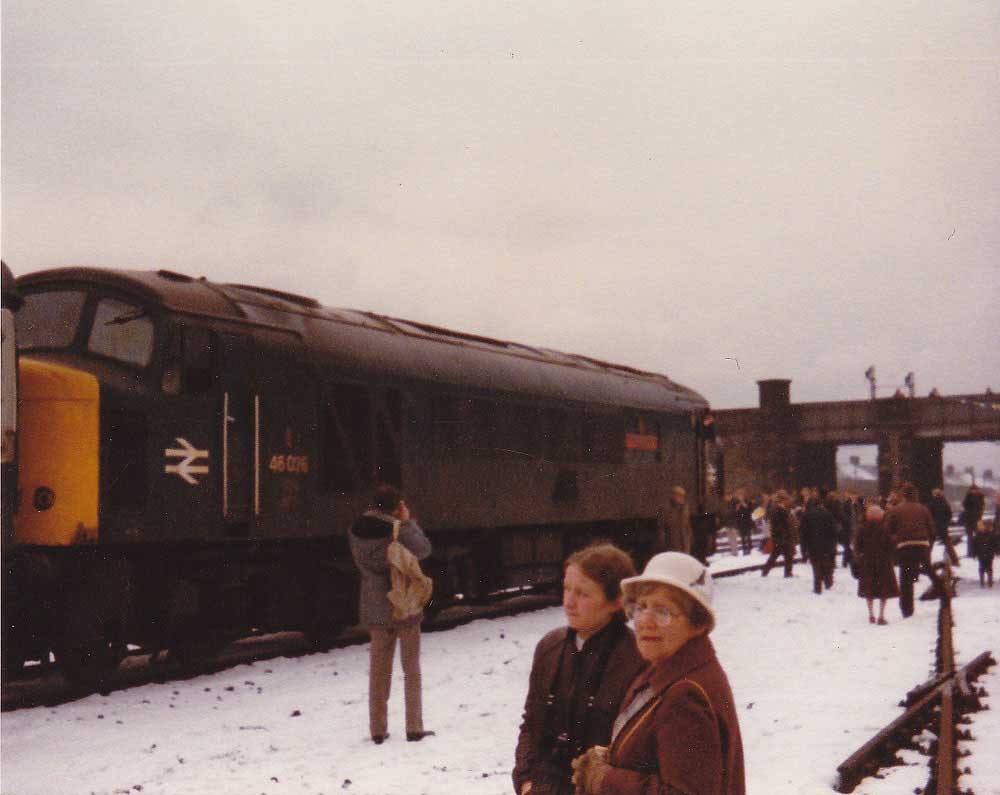
After 46026 and its train headed eastwards for the final time all would fall quiet until the contractors arrived to remove the rails and sleepers (see below).
From a newspaper report by Robert Etherington covering the last passenger working comes this abridged personal retrospective of the trip to Consett:
11.05am:
The electronic arrival/departure board at Newcastle shows: "11.15 The last train to Consett - ever". On Platform 10 a man is dressed as an undertaker, black top hat and all, complete with wreath. His warning however relates to the dangers from overhanging trees once on the Consett branch.
11.15am:
Seven coaches and 46026 arrive, the wreath is hung on the front of the locomotive, the train is a sell-out, the passengers hurry to their seats.
11.19am
The train departs, the musical entourage 'The Tyne Valley Stompers' strike up in the guard's van, and appreciate the acoustics of the vehicle.
11.33am:
Many poeple will greet the train from the lineside, it is believed the four at Birtley are the first to be seen as the train heads towards Consett.
11.35am:
The undertaker is selling certificates commemorating the special train, others read the maps and timetable provided for this working.
11.45am:
Snow appears in the cuttings, the wind is chill, but windows are open as passengers try to get the best view for this one last trip.
11.48am:
Stanley is passed at 30mph.
12.03pm:
Consett is reached, wooden steps allow the passengers to reach track level, there is snow on the groud and stacks of coal. Buses are laid on for a tour. 46026's driver, Bob Todds of Tyne Yard comments 'This is just another day to me. It's not really a sad day. As soon as the steel works closed this line was doomed'.
12.21pm:
The buses leave the site of Consett station for a tour of sites of the old Stanhope & Tyne Railway.
12.23pm:
The site of the steelworks is passed.
12.27pm:
A rusty water tank and a few derelict tracks mark the site of Consett Low Yard.
12.30pm:
Back on the coach a man from Durham says ' I never thought I'd look forward to a bus tour of Consett'.
12.57pm:
Its snowing as the buses arrive at Waskerley.
2.15pm:
The bus tour draws near to a close as the excursionists arrive bank in Consett for a free meal at the Duke of Wellington pub in Meadomsley Road. Snow is falling and the number of people taxes the pub's catering abilities.
2.36pm:
The crowd formed a funeral procession, led by the coffin and the Tyne Valley Stompers getting in to 'When the Saints Go Marching In' heading back to the train. Don Kent, secretary of the Derwentside Rail Action Group makes a farewell speech warning that although the Consett rail line is lost, the fight must go on for the likes of the Settle & Carlisle line and local bus services.
2.55pm:
The guard's whistle marks the departure time, detonators explode and tears are shed as the train draws away from Consett. As the sites of former stations are passed, such as Leadgate, Annfield Plain, Beamish, the farewells are announced.
3.58pm:
Newcastle is reached three minute late, but nobody complains, 300 passengers who paid GBP 10.50 have become a little part of history.
As 46026 and its train pulled away from Consett a lone Northumberland piper was on hand to pipe it away, whether the train was serenaded away is uncertain, one report advised the piper said it was to cold to for the lament.
The three views below feature some of the demolition trains in the Leadgate area used to remove the lines eastwards from Consett. The left view shows the ironically named 37078 Teeside Steelmaster with a train of track panels at Villa Real, just before Leadgate, with the view looking towards Leadgate roadbridge. The center view is at Leadgate, looking towards Consett. The final special with 46026 used the right hand line on the day it visited Consett. In the third view a Class 46 has been turned out to work the demolition train and is seen near The Jolly Drovers Pub just outside Leadgate, the view looks towards Consett. This location is now a roundabout for the improved A692 road.
Three photographs below courtesy John Bainbridge.
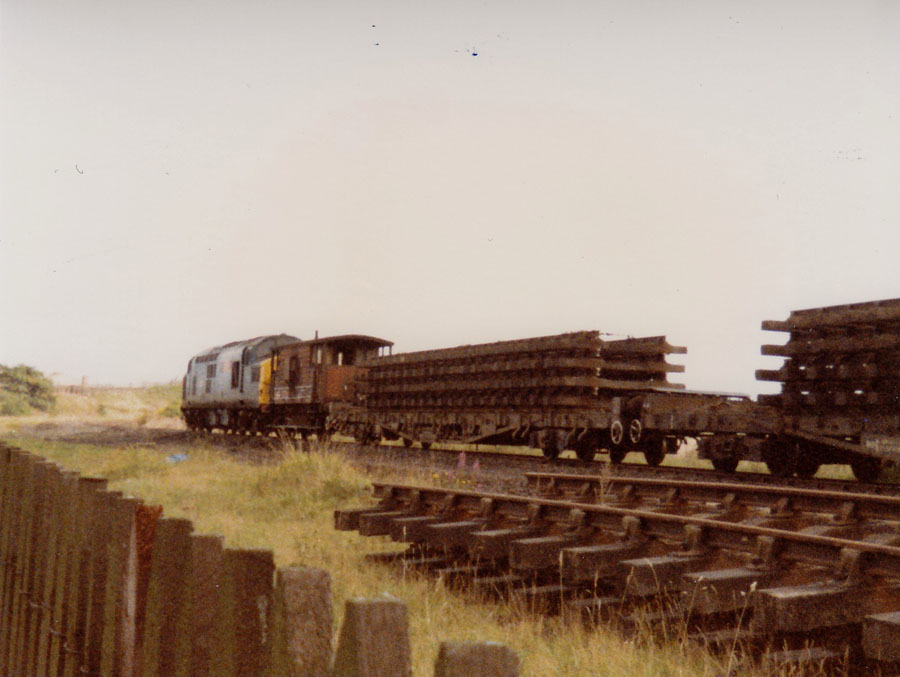
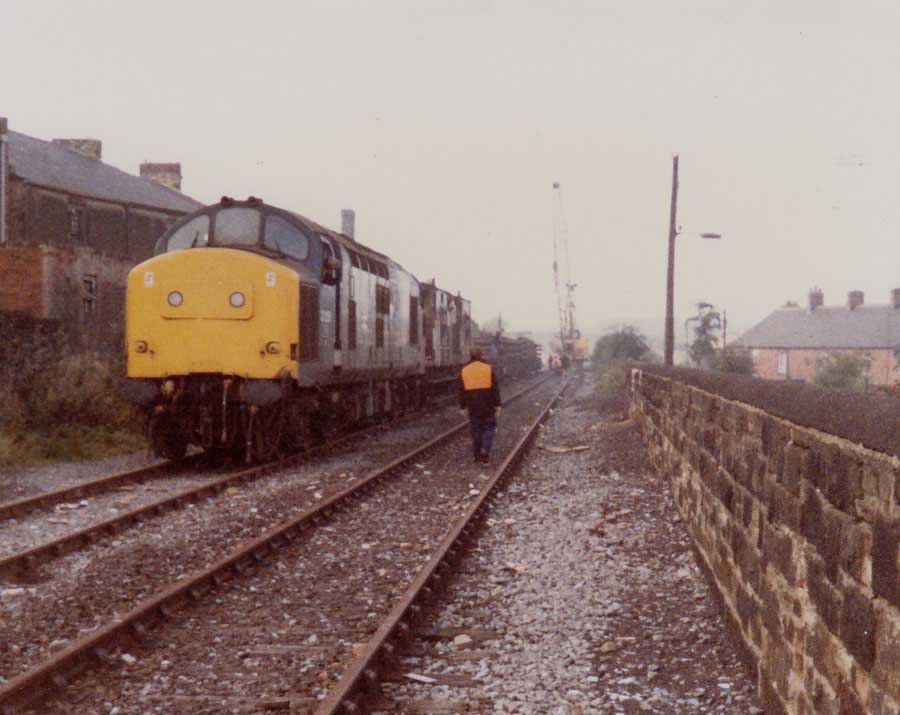

And with that the chapter of 150 years of operational railway history connected to the Stanhope and Tyne Railway slowly closed.
As the demolition trains pulled away from Consett for the last time, the two views below (courtesy Mark Smith) show another section of the S&T route, in the vicinity of Washington during July 1984.
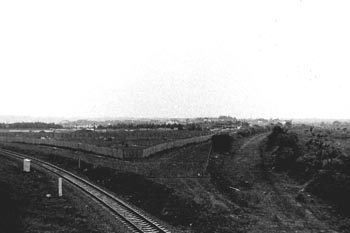
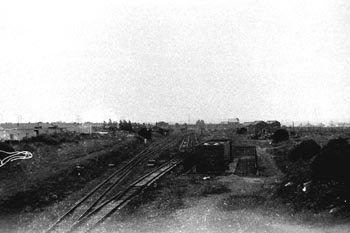
The left view looks westwards along the abandoned trackbed of the S&T curving towards the right in the direction of Ouston Jct, this was the route originally taken by the steam hauled iron ore services from Tyne Dock and later by the ore trains from Redcar. The line to the left heads south to Leamside and the junction with the ECML at Tursdale Junction. The right hand view looks eastwards to Washington with the station in the distance. It was in this area that the loaded iron ore workings would stop to allow the locomotives to run round and head west.
1985
Consett memories
John Bainbridge writes: I live in Consett and remember the Class 24's on the ore trains. In the days when the ore came from Tyne Dock you could set your watch by them as they ran to a timetable better than some trains today. They always ran in pairs with eight wagon sets but I do remember one locomotive could haul four wagons & did see one such combination once. When I was on my way to school after dinner at 13.00 one working always came through Consett station & everyday we would see it. The last one of Gateshead I ever saw was 24109 leaving Consett low yard with four Class 08's in tow. This one must have been the only one which was not a regular performer on the ore trains. After the ore started to come in from Tees Port the ore trains could be anything from ninety minutes early to ninety minutes late & were now all powered by Class 37s.
I once saw 4 wagons with one Class 24 which may have been the one which went into the Low Yard. I don't know why only one went into Low Yard as the ore gantry was accessed from west of Consett station and was near the Coke works. It was then conveyor belted to the blast furnaces. I knew a signalman who let me in Carrhouse West box which controlled the access to the ore gantry & used to go in on a Saturday morning as ore, coal & steel rains ran. As the timetable shows only ore trains ran in the afternoon.
Andy Thompson writes: I grew up on the street which ended up next to Boldon Colliery station, on the Newcastle to Hartlepool line. Traffic over this route included the Tyne Dock - Consett iron ore trains. After the closure of the original route via Stanhope and Tyne line the ore trains ran via Gateshead & Tyne Yard. My happiest memories include watching two Class 24's held on the branch line from Tyne Dock wating for a clear path towards Newcastle. If you stood on the platform footbridge you could look down into the cab of the leading locomotive. A friend lived at a house near the top of the street, with the railway on the other side of the fence. Any excuse I could get would be used to take a look at what was passing by. The iron ore trains would come slowly round the curve from Tyne Dock, often being held for a Sunderland - Newcastle DMU to pass by. If forced to stop the wagons would all clank together and iron ore pellets would fall onto the track. These little rusty balls could be found on the ground all around the end of the Sunderland side platform. On return visits to the line during the 1980's these dropped iron ore pellets could still be found. And the memory of these trains restarting and getting underway was unforgettable. Alas I was too young to photograph these workings and we soon moved away to another part of town. By the time my interest in railways had blossomed the Class 24's were long gone from this route.
Edward George writes: I was most interested in the comments about the ore trains to Consett. My father, F.B.George, was, at the end of World War Two responsible for new development at the Consett Iron Works before becoming Managing Director. He told me that negotiations for ore trains started before the post war nationalisation of the railways and the coal industry. The Consett Iron Company had an American transport consultant investigate the concept of ore trains fron Tyne Dock to Consett. His report recommended 100 ton wagons with diesel locomotives in multiple. The railway responded by offering 25 ton wagons. To this the Consett Iron Company said that, using land they owned or had use of they would put in a 14 mile conveyor belt. Their negotiating position was weakened when the coal industry was nationalised. This led to a compromise with the introduction of the 56 ton wagons.
When the contract was to be signed the railway officials arrived in the York engineer's saloon hauled by a newly outshopped Pacific. After signing my father was asked where he would like to go for lunch. He replied Parkhead at top of the inclines from Stanhope. The saloon was duly propelled there and lunch was served by the guard.
My father joined Consett after taking a mechanical engineering degree at what is now Newcastle University and a part apprenticeship at Swan Hunter's shipyard. He completed his training in Pittsburgh which influenced his thinking. He always wanted size, eg ensuring internal user wagons were of 100 ton capacity on bogies. When he joined Consett his father was General Manager becoming Managing Director and Deputy Chairman.
Chris Pendlenton writes: I have no photos unfortunately but would like to add to your summary. Between 1964 and 1967 I was a railway trainee in the Newcastle Division and was sent on a brake van trip to Consett. It was the time of changeover to diesel power and my hoped for ride on a 9F became instead a trip behind a single Type 2 with banking from both Tyne Dock Bottom and South Pelaw. I think the load was 9 and we were banked up to Green Lane by a Q6 whose roaring front end just feet away from the van veranda was quite something. From Green Lane we staggered to South Pelaw with the Type 2 ripping its guts out. At South Pelaw we took on an English Electric Type 4 as banker but when this dropped off at the customary point the Type 2 again had a very hard time of it. I don't know how long this trial continued but we know the decision.
An anonymous contributor writes: As a youth growing up in the north-east I attended Park View Comprehensive School, at what they called the lower school at North Lodge between 1977 and 1979. At the back of the school playing field was a high embankment which I soon found out was a railway when a train with double headed class 37 diesels thundered past at speed. I found out these were iron ore trains from Redcar heading for Consett steelworks. The section of S & T from Washington to South Pelaw Junction was used again when the ore trains changed from Tyne Dock to Redcar. The ore trains would come up the Leamside line through Fencehouses and Penshaw, across Victoria Bridge and into the sidings at Washington. The engines would then run round and set off for Consett via Biddick Lane Level Crossing and past the back of my school. These heavy trains moving at speed atop that high embankment were a memorable sight and looked very permanent when I left in July 1979. Little did I know that they would be gone forever inside one year.
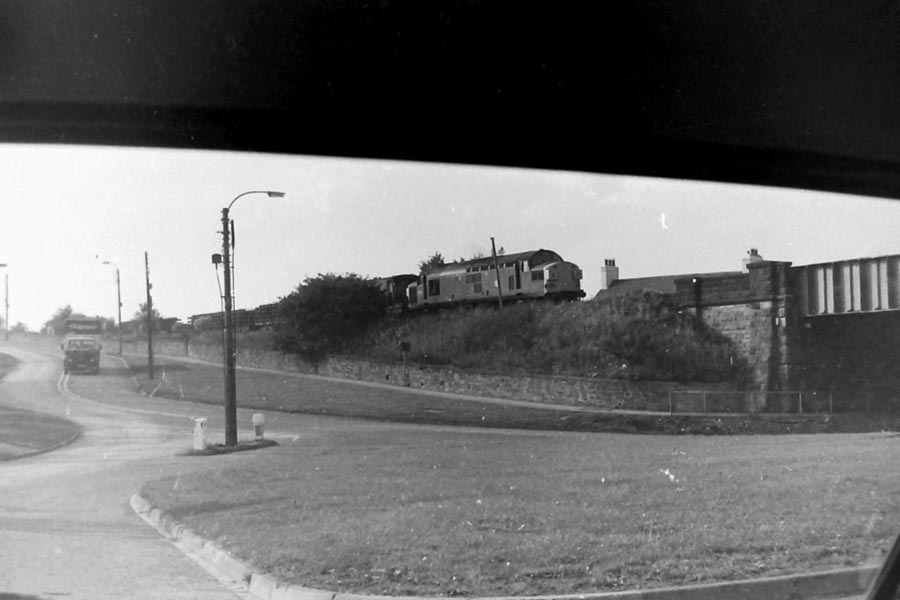
Once I was able to drive I spent some of my time watching the final death throws of the line as the contractors lifted the rails. I was not alone and a friend of mine at that time, John Appleton, kept a comprehensive record of the demolition. In a time without mobile phones getting information to one another was not easy and I missed the last train in Consett high yard, as the station area was known, which was EE Type 3 number 37283 on April 18th 1984, only a month after the last special train. I did however managed to catch the last train ever in Consett as it left with the rails that once lay on the trackbed into Consett. This was another EE Type 3 37058 on October 2nd 1984. I have attached a picture of it coming to Leadgate bridge travelling east with its loaded wagons. I only just got there in time to see it as this shot taken from inside my car shows.
In a very small way part of Consett s railways lives on. On the South Tynedale Railway (STR) running out of Alston in Cumbria there are a number of signals which were purchased from the demolition contractors who cleared the lower yard. Many other sundry signalling items were also purchased and used on the STR. We didn't buy the signal gantries, we had no use for them, but we had asked if we could collect some fittings for our poles from the gantries because some brackets and things were missing. They agreed. We took this as a bit of an open invitation to remove all the brackets and lamps we could! Shortly after the photo was taken the foreman turned up at the base of the gantry and called up to me in his broad Lancashire accent saying, "I hope you're not pinching all the #!**#@! scrap off that signal". We decided we had pushed his hospitality far enough and called it a day at that point. We had bought five poles and come away with fittings for twelve!
Geoff McEwen writes: Talking of the 6LDA28 I was at based Gateshead when the Iron works was in operation. Those poor little Class 24's worked the heavy ore trains double headed up to Consett. I recall that the exhaust pipes glowed cherry red on the difficult sections. At the time we lived in Darlington, so after work I would head over the split level bridge to Newcastle Station to catch the 17.05 to Kings Cross. First stop Darlington. This was normally headed up by a Deltic and had started the journey in Edinburgh. The Station Pilot engine was usually a Class 24 sat idling in the middle road. That exhaust note was like music to me as I crossed the bridge to platform 9. On some of the earlier Class 24's the exhaust system had no silencer. The exhaust came directly out of the turbocharger exhaust gas outlet. Each individual cylinder could be heard. As you say. Happy Days!
Dave McGee writes: As a Beamish lad I lived alongside the Tyne Dock - Consett line and saw much of what passed by between say 1960 and 1984. I very much remember the transition between steam and diesel. At the end of 1964 the Class 9 steam banker was replaced by an English Electric 2000 hp from Gateshead shed. I noticed at once how the train speed incresed and often, on the climb through Beamish, it appeared that the banking diesel was doing most of the work! During 1966 trials were carried out with the D5100s as the end of steam approached. I remember one warm evening in September an ore train came through with what appeared to be 92060 piloting a Sulzer. I can only assume that they'd trialled the Sulzer on the ore train and it had failed.
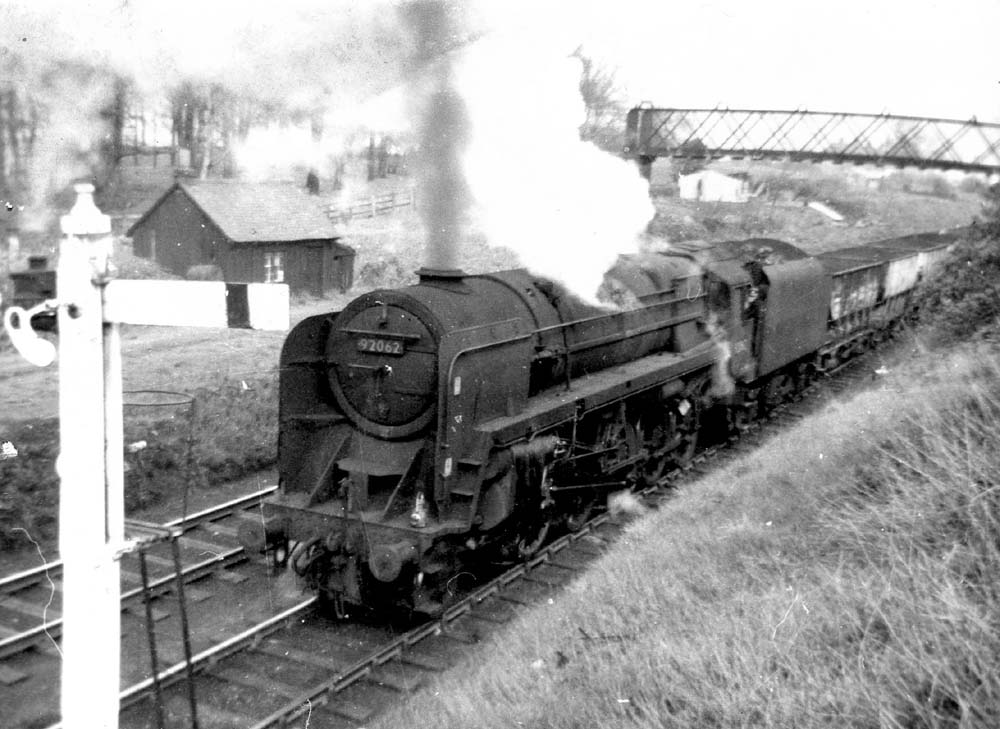
I was a steam fan and so lost interest a bit when they went..... attached are a couple of views to show what things were like in steam days, including one of a 9F to show you that they didn't do just ore, but often coal.... also another of two 24's passing through Beamish with ore empties. I recall that the 24's often struggled with the ore trains. Beamish was on a 1 in 49 grade and the home signal (an ancient NER wooden slotted) was rarely set against the ore trains, but on one memorable occasion it was and it forced the pair of class 24's to stop. They had great trouble starting the train on that grade. Further up the line, there was a long climb of 1/56 to Stanley. I was a kid of about 15/16 and I recall that I could often run alongside the ore trains and almost jump aboard ( not recommended, but you know what kids are!) so I guess they were doing no more than 15 mph.
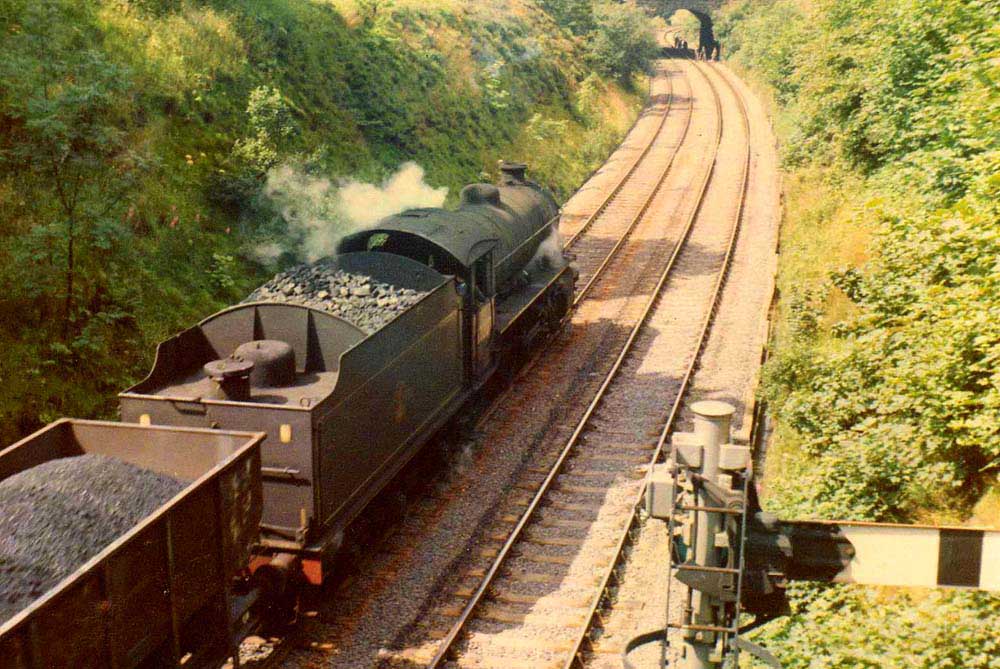
I did from time to time take diesel pics, usually to 'warm up ' the camera, and me, in preparation for the 'real thing'. Even on the Consett line, which had a dedicated steam fleet, diesels could be found from, I'd say 1963. I enclose another photo of a loco plus brake tender, standing at Beamish station circa 1964. I think it's D6768 but I can't be sure. It would have worked a coal train. They had nothing to do with ore trains at that time for reasons you'll understand. Also is a pic of K1 62007 with a coal train on 1st August 1967, one month before the end of steam. It was a lovely warm day, as you can tell by the loco's exhaust, and it was making light work of its train having just been overhauled in March '67. Why oh why was that K1 not saved???
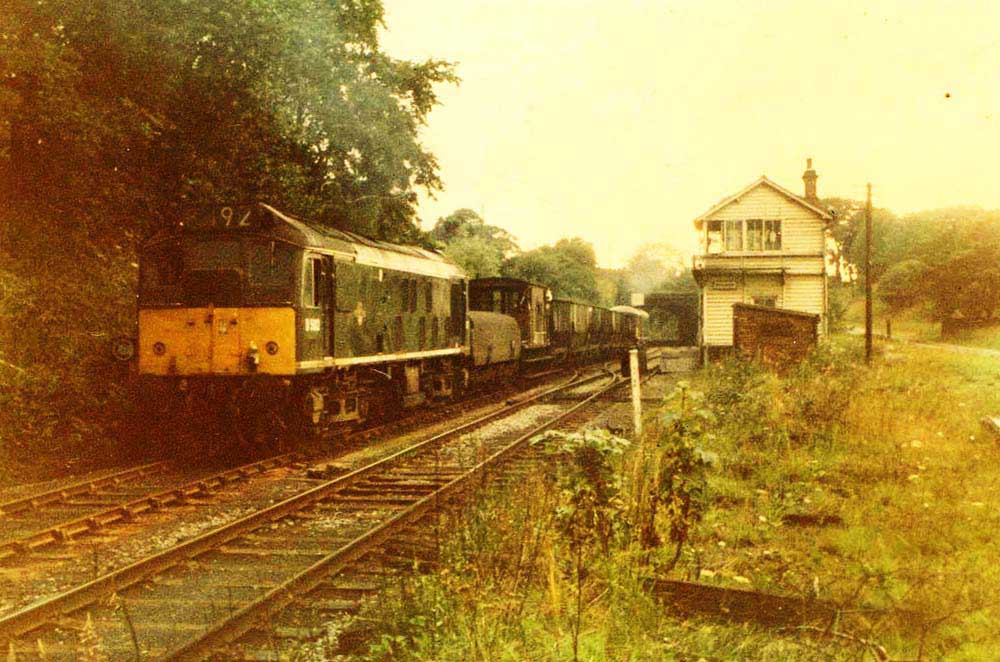
2009 - Twenty Five Years On
The last train at Consett ran during 1984, twenty five years later a visit to the area to view the remnants of the line found scenes far removed from those days of round the clock iron ore trains behind steam or diesel locomotives. The series of views below follow the line westwards from Tyne Dock to Consett.
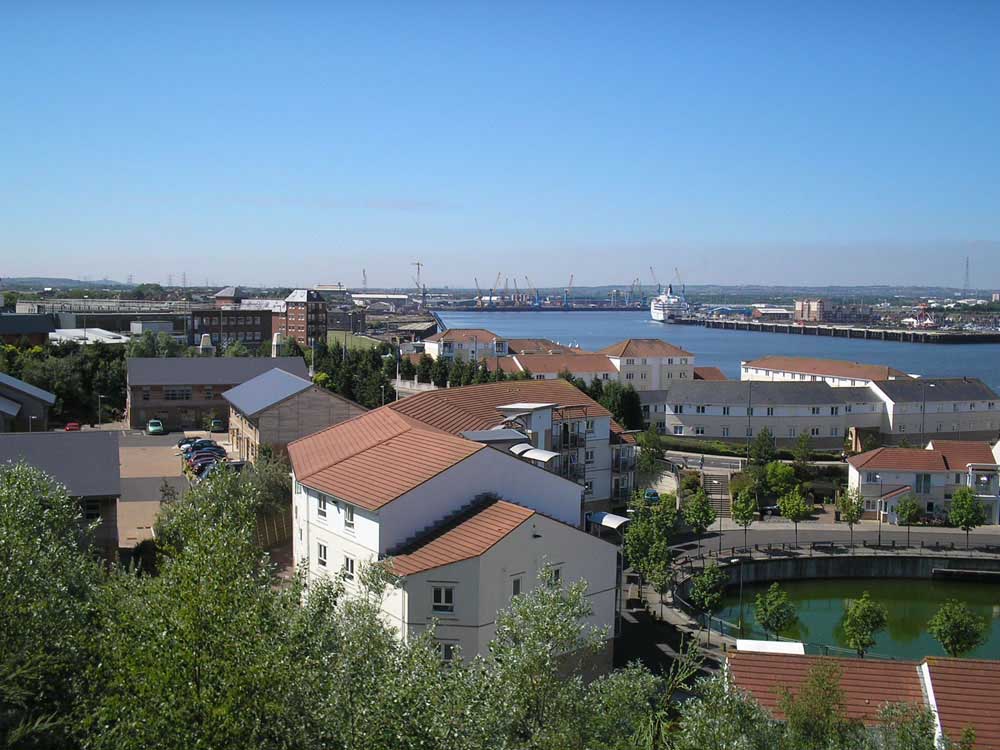
Currently (2009) the tracks remain in place from Tyne Dock to the junction at Brockley Winns station. As with many other locations the views from 30+ years ago are very difficult to replicate due to new development and the extensive growth of trees, bushes and other greenery.
Tyne Dock Shed

The steam locomotives that worked the iron ore services were generally allocated to Tyne Dock shed (52H). The shed was situated about a mile from from Tyne Dock, and was alongside many running lines and sidings. In this view the single line still serves coal traffic from Tyne Dock, but little else remains of the once extensive railway facilities. The site of Tyne Dock shed is now occupied by the houses on the left.
Pontop Crossing


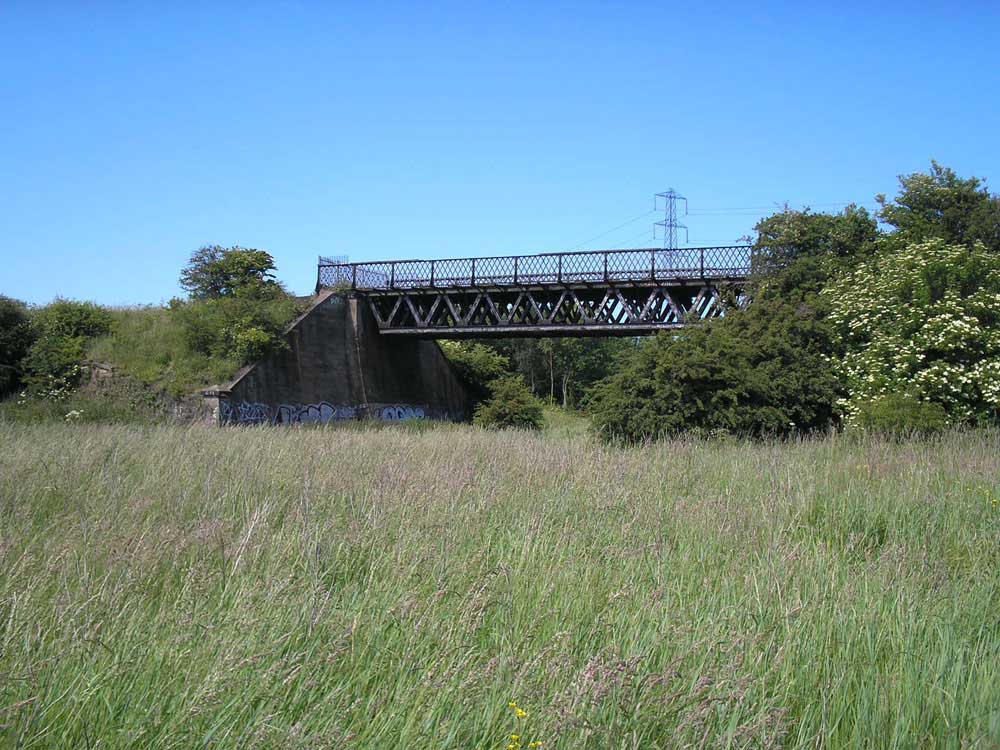
The Tyne Dock - Consett route at one time crossed the Newcastle - Sunderland line at grade level at Pontop Crossing. The three views above are taken at the former Pontop Crossing. The first view shows the route looking southwards, now the start of a walking path. This was the location of Boldon Colliery, no trace of it now remains. The center view looks northwards, the overhead electrification wires of the Newcastle - Sunderland route are visible beyond the fence. Also visible is the electric transmission line and towers that parallel the route towards Tyne Dock and are visible in many of the BR era views of this area. A signalbox once stood in the triangle of lines, to the left of the S&T running lines. The third view shows the remnants of the bridge seen at track level in the previous view.
The line from Pontop Crossing to Washington was closed at the same time that steam was removed from the iron ore trains (November 1966). The Washington - Ouston Junction section would regain iron traffic when shipments started to come from Redcar in 1974. These would come up the Leamside line from Tursdale Junction and require a reversal at Washington before gaining the original S&T route towards Ouston Jct. Although some of the route has been retained for footpaths the vast majority has been heavily redeveloped, being lost in retail/commercial development, housing and roads.
After the S&T route through Washington closed the iron ore trains took the Newcastle line at Pontop Crossing then travelling via Gateshead & Tyne Yard to rejoin the S&T line at Ouston Junction.
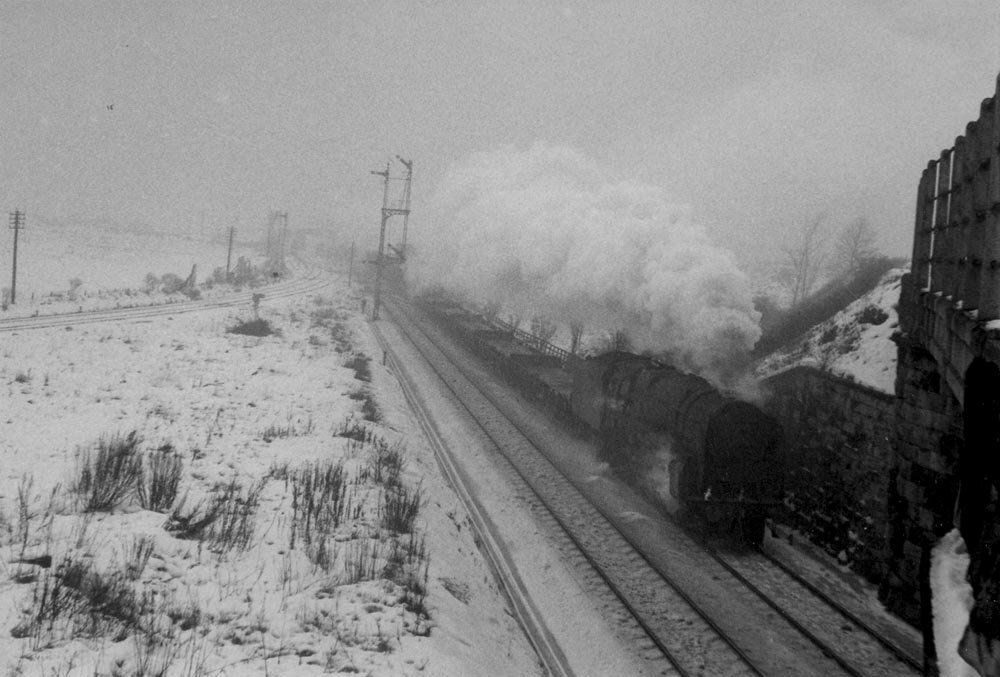
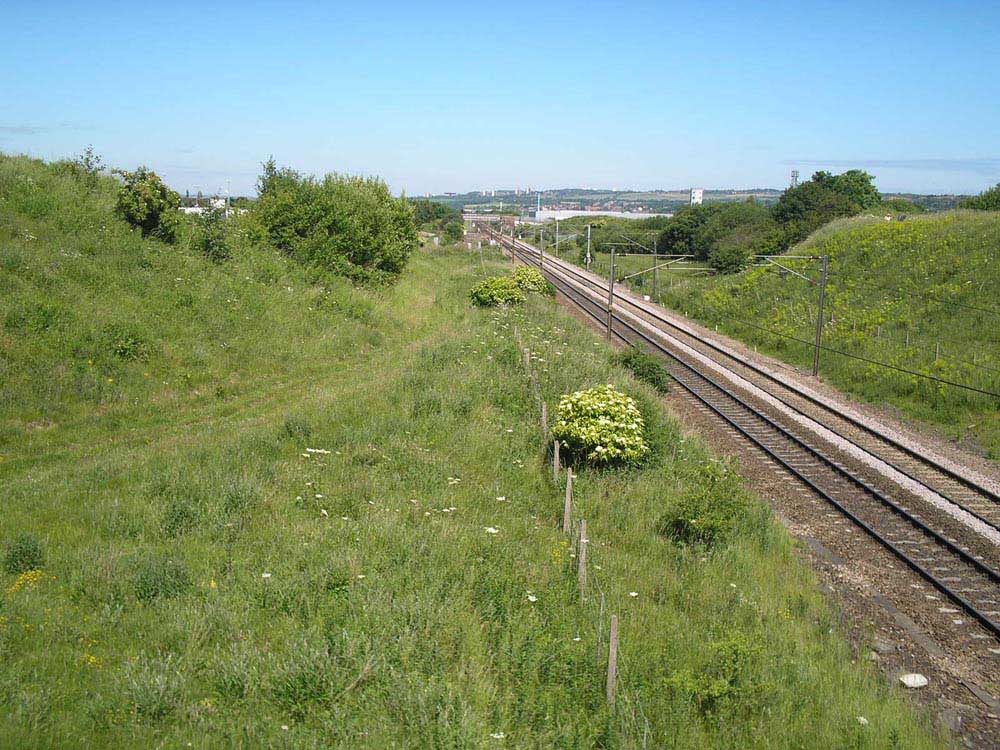
The route west from Ouston Junction is now a pathway/bicycle route, though anybody using the route westwards from South Pelaw will quickly appreciate the stiff climb the trains encountered as they started their climb towards Consett. Almost immediately after leaving the ECML the grade set in at 1 in 65 to South Pelaw.
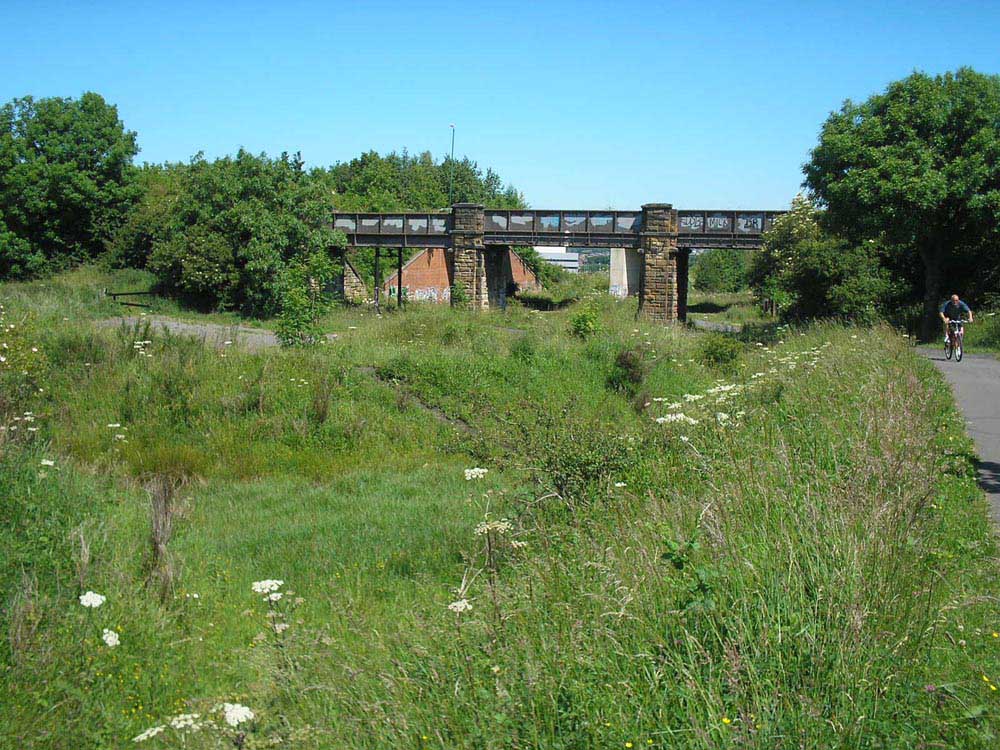
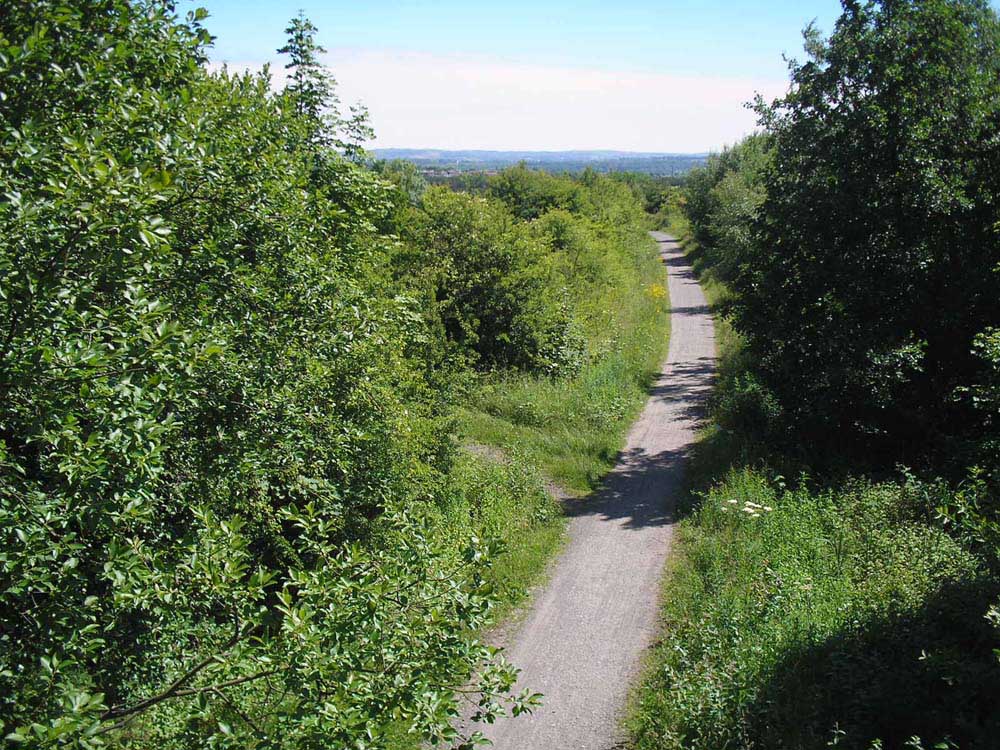
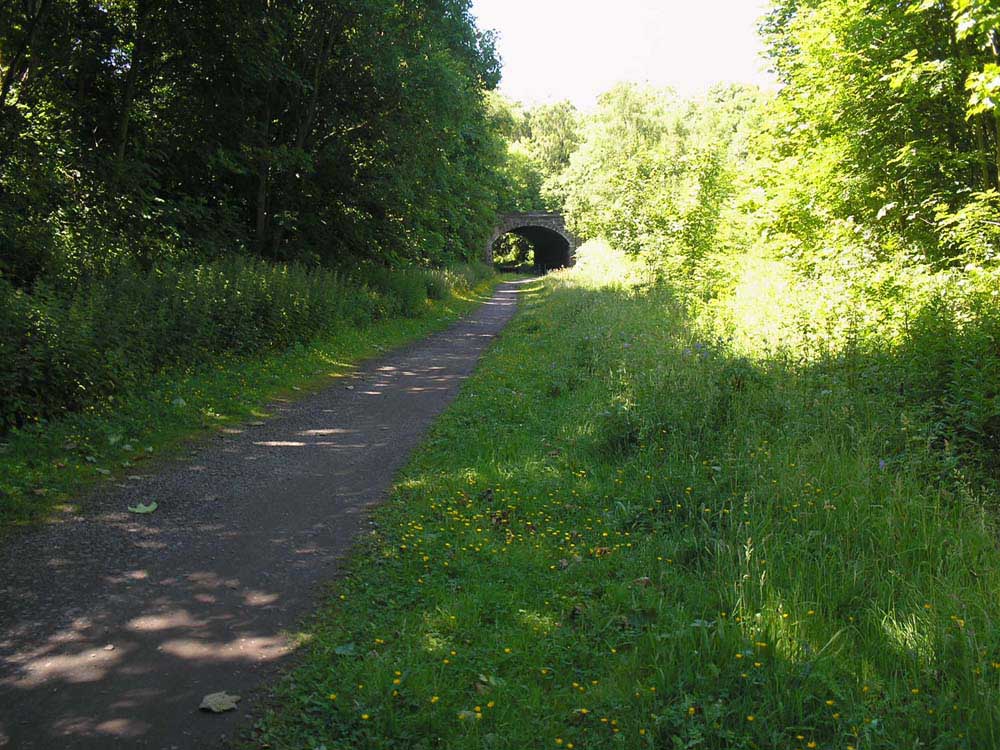

Just before Annfield East came the second short section of 1 in 35 on this route.
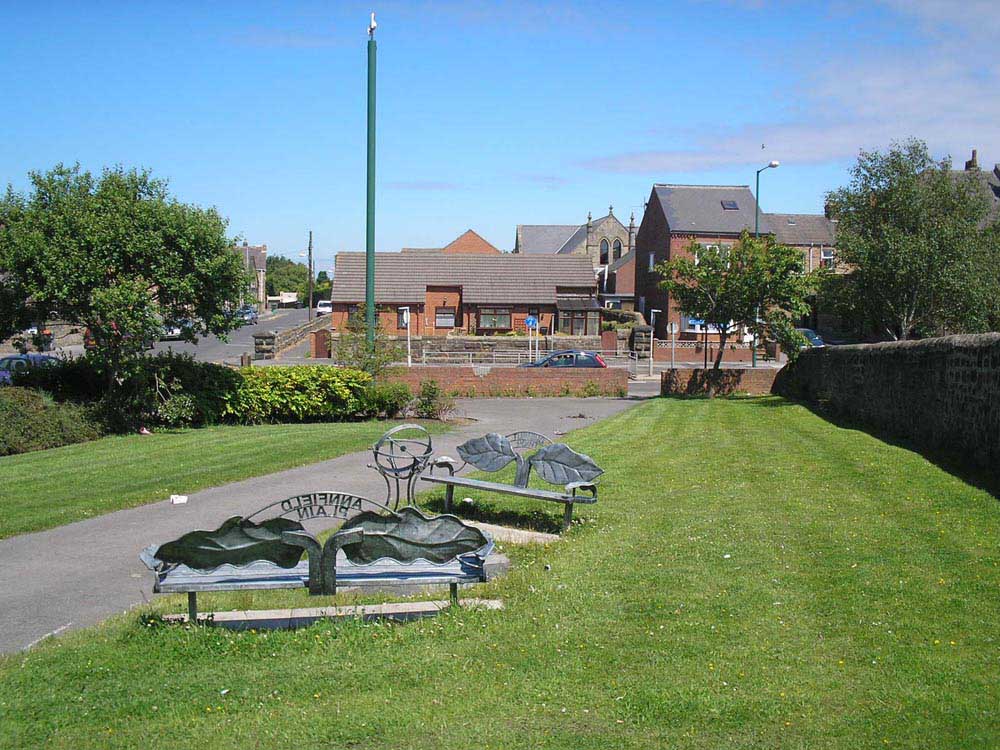
A mile beyond Annfield Plain the grade eased and the line dropped on a 1 in 93 falling grade and then easing for about a mile before reaching a short section of level track just short of South Medomsley. Here the banking locomotives would be removed, the remaining grades, although still rising were not significant apart from a section of 1 in 66 on the approach to Carr House East.
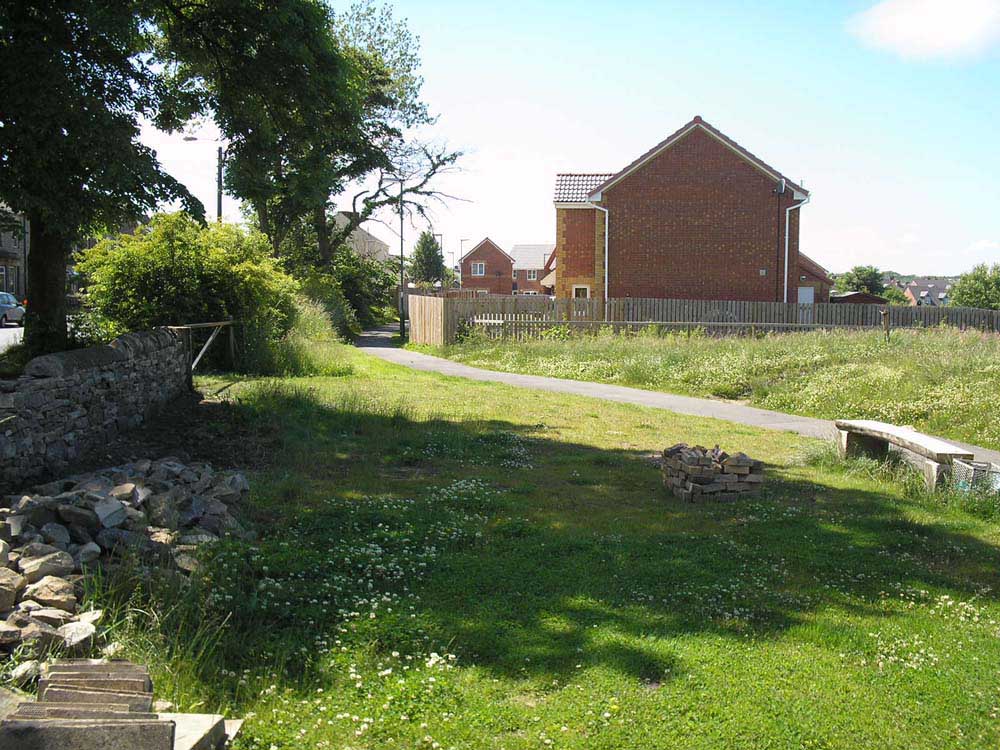
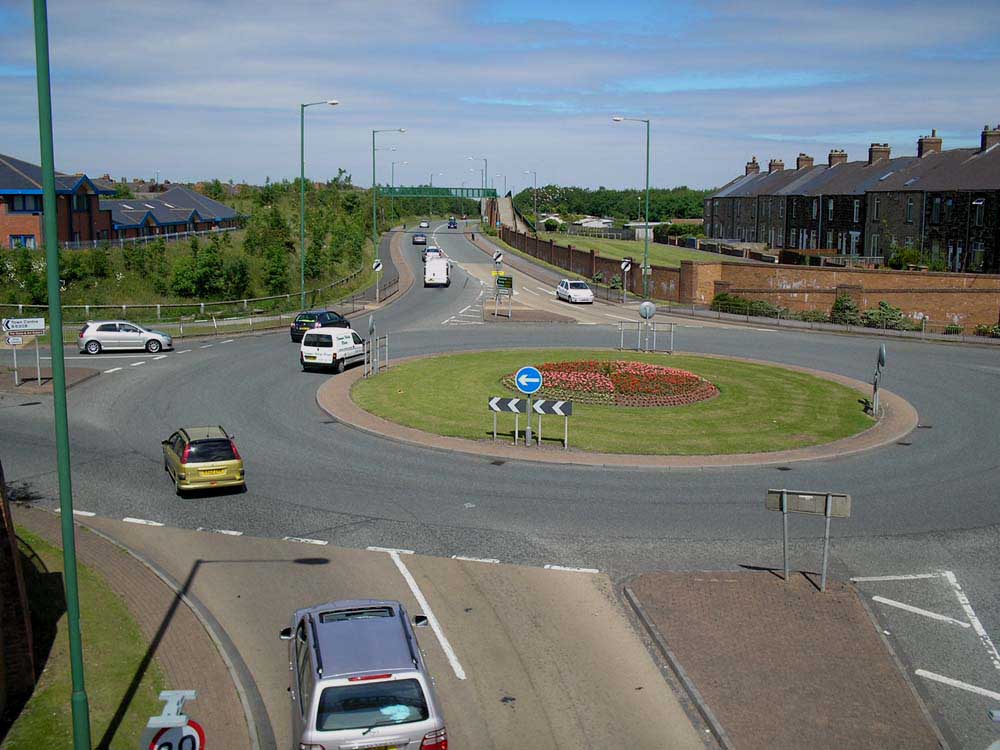
The 12.5 mile climb from Ouston Junction ended somewhere just behind the distant footbridge in the above view. Although the grade had eased considerably about a mile west of Annfield West and there was a short level section at South Medomsley the line still had to climb to reach Consett.
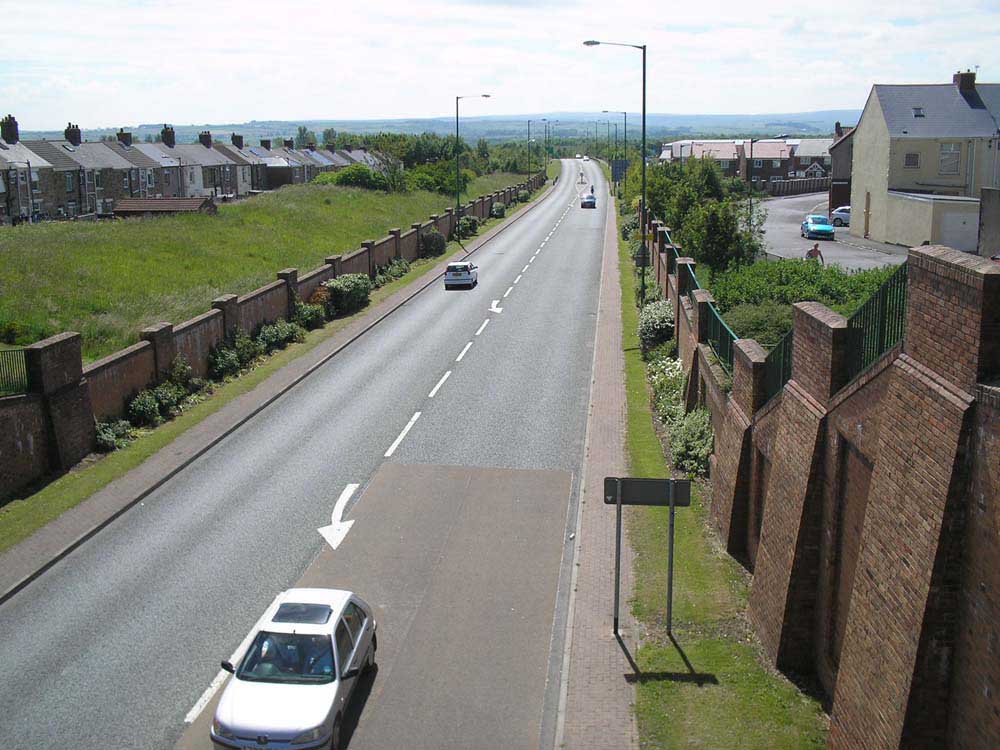
Although the railway route through Consett has been obliterated by the roads built to bypass the town center, once clear of the new developments the route of the line westwards soon reappears, now on a down grade as it passes by the land once occupied by the steelworks, the railway yards and Consett shed. Follow the pathway for a mile or so and Hownes Gill viaduct will be reached.
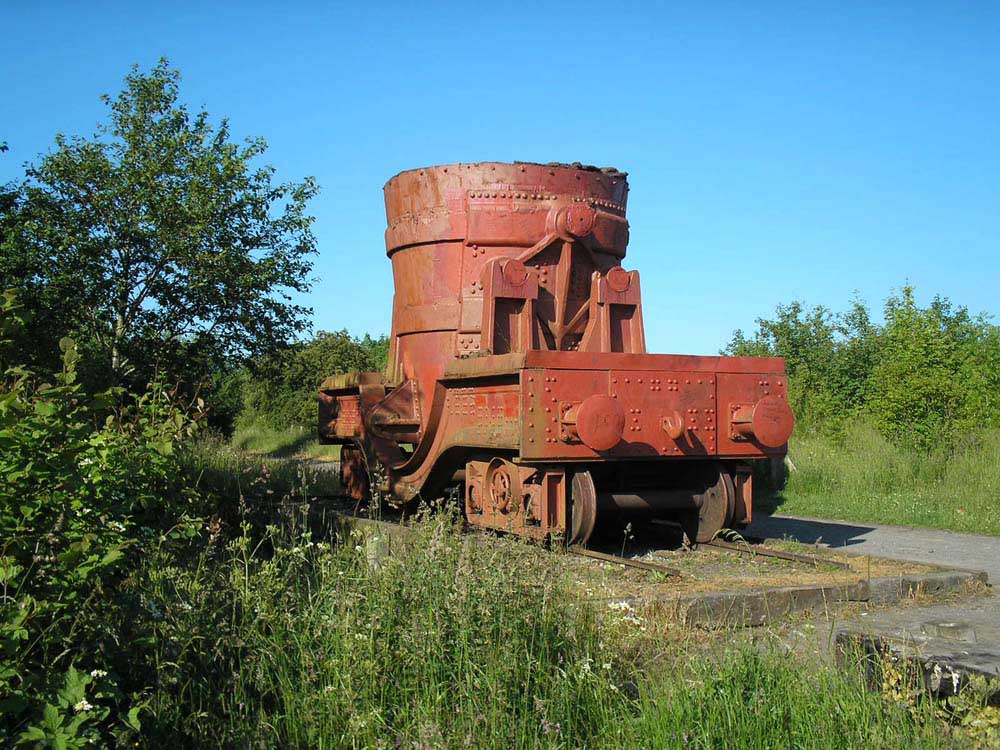
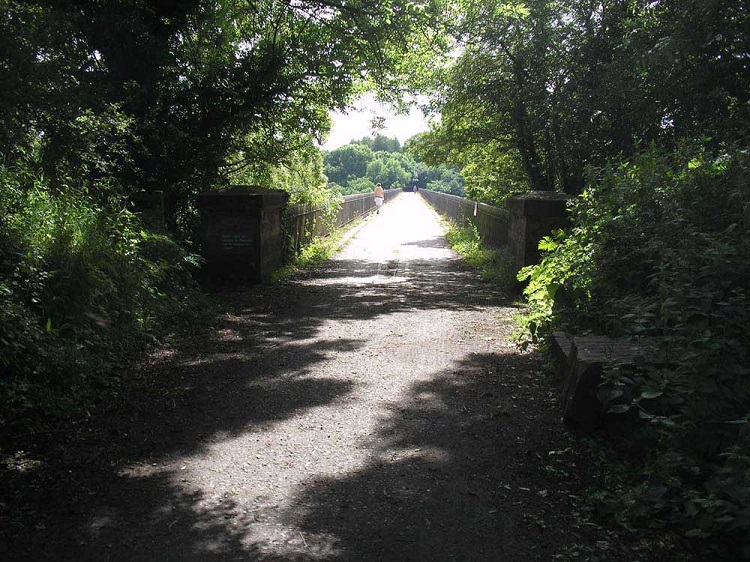
Miscellaneous Views
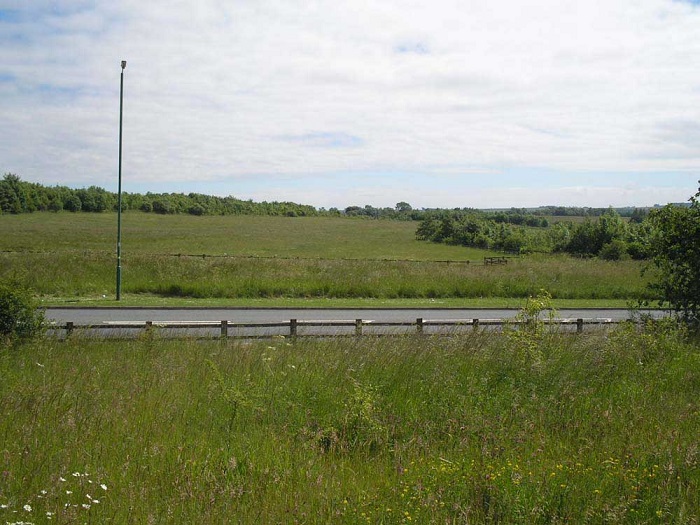
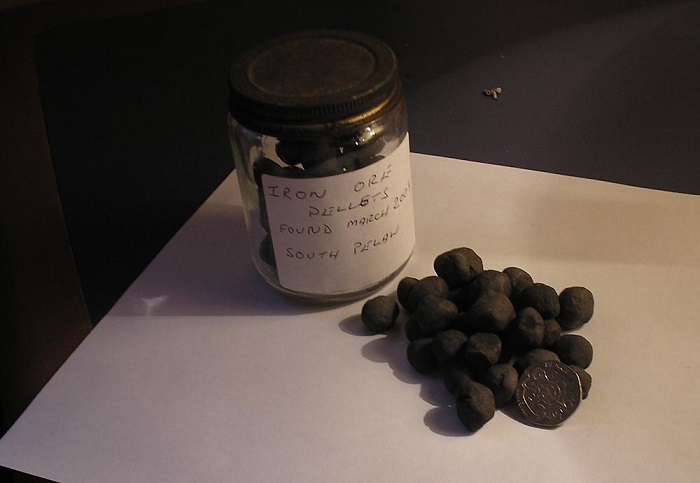
Other Reading Resources
The Tyne Dock - Consett Ore Traffic; Trains Illustrated, October 1955 (pp417 - 423)
Instructions issued by BR for operation of the Iron Ore trains.
The Railways of Consett & North-West Durham, G Whittle (publ. David & Charles).
British Railways Past & Present No.4 The North East; P J Robinson & K Groundwater (publ. Past & Present Publishing 1987).
Railway World July/August 1991 'Up Hill & Down Dale' - memories of a Consett engineman.
Classic Railways October/November 1998 'From the Footplate' - memories of a Consett engineman.
Steam World January 2007 '1,2,3...Heave!' - about the 9F's on the iron ore workings.
Heritagerailway (online) November 2004 'Steel Town Blues' - about Consett and its railways.
Steam Railway ?/1984 'The Consett Haul' - a look at the route used by the iron ore trains.
Steam World July 2009 'Coal and Ore to Consett' - more Consett memories.
Consett to South Shields via Beamish; Roger R Darsley (publ. Middleton Press, Country Railway Routes series, 2009).
British Railways Standard Steam Locomotives: Volume Four - The 9F 2-10-0 Class. RCTS 2008.
Page created February 20th 2002.
Last updated October 12th 2022.