
| Owner | Engine Model | Builder/Wheel Arrangement/Gauge | Electrical Equipment | Total | Running Numbers |
| Buenos Aires Great Southern Railway | Sulzer 6LV28 420hp @ 650rpm | Metropolitan Carriage & Wagon 1929, Bo-Bo, 5ft 6in | Oerlikon-main generator; Metropolitan Vickers-traction motors | 1 | CM202 | Buenos Aires Great Southern Railway | Sulzer 1,200 hp (2 x 8LV28 600hp @ 700rpm) mobile power house | Armstrong Whitworth 1930, 1-A-2-A-1, 5ft 6in | Oerlikon-main generator; Metropolitan Vickers-traction motors | 2 | UE1, 2 | Buenos Aires Great Southern | Sulzer 8LV28 592hp (shunter) | Armstrong Whitworth 1930, 1-C-1, 5ft 6in | Hydraulic: Williams Janney 'swash plate' type supplied by Vickers | 1 | DH501 | Port of Rosario | Sulzer 6LV25 330hp | Henschel 1931, Bo-Bo, 5ft 6in | Oerlikon | 3 | 31(?), 32, 33 | Buenos Aires Great Southern Railway | Sulzer 1,700 hp (2 x 8LV34 850hp @ 550rpm) mobile power houses | Armstrong Whitworth 1933, Bo2+2Bo, 5ft 6in | Brown Boveri-main generator; English Electric traction motors (8 x 134hp) | 3 | UE3, 4, 5 | Buenos Aires Great Southern Railway | Sulzer 1,700 hp (2 x 8LV34 850hp @ 550rpm) locomotive | Armstrong Whitworth 1933, 1A-Bo+Bo-A1, 5ft 6in | Brown Boveri-main generator; English Electric traction motors (6 x 230hp) | 1 | CM 210 | Ferrocaril Oeste | Sulzer 8LV25 450hp (rail-motor) | Armstrong Whitworth 1934 | ?? | 1 | ?? | Buenos Aires Provincial Railways | Sulzer 6LTD19 270hp railcars | Sulzer Brothers 1935, Bo-2, 3ft 3.3in (1000mm) | electric | 4 | M1 - M4 |
| Argentina State Railway | Armstrong Sulzer 6LF19 300hp railcar | BRCW, Smethwick 1937, Bo-2, 5ft 6in | two mechanical, two hydraulic mechanical | 4 | #?? |
| Argentina State Railway | Armstrong Sulzer 2 x 6LF19 600hp total articulated railcar | BRCW, Smethwick 1937, ??, 5ft 6in | mechanical | 2 | #?? | Buenos Aires Great Southern | Armstrong Sulzer 8LD28 800hp | Armstrong Whitworth 1937, 1Co1, 5ft 6in | Laurence Scott & Electromotors & Crompton Parkinson | 2 | CM204 & CM205 | Argentine State Railways | 4 x 6LDA25 735hp each | Argentine State Railways 1951, Do-Do + Do-Do, 5ft 6in | Oerlikon / English Electric | 2 | CM1 & CM2 |
CM = Coche Motor (Rail Car)
One 420hp Bo-Bo locomotive (or power van) numbered CM202. This unit was equipped with the Sulzer 6LV28 6 cylinder in-line 420 hp at 650 rpm, the body was manufactured by the Metropolitan Carriage & Wagon Co. Both CM202 & CM201 unit were equipped with the same Oerlikon main DC generator, the four traction motors were from Metropolitan Vickers for both locomotives.
It weighed 59 tons with a top speed of 75 kmph. All four axles were powered. Part of the body was occupied by the parcels and luggage compartment. This and the Beardmore locomotive (CM201 - see note below) would prove a valuable source of experience and training for the staff in this new form of traction - in general they were too small for the services that would soon be dieselised. Converted into a van during 1941, engines and motors removed, possibly for reuse?
Winterthur supplied the diesel engine for CM202.
CM201:
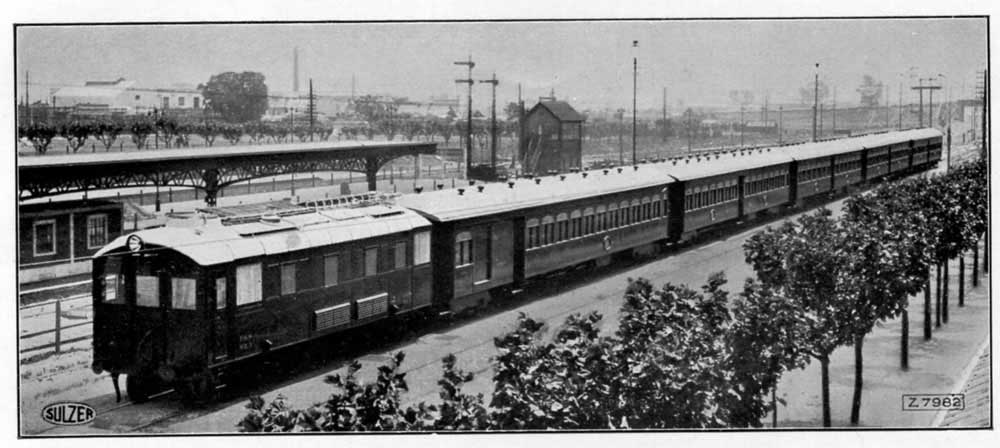
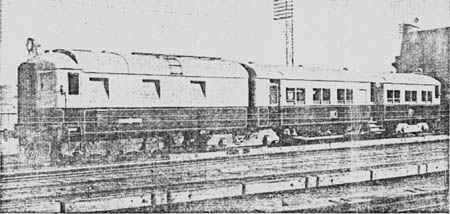
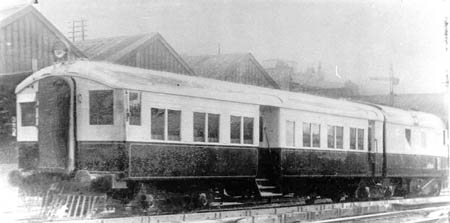
Buenos Aires Great Southern Railway, two 1,200hp mobile power houses, numbered UE 1 & 2, used to haul five coaches, three 1st & two 2nd class providing total seating for 554. One was loaned to the FC Buenos Aires Pacifico. The CME of BAGSR, Mr P C Saccaggio, was reluctant to initiate full electrification of the lines around Buenos Aires due to its cost, but believed in the idea of powered coaching stock, in this case drawing power from a diesel electric generator set installed in a 'mobile power house'. These units were semi-permanently coupled to five coach sets, the end coach being equipped with driving compartments, avoiding reversals at the busy Buenos Aires terminals. These two locomotives were ordered just after an order to Beardmore, which would become the first diesel locomotives to work anywhere in South America.
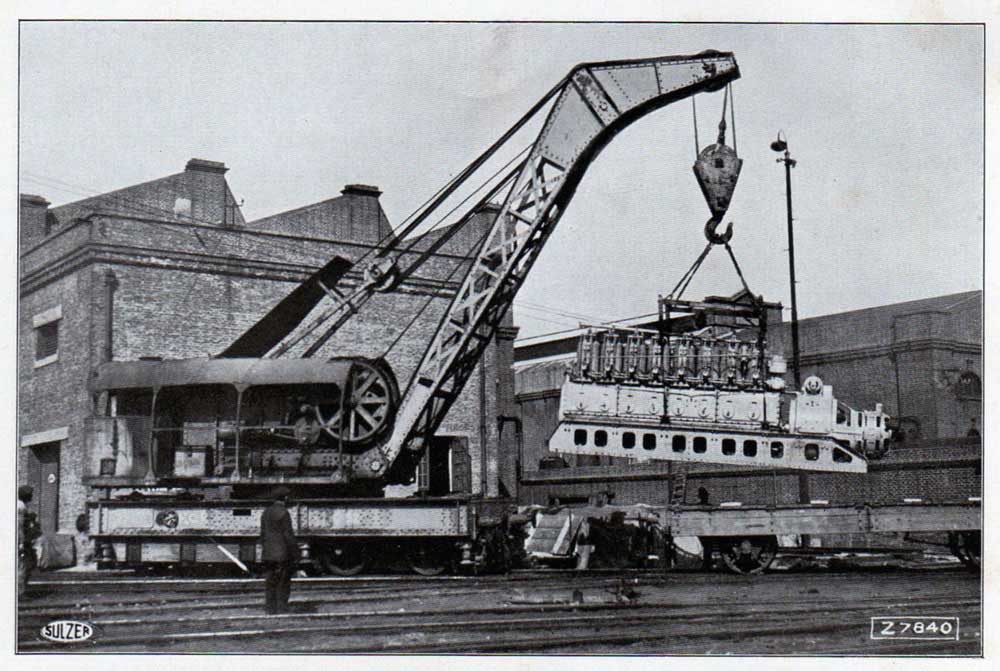
The locomotives required by Mr Saccaggio were not readily available from any builder so on a visit through Europe many components were ordered from a variety of manufacturers. He was familiar with Armstrong Whitworth and the steam locomotives they had previously built for Argentina, thus they were offered the construction of the mechanical portions with final assembly and finishing taking place at BAGS's workshops at Remedios de Escalada. Delivered in late 1930, each was powered by two Winterthur built Sulzer 8LV28 cylinder engines developing 600hp at 700rpm, powering an Oerlikon main generator & two 136hp Metropolitan Vickers traction motors - each coach carried two 125hp motors. The rigid frame supported four fixed axles, two of which were powered with a pony truck at each end (1-A-2-A-1 arrangement). Because they were semi-permanently coupled to the coaching stock the MPH's carried only one driving cab, with a driving cab being fitted to the last coach. Locomotive weight was variously reported between 85 tons & 92 tons, total train weight was 314 tons.
These locomotives were built to the BAGSR's 5ft 6in gauge, the increased body width allowing the side by side positioning of the two engines. It also required Armstrong Whitworth to install lengths of 5ft 6in gauge track at their Scotswood Workshops to accommodate these and other rail vehicles of this gauge. The locomotive design carried some influence of the steam locomotive with its 2-8-2 wheel arrangement, the powered axles being mounted in a rigid frame, rather than the more familiar bogies of later designs. All the wheels were of 3ft 1.5in diameter. The styling of the locomotive was very functional, with slab sides and cab front. The roof was curved to match that of the coaches they would haul, the slope of the cab roof dome was minimal.
The coaching stock had been built in the BAGS railway workshops at Remedios de Escalada. The coaches were very large vehicles, 85 ft over buffers (see photo of train below), and were provided with special shock absorber equipped coupling bars which allowed for easy navigation of the curves despite the coaches great length. Each coach rode on two 2-axle bogies, with the outer axle on each bogie carrying a 125hp traction motor. The electrical output was configured so that each engine provided power to one traction motor on the locomotive and to one traction motor on each coach, thus allowing the train to be operated at half output. This would certainly be advantageous in the event of one engine failing or working services that were lightly timed.
These two machines provided a comparison with the first diesel on the BAGS railway - a 375hp Bo-Bo diesel electric built by Beardmore. This locomotive's high-tensile steel liners required regrinding after 60,000 km, the cast iron liners of the Sulzer engines showed barely perceptible wear over the same distance. These particular engines were some of the last of their type. The weight of the engine & generator set was fifteen tons.
They were most regularly operated out of the Plaza Constitucion terminal to Quilmes under alternating 16 hour and 8 hour diagrams, their acceleration was superior to the regular steam fleet, but the MPU powered trains generally ran under the steam timings. With a driving position at each end their turn round time at the termini was vastly superior to the steam operated workings. These new trains were to have a mean speed of 28mph on lines 20 to 30 miles long, with stations no more than two miles apart. The maximum speeds was set at 45mph. On their first run in February 1930 from Constitucion to San Vicente the journey was completed in forty minutes as against the seventy minutes required for the steam powered workings. Occasionally the two sets were combined. In the early years it was the practice to stop the engines at each station stop, leading to the engines going through the stop/start cycle over two hundred times a day!
This stopping and starting of the engines, literally hundreds of times daily, caused considerable problems with broken joints, pipes, studs etc. Modifications to the governor control, with the fuel shut off prior to the load being taken of the engine reduced the stresses on the engines. Later practice was to allow the engines to idle while stopped at the stations.
The first general repairs were received during 1932, it was noted that only once in 160,000 miles of running had the locomotives required assistance, and that was due to an electrical fault.
At the annual general meeting of the Buenos Aires Great Southern Railway Co Ltd (in 1932?), the chairman Mr Henry Charles Allen is quoted:
UE1 & UE 2 remained in service at least until 1954 with mileages of 1,172,727 & 1,114,906 respectively. The two locomotives were taken to the Tolosa workshops of Fabrica Argentina De Locomotoras and rebuilt into locomotive UE6, a Bo-2-2-Bo mobile powerhouse powered by two 827hp Paxman engines. This hybrid was withdrawn during 1963.
The success of UE 1 & UE 2 would lead to the placing of four more orders, all of 1,700hp; three more 'mobile power houses' (or alternatively 'travelling power station') and one locomotive. Experience would however dictate that UE1 & UE2 had several design shortcomings that would not be carried over into the more powerful locomotives. A serious problem encountered was that of vibration created by the rigid wheelbase plateframe construction. The use of bogies in the later locomotives cut down on the vibration issues, they also made changing traction motors much simpler and allowed for the engine room floor to be on one level for the entire length of the locomotive.
Buenos Aires Great Southern - one shunting locomotive for the railway's repair shops at Talleres Remedios de Escalada, located outside of Buenos Aires, wheel arrangement 1-C-1, Sulzer 8LV28 592hp engine (the same as the two 1929 built powerhouses), a Vickers built Williams-Janney 'swash-plate' type hydrostatic hydraulic transmission - designed for stationary use in driving sugar mill machinery, numbered DH501, weighing 72 tons, maximum speed 45km/h (28mph), used for shunting duties. This locomotive was not a success, having a very short working life primarily due to its very troublesome transmission, with overheating, leakages and oil pressure variations contributing to its downfall, possibly taken out of service by 1933, but not officially withdrawn until October 1940. During its brief career it is reported as having run 20,517 miles, finally being scrapped during May 1943.
Similar to the 1929 built UE1 & UE2 this locomotive carried the influence of steam design practice with is 2-6-2 wheel arrangement. Because it was intended for shunting service the familiar coupling rods connecting the driving wheels were retained. Again the styling was minimal but with the lower body wider than the upper sections. The roof carried a curved profile, but the roof ended abruptly with a slight overhang at each end.
The Port of Rosario in the province of Santa Fe sits on the west bank of the Parana River about 300km north west of Buenos Aires, Argentina and about 550km from the Atlantic Ocean. It marks the transition point on the Parana River between ocean going vessels and that of river navigation.
The buffer beams carried drawgear for two different gauges, the 5ft 6in (1676mm) gauge for which the locomotives were designed for and the 3 feet 3 inch (1000mm) gauge of the Ferrocarril Central de Cordoba line which share the Port of Rosario facilities. The locomotives are also designed to operate over curves of 2.5 chains radius.
Tractive Effort: one hour rating at 8.7kmph (5.4mph) = 7,600kg (16,950lb).
1989
Phil Graham captured these remarkable shots of one of the locomotives in use at San Nicholas (near Rosario) on March 15th 1989, some 58 years after its introduction. The locomotive still carried its original engine, however it could not be determined if the two other Henschel/Sulzer shunters were still intact. A remarkable find - one wonders just how long it survived after 1989?
2006
Further views of the Henschel/Sulzer shunter were obtained by Cristian Huck during 2006 (their 75th anniversary). This machine clearly seems to have been out of service for a while but even in this state is a remarkable survivor and worthy candidate for preservation.
2014
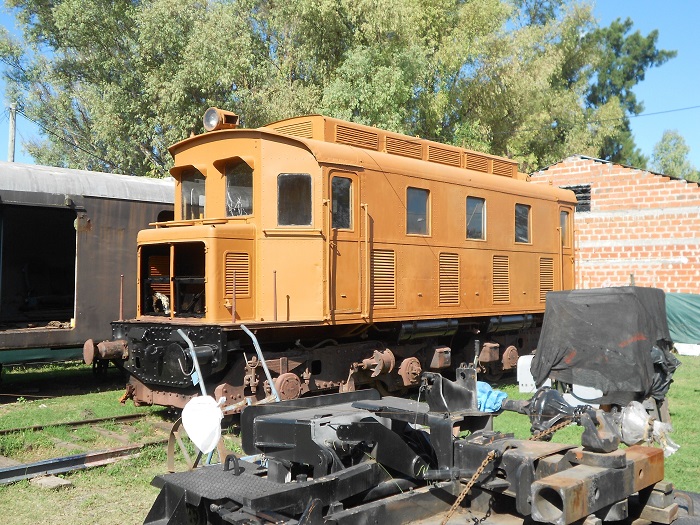
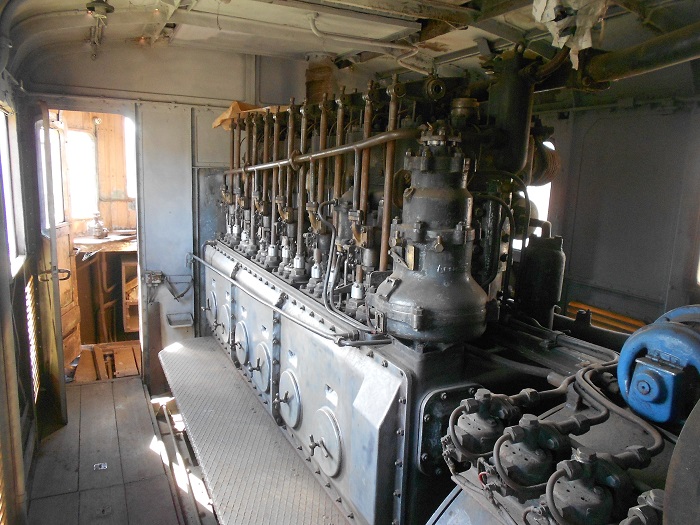
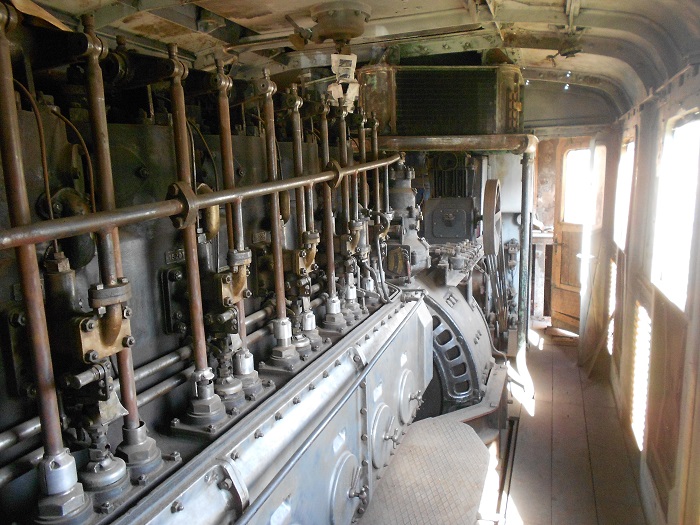
Sometime during 2014 (maybe November) a Henschel was obtained by Mr J G Mendoza, with the intent to make the locomotive operable and put back into some sort of service. The views below show the locomotive after transport to its location annd then after some work has been carried out on it.
Buenos Aires Great Southern: three 1,700hp mobile powerhouses, each powered by two eight cylinder, in-line four stroke type 8LV34, each producing 850hp at 550rpm, cylinder dimensions 340mm x 400mm, with 8 x 134 hp traction motors, tractive effort 38,000lb, weight in working order 133 tons. Numbered UE 3,4 & 5 they were used to haul eight passenger coaches, five 1st & three 2nd class. They had an increased top speed of 70mph but had the same traction motors and reduction gearing as the first two power houses. The newer machines were also lighter, 132 tons compared to 145 tons. The cost of the two engine-generator sets and ancilliary equipment was GBP16,400.
Like UE1 & UE2 the styling was very similar, again with a very boxlike external appearance. The cab appearance was slightly altered with a larger central window and the lower driving end cab front curving out slightly above the bufferbeam. The curve of the driving cabfront roof line was slightly shallower and the roof line in general was less cluttered.
Each Winterthur built Sulzer engine was coupled to a Brown Boveri main generator rated at 570 KW dc and two English Electric axle-hung, nose-suspended, self ventilated traction motors on the outer bogie of each half unit. Each engine generator set supplied power to two motors on the powerhouse and eight motors under the coaches. The weight of each double unit was 133 tons, with eight coaches in tow the total train weight was 470 tons. These mobile powerhouses were delivered fully assembled during November & December 1932. As with UE 1 & 2 the performance of these three trainsets was impressive, particularly in light of their quick turnround times at the termini (5 to 10 minutes as compared to 35 - 45 minutes for the steam workings), however for most of their lives they slotted in to steam diagrams where their full potential was not always realised. With each train having a starting tractive effort of over 60,000lbs, considerable acceleration was possible and providing excellent performances. Monthly mileages of 8,500km to 9,500km were the norm.
Date of first trial & date to traffic:
After delivery the trainsets worked accelerated services over the suburban main line between Plaza Constitucion and Glew, on two eight hour shifts, with daily mileages of between 300 & 345 miles and handling a total of 44 trains. Two sets were in service with the third on standby. They were also used on existing steam diagrams. Average yearly mileages totalled 66,000 miles, with running costs of 1s 0d (5p) per mile.
There were problems with the crankshafts on UE3 & UE5 after about eight months of service, the failures of which were never sactisfactorily resolved, but vibration of some sort may have been the cause. New crankshafts were provided by Sulzer for all the powerunits, after fitting these gave no further problems. In some cases new cylinder blocks were provided. By the middle of 1952 UE3 had completed 1,280,000 miles and UE4 1,250,000 miles, though by this time they were now equipped with Paxman RPHXL-II 800 hp engines and Metropolitan Vickers generators.
The mobile powerhouses were withdrawn between 1959 & 1961, although the official withdrawal dates are recorded as April 1963, with the scrapping date recorded as December 1963.
Final mileage totals:
"....experiments with diesel engines were started by us some five years ago. Trials have convinced us that this form of traction for branch lines and similar light service has outstanding potentialities. We sent out two mobile power houses, each of 1,200bhp. Encouraged by the results obtained from these original power houses the company acquired three more powerful units, each of 1,700bhp. These were put into service in June this year and up to the present have run some 45,000 miles. Each of these 1,700bhp power houses operates an eight coach train, weight of which is 526 tons. Seating capacity is provided for 916 passengers. In addition to these units a diesel-electric locomotive of 1,700hp was sent out. Trials of this locomotive were satisfactory. These pioneer developments in diesel traction are being watched with great interest in railway circles, and each step we have taken so far has been attended with complete success....."
Buenos Aires Great Southern: one 1700hp 'twin unit' locomotive, #CM210. After the success of the five mobile powerhouses one locomotive was ordered as a mainline version of UE3-5. The engines and main generators were the same, but carried six 230hp English Electric traction motors, with a one hour rating of 310hp. These were similar to UE3-5 except that all the electricity generated for traction would be used by the locomotives. All axles were powered except for the outer axle on each of the outer bogies. Each half unit had a driving compartment. When delivered the unit came with three different sized sets of driving wheels, axles & gears. After testing the 'mixed traffic' set was permanently fitted to the locomotive. Total weight was 145 tons.
The fully completed locomotive was shipped in December 1932 and entered regular service during October 1933. After settling in on the local services CM210 was transferred to the Bahia Blanca night trains working between Buenos Aires and Olavarria, this was a journey of six to seven hours with loads varying between 450 & 650 tons. Frequently, after a very short break the locomotive would return to Buenos Aires with a passenger working. CM210 handled this working for thirty two consecutive nights, a total mileage of 13,662 miles. This excellent spell was broken when the locomotive was actually put in reverse whilst running forward, requiring nine days out of service to attend to the traction motors. Once back in service it completed a further thirty four round trips (27,945 miles) without incident. Truly a remarkable record!
When tested on freight work the locomotive put in another remarkable performance. At Las Flores yard it was given a train weighing 3,150 tons, with dynamometer car. The yard track was level and a drawbar pull of 57,000lbs was recorded. The journey was 105 miles, completed in six hours at an average speed of 17.5 mph.
A non-stop passenger run to Mar Del Plata with an excursion was recorded during 1938 with a load of 730 tons for the 250 miles. The first half of the journey to Dolores was signal checked because of heavy traffic, the average speed was only 33mph. But once clear of Dolores the average speed rose to just under 52mph with a maximum recorded of 57mph.
Over the years the locomotive would continue to put in many miles on the overnight Bahia Blanca runs, including the Night Mail via La Madrid, loading to 600 tons and the regular night train via Pringles, loading to 850 tons. Frequently these services would be made up of only four axle vehicles. The locomotive was noted on this service at the time of nationalisation of the BAGSR in 1948.
After nationalisation it ran in the service of the General Roca Railway, continuing for many years on its overnight runs to Bahia Blanca. It remained in service until 1960.
Mileage reports including the following:
Route mileages - from Buenos Aires to various locations:
The availability of the locomotive was generally very good, made possible by the presence of an Armstrong Whitworth engineer who carried out or closely supervised the maintenance and repairs carried out to the locomotive. Some stoppages to the locomotive were caused by mistakes by the drivers, others were related to mechanical failures through wear and tear or premature failure of components.
Observations made by BAGSR staff after five (?) years of service with CM210 provide an insight into the development of these early Armstrong Whitworth built diesels:
Although the output of diesel locomotives from Armstrong Whitworth was quite small it is probably without a doubt that CM210 was the most successful of their output. It was in operation for 27 years, travelled over 1.8 million miles, bridging the gap from a time when large diesel electric locomotives for rail traction purposes were in their infancy to a period when in most industrialised nations the writing was most definately on the wall for steam traction.
A twin unit articulated railcar supplied to the Buenos Aires Western Railway which with its comfort and higher speed was promoted as a way to regain lost traffic.
It was powered by a Armstrong-Sulzer 6LD engine (or an 8LV25) producing 450hp at 750rpm. Laurence, Scott & Electromotors provided the main and auxiliary generator, the latter feature allowed for the elimination of the auxiliary engine/generator set found in many Armstrong Whitworth vehicles. The two axle-hung, nose suspended traction motors were provided by Crompton Parkinson.
The shorter power unit carrying vehicle was built by Armstrong Whitworth, the body & internal fittings for the passenger coach were built by Gloucester Railway Carriage & Wagon Co Ltd and delivered to Scotswood for fitting. The trainset was designed to operate with up to two trailer coaches, thus connecting vestibules were fitted between the vehicles and at both ends. The accommodation in the coach was for 50 First Class passengers only, with toilet facilities and luggage space. Total weight was 67 tons, the total length was just under 90 feet, unusually electric heating was fitted.
After delivery to Argentina, the trials began on September 14th 1934, initially working a Eucharistic Congress special from Buenos Aires to Lujan. Following this regular services operated to Bragado, Nuevo de Julio, Carlos Caesares and Pehuajo. Average daily mileage varied between 260 & 460. The minimal passenger capacity was resolved by the addition of a second coach with a maximum of 90 seats. The new coach was fitted between the power car and original driving trailer, being carried on a new articulated bogie between itself and the original driving trailer.
At the ordinairy general meeting of the Buenos Ayres Western Railway on November 6th 1935 Sir Follett Halt advised that one Armstrong Whitworth vehicle had proved a great success having covered 120,000 miles in service at a very low operating cost. In the same period the diesel engine had required no repairs. The higher speeds and greater comfort had proved popular with the public, even allowing for the 400 mile round trip diagrammed for the train.
The trainset remained in service until 1968 - 1970 and was scrapped at the Liniera workshops during 1971.
Mileage:
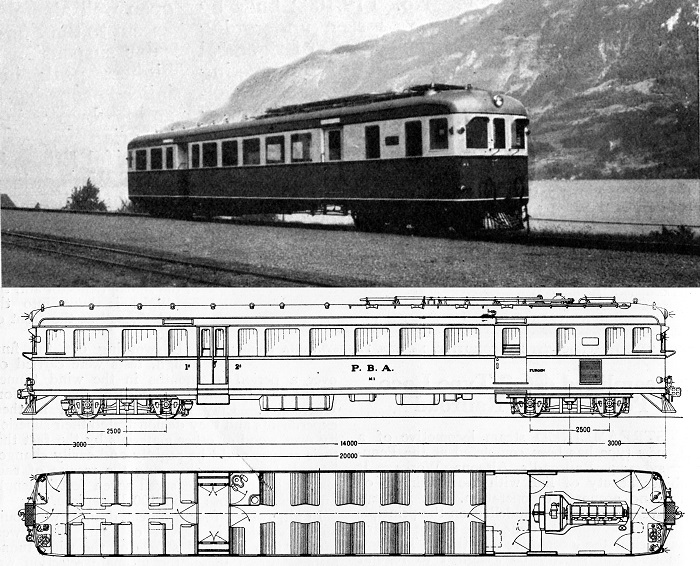
During 1933 an order was placed by Buenos Aires Provincial Railways with Soc. Espanola Babcock y Wilcox for four metre-gauge double bogie diesel-electric railcars. After several months the order was transferred to Sulzer Brothers, who started shipment of the completed vehicles during the autumn of 1935. Sulzer Brothers were the main contractors and supplied the power unit, Brown Boveri supplied the electrical equipment and the mechanical portions were from Christoph & Unmack of Niesky, Silesia, although final installation of the equipment was at Sulzer's workshops in Winterthur.
The railcars were powered by the new four-stroke lightweight six cylinder design (6LTD19) producing 270hp at 1,100rpm, cylinder size was 190mm by 240mm (7.5in by 9.5in), maximum output was 290hp. The underbed was of welded steel plates and supported both engine & generator. Rubber blocks attached the underbed to the underfame, much attention had been applied to minimising the transmission of noise and vibration through to the passenger area. A combination of cast & welded components within the engine were used to reduce weight without compromising strength. The upper part of the cylinder block was cast steel, the crankcase and cylinder block walls were of welded steel plate, and the transverse stays of the crankcase - which supported the bearings - were steel castings welded to the steel walls. The cylinder heads and casings were single units cast in iron and silumin respectively, the exhaust manifold was in two sections covering two heads each. The pistons were of stamped aluminium alloy, the crankshafts and pins were hollow bored. The main bearings had a white metal lining on a steel shell and the big end bearings white metal on bronze.
Along the air intake side of the engine was a gear driven camshaft operating the air & exhaust valves, on the opposite side was another camshaft driving the Bosch fuel pump and governor. Pressure lubrication applied to all working parts, an engine driven pump located in the sump provided the necessary pressure. An electrically driven cooling water pump was mounted on the main generator casing and circulated water through roof mounted radiators. The radiator was in five sections of which three could be cut out of the circuit as desired. A reserve water tank situated in the engine room held 240 litres, when working at full load water temperature should not exceed 80C. Two fuel tanks totalling 540 litres were situated in the engine room. All piping circuits were colour coded: fuel = red, air = blue, lubricating oil = brown & electric cables = yellow.
A Brown Boveri self ventilated DC generator of 144kW continuous capacity at 950/1,100 rpm was directly coupled to the engine. The maximum rating was 218 kW 475volts 460amp. The maximum current supplied by the generator was 770amp, maximum voltage of 500. The auxiliary generator was driven off the main shaft but was recessed into the main generator to save space. The two nose-suspended traction motors, powering the bogie at the opposite end to the diesel engine, had a continuous rating at 2,280rpm of 75kW 450volts 188amp & a one hour rating of 75kW at 1,690 rpm 365volts 236amp. The maximum tractive effort was 4,960lb. Because the roof mounted radiators required no cooling fans the auxiliaries only drew 17.5hp off the engine.
The vehicle's structure was divided into a number of compartments, a driving cab, engine room, small luggage/guard's space, second class cabin with 42 seats, first class cabin with 20 seats and the second driving cab. Access was primarily through one set of doors per side that opened onto both the first and second class cabins. Access could also be obtained through the luggage area though this was somewhat restricted and assumed it wasn't full of cargo. Tare weight was 36tons, fully loaded was 43tons, giving a ratio of 6.3hp per ton gross weight. Because the maximum speed was only 80kph (50mph) little need was given to the streamlining of the railcar. Welding was principally used in construction of the frame and body except for the side panels which were riveted. The headstocks carried cowcatchers and Henricot automatic couplers. Should the passenger loadings warrant it a second coach could be coupled to the railcar.
The bogies were built up on welded frames with box type side members. The SKF roller bearing axle boxes were supported by overhung laminated springs with helical auxiliaries on each hanger. Additionally a laminated equalising spring each side of the bogie supported the superimposed weight of the underframe. The bogies were not fitted with bolsters. Braking was by means of the Westinghouse air system, with two blocks applied to each wheel. A 6.8hp Brown Boveri 1,500rpm motor drove a compressor which supplied the air reservoirs, all this equipment was mounted below the underframe. Also installed below the underframe were the Nife alkaline starting & lighting batteries, the dead-man handle operating gear, a 2hp motor generator set, a 15kW lighting generator (25volts 60amps) and a ladder for inspecting the roof mounted radiators.
Testing in Switzerland
Tests took place on the eighteen mile Interlaken - Meiringen line which has a maximum grade of 1 in 60. On the level acceleration to 35kmph was in the order of 1kmph/ps. On a 1 in 77 grade the car accelerated from 30 to 40kmph in 25sec and from 40 to 50kmph in 50sec. On the 1 in 333 grade 50kmph was reached in 70sec and the top speed attained was 78kmph (49mph). Lubricating oil temperature did not exceed 47C and water temperature remained almost constant at 49/50C. Fuel consumption varied from 250 to 350gr per km depending on the grade.
Service in Argentina
When delivered the railcars each carried a different paint scheme. All had an aluminium coloured roof with cream window surrounds. However for the lower body the colours green, red, blue & yellow were used, one colour per railcar.
By the summer of 1938 the four railcars shipped to Argentina had covered an aggregate mileage exceeding 1,000,000 km (625,000 miles). Despite their top speed being a fraction under 50mph they were principally used on the long distance 805 mile daily service between La Plata & Avellaneda. The railcars were also used on the daily La Plata - Soma Verde service - 160 miles, and weekdays on the Avellaneda - Monte Chingolo service - 26 miles. They were also used on occasional weekend excursions between La Plata, Azul & Olavarria, adding 380 - 410 miles to their totals. By the middle of 1941 the aggregate mileage for the four cars had reached 2,250,000km (1,406,000 miles). The timetabling for the single car working for the most part only required two-thirds of the available horsepower, only short periods of acceleration demanded anything like full power from the engine.
The Buenos Aires Provincial Railway was eventually absorbed into the Belgrano Railway, all the railcars were then painted in a red livery. These vehicles continued in service into the 1960s.
Service details March 1936 - December 1937
Railcar #
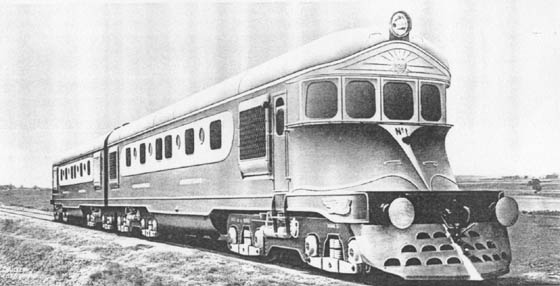
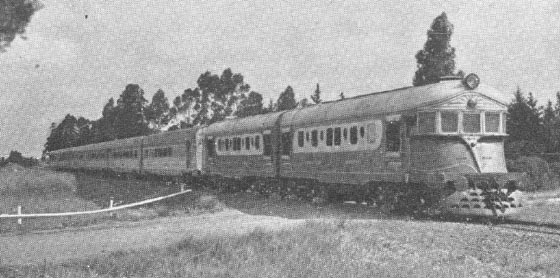
Central Argentine Railway single & double railcars, powered by Armstrong-Sulzer 6LF19 engines of 275hp at 1,150rpm. These integrally welded all steel vehicles were built by BRCW Smethwick being equipped with mechanical transmission, two with a Vulcan-Sinclair fluid coupling and Wilson five speed gearbox & two equipped with a five speed SLM oil operated gearbox. The engine, transmission and radiator were mounted on a subframe carried by one of the 12ft wheelbase bogies, the single cars weighed 38 tons and were 76.5ft long and seated 75 passengers. The articulated sets weighed 66 tons with a top speed of 68mph.
The above view featured in the annual overseas supplement to a November 30th 1938 edition of the Railway Gazette and describes them as two 880hp Armstrong Whitworth diesel electric locomotives, numbered CM204 & CM205 (CM204 nearest the camera). The text further identifies them as recent deliveries (1937) from England for use in working the heavy trains to/from the southern ports in Argentina. These locomotives were initially shipped to Ceylon for brief testing there prior to onward shipment to Argentina - these must have been produced close to the end of locomotive construction by Armstrong Whitworth.
During the early 1930's the North Western Railway of India were showing interest in the possibility of testing main line diesels and recognised the work being done by Armstrong Whitworth in this field. Feeling that an order would be forthcoming Armstrong Whitworth set about building two 5ft 6in gauge locomotives which would bear many similarities to the Universal locomotive tested on the LNER during 1933/34.
The two locomotives were built under order DT23 carrying Works numbers D27 & D28. They were each powered by an Armstrong-Sulzer 8LD28 eight cylinder engine, delivering 800hp at 700rpm. Laurence, Scott & Electromotors provided the main generator, whilst Crompton Parkinson supplied the three 250hp axle-hung, nose suspended traction motors. They were force ventilated and drove through a 61:17 reduction gearing. Similar to other large diesels built by Armstrong Whitworth this locomotive was equipped with a Armstrong-Saurer 6BLD auxiliary engine producing 75hp at 1,600rpm. This engine/generator set was mounted transversely in the engine room between the main engine and the cooler group. It was used to supply all the auxiliaries and start the main engine.
With the expected order from the North Western Railway of India not forthcoming (it would arrive later, but for two larger machines) Armstrong Whitworth looked for the opportunity to test these two machines elsewhere. This came from the Ceylon Government Railway, with the locomotives shipped late in 1934 on the SS Belray, with unloading taking place at Columbo during the first week of January 1935. They were numbered 800 & 801 and were used on the Indian Mail trains between Columbo & Talaimanna, with loads up to 18 bogies coaches weighing 500 tons. Depending on the rosters the weekly mileage varied between 2,000 & 2,400 miles. Both entered service during February 1935, but D27 was stopped soon after when a traction motor suffered a broken banding wire. The locomotive visited the Workshops for repairs, in lifting the locomotive to drop the axle out of the rigid frame a chain broke causing the locomotive to fall to the floor. Although examination revealed no serious damage the engine mounting had been put out of alignment, leading to the failure of the crankshaft late in July 1935. D28 suffered a cracked cylinder block at the end of May 1935 and was taken out of service.
With their service now finished in Ceylon Armstrong Whitworth offered to sell each locomotive for GBP15,000 plus a quantity of spares, the offered was turned down by the government. The locomotives were then shipped back to Scotswood where they were reconditioned in the hope of an eventual sale.
During 1936 the two locomotives were sold to the Buenos Aires Great Southern Railway, being shipped on the SS Leighton during December 1937 to Argentina. Prior to shipping they had received modifications as required by the sales order. They were given numbers CM204 & CM205 and after inital testing were placed in service on the night trains between Buenos Aires and Bahia Blanca, operating these services alongside CM210.
The engines were derated to 600hp after the failure of a piston, however their reduced power did not materially affect their performance on nthe overnight trains. More serious problems affected the engine of CM205 during 1939 when it suffered a major failure resulting in the fracturing of the cylinder block. The damaged engine components were returned to Sulzer, Winterthur for repair since Scotswood was no longer available for railway work. Unfortunately World War II intervened and the components remained in Switzerland, CM205 would not run again. CM204 was transferred to the milk train service between Buenos Aires and Canuelas, covering about 230 miles daily. It continued in service until September 1943 when the locomotive sustained considerable fire damage, reportedly due to sparks from the brakes igniting oil and dirt deposits on the frames. CM204 joined CM205 in a laid up state, remaining as hulks until scrapped according to railway records during December 1963.
The Justicialista Locomotives
During World War Two Argentina like many other nations had operated with its existing locomotive fleet, early in 1945 management of the State Railway adopted a policy of only acquiring diesel-electric locomotives for its lines. A Diesel-Electric Division was established in February 1945 to promote locomotive construction - this was to be located in the National Port Authority shipyards on Demarchi Island, Buenos Aires.
Although under the management of naval and shipyard personnel the retired engineer Pedro Saccaggio remained honorary consultant and advisor to the project. The manufacture of thirty narrow-gauge locomotives was envisioned whilst new passenger coaches were to be built at other railway workshops. In March 1945 a total of Pesos 22.4 million (GBP1.4 million) was allocated for the acquisition of tools and equipment and for the purchase of eight Sulzer diesel-electric engine/generator sets. Construction commenced on two locomotives, although this was soon halted with just the frames and parts of the bodysides completed - foreign currency required to buy further materials was in short supply. With the project halted, the two incomplete shells were moved to the former Buenos Ayres Western Railways workshops at Liniers and the Sulzer engines placed in storage.
During 1949 new diesel locomotive deliveries started to take place, and until 1954 these were all from American builders. As detailed above no post-war locomotive construction had taken place within Argentina, however the above photograph shows one result of the first attempts in 1951 utilising the eight Sulzer engines unused from the earlier project, axle loading was only twelve tons made possible by a Do-Do+Do-Do wheel arrangement (though it may be a Bo-Bo - Bo-Bo + Bo-Bo - Bo-Bo arrangement if each set of paired axles in the four axle truck frame are independent of each other). Maximum speed was 150kmph (93.7mph) - a high speed for a locomotive with such a low axle loading! P.C. Saccaggio was the designer of this unusual machine, hearkening back to the early diesel days in Argentina; each locomotive carried four 735hp 6LDA25 Sulzer engines. Electrical equipment was provided by Oerlikon (main generator) and English Electric (traction motors - 16 in total!).
Gauge: 5ft 6in (1,676mm)
Bogie detail: Each bogie apparently had two pairs underslung equalizing beams connecting respectively the outer pair and inner pair of axles. possibly these beams also acted in the manner of Beugniot levers, to help with curving. Thus, they were dual-function, and not simply equalizing beams. Concomitantly, the coil primary springs acted centrally on each beam, rather than towards the outer ends. The inclusion of the steering function, if that was the case, would likely have determined the preference for underslung beams in this case.
These locomotives were numbered CM1 & CM2, these numbers were originally carried by two diesels acquired in 1929 and long since withdrawn. After construction was completed the locomotives were rolled out to the public on October 19th 1951 close to Retiro Station. The ceremony included the President, Gen. Juan Domingo Peron and designer and engineer Pedro Sacaggio.
Despite the characteristics of this double-diesel it was mostly put to use on the Mar del Plata express, hauling new light weight cars built by Budd, the destination being a fashionable seaside resort. During the summer the train ran daily making one round trip, each leg taking 4hrs 45min to cover the 250 miles. This did not tax the diesel greatly, but it was a considerable improvement on the six hours taken by the steam powered expresses. During the off-season the trip was only made at weekends, enough to allow the locomotives to cover 34,000+ miles per year, some 20% higher than the average mileage worked by Argentinian diesels. Other regular workings included trips to Bariloche and Mendoza.
During 1953 the express 'El Marplatense' (Buenos Aires - Mar Del Plata) collided with a steam train at Camet station, the express was being hauled by the locomotive Justicialista, which was carrying its designer P L Saccaggio.
After six years service on the Mar del Plata express service the two diesels were withdrawn in 1958. The reason appears to have been political, the locomotives somehow being a reminder of the days of Peron, although their designer P.S. Saccaggio was entirely apolitical - he died in 1959. The locomotives lingered a little longer, CM1 was broken up in 1962 and CM2 in 1963.
'The Locomotive' January 1958 reported that CM1 & CM2 were quite successfull in operation, particularly in light of their four engines and sixteen traction motors! However their true ability as mixed traffic locomotives was never properly exploited, being expected to work over lines with gradients up to 1 in 80.
Mr Saccaggio also attempted to create an Argentine standard locomotive engine, with the initial batch being constructed by a European builder. The basis for the planning was the Sulzer engine design modified to his own requirements. Fiat eventually took up construction, building eighty engines of the eight cylinder vertical type rated at 1,050hp at 700rpm, with a maximum output of 1,200hp at 750rpm, a second order was completed for two hundred engines, which were all shipped to Argentina and stored, it was not until 1958 that an Italian consortium completed the other portions of the locomotives!
During World War Two and the following post-war years Argentina came under the sphere of influence of USA financial happenings, leading to the majority of locomotive purchases during the 1950s to come from a variety of American builders, orders received by Europe were very few.
Written Sources:
Picture Sources
Page added January 14th 2004.
The engine was a William Beardmore & Company, Glasgow eight-cylinder inline diesel of 375 hp at 700 rpm. Each cylinder had a 209 mm bore and 279.4 mm stroke. The total cylinder capacity was almost 27.5 litres. It was this locomotive that made the record journey of 1,239 km from Buenos Aires to Cipolletti, province of Rio Negro in 20 hours 35 minutes, at an average speed of 62 km/h.
"The Diesel-electric trains are working well in our ordinairy suburban time-table service, and I made two or three trips in them. The running was smooth throughout, and the starting and stopping quite as rapid as the ordinairy electric service. The experiments carried out so far have been so successful that we are ordering a higher powered Diesel engine and three larger mobile power houses, so that we can run trains of eight instead of five coaches as at present. The results so far obtained are in every way satisfactory, and I am hoping that we have solved the question of electric traction at a minimum cost with the maximum of efficiency, as we get all the advantages of electric train-running without the necessity for the third rail, overhead wires, or of obtaining power from outside sources..."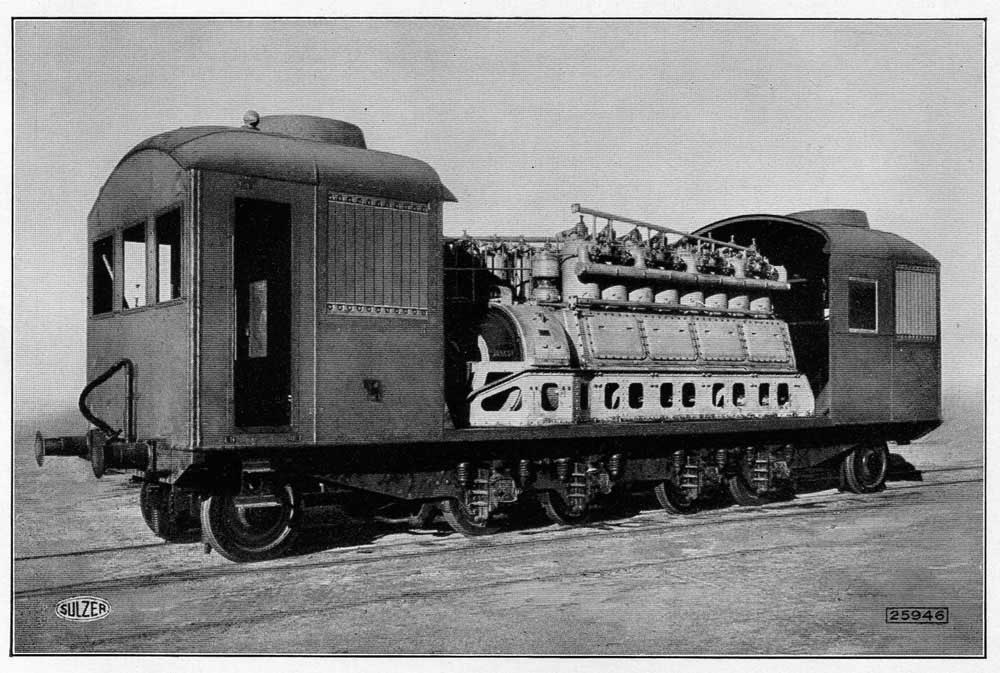
Photograph courtesy BAGS/Armstrong Whitworth/Sulzer.
Photograph courtesy Sulzer.
Photograph courtesy BAGS/Armstrong Whitworth/Sulzer. 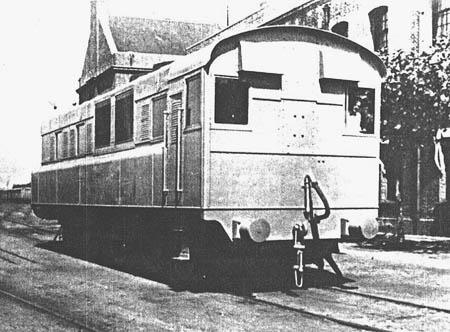
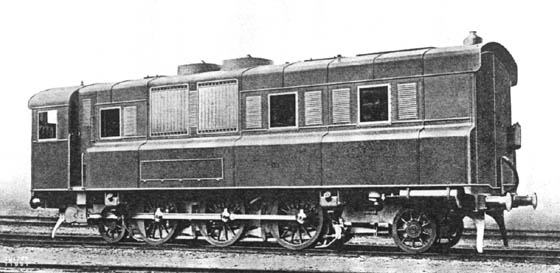
The above view clearly shows the two cooling unit radiators and fan shrouds - one system cooled the water, the second cooled the oil used in the hydraulic transmission. The locomotive's overall length was 42 feet, rigid wheelbase 26ft 9in, driving wheel diameter 4ft 7.5in. The engine was carried at the cabless end, the reduction gear was in the center with the hydraulic unit and the jackshaft output to the wheels at the cab end.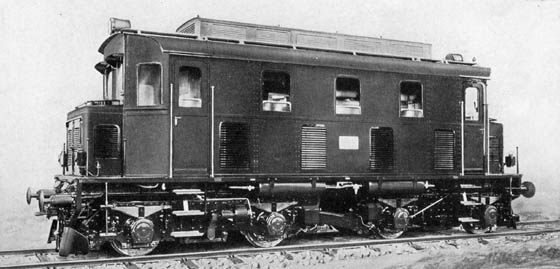
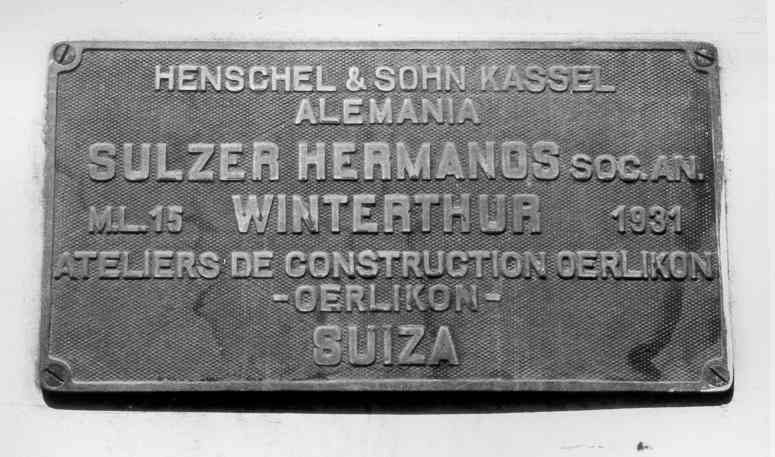
(Above & Below) Two factory portraits from slightly different perspectives of one of the three shunters built by Henschel Locomotive Works, Kassel during 1931 for the Port of Rosario railway. They were powered by a six cylinder 330hp Sulzer engine with Oerlikon electrics and were built for 5ft 6in (1676mm) gauge track.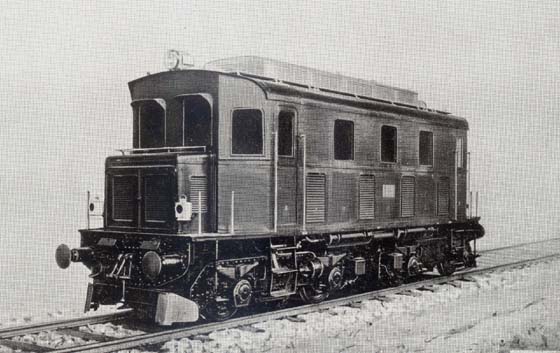
These shunting locomotives were 36 feet long over the buffers, weighed 58 tons with a maximum speed of 45 kmph. They were recorded as handling freight trains weighing up to 1,550 tons. The power units fitted were one of the transition models used between the LV & LD series. They carried a one piece cast steel crankcase and a one piece cast iron cylinder block - the earlier 1929 LV build engines had a single piece cast iron crankcase surmounted by six individual cast iron cylinder blocks.
Maximum Tractive Effort: 14,000kg (30,800lb).
The locomotives were designed to haul 1,200 tons at 2.5mph on level track.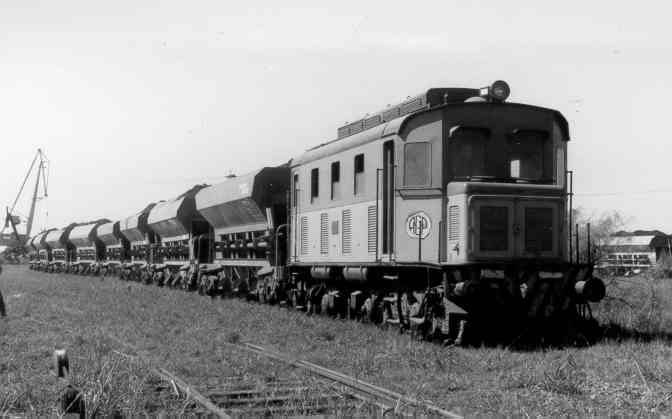
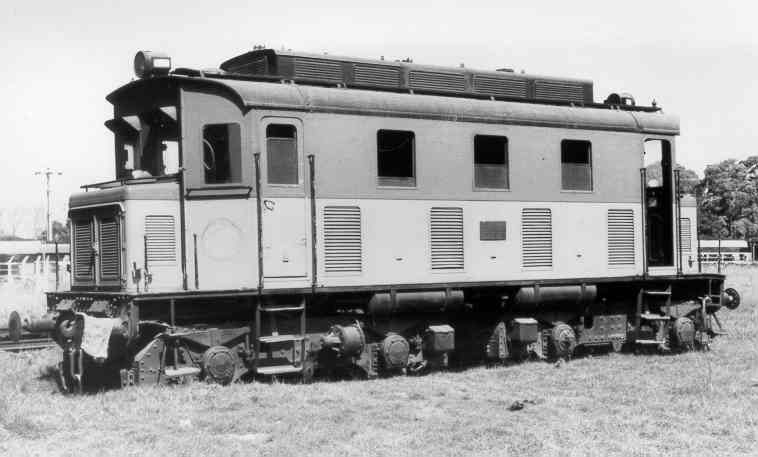
Photographs courtesy Phil Graham - many thanks!!. 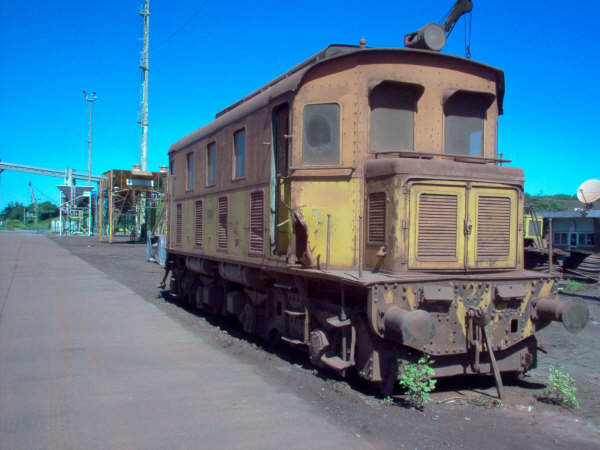
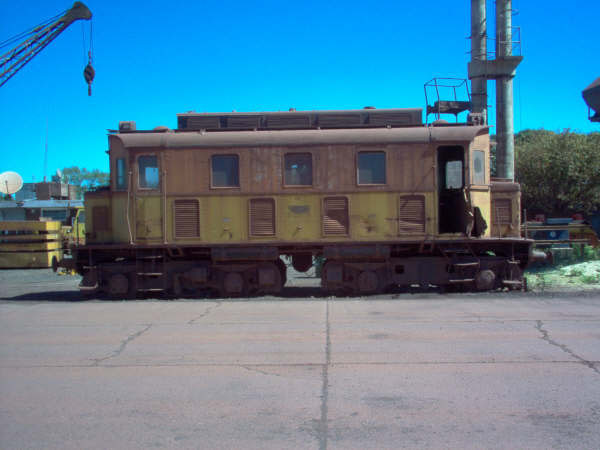

Photographs courtesy Cristian Huck - many thanks!!. 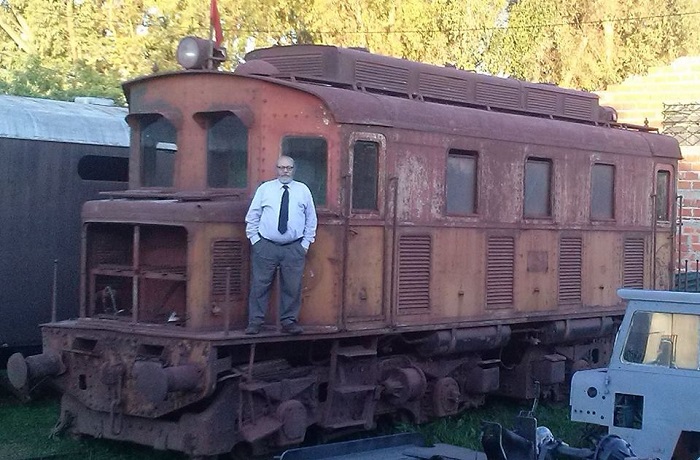

Photograph from Armstrong Whitworth files.
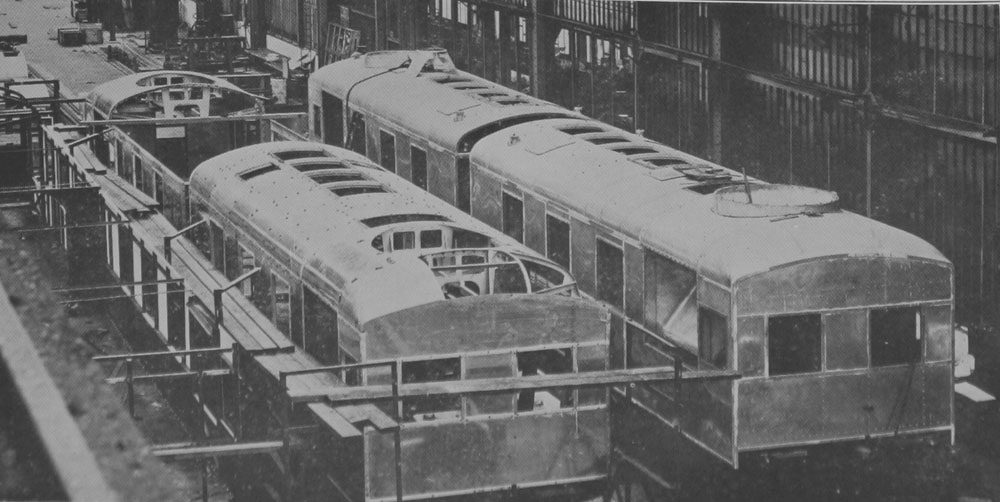
Photograph from Armstrong Whitworth files.
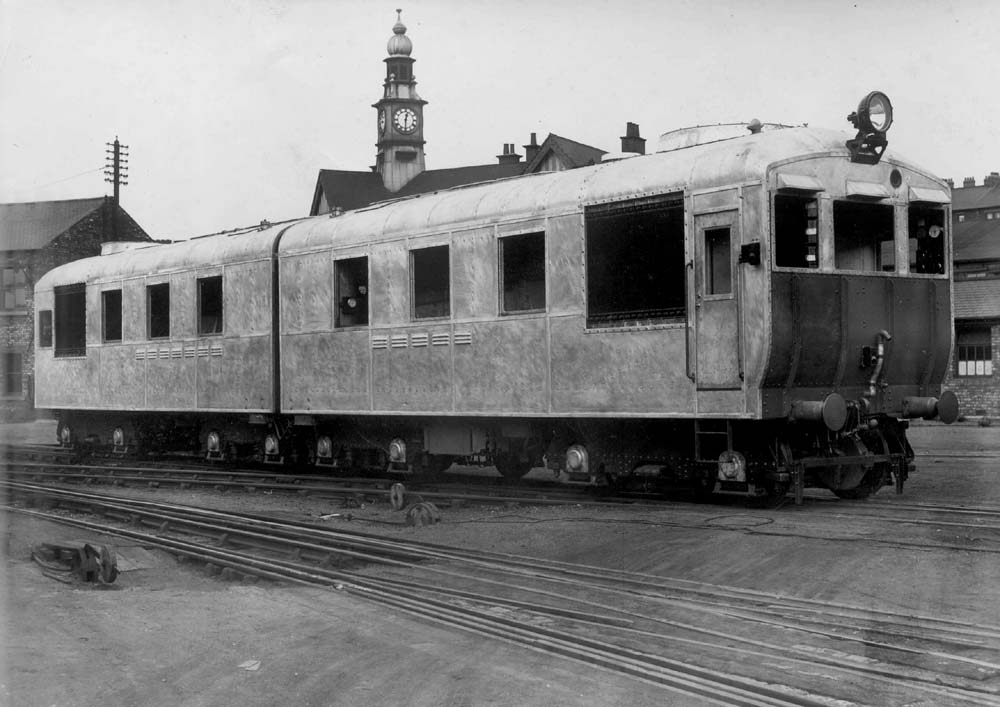
Photograph from Armstrong Whitworth files.
These three mobile powerhouses were direct descendants of the 1930 built UE 1 & 2. Improvements included the use of two four axle trucks rather than the earlier rigid wheelbase. Each 'locomotive' was comprised of two half units permanently coupled together, each containing an engine generator set, though only one unit had a driving compartment (an A-B unit in American diesel nomenclature). A third innovation was the use of Messrs J Stone & Co's 'Skefco' roller bearings on all axles, a welcome fitting in the dry dusty conditions of Argentina. The coaches were also fitted with roller bearings, some of which were noted still in use in the late 1960's.
UE3: April 27th 1933 & June 12th 1933
UE4: June 20th 1933 & July 12th 1933
UE5: July 31st 1933 & July 31st 1933
UE3: 1,610,180 miles
UE4: 1,483,888 miles
UE5: 1,570,101 miles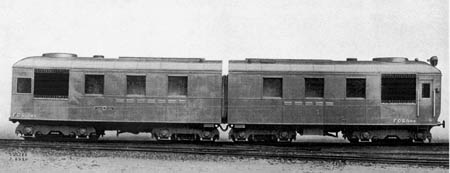
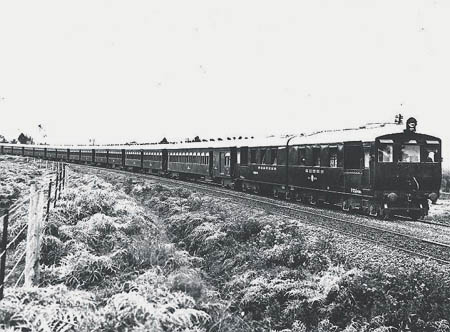
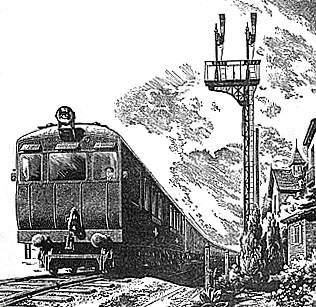
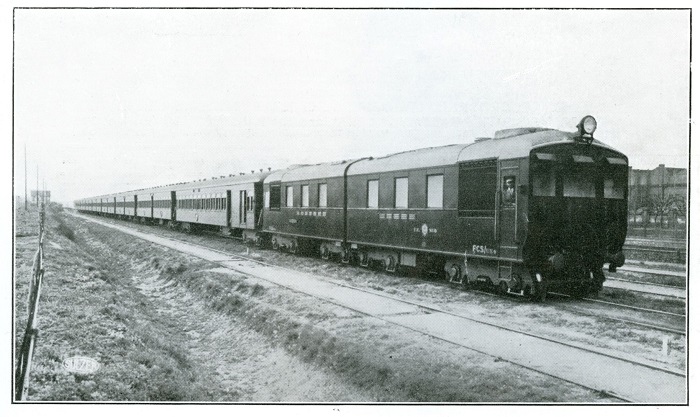
A view from a 1933 issue of Diesel Railway Traction advertising Sulzer diesel engines shows the two 1,700hp mobile power houses with a lengthy train. On November 8th 1933 the chairman of the BAGS included this statement about the early diesel experiments on the BAGS in Argentina: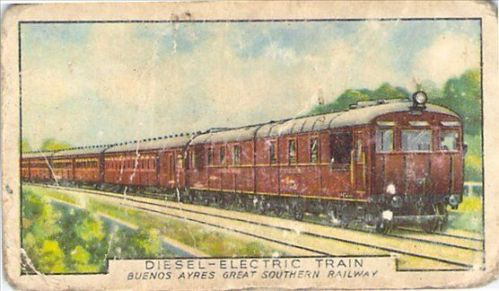
9,750 miles after delivery, testing & trials on local services
57,000 miles between October 1933 & April 1934
140,000 miles between December 1933 & December 1935
381,101 miles total reached sometime during 1938
1941/42 averaging 8,840 miles per month at an average cost of fifty cents per locomotive kilometre (20 cents operating & 30 cents maintenance)
798,822 miles total reached sometime during 1943
1,808,584 miles at withdrawal in 1960
Running in turns to Canuelas: 96 miles round trip
To Olavarria: 427 miles round trip
To Bahia Blanca via La Madrid: 434 miles one way
To Bahia Blanca via Pringles: 425 miles one way
The rigid plate frame wheelbase in UE1 & UE2 created problems with vibration and the changing of traction motors, leading to the use of bogies in UE3 - UE5 & CM210.
CM210 had the ability to be either a passenger or freight locomotive, but only by changing the gearsets in the Workshops - the addition of an intermediate gearset made the locomotive much more flexible in traffic.
The self ventilated traction motors suffered from overheating on heavy trains at low speeds - force ventilation was the solution and would also have minimised dust & dirt ingress into the motors, reducing the incidents of flashovers & arcing.
A similar ventilation/airflow problem was found in the engineroom where the presence of a slight vacuum led to dust and dirt entering the space and causing problems to the power & electrical equipment. Additional airscoops were located above the driver's cab front windows to resolve this issue.
The body itself created problems, the locomotive had been built with alumimium sheeting over a steel framework, over time the aluminium suffered from warping, bulging and cracking. Likewise the fuel and water tanks were prone to leakage due to their lightweight construction.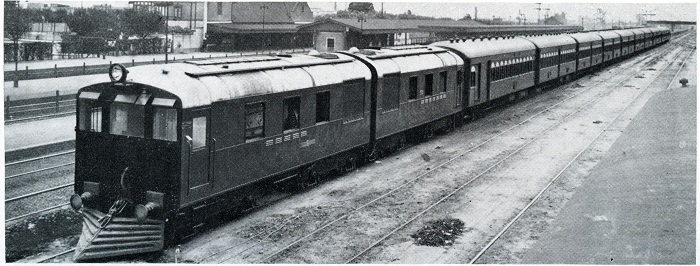
53,000 to April 1935
80,000 to July 1935
126,918 to November 1935
228,300 to end of 1936
621,000 to October 1940
1,125,000 to end of 1947
At withdrawal the official mileage shown was 574,679 which clearly disagrees with the other quoted mileages.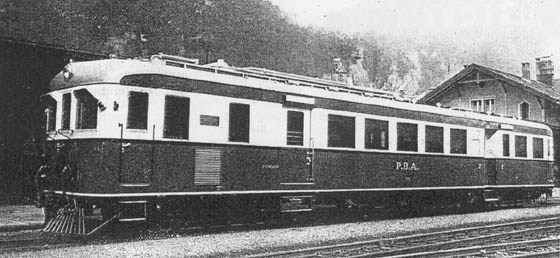
A view of railcar (furgon) M1 whilst on test in Switzerland.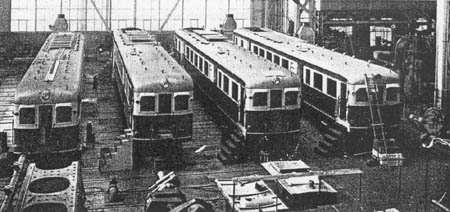
Control of the engine speed and current supplied by the generator to the traction motors was through a large hand operated wheel situated in each driving cab. An automatic excitation regulator, mounted on the engine and worked by air pressure operated in conjuction with the engine governor allowed the output as set by the controller to be maintained constantly by the engine. This allowed for economic operation of the engine at any of the four pre-selected speeds (600, 800, 950 & 1,100rpm) and prevented the possibility of overloading the engine. A dead-man control of the foot pedal type was also fitted.
1
2
3
4 Mileage (km) 193,974 206,393 198,390 213,972 Total fuel consumption (tons) 59.3 68.1 65.8 73.0
Fuel consumption per km, grams 342 348 368 372
Total lubricating oil consumption, kg 804.5 734.5 406.5 681
Number of oil changes 5 4 4 6
Average km per oil change 35,000 49,000 45,000 33,000
Intervals between overhauls (km):
to first one
to second one
to third one
7,050
47,280
97,742
25,396
77,226
92,950
32,842
24,586
72,262
32,193
56,771
22,503Longest continuous time in service (days) 265 197 178 180
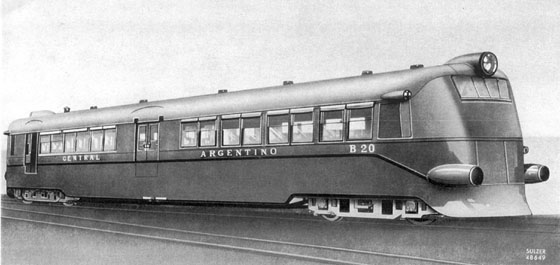
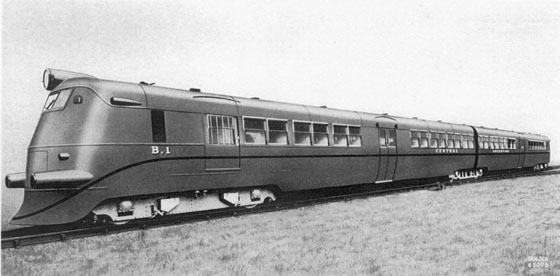
Stylised views of the single and articulated railcars built by BRCW, Smethwick.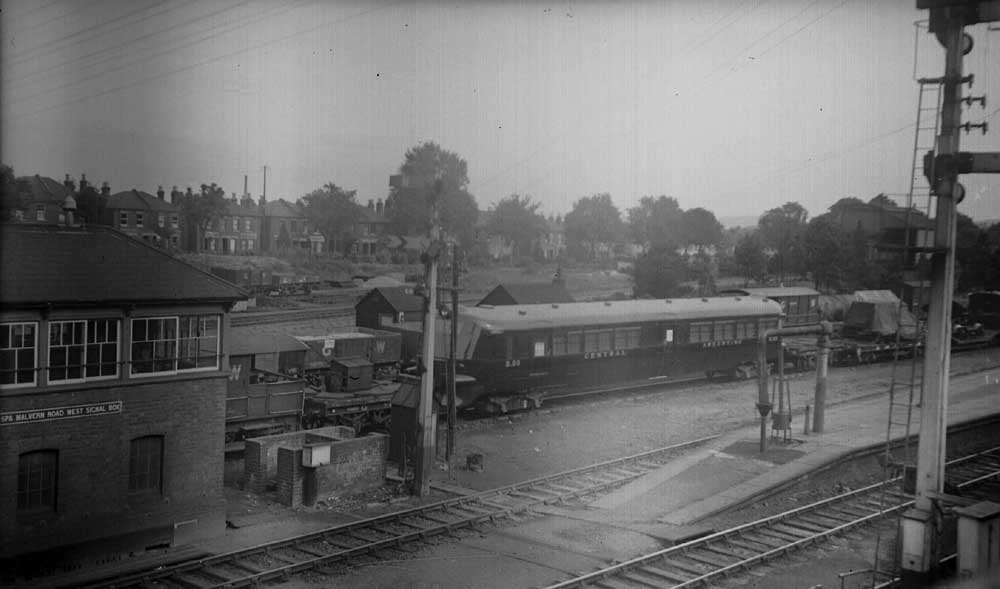
Photograph collection of webmaster. 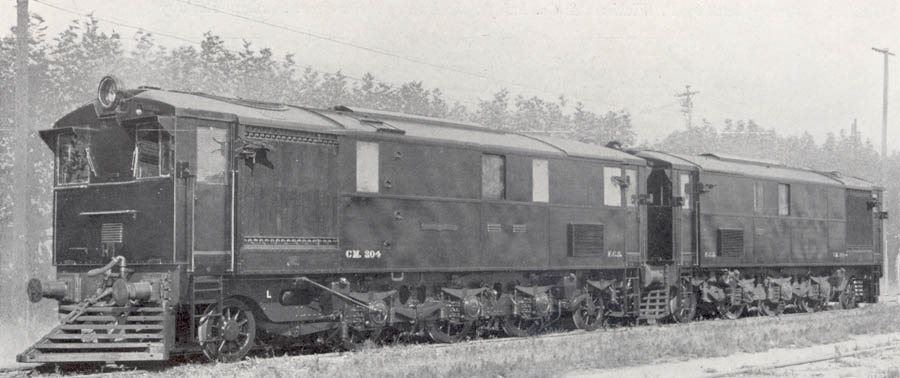
Weight in service: 229 metric tons
Axle Load: 14.3 metric tons
Length over buffers: 39.116 metres (128ft 4in)

Sulzer Technical Review #2 & #4 of 1930
Sulzer Locomotives et Automotrices Diesel, 1931
Armstrong Whitworth Record, Autumn 1932
Sulzer Technical Review Special Edition 1933
Diesel Railway Traction October & December 1933
Diesel Railway Traction October 4th 1935
Diesel Railway Traction September 30th 1938
Railway Gazette, Overseas Railways Edition 1953
Diesel Railway Traction July 1959
S Damus, DIA Agency Inc, Ottawa Canada - distributor of materials for the History of Argentine Railways.
Alan Morley.
Steve Palmano.
Armstrong Whitworth: A Pioneer of World Diesel Traction, Brian Webb (2010).
British Steam on the Pampas, Douglas Stewart Purdom.
AAT: Asociacion Amigos del Tranvia
AW: Armstrong Whitworth
DDT: Development of Diesel Traction
DLR: Diesel Locomotives & Railcars
FMF: Fundacion Museo Feroviario
MFN: Museo Ferroviario Nacional
Last updated November 8th 2025.