The Very Beginnings
For this particular page of railway memories, the story truly starts at the beginning, which in this case is at Walton hospital in June 1942 when our storyteller, Mal came into the world. Seven days later, whilst Mal was at the hospital he was joined in the nursery by no less than the recently delivered Paul McCartney. Mal along with many others was born into troubled times. World War Two was raging, with the Liverpool area regularly a target for Goering's Luftwaffe bombers due to the importance of its docks, warehouses and industry. Mal's family had already been directly involved - Mal's dad had been part of the Narvik campaign in May/June 1940, his ship, the Polish passenger ship 'Chrobry' was torpedoed and sunk on May 14/15th 1940 by German bombers. Then in 1941 his father's house in Liverpool had been destroyed in an air raid.
Out of School
After leaving school I joined ship brokers E H Mundy at the Georges Dock building pier head as office boy. I enjoyed going round all the shipping offices in Liverpool and also remember seeing the overhead railway being taken down. Memories include the last trams at the pier head, the last big liners coming into Liverpool, exploring the ruins of Custom House, what a building that must have been in its heyday before the war. And then there was the music, I heard the first single from Buddy Holly and the Crickets and became a fan. Another young guy in the office was also a fan so when the band played in Liverpool on March 20th 1958, we booked immediately for the first show. The performance was great, there were many American serviceman present from the nearby American Burtonwood base. When after 18 months they wanted me to stay in the office and learn to be a clerk, I refused so they fired me!
Welcome to Bank Hall
New employment came in 1960 with British Railways, starting at Bank Hall, shed code 27A, as an engine cleaner - what a relief this was. The entrance to the depot was off Stanley Road facing the old Royal pub, I was just 18 years old, cleaning steam locos, enjoying great company and had a good laugh.
Our foreman cleaner was Fred Bryce, a fit guy for his age, used to jump across the pits, the cleaners would book on at two hour intervals, Fred would give the senior cleaner the list of engines to be cleaned, you would sort out yourselves who worked on what. The tenders required cleaning with long brushes, if the locomotive was outside over the pit we would turn the water column on and swill the solution off. The motion had to be cleaned down with an oil based solution, you used cotton waste - it would get stuck everywhere, up your nose, over your clothes, horrible stuff. The boilers were cleaned with yak, a white based solution. The senior cleaner was most times sent out for a firing turn, once the job was done we would play cards in the tenders of dead locomotives. On nights we were only allowed in the mess room for our break, there was always a card school going on! We would climb to the top of the coal hopper and drop coal down onto the fitters cabin while they were asleep.
These times did not last too long, very soon you would get more firing turns, Old Fred would get the shedman to move 40684 over No.8 pit, then connect the steam lance to the injector water feed, then we would steam clean the oil from pits and walkways, this was not long before 40684 went for scrap.
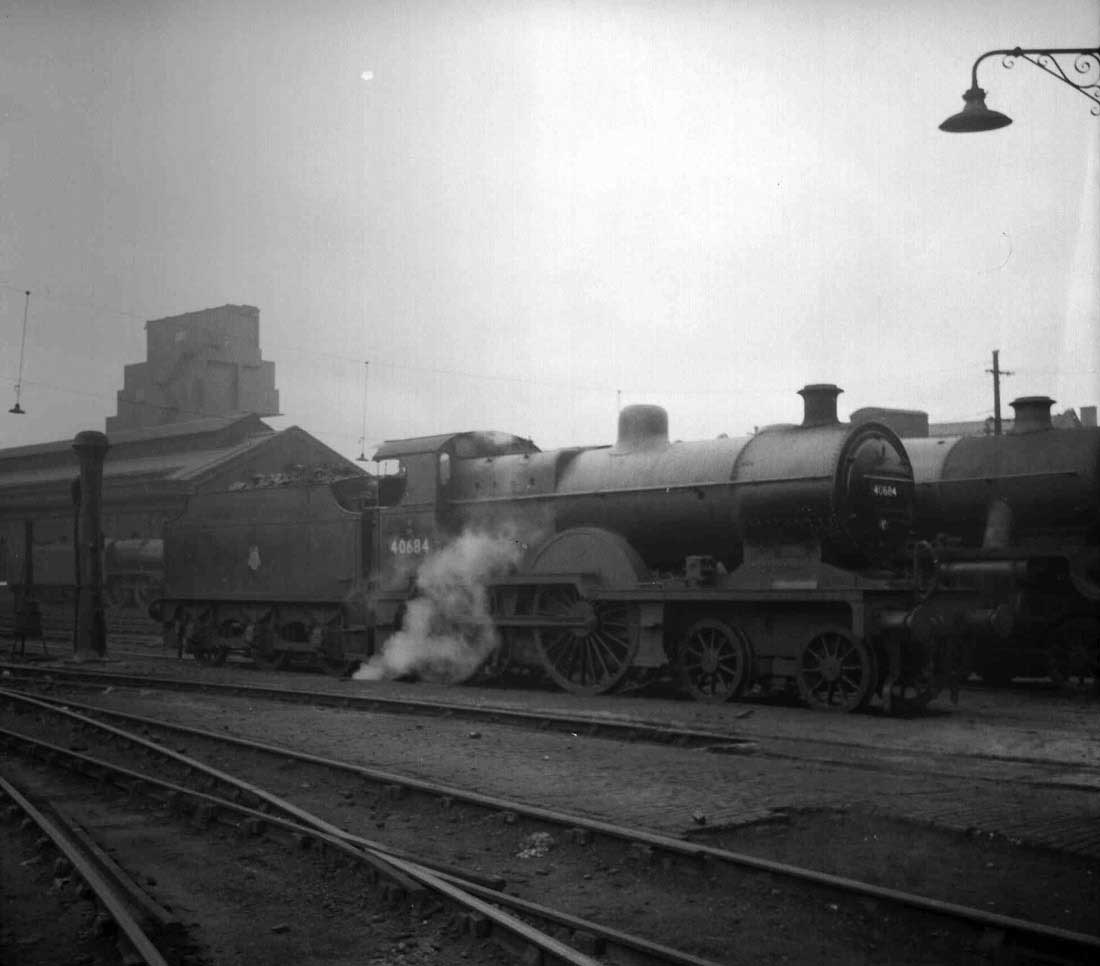
40684 was a representative of a large fleet of 4-4-0 2P locomotives built by the Midland Railway and the LMSR between 1882 & 1929. No.40684 came from the LMS batch constructed between 1928 & 1929 numbered 40563 - 40700. By the summer of 1962 only seven remained in service, 40684 was not one of them.
In the above view to the left is the Wigan shed. With Bank Hall being the A shed for the area they used the Wigan shed for locomotive overhauls, it was equipped with a wheel drop, blacksmith, metalworkers etc. Locomotives from the sheds under Bank Hall would come for repairs, a train hauled by a Class four tank came in most days from Wigan Wallgate L & Y Shed 27D. This shed was close to Wallgate station, Springs Branch shed was quite a distance from both stations at Wigan, we were allowed forty minuets to walk from Springs Branch to the station. We never got Brunswick 27F locomotives at Bank Hall, this shed had not been under Bank Hall for long.
We would play football on dust bowl alongside Wigan shed, from time to time we were joined by fitter's mate Billy J. Kramer, he was always combing his hair. I remember looking across to the main line and watching the trains going into Liverpool, the firemen with dirty faces, thinking that will be me soon. I fired 40684 once on the Kirkdale shunt, the cab was very open to the elements, uncomfortable seats, like they did not want you to sit down. At that time you got no pay if you were off sick. You had to go to work sneezing and with runny noses, no choice. We were also sent out to knock people up on nights, two cleaners would be sent together. Some men got angry when you banged on the door at four o'clock in the morning, others were happy if it was for driving. I did not like that job.

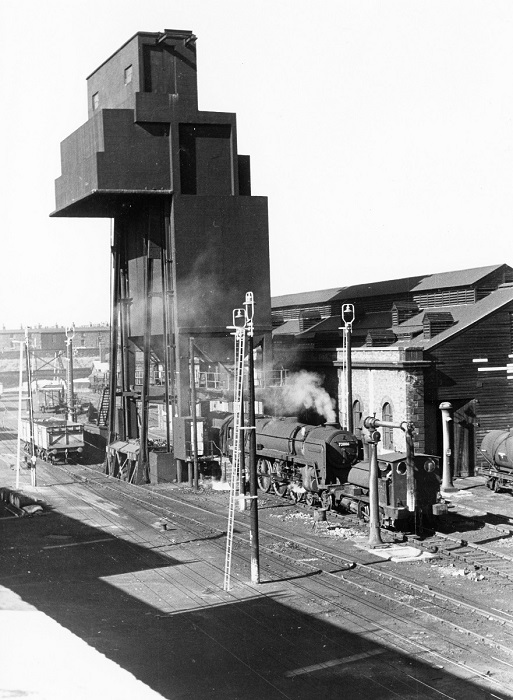
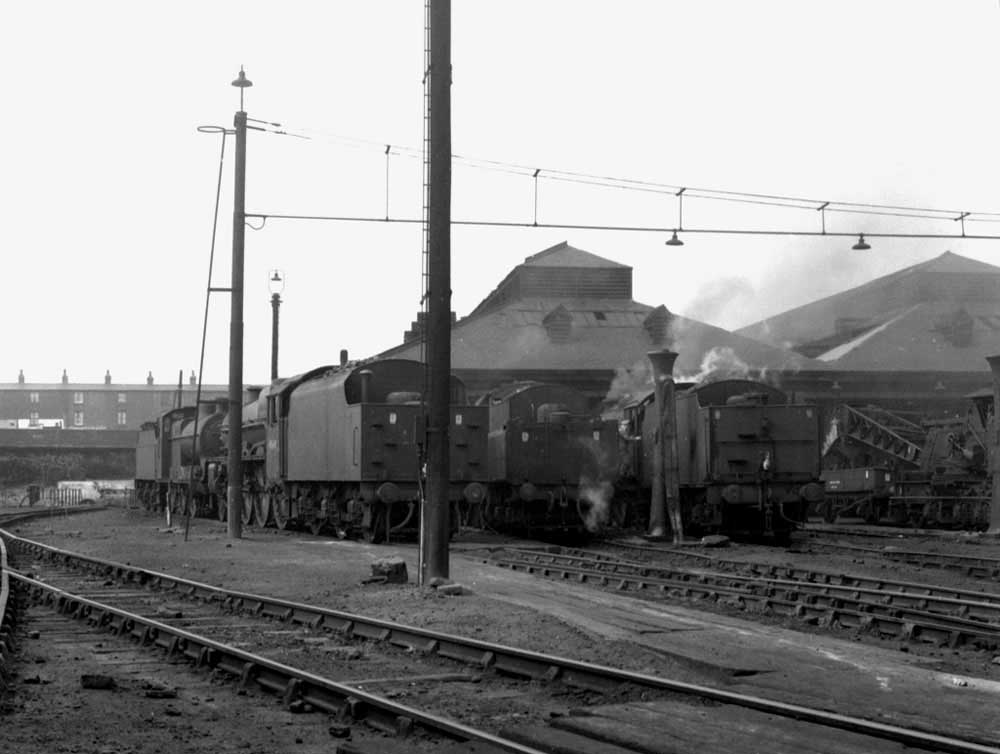
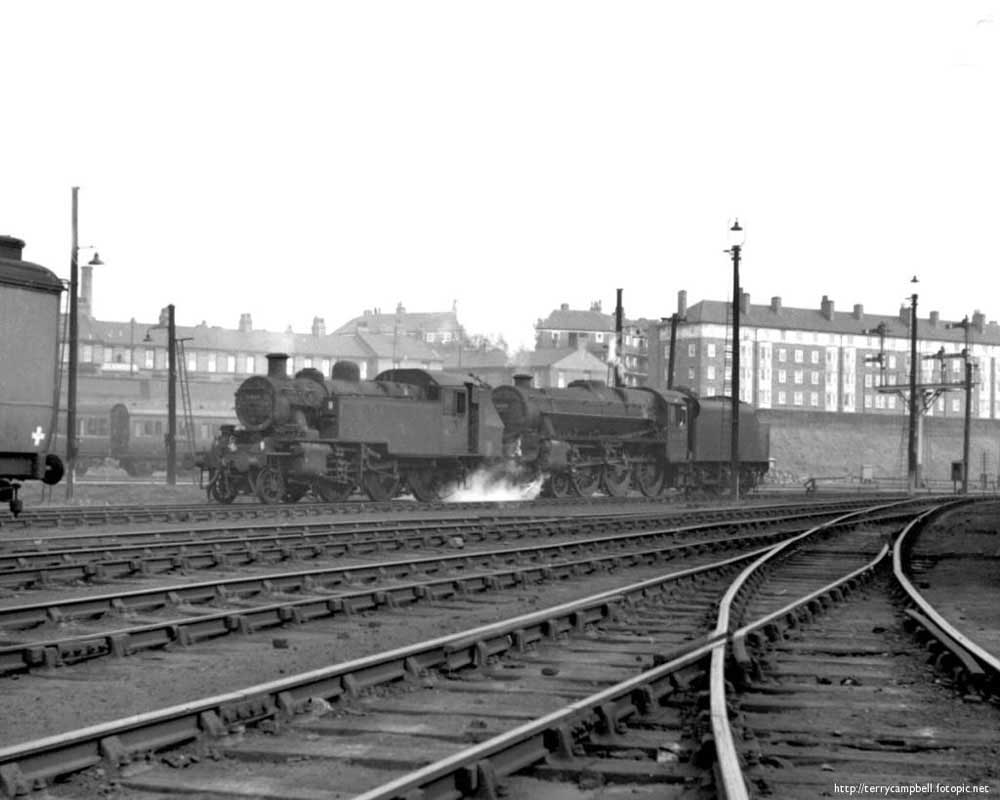
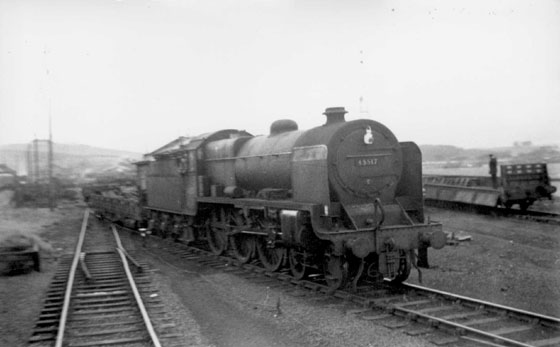
After two months I was sent to Aintree, shed code 27B, to learn how to be a fireman, an old coach alongside Aintree shed was used for this purpose. The instructor was Harry Bailey, a Southport man. No one ever failed the course so I was now a passed cleaner and able to go out on trains. My first firing turn was shedmans mate on Christmas Day, my driver was Leo Cranny. My second turn was taking 76020 from Bank Hall to Aintree shed. When cleaning engines we often cleaned wrong ones on the night shift, getting the numbers mixed up, for instance 45517 and 45717. The longer you were there on the firing turns the more seniority you got.
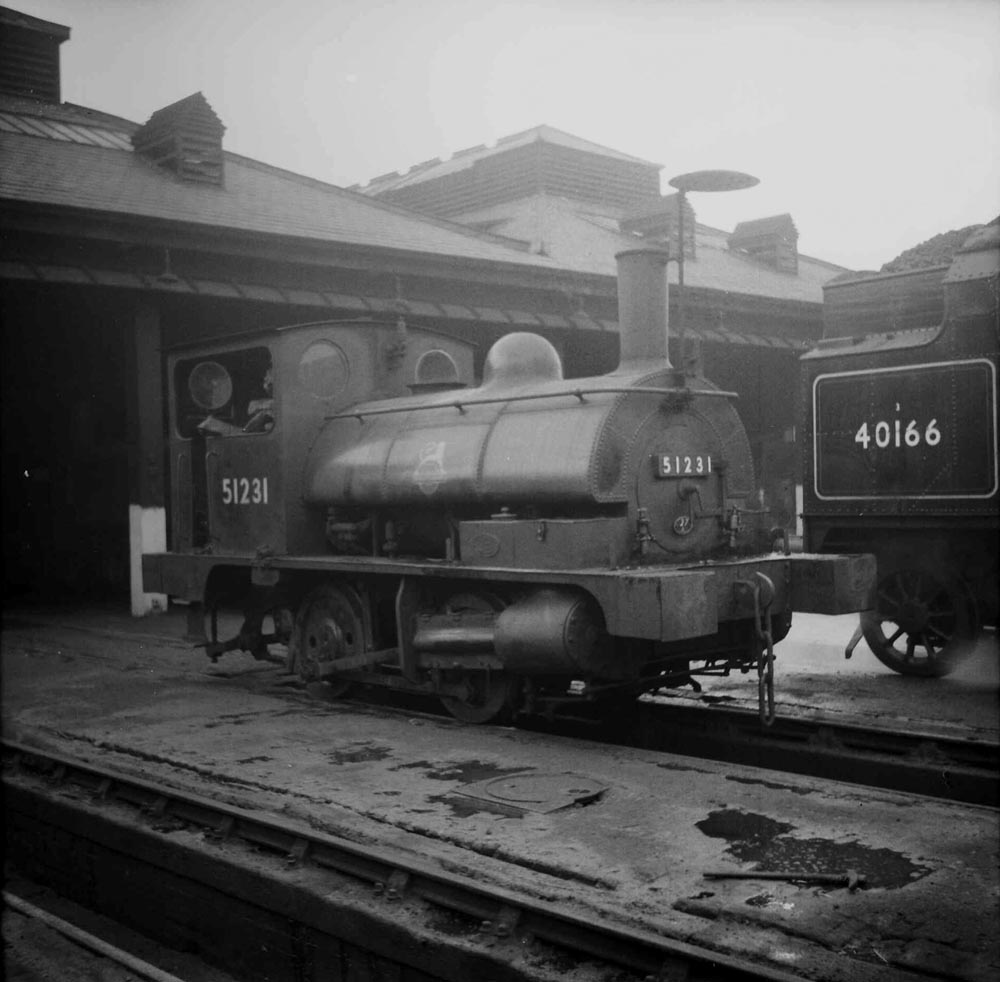
On arrival at Bank Hall Mal would have seen the diminutive Pugs 51206/27/29/32/37/46/53 which were used in the many lines in the docks area. Their time would be short however as the brand new 170hp Yorkshire Engine Co. diesel shunters started to arrive early in October 1960 with the final arrivals in December 1961. Received were D2850-52, D2854-57, D2866-69. Transferred in later were D2858 (July 1963) and D2860 (June 1966 - not long before Bank Hall closed).
With regard to the 170hp diesel shunters we had one stabled at Brunswick yard, they would change over locomotives at weekends. From Bank Hall it was an all day job, you had to go via the Cheshire Lines to Aintree and down to Halewood, then north west paralleling the Mersey to Brunswick yard. This was after the Dock Board stopped you going along Dock Road. My last trip across Pier Head was from Park Lane to Bank Hall. Park Lane closed not long after.
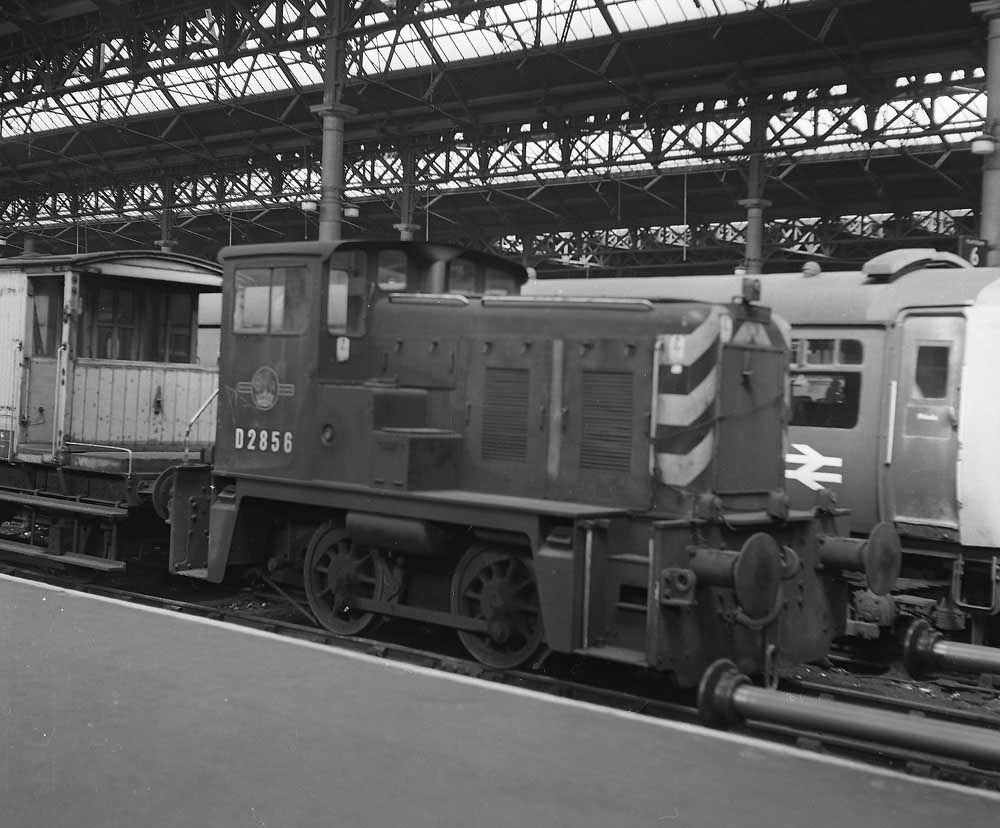
An early group of firing turns were with Jinties on 32 and 33 pilots servicing the local coal merchants, busy jobs shunting empty wagons out and loads in. The coal merchants yard was on the other side of road bridge alongside the Southport line. Two other jobs worked by the Jinties were the Canada Dock and Alexandria Dock shunts, these were British Railways yards on Dock Road, the line across this road led straight onto the Dock Board line, which remain in use today (2008). Edge Hill men using Super D's would trip across the Bootle branch to pick trains up in these yards, and return them to Edge Hill sorting siding to be shunted.
The Kirkdale shunt involved arranging coaches for booked trains and specials, locomotives 41205, 41268 & 41269 were used on this job. A trip to Liverpool Exchange on an afternoon job was to bring Glasgow empties back to Kirkdale. The other job the same three locos were used on was station pilot, on the early turn on this job you would relieve a train from Skipton, the locomotive was called by some men a Chinese four, also called a flying pig, it was taken to the shed and then book off. On the late station pilot you would bring a run of coaches up to Kirkdale as the last job, then onto shed. These were the jobs the passed cleaners started on, and of course the passed firemen. The cleaners were also sent around the area.
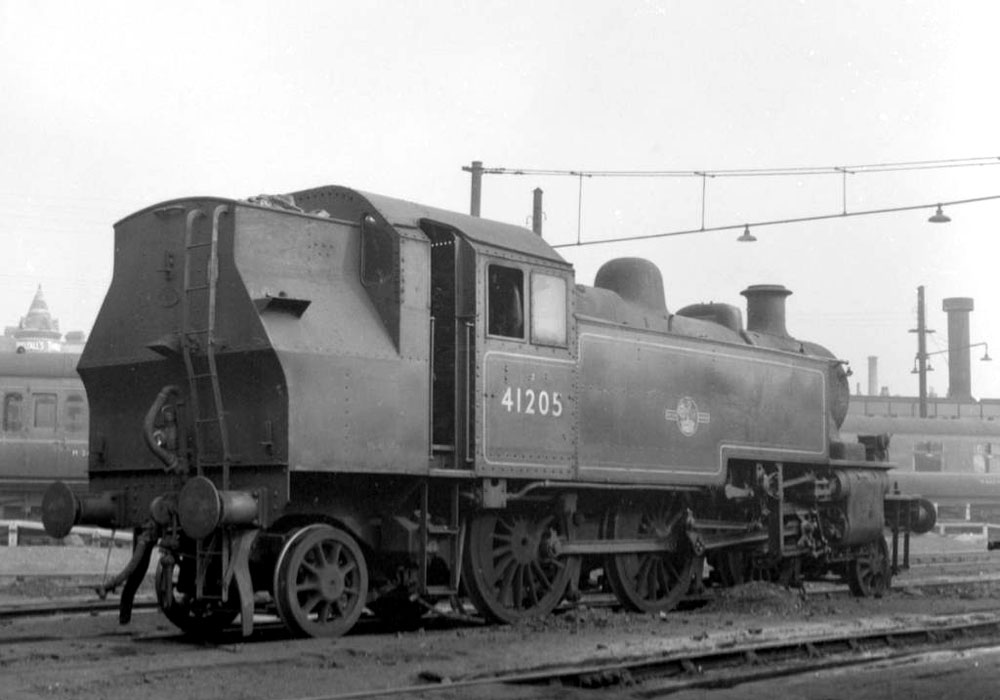
The Link working at Bank Hall was relatively straight forward. Being a smaller shed the links including the No.1 top link contained eight of the senior drivers who were fit for main line duties. Larger sheds with more work would have twelve men in the link. This link contained the top work at the depot, with the most mileage jobs, to Carlisle, Bradford & Leeds, Windermere, etc. Regrettably over time some senior drivers from the top link would be relegated to the shunt links due to eyesight problems, poor health etc. The No.2 Link contained the next eight drivers, local passenger, some Bradford work, parcels etc. The No.3 & 4 Links were local passenger. The next link was the steam electric link, 24 men in this link with electric work, station pilot duties, the Kirkdale shunt, shedman and disposing, drivers in this link had opted to go forward to electric links. An Extra link was to cover any steam workings. Finally there were the shunt links and the electric link for motormen.
I think when I started we were on a 44 hour week so we would get a rest day every other week. The links were all based on seniority. The fireman would be alongside the driver on the rota, some guys hated their drivers, likewise some drivers detested their fireman, they would try and change turns with another man, getting a good mate was pot luck. The top link men were all over sixty years of age, too old to pick the shovel up and fire the locomotive if needed. The younger drivers from time to time would let their fireman drive. If a top link driver was heavy on the regulator, etc using more steam than need be, making fireman work hard for nothing, every one at shed would say, he's heavy handed, and dread going with him. Everybody had a nickname, one top link man was called the admiral, he liked to top the tank up with water at every chance he got. Another was the moon man, he liked to swap for night turns whenever possible.
On Loan to Neasden
In 1961 I went on loan to Neasden, shed code 14D, there were a number of passed cleaners who went on loan at different intervals. We stayed at the Hamden Club, on Polygon Road (?) not far from Euston station. Some of the passed cleaners would choose to stay at the shed they were on loan to and progress to becoming booked firemen. At the end of the day a group of us would go down to a pub called The Lion and Lamb, close to Euston and spend an evening with the local brew - Mann Crossman & Paulin beer. One person in the group I knew was Mark Dowd, he'd gone to Willesden on loan and would join in the sing-songs that happened after a few beers had been dealt with. Mark didn't come back to Bank Hall, I later met him at Speke Junction and then Kirkdale, later to become a Councilor and Chairman of Merseytravel.
Due to my lack of experience they put us on the local stopping trains to Aylesbury and High Wycombe. On one turn to High Wycombe, I didn't have a clue where we were but we had backed up into the bay and all of a sudden an express came through with two King class locomotives on the Paddington - Birkenhead... what a sight! At Aylesbury the same again happened, this time it was the Master Cutler that came roaring through. I also had my first sight of a Green Arrow. We had a job that required us to go to Neasden station to relieve the train from Nottingham, I think it might have been starlight express? It was a Green Arrow, a no name big engine, we took it down to Marylebone, then turned it on the turntable before moving off to Neasden shed.
When we worked the stopping trains out of Marylebone up through the tunnels to run alongside the Tube and Metropolitan lines, I got quite a surprise when a Metropolitan train came alongside of our train. This route also provided for my first sighting of an electric third rail locomotive, maroon in colour moving quite fast, I think they had names on them. Also at Marylebone there always seemed to be movie cameras, actors and so on?
I spent three months at Neasden shed, it was quite an eye opener, they were so short of men you could get a job whatever time you went to work.
Home again to Bank Hall
On return to Bank Hall I received more experience out on the main line, during 1961 we were sent on loan to sheds under Bank Hall, including Aintree 27B, Southport 27C, Walton on the Hill 27E and Brunswick 27F. We went to Brunswick about five times before it closed on September 10th 1961, it was a very strange shed, it didn't have much room and was very close to the main line.
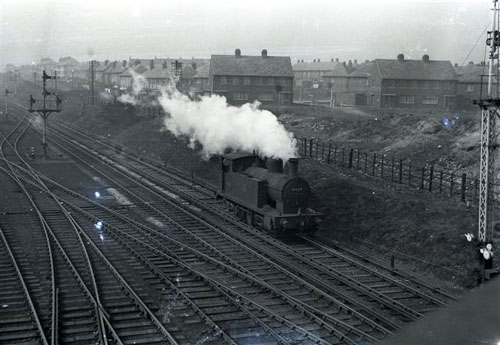
One Saturday during the summer of 1961 I was told to go to Sandon yard and secondman one of the 170hp shunters to the shed, it was about midday as I head out. Before you reach Sandon yard its necessary to cross Dock Road, there was a crossing keeper on duty until the last locomotive finished its duties. Once down at the yard I cannot see the locomotive, and neither has the crossing keeper. I walk over the road into docks, there's a policeman on his beat and when asked he hasn't seen the shunter either. Neither have some dock workers I come across whilst walking around the docks, but one mentions there was a locomotive on the other side of a nearby large warehouse. Off I go walking through the sheds and out the other side, and there's the locomotive parked up with the driver sound a sleep! Once awake the driver wants to know what I'm doing there, I remind him of the time, he revs up and off we go, there's a 5mph speed limit around the docks, but at times we're doing 15mph, there are some tight curves through the sheds. Finally get to where we cross the road, by this time the crossing keeper has gone, so I get to stop the traffic while the driver brings the shunter across, the clanging bell gets on your nerves. We soon get to the top of the ramp alongside Sandhills station, then quickly on to the shed.
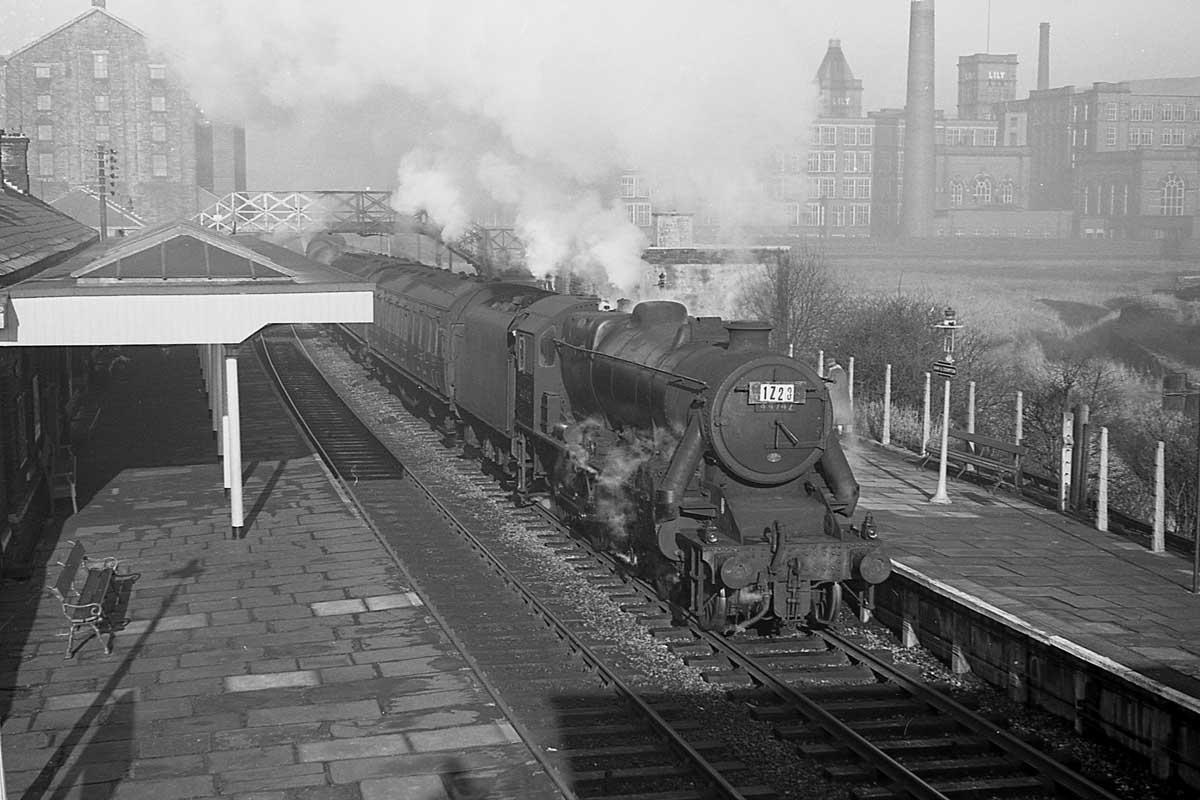
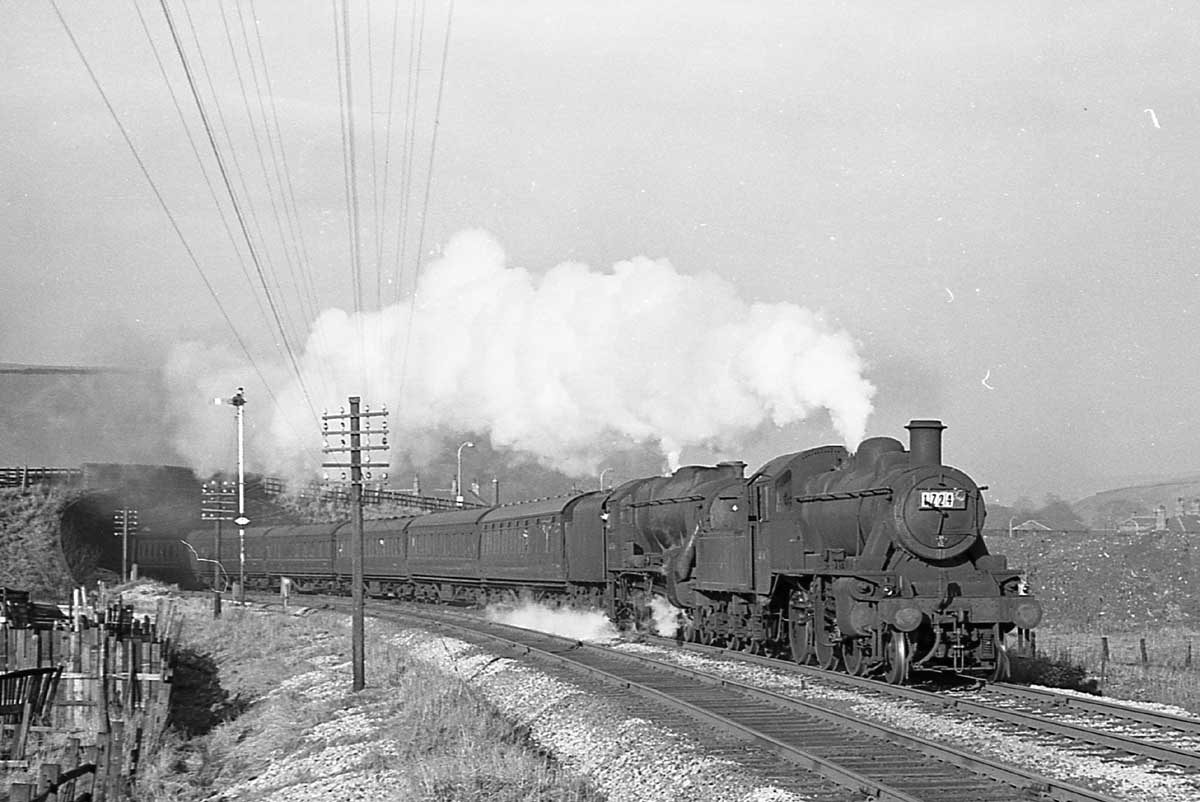
At Bank Hall there were ten pugs and all going for scrap, we had a stack of 170 hp Yorkshire shunters arrive, fitted with Rolls Royce engines. I can remember the shed boss lining a pug and diesel together and taking photos, wonder where they are now. This also meant our Jinties were on the way out. The locomotives left were 41205 41267 41268, 78041/42/43/44, 75045/46/47/48/49, 45517, 45698/717/719, 44743/44/45, 44928, 45210, 47001/002 & 40684, the last LMS 2P 4-4-0 at Bank Hall. This locomotive was withdrawn early in July 1961. Also of interest in this set of locomotives are the three Caprotti equipped Black Fives. 44743-44745 had been transferred from Derby in May 1958, a fourth - 44742 only arrived at Bank Hall in January 1962, all four were transferred to Southport during the week ending March 17th 1962. Mal comments that the older drivers would say that when firing the Caprottis they were OK on the level or slight grades but seemed not to do so well on the heavier grades.
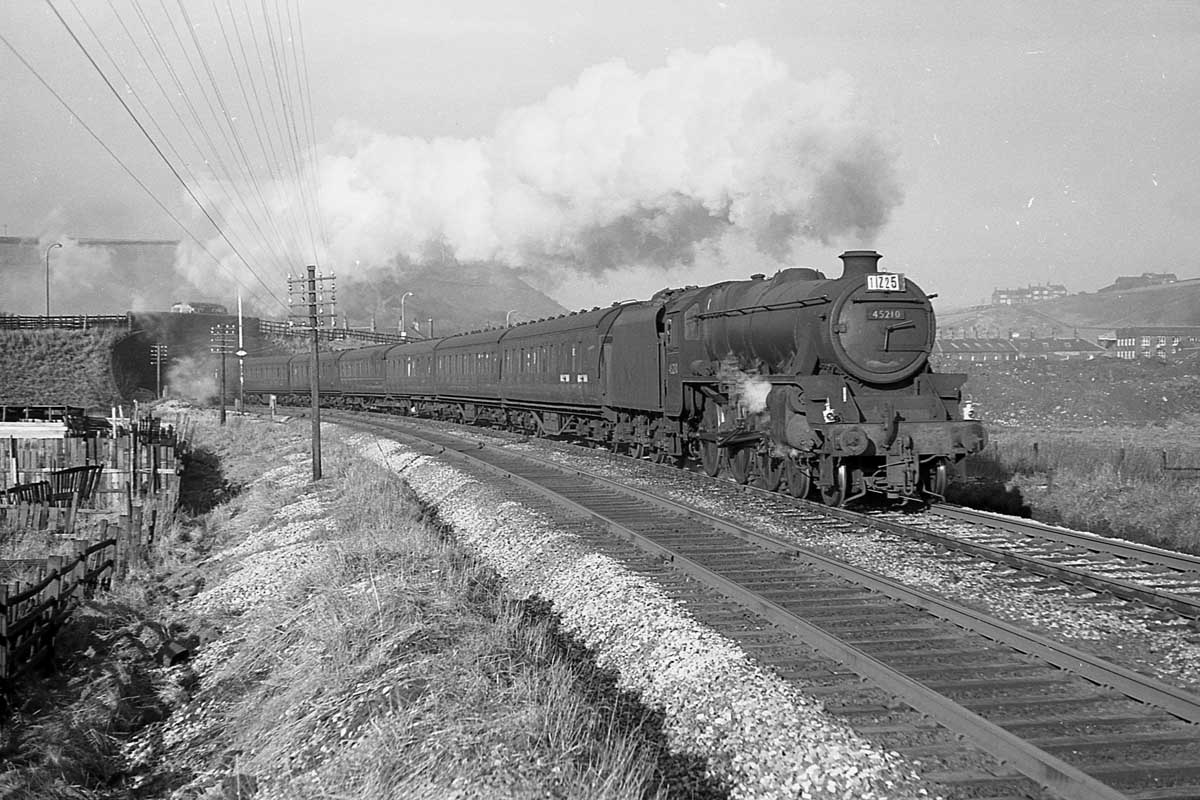
45210 had a somewhat checkered career. As a Low Moor allocated locomotive it was working the 6.15am Bradford - Liverpool Exchange express passenger train on April 19th 1945 when it came into violent collision with a stationary brake van and 0-6-0 goods locomotive No. 12117 standing on the mainline at Dale Lane, Kirby. The accident took place at 9.37am under clear signals with the express running at 60mph in misty conditions, visibility was about twenty to thirty yards. Both drivers were killed, two drivers learning the road on 45210 and a shunter in the brake van were also killed. Both fireman, the passenger train guard and nineteen passengers were taken to hospital, thirty other passengers suffered minor injuries and shock. The brake van was destroyed, the goods engine was driven forward a distance of 80 yards ending up on its side. 45210 also ended up on its side with considerable damage, all six passenger coaches sustained damage, particularly the leading two coaches. Primary blame lay with the goods guard and the signalman with regard to the actual location of the goods engine and brake van.
During her time at Bank Hall Mal records that 45210 had hit a car on a road crossing killing the occupants. On another occasion in the fifties she was on her side at Sandhills, by the canal, after running through some buffer stops. One night on the late cleaning turn, 45210 had recently come on to the shed when we were told to clean her, a fireman advised us she had been in another accident. We refused the task until told the collision had been with some cows she had ran into, we cleaned the mess anyhow!
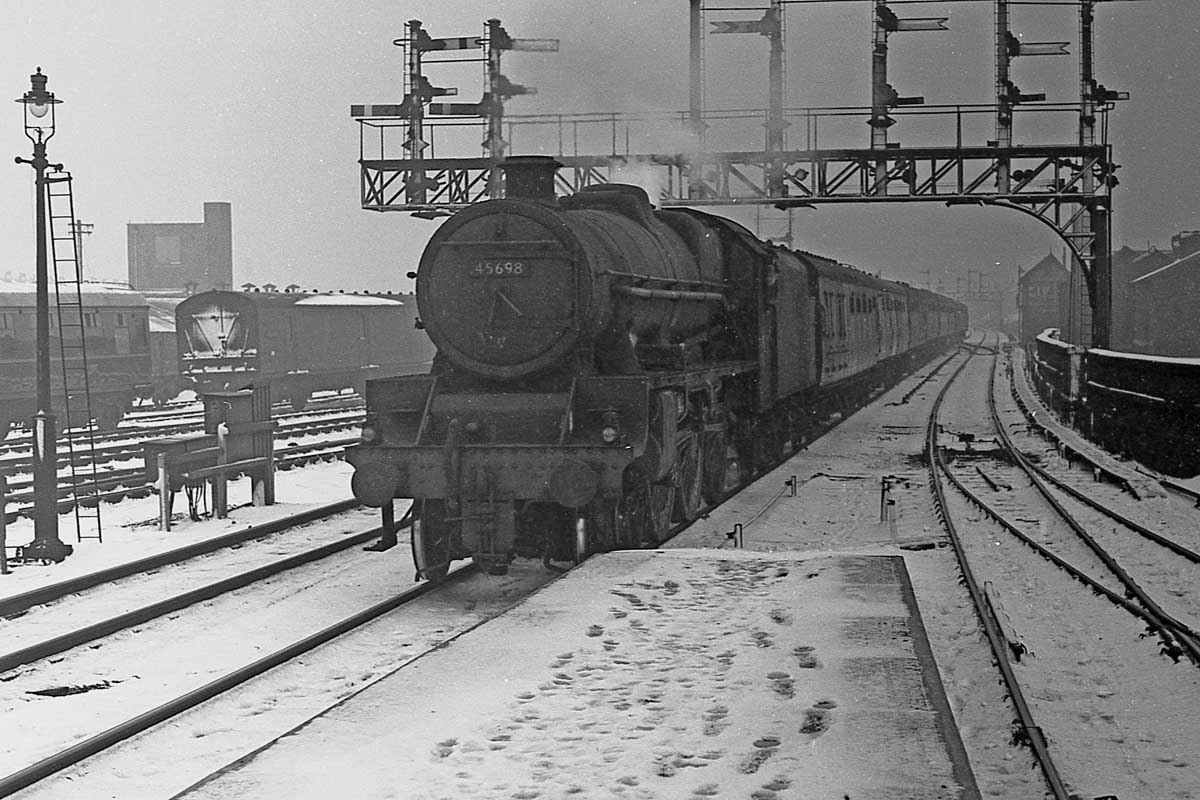
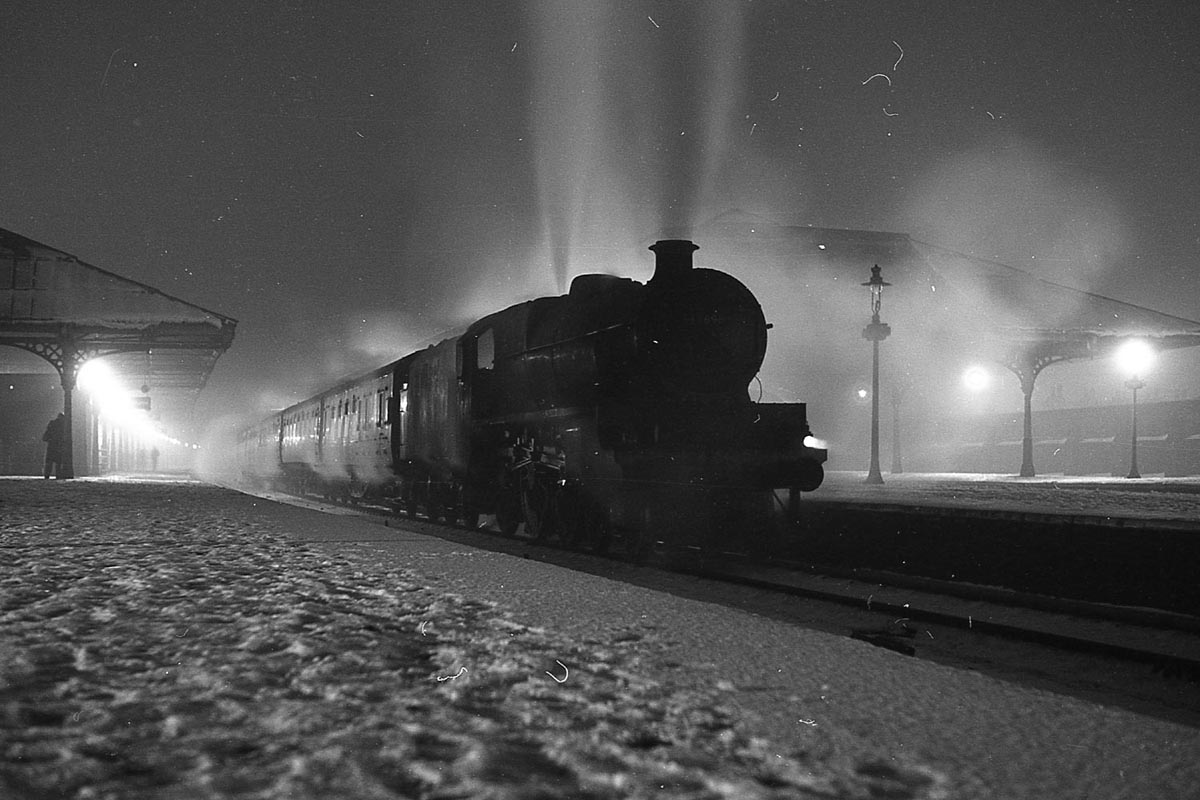
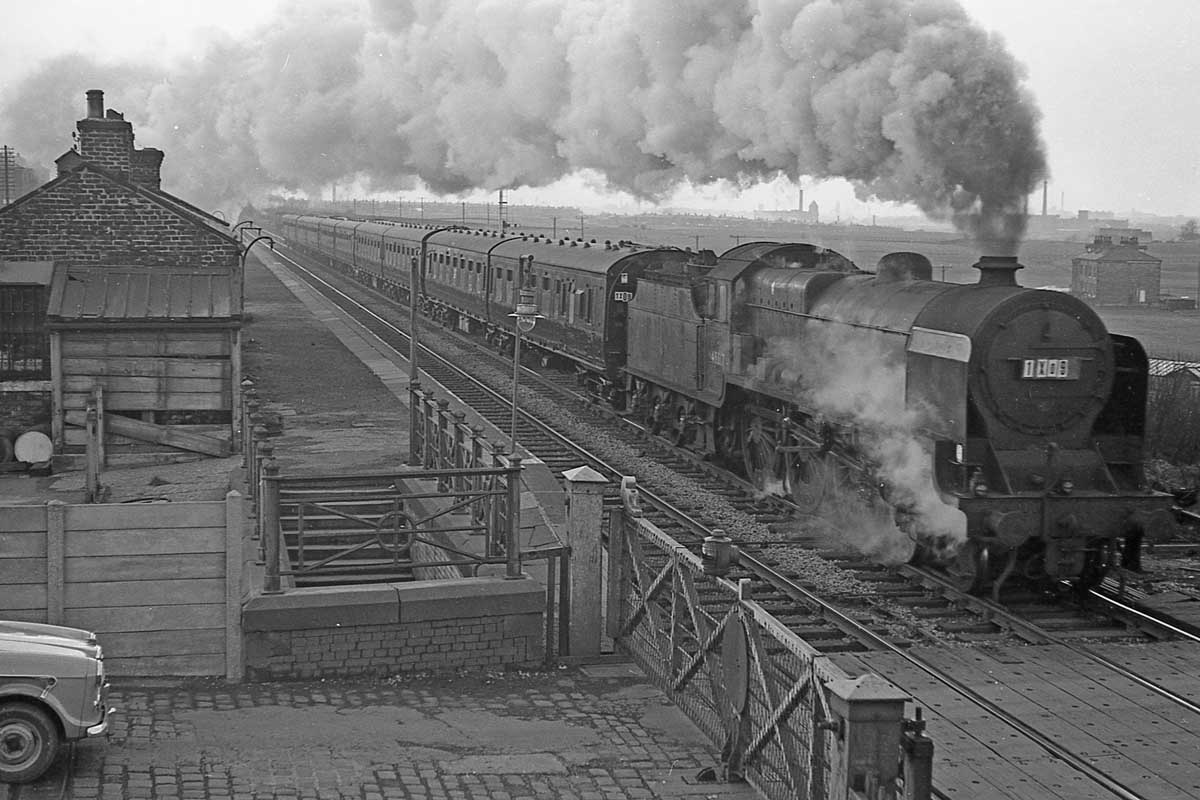
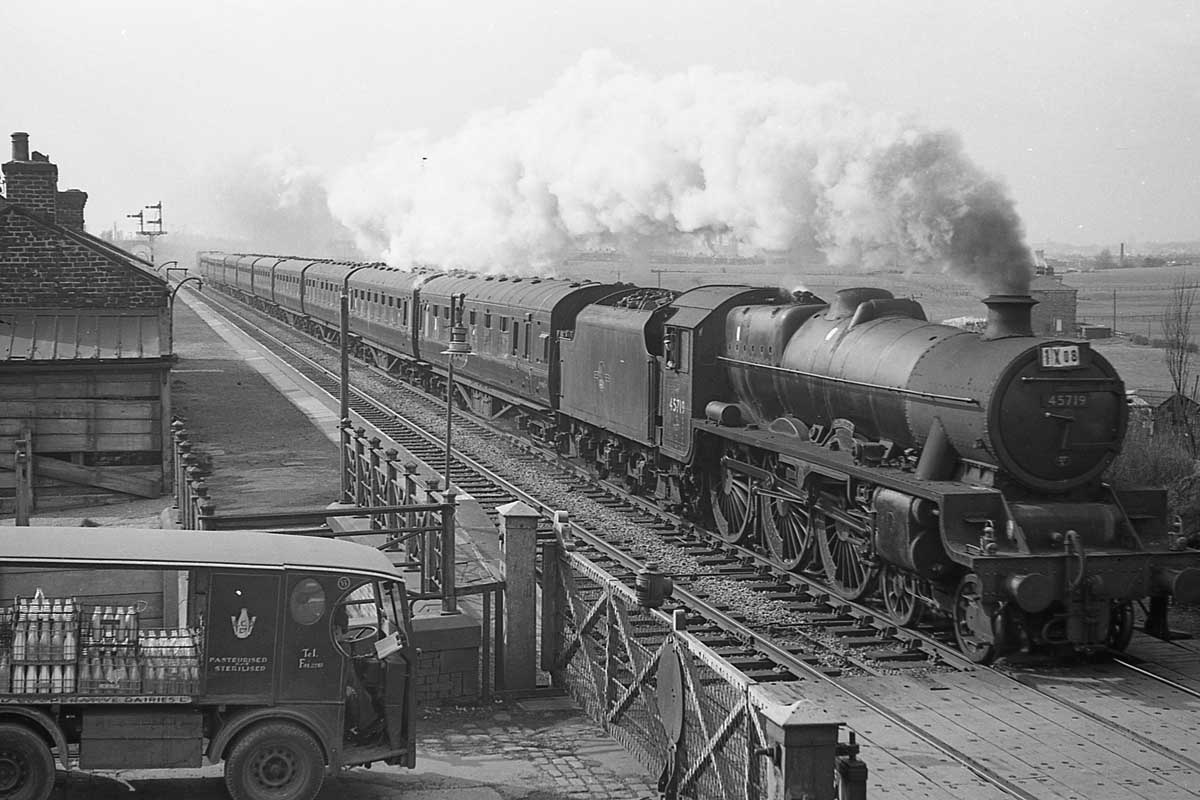
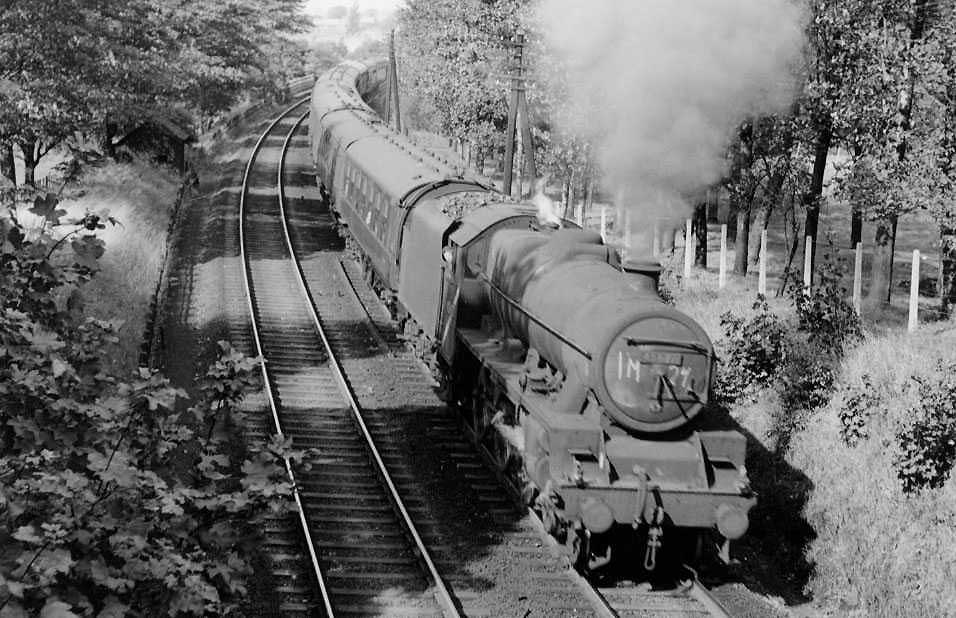
The views below show two of the three rugby specials (1X08, 1X09, 1X10) run on March 24th 1962 from Wigan to Wakefield. It was not a good day for Wigan, they were beaten soundly by Wakefield. Some windows on the trains were broken on the return trip.
Bank Hall's fleet of locomotives did not require the need for anything larger than the Patriots and Jubilees. However with Mal taking up more firing turns during 1961 he would be introduced to larger locomotives, particularly during the summer season with not only the summer extras but also longer trains to cope with the increased passenger loadings. The principal workings that initially made this possible were the workings to Glasgow from Liverpool Exchange & Manchester Victoria which combined at Preston. One duty was to sign on at 12.46 and work the Glasgow job to Preston with one of the Polmadie Clans, here we were relieved and then walked to Preston shed, I remember the shed had no roof. There was a small pub close by the back of the shed where it was time for our sandwiches and a pint with the driver. The pub was full of railway men. The next part of the job was preparing the Scot for our return to Liverpool. Just before our train came in we would ring off the shed and stand to one side. The train engine at this time would go forward to Manchester and we would attach to the rear portion, and work forward to Liverpool. Two of the Scots I fired on this turn in the same week were 46169 The Boy Scout and 46134 The Cheshire Regiment, others are now forgotten.
I can remember I was frightened working back to Liverpool, the driver had told me to get a good fire on, not because we had a big train to haul but because of the speed. These engines rocked and rolled, frightened the life out of me, being still a novice. I could hardly stand up, doing my best to keep my balance. I think a bogie under the cab on these engines would have made them better riding. I take my hat off to the firemen who worked on Scots regular on express jobs, they also had a long firebox, which did not help. Later when more drivers would let you drive on the 13.33 to Preston, with a BR Standard Four you could get up to 80 mph on the Preston side of Ormskirk regular, so what speed could have been attained with a light load with a Scot is anyone's guess.
These summer workings brought a number of Scottish allocated Black Fives, as well as the Polmadie allocated Clans to Liverpool. On one particular disposal job for one of these Scottish Black Five's the locomotive came on the ashpit, when opening smokebox door the ash was piled virtually to the top with just a small space at the top. Nobody could remember seeing so much ash in a smokebox, it took me twenty minutes to rake and shovel it out. A bad one would be half full, normally you'd expect a quarter or less!
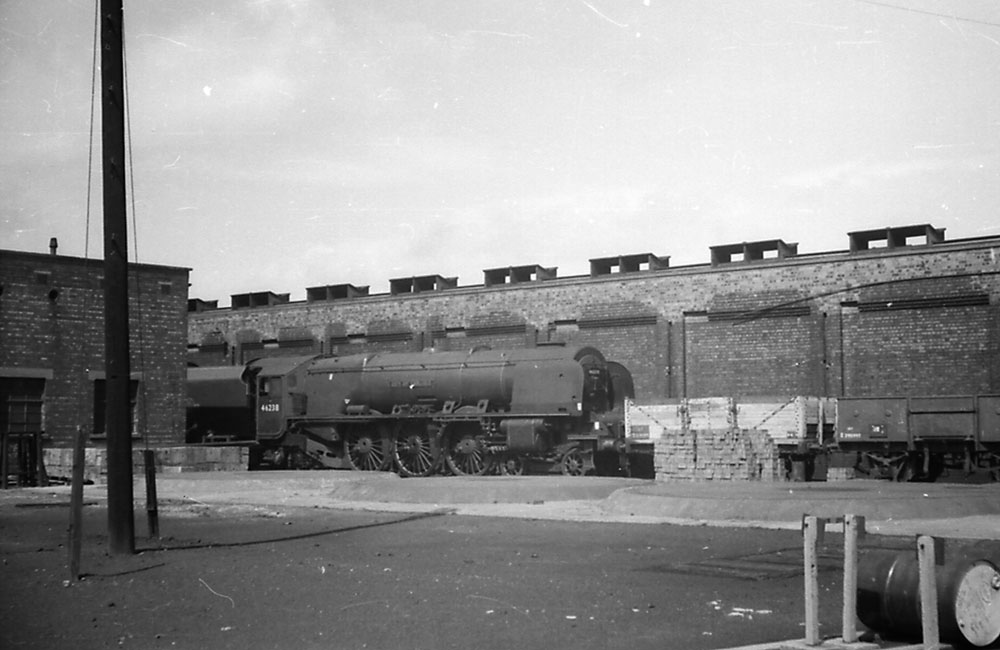
The 7.19pm arrival at Liverpool Exchange from Glasgow was a favourite for bringing in the Scottish allocated locomotives, but on June 29th 1961 it showed up with some most unusual locomotives. The advance of the diesel fleet was causing the steam fleet to cascade on to lesser duties, on this day the 7.19pm had 46238 City of Carlisle in charge, unfortunately 46238 slipped violently at Ormskirk, bending a rod and declared a failure between Aughton & Town Green, it was rescued by 90712 running tender first. Mal remembers the unfortunate 46238 being put alongside Aintree shed and speaking to the driver about how it ended up in this state. The driver had tied up the rods but was not able to make it to Liverpool Exchange. The use of the Coronation class into Liverpool Exchange would continue into 1962, allowing Mal the chance to fire the second most powerful class of locomotives in the former LMSR fleet (see later in story).
George Gristock at the time was a senior passed fireman who was driving pretty regularly, he would always let you drive. One day on the Kirkdale shunt we were shunting coaches around with one of Bank Hall's three Ivatt's. After our break the next job was to pick up a dining car off an empty road, the shunter was still finishing his break, so George said stay where you are we'll go pick up the coach and bring it up to the shunters cabin. So off we go, I'm driving down the empty road and gently come up against the coach, George is just about to duck under to attach, when she starts moving, the vacuum had leaked away and there is no hand brake on the dining car. It's picking up more speed as it heads down the empty road, George is running alongside throwing chunks of anything he can get his hands on under the wheels. I'm following slowly with the locomotive, at some point I realise we're not on a buffer stop road, this one goes back out onto the main line! Almost near the bottom and now not going any faster George is slowing it down, he's rubbing a loose brake block on the wheel and the rail, finally the coach comes to a stand. I'm standing off the coach with the locomotive, George is sweating, he shouts up to me, 'Not your fault!' - I move forward almost touching, George gets the vacuum bag on to create some vacuum, slam the vacuum brake on to destroy the vacuum, then ease up and put the shackle on which we did. We pulled back towards the shunters cabin, the shunter came out nice and fresh and said everything OK? George was a big guy, his face was red, he didn't let on about our little adventure.
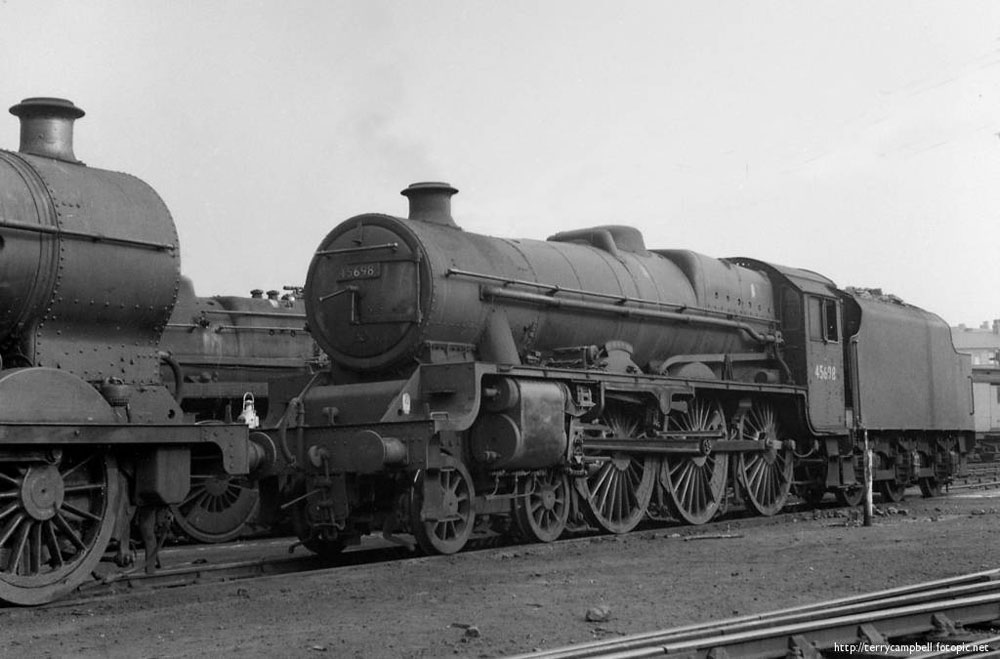
Around the same time I'm booked with George on the 08.36 to Blackpool North, our locomotive is 45698 Mars, always a good steaming locomotive, generally a favourite with most Bank Hall men. We're on our way to Preston having a good trip. After leaving Preston George says get over here, take the regulator, on the main line your a bit apprehensive when this happens, you know what to do having watched other drivers but on a main line locomotive you realise you can't make any mistakes. I grab the regulator, open her up and wind the wheel back slowly all without thinking. George is firing away but I found I was automatically looking at the water sight glasses, checking how much water is in the boiler! George tells to me keep a look out for distant signal, tell me if it's on. I remember we stopped at Kirkham & Poulton, George took us in to Blackpool North station to the buffer stops. I enjoyed my first drive on the mainline, I did fire the other two Bank Hall Jubilees 45717 Dauntless and 45719 Glorious, but can't remember on what jobs.
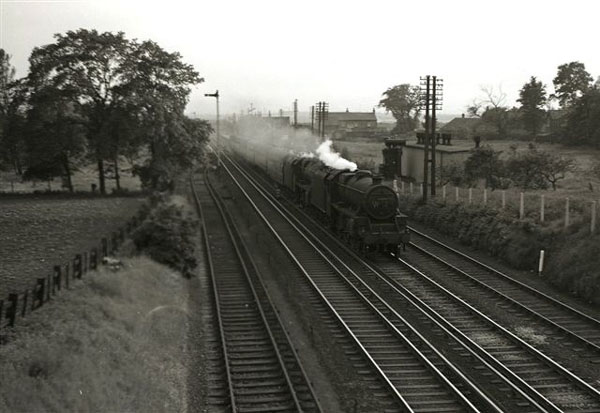
Early in 1962 I was booked on a special turn, Wakefield were playing Wigan in a Rugby League cup game, we were going out passenger to work back one of the the three specials that had been provided. So the three train crews travelled to Wakefield, then down to Wakefield shed to pick up the locomotives. My train was the first booked to leave, my driver Alfie Moore had a conductor on the road as far as Sowerby Bridge. We left the shed and backed up onto our train in the sidings, our locomotive was 45517, then ecs to Wakefield Kirkgate. Standing in station the supporters began filling the train. All of a sudden in the coach behind the locomotive the first window shattered, a table came through and landed on the platform, at the time I thought this trouble only happened with the football supporters, the police who were on platform soon defused the problem.
We had to have the window covered with a temporary repair, I think Wigan were beaten. Its departure time so off we go, this would be my first experience on an express train, still a novice, stopping trains and freights were easy compared to an express. All special trains at that time were ten coaches, 45517 rocked about a bit, but so did most. We stopped at Sowerby Bridge to let the conductor off, and away we went again. Approaching Walsden I mentioned to Alfie she's not steaming very well, need a blow up. He looked over at the steam and water levels in the boiler. Ok he said I'll stop by the signal box, you go to the box and sign the register. Tell him five minutes and we'll be away. In the signal box I told the signalman we don't want to go into Summit tunnel in a bad way, I signed the book. He said the train behind has not been given to me yet, so you have a few minutes. Alfie had brought the fire around now, the boiler was full, then a long whistle and off we go. Once out of the tunnel its down grade to Manchester Victoria, then on to Wigan Wallgate - our first stop, then Pemberton, Orrell, and ecs to Kirkdale sidings, detach and on to the shed. I realised firing on these kinds of jobs was not easy, you had to be on top of the job throughout, as some of the experienced drivers would say, when firing, little and often.
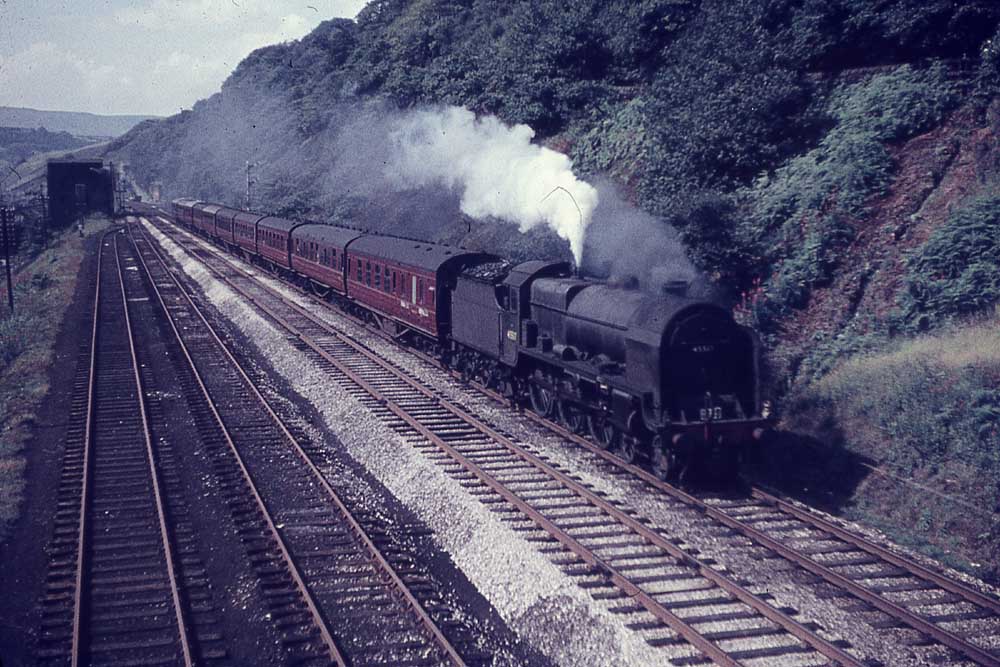
Bank Hall also had a breakdown crane which provided us with extra work.
We were also sent to Warrington Central, at the back of the station with two roads. There were two Derby 4's which were used to shunt Rylans wire trains and a trip to Glazebrook. Whilst on loan to Aintree I made my first regular encounter with the B1's, I always banged my head getting on board! I liked the B1's they had nice comfortable seats, good steam injectors, the only thing I could not understand was the firebox door. As soon as you got some big lumps of best Yorkshire coming into the well of the tender, you had to get your coal pick working, which was OK if you were standing still you could open grate, on most other locomotives you could fit big chunks through the firebox door. 61010 Wildebeeste and 61018 Gnu were regular visitors to Aintree, the Sunday night Liverpool Exchange - York train was diagrammed for a B1 and was worked by Aintree men.
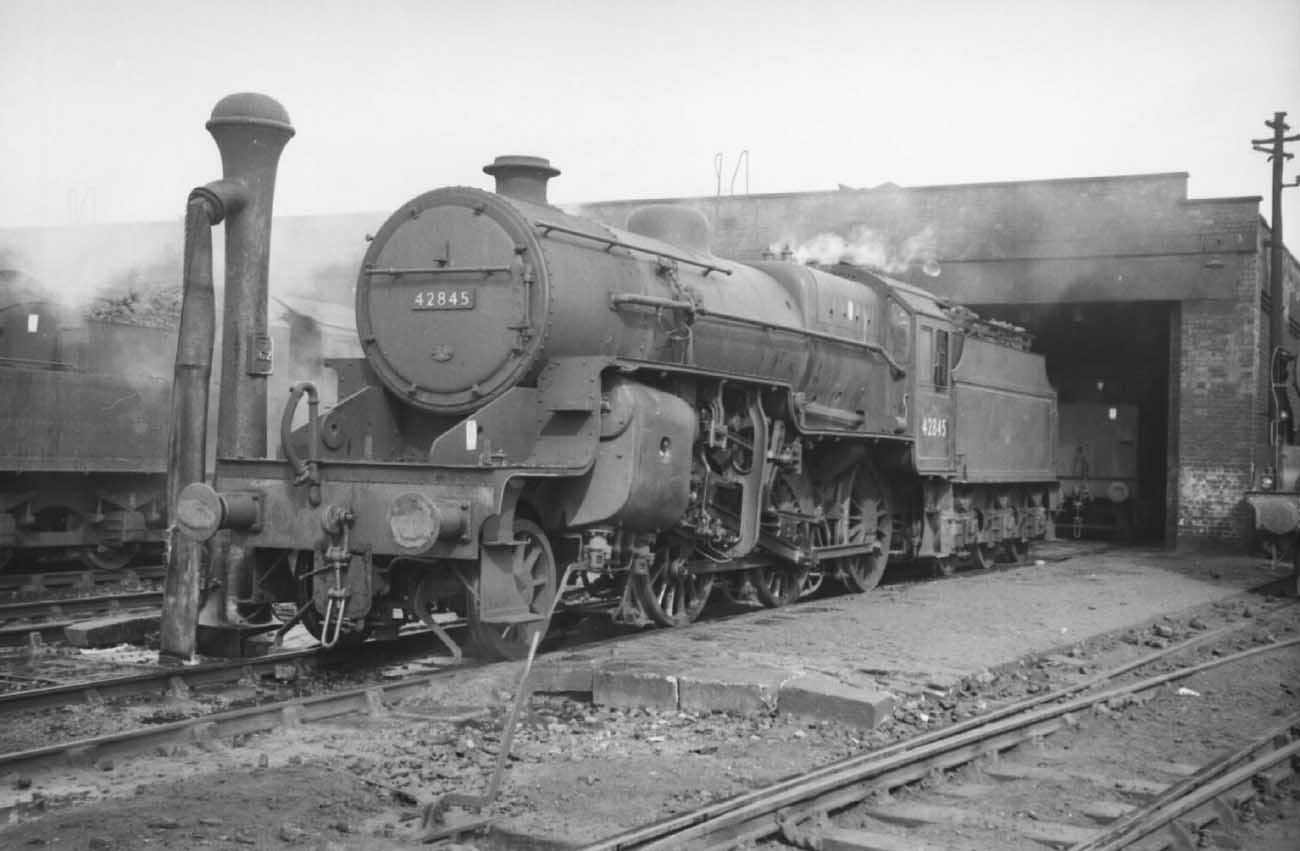
At Walton whilst on loan again, I had my first encounter with tiny, Eastern Region freight locomotives. One job at Walton involved the shunt engine working Walton sidings located in the middle of the triangle with Huskisson Dock to the west, Aintree to the north and Halewood to the east. A shunting box or frame controlled the sidings which were operated by a woman (Betty?) whose constant use of profane language at the shunters and drivers was not easily forgotten. From the window of her box it came as a shock for me to hear a woman using that sort of language, one of the drivers said she was left over from the war. We also got the tripper job up to Halewood with a Derby Four, I remember being told a Walton driver lost his eye because of overgrown trees fouling the track by sticking out to far. After the shunting at Halewood it was straight back to Walton. We also got the job of taking the 350hp shunt from Huskisson Dock to Walton shed which is where I saw my first examples of the Brush Type 2's, Sheffield men would bring the train in and lodge overnight by Melling Road, then take the train back the next day. Walton closed in 1962. During that time on odd occasions we had diesels coming in to Liverpool Exchange from Workington or Barrow powered by the Metropolitan Vickers Type 2's. Normally they would detach at Preston and we would work forward with steam. The Workington was a good example, I did see these locomotives on the shed at least twice, the locomen would walk across to have a good look at them. However at this time most of the sightings of the MetroVicks would be at Manchester Victoria, Red Bank carriage sidings, Preston and Carnforth.
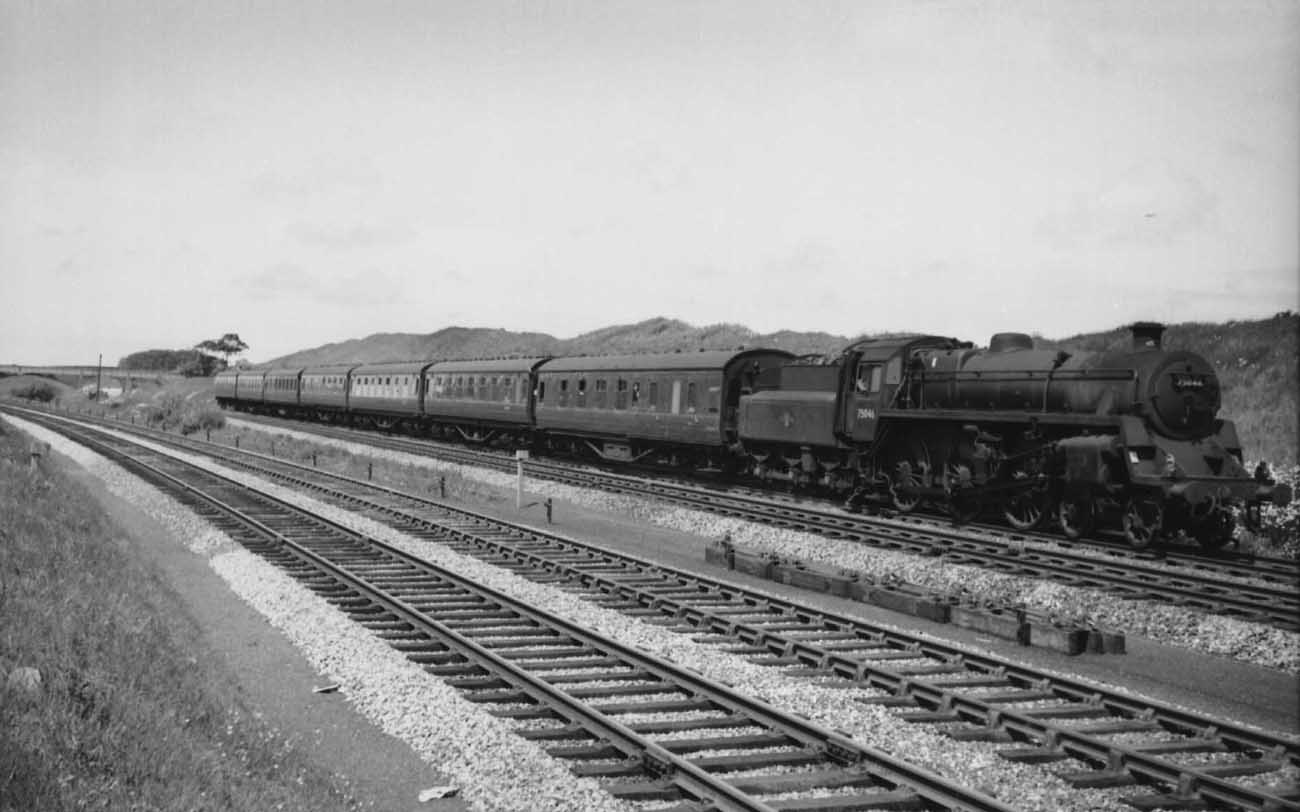
During 1962 the drivers were now training on diesel multiple units. All the Leeds and Bradford jobs were going over to the Rolls Royce engined three car diesel multiple units from Hammerton Street. We had the extra summer Glasgow service, being extra work we got jobs regular, always got a Clan and managed to fire eight of them, but only to Preston. We would also get Firth & Brittania, I used to love blowing the two-tone whistle coming down past Old Roan. There were jobs to Windemere in the summer, on arrival at Windemere station we would back the train onto the bank, unhook the locomotive and head off to the turntable. Meanwhile the shunter would release the brakes on the coaching stock, and control the train back into the platform. Having turned the engine we would take on water, you could see Lake Windemere from the top of tender! We would then back on to the train and head straight to the pub for butties. Other booked work from Liverpool Exchange took us to Bradford, Leeds, Carlisle, Hellifield, Rochdale, Blackpool North and Central and Fleetwood.
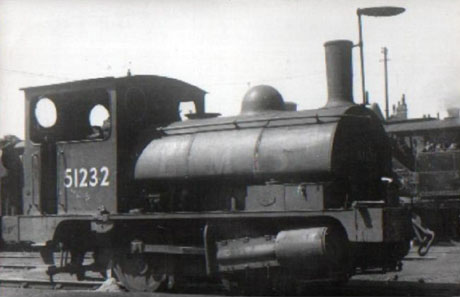
With regard to the cleaning of the Pugs like many of the older steam locomotives, it was a dirty job. Most of the older locomotives were bars up, to clean the fire you had tongs to lift some of the bars out or stand them against the brick arch, with enough bars removed the clinker and ash could be raked through into the ashpan. When the fire had been cleaned the bars could then be replaced, then it was down into the pit under the locomotive to rake the ashpan out, it was your hard luck if the wind was in the wrong direction. The last thing to do was to open the smoke box door and shovel the fine ash out. The newer locomotives had drop grates or rocker bars, with self cleaning smoke boxes. You opened the ashpan from the side of locomotive, all the clinker and ash went straight through into the pit, this would take about 15 minutes as compared to 45 minutes with an older locomotive. Some sheds had labourers to clean the fires, possibly the depots with slow promotion used footplate men to make more work. At other depots the fireman and driver would not know how to clean the fire.
After the departure of the last Pug from Bank Hall late in August 1962 the depot was left with an allocation of 23 steam locomotives: 41205, 41268/69, 45627/57/98, 45713/15/17/19, 47001, 47230/306/583 and BR Standards 75045-49, 78041-44.
The driver training on the diesel multiple units was soon finished with. We lost our three Caprotti Black Fives, it seemed like the locomotives were just moving from shed to shed. I think they were scrapping locomotives coming up to major overhaul, paint jobs etc. 75045 goes, 75050 comes in place. During 1962 75032 & 75033 arrive not to sure of the next 4 years (1962 - 1966) not in time order.
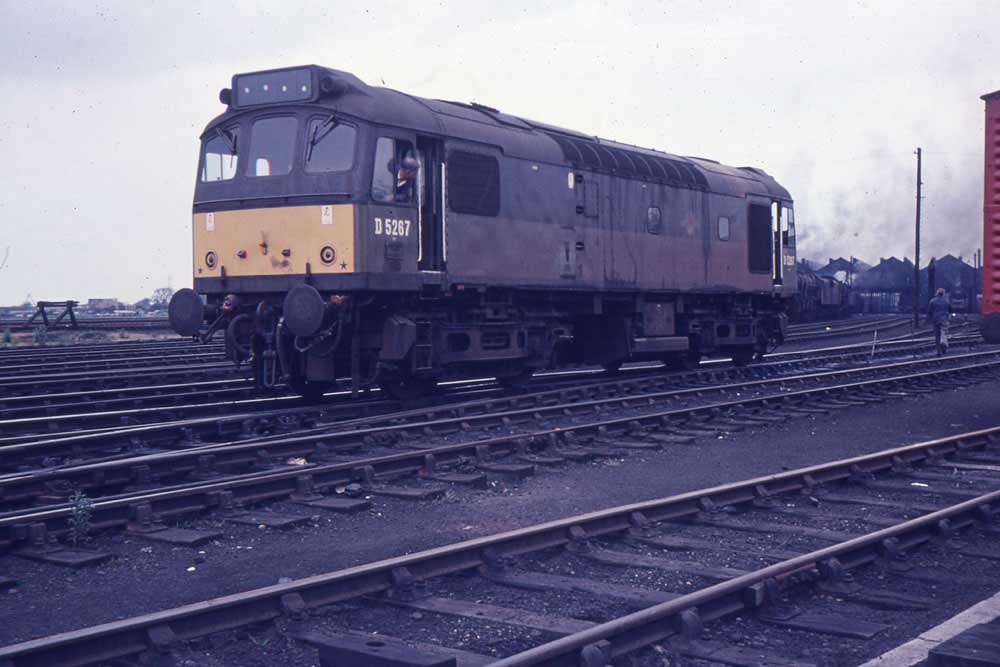
My first trip to Carlisle with a Class 40 was somewhat unexpected. The train was the booked 09.43 Liverpool Exchange - Glasgow. I had been told to secondman the locomotive from the depot down to Liverpool Exchange and then return to the shed. On arrival at Exchange I attached the locomotive to the coaches and having got back on the Class 40 an inspector walked up and told me I had to go with the train! Having expected to return quickly to the depot I had no food bag or coat, but I still had to go!
One summer evening in 1962 we were waiting at Preston to relieve a Glasgow to Liverpool Exchange passenger. My driver is Ken Abernetty, very easy going guy, mad on horse racing. We are in the porters room on the platform waiting for our train. On its arrival we walk over as the train is split, the locomotive and the first six coaches with diner would go forward to Liverpool, the rear six to Manchester Victoria. To our surprise we find the train locomotive is 46227 Duchess of Devonshire, my mate said that can't be ours, I didn't think these locomotives were permitted into Liverpool Exchange. But we are advised it is our train so up we go onto the footplate, the signal is cleared, the flag waved, off we go! My driver said as we drew away from the station that the acceleration is amazing, with our small train he had trouble holding it back. Its a fast trip to Liverpool, the Duchess went to Aintree to turn, later on they would be turned at Bank Hall. The two turntables were the same size.
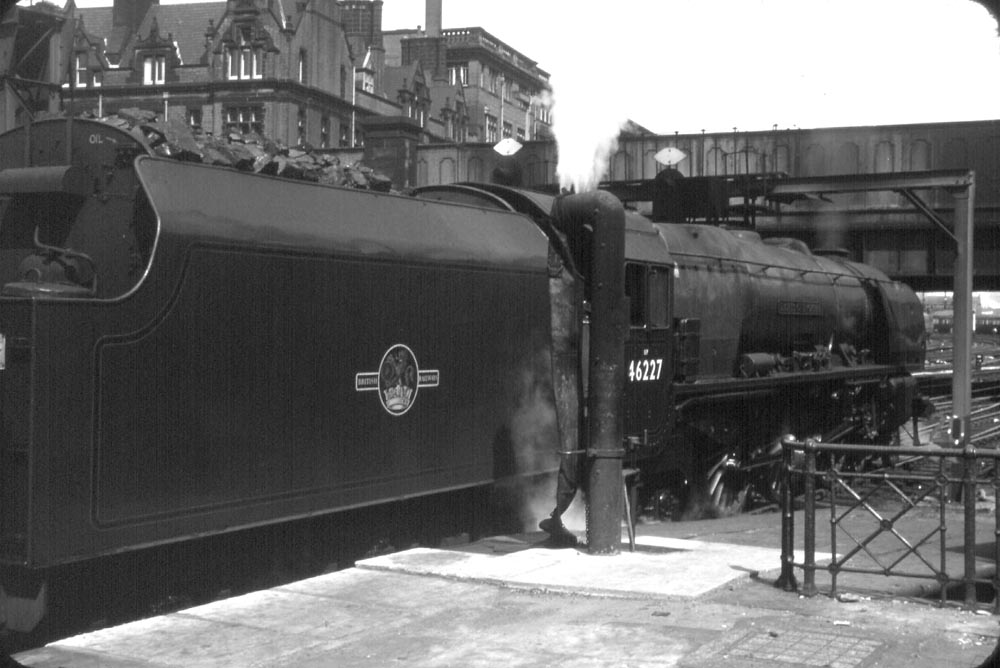
Mal's comments on the view of 46227 - plenty of detail in the view, located at the north end of platform five, with the council offices in the background. 46227 has not used much coal, maybe she has come forward from Crewe, its nice to see a locomotive which has been at the same shed almost all of her BR days, 66A, Polmadie. 46227 has a coal pusher fitted, the oiling point for the pusher is just visible on top of the tender. The locomotive is blowing off, when the driver shut power off approaching a signal or station stop and the locomotive had a good head of steam, even with your steam injector on the pressure would rise quickly. There was a red mark on the steam gauge so you knew when she was going to blow, you could close the dampers. But you had enough to do without causing more work. With the firebox doors open she would soon cool down. Note the water column, with the signal gantry which replaced the semaphore close to the platform end, the locomotive could not take on water, unless the signalman was informed your train would be standing past the signal. So for instance if he had cleared the signal for you, then you had a delay of some sort, he could not let another train leave from another platform, because your locomotive was past the signal which then caused locking problems in the box.
Diverging slightly to the days of Edge Hill - When I think back to my early days at Birkenhead 8H, with the ex Edge Hill 8A firemen, now drivers Don Buckley, Johnny Kay and Alan Caufield, working regular on these engines, with sometimes eighteen coaches, my mind boggles. They must have been very fit. I did get told in the early days of diesels, which were marked on the London jobs, the fireman would sneak into the shed before booking on, look at the arrangements board to see which locomotive was marked on the London, if the diesel had failed and a Princess or Duchess was marked in place, some would book off sick. So later the foreman would always mark a diesel to the job, then after the men had booked on he would change the locomotive to a steam engine!
Other Duchesses fired that summer on the same job included 46237 City of Bristol & 46256 Sir William Stanier FRS, at the time 46256 was still in the maroon livery and was hard to miss on that late summer evening as we took her light engine from Bank Hall to Lostock Hall. Back on the Windemere job we got 45627 four times. Transfers to Bank Hall included Swiftsure, Dreadnought & Renown, some were there only a few weeks and then gone for scrap. We also received green liveried 75026 and 75027 from the Western Region.
On loan to Bletchley
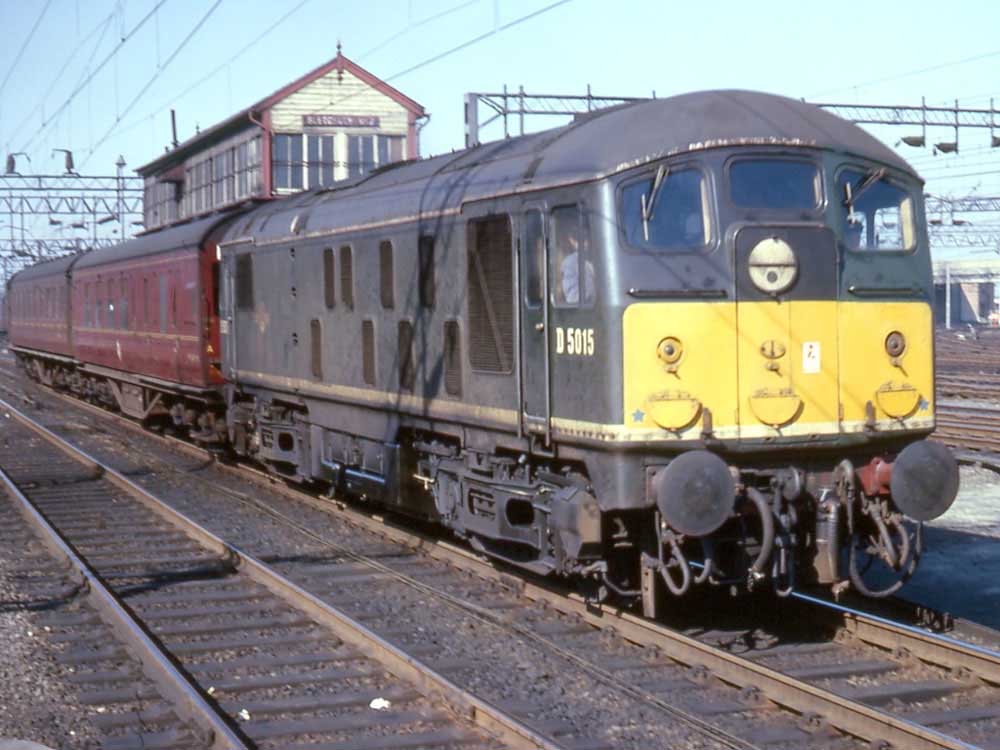
Next we were sent on loan to Bletchley, shed code 1E. There were four of us from Bank Hall, six from Springs Branch and one from Buxton. We settled into a hostel in a place called Little Brickhill which was out in the country. The next day a mini bus picked us up and took us to Bletchley shed. We went into the supervisors office, the first thing he wanted to know is if any of you lads were trained on steam generators. Stones, Spanner and Clayton. Two of us from Bank Hall were so we ended up going into the diesel link. The others were envious but still had a good time, they said the jobs were hard work, but were happy to get plenty of overtime. The main jobs they handled were chalk trains from Leighton Buzzard to Rugby using Class 8F's. The diesel link was mainly passenger and parcels trains. My first weeks work was taking a Class 24 off shed and over to the carriage sidings. Our train was of eight coaches for all the main stops to Euston. I went into the engine room to start the boiler, it was a side on boiler made by Stones, the only problem was I had trained at Crewe on the Stones boilers fitted to Class 40's, it took about twenty minutes to work my way around the switches and controls in different positions, but very soon the train was nice and warm.
Bletchley was a very nice small town, we used to meet at the British Railways staff club near the station. We would go up the High Street to a pub called the Eight Bells, I think that was the name. It had a movie juke box, the pop movies were all on discs, a popular one was screaming lord sutch. That was the only machine I'd ever seen. The movie 'The Great Train Robbery' was in production at the time, they were using Type 4's D324 or D325, at the time I wondered why they couldn't get the actual locomotive involved, D326? I remember going light engine to Willesden, en-route the driver pointed out locations involved in the robbery, and we stopped at Sears crossing, Bridego Lane was also noted.
Other jobs with the Type 2's were turns to Rugby and Northampton, returning as stopping trains to Euston, the cabs on these locomtives were nice and warm, you could also put the stove on and make a brew or do toast, warm your tins etc. Looking back they were nice and snug, at this time (1964) the overhead wires were going up with trains being diverted at Bletchley off the WCML and on into Marylebone, with the locomotives then light engine to Camden. I can remember seeing a Class 2 in the carriage sidings at Euston the coaches had backed into her and crumpled the cab. A brand new Class 47 was noted on Camden shed. A nice job was the run to Cambridge with a parcels train powered by a Brush Type 2. I can remember passing a place called Sandy and seeing steam locomotives lined up waiting to be scrapped.
Whilst at Bletchley I worked my first train to Oxford on the Western Region. On the return working it was night and we took charge of a Class 9F. It was a WR allocated locomotive, the markings and gauges in the cab indicated this. Such items as the hand brake & water scoop were marked, detail not normally found on the LMR locomotives I'd previously worked. Although not obvious in the dark, the locomotive livery was green, and when we arrived at Bletchley shed the driver pointed to the special plaques and 'Evening Star' nameplates carried on the smoke deflectors.
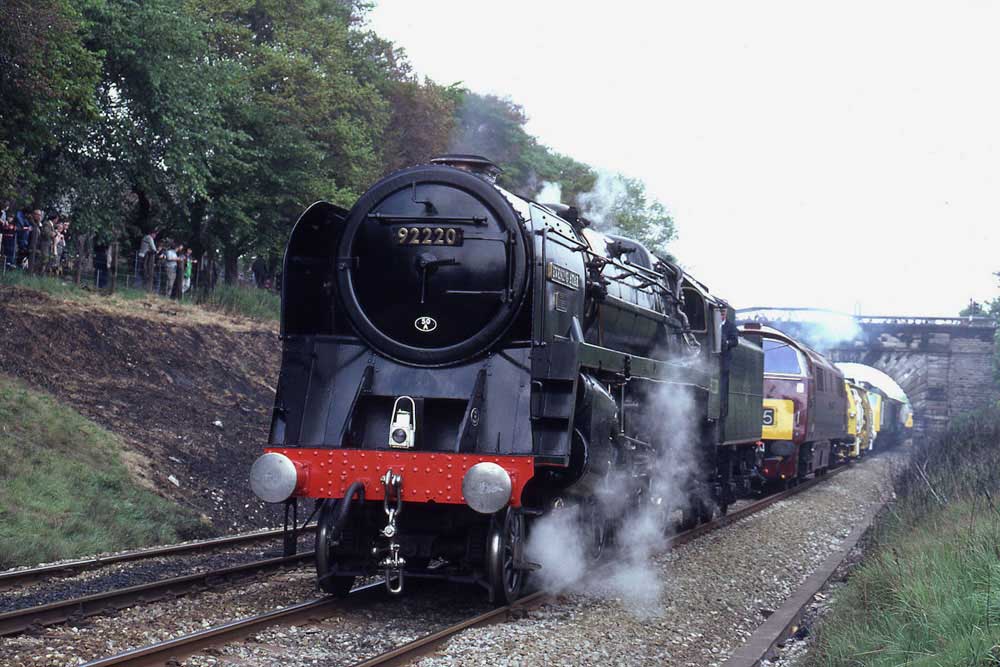
At Northampton we visited the steam shed and carried out some shunting here, I asked my driver where did that branch line go, it was the one to Market Harborough, the line's local passenger service had ended in January 1960, but through trains would continue to use the route into the 1970's. Looking back I did enjoy the Bletchley, Northampton, Long Buckby and Rugby jobs with the class 24's. In fact the work at Bletchley, although not a big shed was diverse with duties covering the Eastern, London Midland & Western Regions, they had a DMU service in the middle of the night, which crossed all three regions, someone must remember the diagram?
Back to Bank Hall
After returning from being on loan at Bletchley everything seemed to be changing rapidly, many of the locomotives I had worked on had been withdrawn and sent off for scrap or had been transferred. One favourite Bank Hall locomotive that had been at the shed a long time was Black Five 44767 which had moved to Southport, the only Black Five fitted with Stevenson link valve motion, later this locomotive would be preserved. I fired 44767 on quite a few jobs. Why they took the electric fittings off the locomotive is a mystery, 44767 was remembered for being the quickest for acceleration, so everybody said! Other locomotives would arrive and then vanish. I was firing frequently now, but with all the changes happening I took less interest in the workings and the locomotives.
We had a diesel job to Manchester Victoria, the class 40 which would arrive off the Glasgow, we would re-man it at Liverpool Exchange and work a stopping train to Manchester Victoria via Atherton, we would finish the job by taking Type 4 to Newton Heath and leave. It would return north later that night on a parcels train. We would return to Liverpool working a parcels train.
Other jobs remembered include travelling passenger to Bradford with driver Tommy Bracken to return with a special, we went out with one of the Bank Hall afternoon jobs and rode in the front with driver on the Rolls Royce three car unit. I can remember Low Moor shed, preparing a Black Five, running light engine to the station, then express to Liverpool. Another job with a Black Five was a football special to Burnley, we work the train out, the fans alighted at Burnley and we took the coaches to Colne, turned the engine, and waited for the return work. Another special football train was to Bolton for the semi-final of the FA Cup on April 23rd 1966, Everton v Manchester United, we were able to see the game from the railway next to ground, you could see over the wall. One of the afternoon Preston jobs had changed to two trips, some drivers would come back tender first off the first trip, a BR Standard 4 locomotive, not very nice unless you had 75050, which had a glass window behind the seats, they all could have done with this being fitted. These two ex GWR allocated BR fours were still in good condition, one would end up preserved. Another evening peak hour job was with a Class four tank to work a stopping train to Bolton, take the locomotive on to Bolton shed and leave. We then walked to Moses Gate station go passenger to Pendelton, from there we walked to Agecroft shed, a pint or two was had in the Feathers pub by the shed. We'd get our locomotive number from the shed foreman, prepare the locomotive and run light engine to Manchester Victoria to work the last stopping train to Liverpool. I did go second manning on the Glasgow, to Carlisle a few times, always an English Electric Type four. The 170hp shunting locomotives were being used on ballast trains. The only original locomotives I remember when I was leaving were 75049 and 45627.
Another Bank Hall job we worked was a Liverpool Exchange to Preston stopping train, detaching the locomotive at Preston then proceeding light engine to Lostock Hall shed. Here we would leave the locomotive under the coal hopper. Then it was off to the foreman's office to get the number of our next locomotive, usually a Class 4 tank. This had already been prepared for us so it was off shed light engine to Chorley Royal Ordnance Factory (ROF). After attaching the train, we would wait by the stairs to the platform having our break until the workers arrived from the factory for their journey home. I noticed a lot of the workers had many physical disabilities, arms missing, severe limping, many with eye patches. I mentioned this to my driver who said most had received these injuries during World War Two, the Ministry of Defence would give them preference in their factories for the jobs.
At departure time its off to Blackburn, not sure now whether we were all stations or an express. On arrival at Blackburn we were relieved by 24D (Lower Darwen) men. I think the train went on to Burnley. Our return train was already in the bay, usually an Agecroft Jubilee, its an express to Liverpool Exchange. On arrival we are relieved by Bradford Low Moor men. They would turn the engine and take it back to Bradford with a parcels train.
Another time on the same job we had Jubilee 45607 'Fiji'. Off we go express, most people today don't realize the maximum line speeds were much higher on all lines, most were 80mph. When we were racing down the bank towards Bamber Bridge I really thought we were going to turn over, you would have to live through the experience to understand, once we got through Midge Hall on the main route into Liverpool the track was much better. Mind you that engine was a wreck. This Jubilee had come from Canklow to Newton Heath in March 1962, it would be withdrawn in November of 1962, thus dating this memory somewhere in this period, hopefully.
One important item to remember with steam traction was when a driver's eyesight deteriorated to a certain level, they would be brought off the main line, often times they may have just reached the top link, valuable mileage jobs, etc. Glasses were not allowed, most would be put in to the shunt link. I was with one of these drivers on the Canada Dock shunt, he had a box of matches, 52 in the box, he had a razor blade and would cut every match in half, he said to me now they will last twice as long! This same driver would step out on the fruit quay and pick up faded oranges off the floor, he'd come back on the locomotive and say here you are son, some nice juicy oranges! The next day on the same job, a younger driver would walk on the quay and boot the orange box, picking up armfuls, then put them on the locomotive and say help yourself.
Late in 1962 one job involved signing on at 18.00 with top link driver Dave Roberts and walking to Kirkdale station to go passenger to Preston. Here we joined locomotive 44928 working a Blackpool to Manchester express stopping at Bolton. It must have been late on in the year, it was very cold and windy, my first time on an express in the dark, I was amazed how the driver could see the signals despite the glare from the fire, a good trip. We run into Manchester Victoria, after the passengers detrain its ECS to Red Bank Sidings and detach the train. We then use the turntable to turn the locomotive and fill the tank, I can remember looking in the cab seeing my driver huddled in the corner. It was then light engine to Brindle Heath Yard, Salford to pick up a goods train for Aintree. We take a short break before departing, our route was via Atherton down towards Wigan, over Westwood avoiding Wigan, join up again at Pemberton, down to Fazakerley and across to Aintree grid. Here we detach the train and run light engine to Bank Hall shed via Marsh Lane. We arrive on shed around 01.30.
During 1963 I was sent to Aintree quite a few times. One job was for a week with a Jinty on the Fazakerley shunt, to the pre-fab depot for the afternoon turn, my first day was getting to know the driver, later that day he let me do the driving, monitoring me to see if I could be trusted. The next day, same job, same driver I get to drive all day, next time I saw him was for our break, he was playing cards in the shunters cabin, I don't think he stepped on the locomotive for the rest of week, apart from going on shed. I enjoyed shunting about in the sidings. On a Saturday around the same time another lad and myself were both sent to Aintree, the job was go to Crewe double headed with two Austerities with a pre-fab train, I was on train engine. We got a good run, all was OK until you shut power off, then they start shaking with the tender bumping into the locomotive, bringing all the coal down into the well. I enjoyed going to Aintree, used to think the men were all laid back, but found most freight sheds were like this. Passenger sheds were the complete opposite, somebody watching you all the time. If you made an hour's overtime at Bank Hall it would be checked.
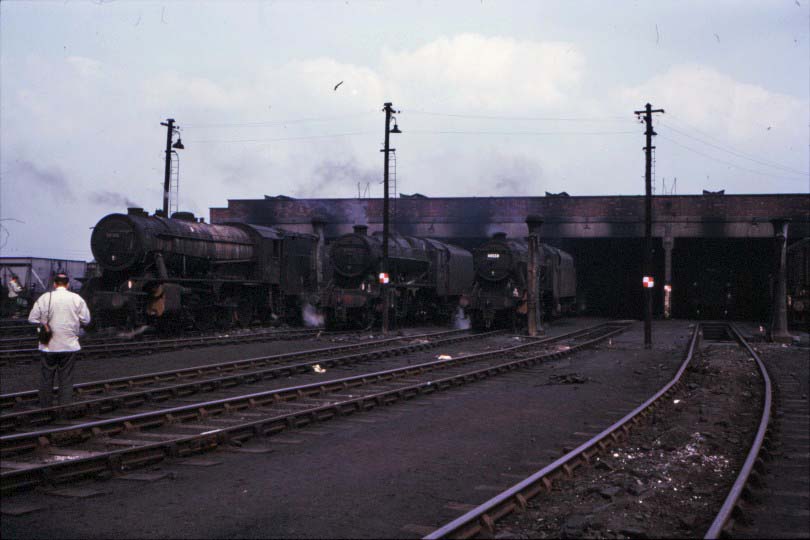
Some jobs were unique, such as the time I was sent out to Southport to assist in the removal of some rails. The job required the use of one of the 170 hp shunters to go light engine. We normally had a brake van attached with these moves so that the track circuits would activate, the locomotive alone was insufficient. So we set off from the shed, up to Aintree inside, follow electric, inside at Town Green, same again. Next time we had to wait was on the Burscough curves. It took four hours to get there, we had no chance of going along the Liverpool - Southport electric line because this route had a busy service. The shunter was staying at Southport for a week on the rail moving job.
One booked steam stopping turn on the Liverpool - Southport electric route was the pigeon specials, which operated maybe monthly with a BR Class 2. They were not all stops, only certain stations - the birds would be put in you vans, on arrival at Southport the train turned around the angle and picked up more birds, then it was off to Preston. These jobs ran during the middle of the week after the evening peak hour. They made extra work for the crews, similar to when the the breakdown crane and tool van were needed. They could be called out at anytime, with a crew always on standby, fitters, fitters mates. A locomotive was always in steam, called the shedmans locomotive, stood outside the Wigan shed, soon as the call came through the shedman and his mate, a passed man would split with the junior cleaner and would go with the shedman and the senior cleaner with passed fireman, I had quite a few trips with the breakdown train, if the job was a big one you would be relieved on site. Again a BR Class 2 was always the locomotive.
The drivers on all the local jobs, Kirkdale shunt, station pilot, shedman, disposing sets were all steam electric men, passed for EMUu work, if a regular electric driver went sick, a steam electric man would cover the job.
(Need Date!!) On a Saturday if you were on the late turn you could almost guarantee getting the last Rochdale, the regular fireman would take leave as would the driver, so I would get the job with a passed fireman. The one I got was Frank Woodford, his regular driver was heavy on the regulator so Frank had to work hard. So when he went driving he would take it out on the passed cleaner! It was all stops to Rochdale, via Wigan Wallgate, Bolton, Bury Knowsley Street and Heywood. On the return it was express from Wigan to Liverpool Exchange. I fired for Frank three times on this job, he would wait until we had gone through Upholland tunnel, then onto the down grade, as we came out of tunnel we were doing about 60 mph with Frank determined to get to 100 mph. We had a Standard Class 4 (75047 or 75048) with five coaches, each time he would look for 100mph I could hardly stand up, the coal would be all over the footplate, I would have put coal in the fire approaching Liverpool which was unheard of, of course Frank was intimidating, he had been an ex-boxer, he was tough; looking back if you had bet me one of these locos could do a ton I would never have believed it...
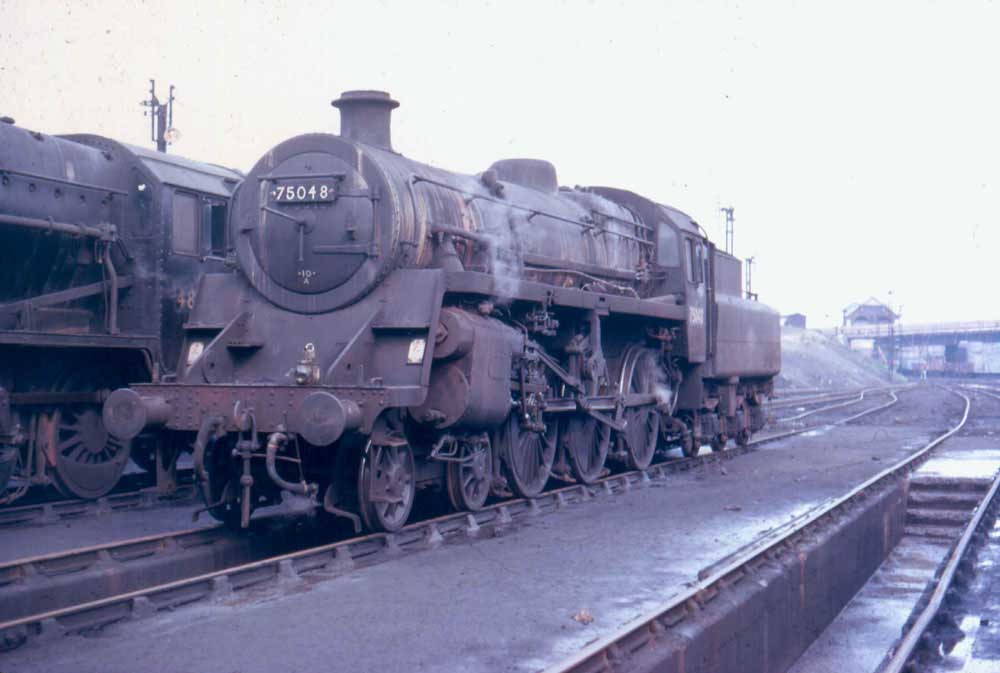
Another Rochdale turn I can remember took place early in 1964. It was a time of extemely wintry, cold conditions, we booked on at 05.30 for the second Rochdale turn. We prepared the locomotive - a BR Standard Class 4, then light engine down to Liverpool Exchange. Ice was everywhere, causing the points to stick, signal wires to tighten up etc, all this caused everything to slow down. Departure was at 06.50 with the steam heating full on, the first Rochdale service had cleaned the rails somewhat, but there was still plenty of slipping with the sanders working overtime. These early jobs you would be half asleep, not the driver though, he had to concentrate on the road, we were making good progress!
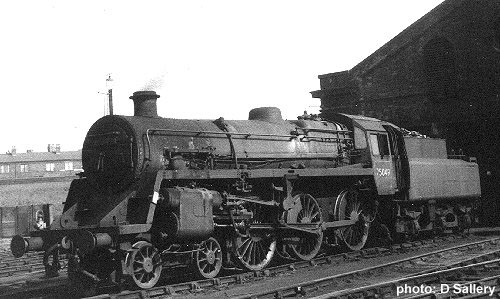
After leaving Upholland station the high walls on the approach to the tunnel are sheets of ice, like a glacier hanging down. As we go into the tunnel the locomotive is knocking icicles off the tunnel roof. From Wigan forward you would pick up dozens of mill girls especially on the first Rochdale. After Lostock Junction where most mill workers would alight, you had the water troughs. I dipped the scoop only to see ice chippings flying out alongside the locomotive, no water picked up, the water gauge was static. We still have adequate water in the tank for the journey, but always nice to top up in seconds at the troughs. Into Bolton station where I nipped into the porters room with my can to brew up. Not lost too much time, considering the conditions.
At Rochdale we go into the bay and here the trouble starts. We pull up to the end of the platform to take water from the column, but its frozen. For whatever reason the station foreman had not lit the brassiere fires or they had gone out, in such conditions as these the fires should have been kept going night and day. With no water at all at Rochdale we will have to go light engine to Newton Heath shed for water. At the time I did not understand why my driver was so angry, he was getting on in age, maybe this had not happened to him before. Anyhow off we go to Newton Heath shed for water and to turn the locomotive. Then its light engine back to Rochdale, back up on train and the whistle blows right away. The driver tells me get the tea can and go get a brew up, which I do, all of the porters rooms on stations had a big black kettle on the boil continuously, or a gas hot water urn.
On returning to the locomotive I discover the foreman has followed me and stops as he draws level with the locomotive. We start to pull away when my driver stands up and throws his sandwiches towards the foreman! I thought he was going to throw them directly at him. To me I suppose the whole thing had been like an adventure. One thing no matter what happened, we always could brew up. Some of the old drivers had a bottle of stewed tea on the hob. It would last throughout the journey, I tasted it once - it was putrid. In hindsight its now remarkable to remember that at one time all over the railway system were cabins, huts, mess rooms all with some sort of cooking facilities, every yard, station shed, porters rooms, plate layers, loco crews, guards, signal and telegraph, signalmen, parcels workers, thousands of people working round the clock.
At Rochdale there was a small turntable, you had to balance the locomotive in the centre of table before you and the driver could push it around, there was a similar one at Godley but much bigger. If the locomotive was too big for the Rochdale turntable (anyone recall how large it was?) we would have to turn the locomotive around the angle at Castleton.
Another duty required signing on at 01.23 then light engine, usually a BR Standard Class 4 to Preston, to pick up a train of vans to Fleetwood. This train used to be 03.00 to Preston, detach then work to Fleetwood, the first part had finished by the early 1960's. This was a heavy train. On approaching Fleetwood we would pass Wire Dock overcrossing and see the fishing boats in harbour. We would run into the bay at Fleetwood, once released it would be light engine to Fleetwood shed, where we'd turn the locomotive using the turntable, and replenish the tank. It seemed to always be dark when going on shed, looking out towards Burn Naze ICI complex. After all the shed work was completed it was light engine back to Fleetwood station to pick up our train. I remember going into the dimly lit porters room to have our sandwiches, usually cheese, spam or even corned beef. I think we left for all stations to Liverpool around 06.30 or 07.00. Very busy train en route to Liverpool, very tired.
During September 1963 the LMR reorganised its shed allocation codes. The '8' series numbers headed by Edge Hill were consolidated with the '27' series numbers led by Bank Hall and solitary Birkenhead, previously 6C from the Chester area. The 'new' Liverpool Division now comprised fourteen sheds in the '8' series. Edge Hill retained its 8A code, Birkenhead became 8H and Bank Hall became 8K, to name but three.
One turn that we worked was over the Preston to Southport via Hesketh Bank, we were lucky to get this route in as the line closed to passengers in September 1964.
During the early 1960's the Littlewoods Company would take all their staff to Blackpool, including the Pools workers, shop staff, warehouse people, everybody, every year. I worked two of the specials, one to Blackpool Central and one to Blackpool South, after Central had closed. On my first trip there were four ten coach specials, not sure how many on the second trip, which was probably Sept/Oct 1965. On each occasion the girls would have a collection, and stand by the side of locomotive and present to the driver and fireman. We got fifteen pounds on one, and eleven pounds on the other trip. Photographs would be taken which would go into the Littlewoods house magazine. I know on the first trip my mate had 45698 Mars, another had 44767, don't know what loco I had.
Remembering the second trip my driver was Charlie Middleton, one of only two black drivers in the north west, the other one was at Agecroft. Charlie had started at Bank Hall in the 1950's and was a passed fireman on my trip. When the girls were handing us the money, no way could they or I get Charlie in to the photograph, he would not come off the locomotive! So I alone was handed the money. Jumping ahead a little I met up with Charlie again at Edge Hill. During December 1973 we were given instructions to go to Warrington Central sidings and take Type 4 D49 light engine to Edge Hill shed. So off we go on passenger train, but at Allerton Charlie says he has to go on a message now, book me off later, you'll be all right won't you! As he's stepping out on platform I shout I'm not trained on the traction! But too late Charlie's gone. Never mind, its off to Warrington, pick up the locomotive and then safely back to Edge Hill - no problems. I think Charlie ended up at Speke Junction, not sure though.
We had regular jobs to Blackpool Central and North, on North shed there was an electric turntable, I would like to go round twice for fun, the top link men were not impressed! There was one job where we would work into Blackpool North, step off the locomotive and then booked to walk to Blackpool Central for our return work. This would be around mid day, most drivers would want a pint enroute, so you did not have enough time to get a wash, walking through the crowds of people with a dirty face, then sitting in the pub, I was always embarrassed. On that job we worked a London turn as far as Preston, from there we worked another train to Liverpool.
One event which drew the crowds to the Liverpool area was the annual running of the Grand National steeplechase at Aintree. Whilst a lucky few were in the grandstands and many used TV or radio to follow the race, there was opposite Beechers Brook a railway line which was used to park a passenger train on race day. The locomotive was a BR Standard 2MT and six coaches. One week before the Grand National the foreman cleaner would allocate us a locomotive to clean, from 78041/42/43/44. When I say clean I mean sandpaper the motion, scrub the tender & boiler by hand, by the end of the week this locomotive was truly gleaming. It was the 1964 Grand National, we had the misfortune to witness the last moments of a small plane crash that killed six people including Daily Express & News of the World writer Nancy Spain. The light aircraft vanished behind houses a short distance from the racecourse.
I got the job that year to pick the coaches up from Kirkdale sidings, propel them to Sandhills, then off to Fazakerly. Alongside the course we would park up abot 8.00am and begin steam heating the coaches. Buckets filled with sawdust would be put under the toilet waste pipes, meanwhile we'd watch and see everything come to life on the race course. The railway bosses would start to turn up about 11.00am, whilst we got relieved around 1.00pm.
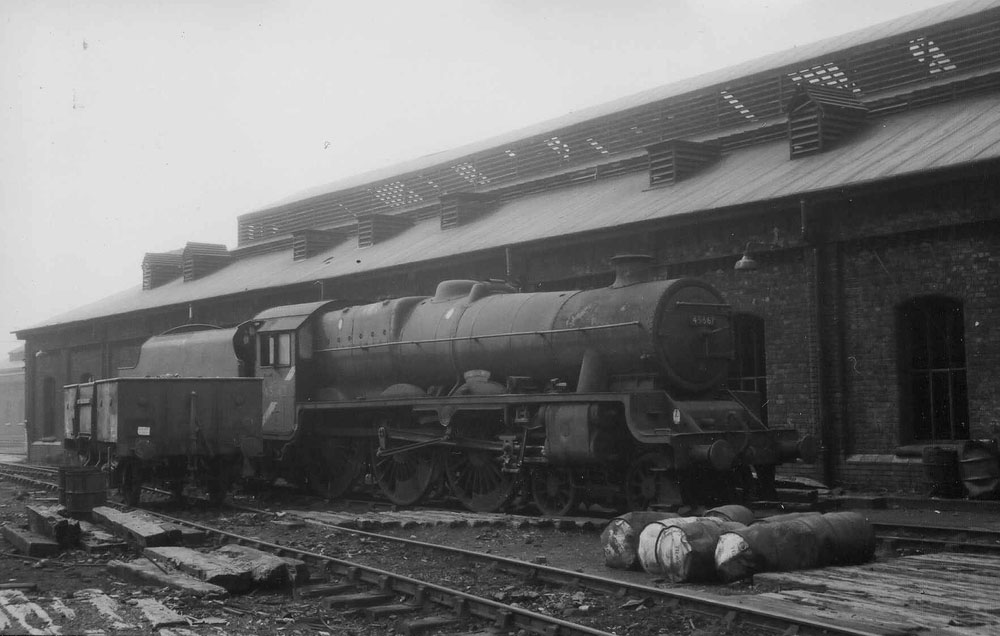
In regard to the above view Mal remembers that when he first started at Bank Hall withdrawn 50721 and 50712 were parked in the same place, waiting for removal. One night whilst cleaning Jubilee 45705 Seahorse which was also parked in the same place, he thought at the time what an unusual name for a locomotive. Behind 45667 is the Wigan shed. At the back of the shed and the buffer stop on road where 45667 is parked, and over the wall and down the embankment was Atlantic Dock Junction. Times have changed somewhat, the box is now gone and the line down to Canada Dock is no longer used, but the other line, the Bootle branch is in full swing. A piece of track was reinstated at Olive Mount to allow trains to go direct to the docks without running around at Edge Hill.
When Liverpool played Celtic on April 14th 1966 in the semi-final first leg of the European Cup Winners’ Cup two ten coach football specials were worked to Glasgow. We worked one of these specials (1X51) to Carlisle, my mate was a good man, George Lewis, we had a Springs Branch Black Five, 45395. The other train utilised Jubilee 45627 'Sierra Leone', which required assistance from Oxenholme by 4MT tank 42110. I had a good trip to Carlisle and were relieved by Carlisle men. We met up with the other crew, got cleaned up, had a shower etc then off for a pint. I had worked to Carlisle before but never gone out for a pint! The beer was very good, George said to me the pubs in Carlisle were all state owned. Same ale in every pub, the only place in Britain that had state owned pubs. We were invited to a shunters house to watch the match. Whilst waiting to go back to the station I remembered the fireman saying he had a rough trip north on 45627. We were first back about 2.00 in the morning and sure enough 45627 'Sierra Leone' came trundelling down the platform and I feared the worst. I was stepping on to the footplate when the Carlisle men advised they had failed the engine. 45627 disappeared off to Upperby depot whilst a fresh Carlisle locomotive, a Black Five arrived for my trip home.
Bank Hall shed closed closed on October 16th 1966, a couple of months after my transfer to Birkenhead. Bank Hall's steam allocation transferred to Aintree, whilst the diesel shunters moved to Speke Junction.


To continue to Mal's diesel/electric railway memories and eight years in Liberia working on the LAAMCO Railway please click on the links below:
Part Two - The Steam Years at Birkenhead
Part Three - The Diesel/Electric Years 1968 - 1980 & 1989 - ?
Part Four - Memories from Liberia 1980 - 1988
Acknowledgments and thanks:
Obviously to Mal for putting together an immense amount of memories and data in email form to allow this webpage to be created.
Also to Richard Greenwood, David Rapson, Tom Sutch, Terry Campbell, Bill Wright and Geoff Plumb for the generous use of their photographs, to Kerry Parker for the use of Ted Baxendale's views and to the enthusiasts identified in the links below for permisson to use their photographs:
David Sallery's site with thanks for the Birkenhead steam era views.
Ministry of War Transport Accident Inquiry, Kirkby 1945.
Page added December 6th 2008.
Last updated July 6th 2015