
| Owner | Engine Model | Builder/Wheel Arrangement/Gauge | Electrical Equipment | Total | Running Numbers |
| Sao Paulo Railway | 6LD25 450hp, railmotor + three trailers | Armstrong Whitworth 1933/articulated/5ft 3in | Laurence, Scott & Electromotors Ltd | 1 | 'Cometa' |
| Estrada de Ferro Santos a Jundial | 6LDA25 600hp, power car & trailers | Armstrong Whitworth/BRCW Smethwick 1939/5ft 3in | English Electric Co Ltd | 2 | 'Planeta' & 'Estrella' |
The 1933 Railmotor & Trailers
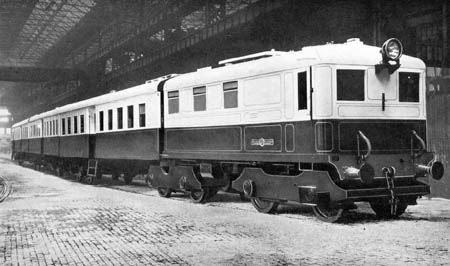
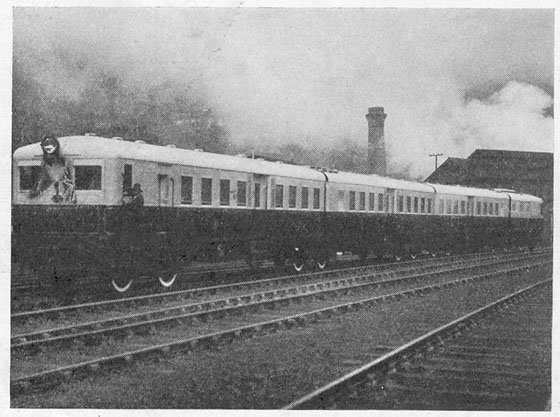
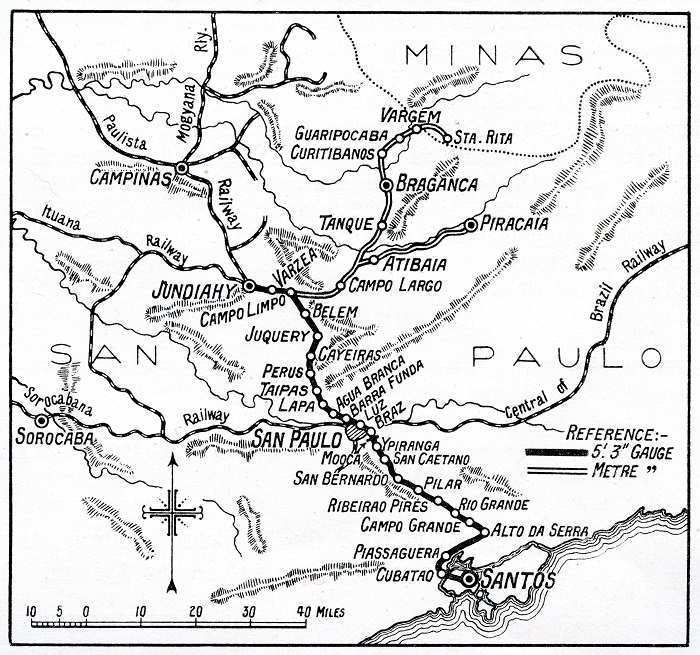
This articulated three coach + railmotor was built for the 5ft 3in San Paulo Railway, to operate over the forty nine miles between the port of Santos and Sao Paulo. Maximum height on this route was 2,900ft and included the famous Serra incline. The passing loops on the incline created a restriction as to the length of the train. The articulation was between the railmotor & the first coach and between the second & third coaches.
The railmotor was powered by an Armstrong-Sulzer 6LD25 six cylinder engine developing 450hp at 750rpm. All engine output was available for traction, an Armstrong-Saurer type BOD 50hp engine/generator set was used for starting the main engine and to drive the auxiliaries. Laurence, Scott & Electromotors Ltd provided the main generator which was directly coupled to the main engine. This company also provided much of the control gear. Crompton Parkinson supplied the four axle-hung, nose suspended traction motors. The traction motors were located on the outer bogie at each end of the train, these powered bogies were identical.
The plate frame power-unit bogies were equipped with Isothermos axleboxes, the load transmitted by laminated springs. All four wheels on the power-unit bogie were fitted with clasp brakes, operated on the automatic vacuum system driven by a Consolidated Brake Company exhauster.
The Gloucester Railway Carriage & Wagon Co Ltd were subcontractors for the coach bodies, being delivered to Scotswood for fitting onto the frames. Seating capacity was originally 100 first class and 68 second class. The coach next to the power unit featured a small buffet/pantry with a variety of storage options and space for an ice chest. Corridor connections were provided between all coaches. The end coach was equipped with a driver's compartment and a full set of controls.
Total length of the train was 174ft, tare weight was 92.6 tons, maximum speed was 65mph.
It was normal for new vehicles to be extensively tested in the yard at Scotswood, however this long articulated set of motor and coaches presented a problem. Special 5ft 3in gauge track was laid through much of the facilities, including curved sections to fully test this trainset, especially the articulation of the vehicles.
In 1934 the Sao Paulo Railway became the E.F Santos a Jundiai. The Armstrong Whitworth articulated train became known as the Cometa (Comet).
Late in 1933 the trainset was shipped from Elswick. On arrival in Brazil the seating was modified, reducing the passenger capacity, but increasing the amenities with the center coach becoming a lounge and smoking saloon, only able to seat 19 passengers. An additional fare was required when using the lounge car.
After some trial runs the trainset was put into service June 25th 1934 amid much fanfare. Railway and government officials attended a ceremony at Alto De Serro to inspect the Serra Incline and a selection of old and new rolling stock. Luncheon and speeches followed, then the new train, now named 'Cometa' set off on the 30 mile run to Sao Paulo. The journey took 35 minutes, with a top speed of 67mph. Full public service began on July 1st 1935, making two daytime roundtrips between Sao Paulo & Santos six days a week. Total weekly mileage was 1,200. A third turn was added with a round trip from Sao Paulo to Alto De Santos, increasing the weekly milage to 1,293. In January 1936 a third Sao Paulo - Santo turn was added (except Sunday's), weekly mileage now rose to 1,988.
Sometime during May/June 1944 the main engine crankshaft fractured, an event that was to reoccur in June 1949.
The livery of the train seems to have varied over the years from the bold contrasting livery following its construction to simplified liveries, both light and dark (by 1952). By the early 1970's the train was in a chocolate brown livery with yellow trim and black/yellow striped warning panels on the buffer beams of the end vehicles.
In August 1959 both engines were replaced, a 720hp Cooper-Bessemer 6 cylinder 6-FD replaced the Armstrong-Sulzer whilst a 110hp Buda engine replaced the Armstrong-Saurer. The train remained in service into the late 1970's before being scrapped at the Paranapiacaba yards.

The 1939 Railmotors & Trailers
Following the success of the 1934 built 'Cometa', two further trains of greater power and capacity were ordered from Armstrong Whitworth. They were of similar layout - that of one power car and three passenger coaches, for this build there was no articulation between the vehicles. The engines fitted to these two power cars had 33% more power than the 'Cometa' with the coaches having a total capacity of 134 passengers. The power equipment was supplied by Armstrong Whitworth whilst the passenger coaches and quite possibly the power cars were built by Birmingham Railway Carriage & Wagon Co. Ltd. Although this was not normal practice the delivery had been delayed and the Scotswood Works was winding down its Diesel Department.
The total weight of 108 tons and length of 194 feet was governed by the restrictions on the infamous Sierra incline which required the trains to be raised and lowered by cable. Maximum speed was 60mph and the trains were required to negotiate six-chain curves.
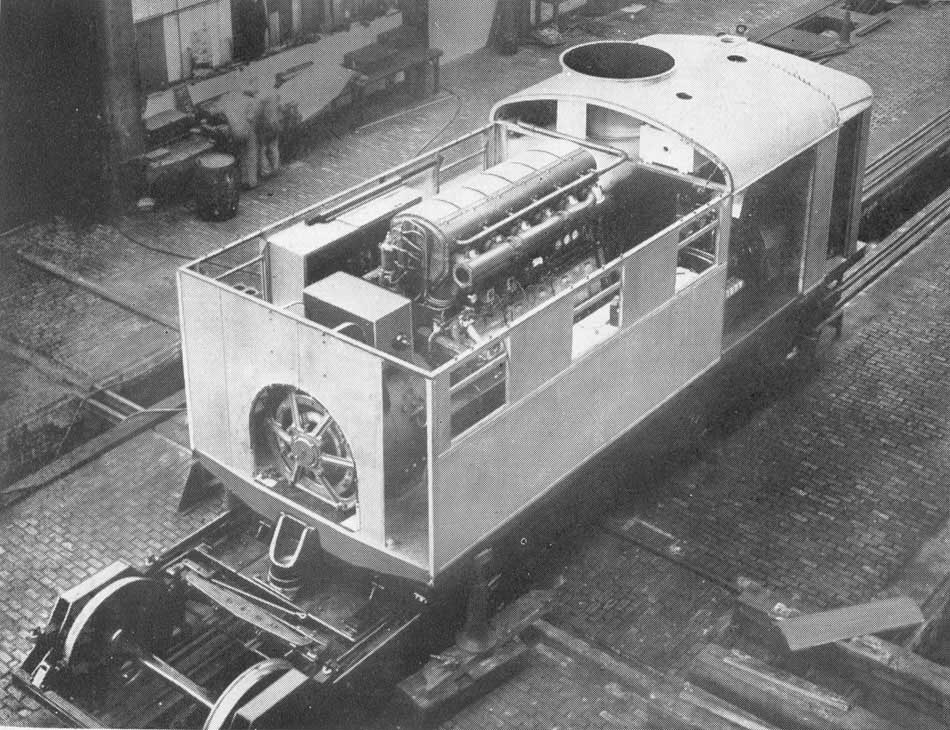
All the power equipment apart from one traction motor was housed in the 47.5 ton bogied power car. The styling of the power car matched that of the passenger coaches to give an unbroken appearance to the whole of the train. The last coach contained a driving cab. The power car also contained the guard's locker and a buffet/kitchen supplied by Stone's. The engine was a four-stroke Armstrong-Sulzer 6LDA25 with Buchi exhaust gas pressure-charger. Cylinder size was 250mm bore and 350mm stroke giving a maximum output of 600hp at 750rpm.
The crankcase was of fabricated steel and combined with the sump, side frame supports extended beyond the engine to support the generator. Rubber blocks carried the engine generator set on the main frame. The cylinder block was of cast iron and was bolted to the crankcase, iron castings were used for the cylinder heads and liners. The crankshaft was of oil-treated carbon steel with hollow bored crankpins and journals, carried on seven bearings composed of steel shells lined with whitemetal. The big end bearings of the nickel-chrome steel connecting rods had gunmetal shells lined with white metal.
CAV Bosch supplied the fuel pump and injectors, Auto Klean the fuel strainer and Zwicky fuel filters. A Stream-Line oil renovator with two heating elements was incorporated into the lubricating oil circuit. Vokes air filters were fitted at cant rail level. The turbo blower was water cooled off the main engine cooling system, radiators for which were mounted in the roof.
English Electric Co Ltd supplied the electrical equipment, possibly the only time a Sulzer engine was coupled to electrical equipment supplied by English Electric. The main generator was a direct-couple six pole machine with interpoles and an overhung auxiliary generator. Three traction motors were fitted, two under the power car and one on the underframe of the passenger coach at the opposite end. Each drove a single axle through a cardan shaft and worm gear. The one hour rating of the generator at 750 rpm was 850amp 430volts, the continuous rating at the same speed was 750amp 525 volts.
The weight of each traction motor was 3,130lb, the armature being carried on SKF roller bearings. An overspeed trip at 2,200rpm (25% above normal top speed) would operate if any part of the mechanical section of the transmission failed. Two 54 cell 197 amp/hr Chloride lead acid batteries were provided, one to provide starting for the engine, the other for power car and coach lighting.
Because of the weight restrictions imposed the passengers cars incorporated much high-elasticity steel for the underframes and bogies. Roller bearing axleboxes were provided by Timken, Luvax shock absorbers were part of the bogie springing. Body framing was of light steel flanged channel sections, floors were galvanised steel sheets covered with cork and linoleum. Insulation was provided by sprayed on Robert's asbestos applied to the inside of the aluminium coach panels, the roof was also made of aluminium.
Panelling of the saloons was of polished mahogany to the cant rail level, the roof was of cream enamel. The last portion of the trailing coach was fitted out as a Pullman Saloon with seating for twelve instead of twenty. A small buffet service area was adjacent to this area.
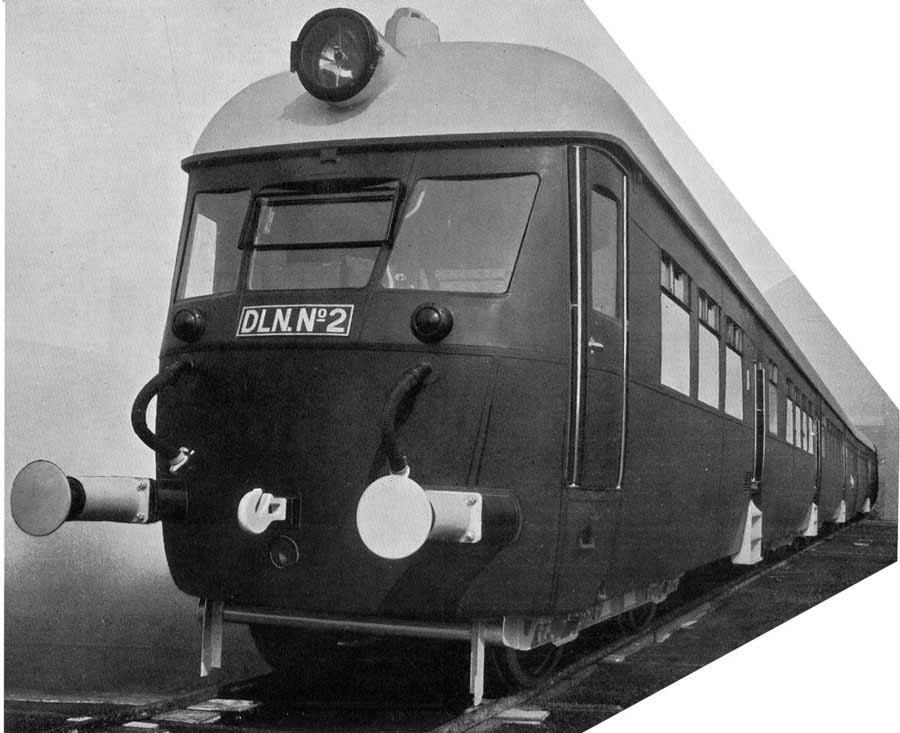
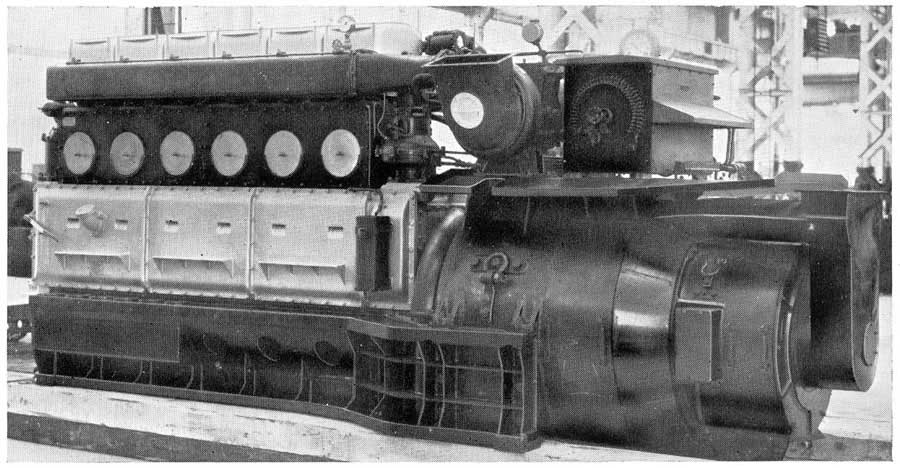
Both sets were named - 'Planeta' & 'Estrella'. The former was painted red with a cream roof, the latter dark blue with a cream roof. They joined the 'Cometa' on first class passenger traffic between the port of Santos and the city of Sao Paulo.
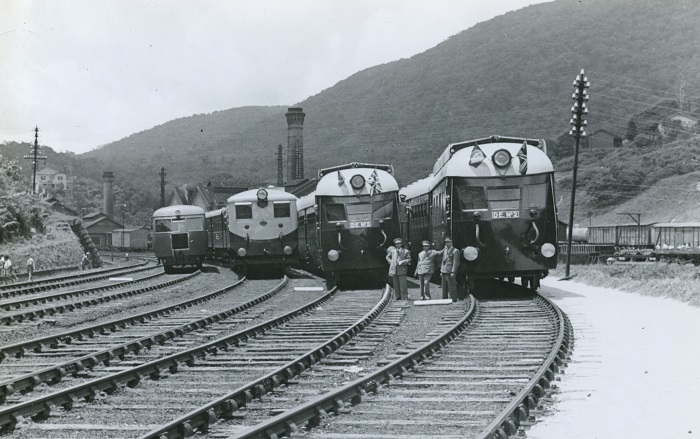
The planned delivery of the two trainsets had been delayed, shipment from the Liverpool did not take place until the autumn of 1938. 'Planeta' entered service in December 1939 and 'Estrella' in February 1940. The two trainsets gave three decades of relatively trouble free service, 'Planeta' suffered piston problems in 1946 & 1948 and crankshaft problems in 1960 & 1964. 'Estrella' encountered problems with the engine and drive shafts in the early 1960's and had an ongoing issue with water leakage. 'Planeta' was removed from service during November 1972, at some point the power car sustained considerable damage. 'Estrella' remained in service at least until late 1975. Vehicles from both trainsets were noted at the Lapa Works, Sao Paulo during 1978.
At least some vehicles, including the power car from 'Estrella' lingered at the Paranapiacaba yards into 2001, little more than gutted, rusting shells.
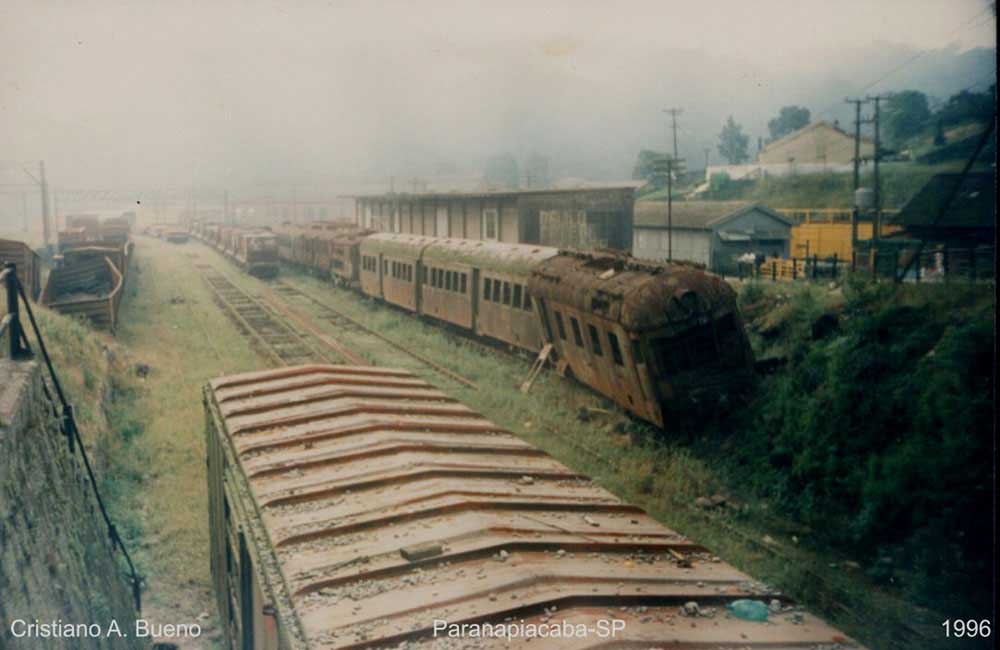
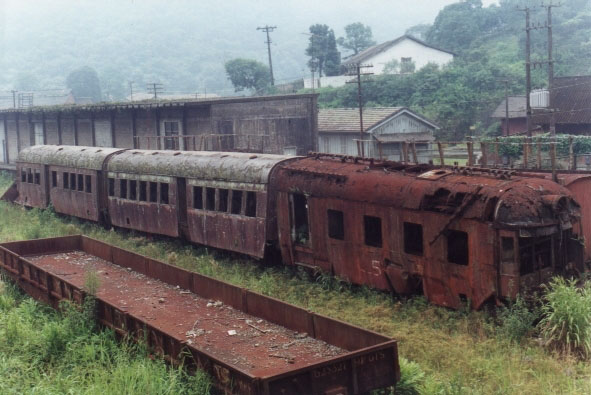
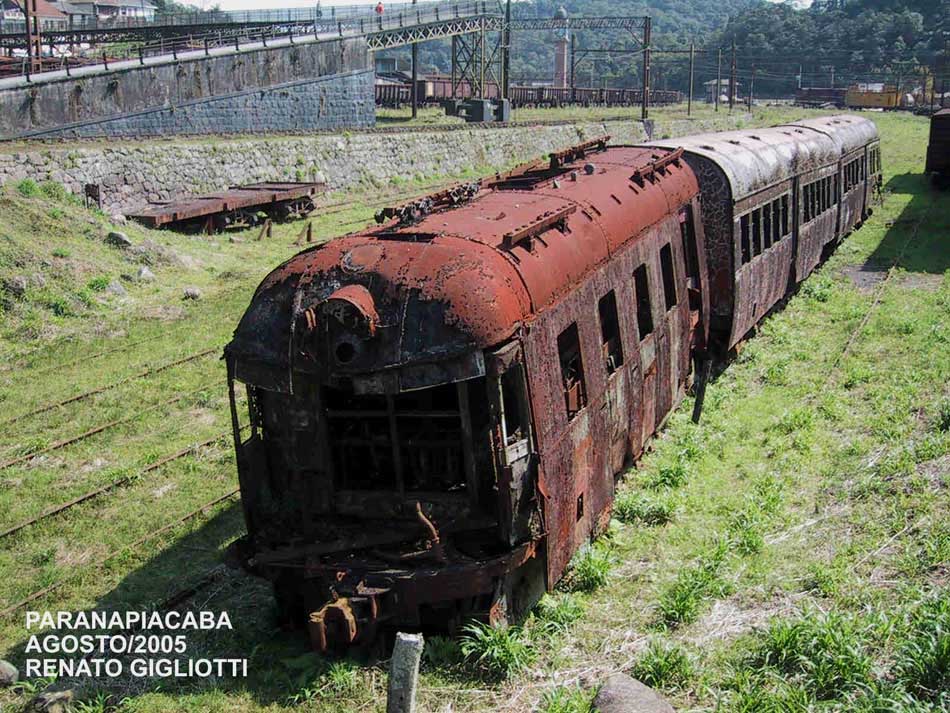
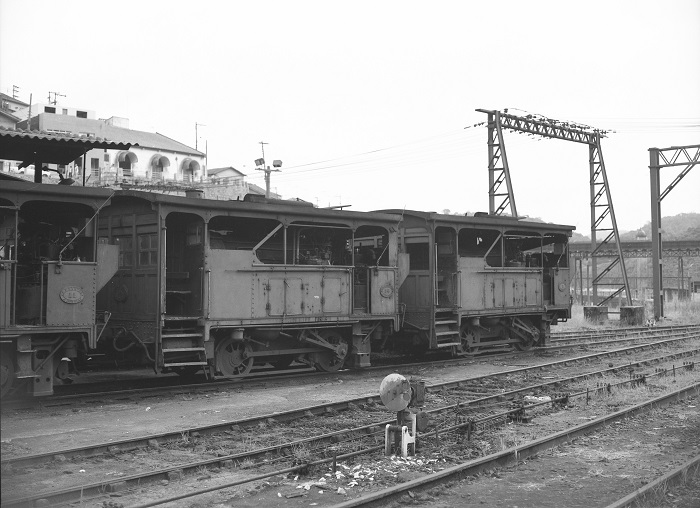
To compliment the views above, the three views below from 2007 provide some additional views of the Estrella, or at least what's left of it as it slowly rusts away. All three photographs below are courtesy of Otavio Barros.

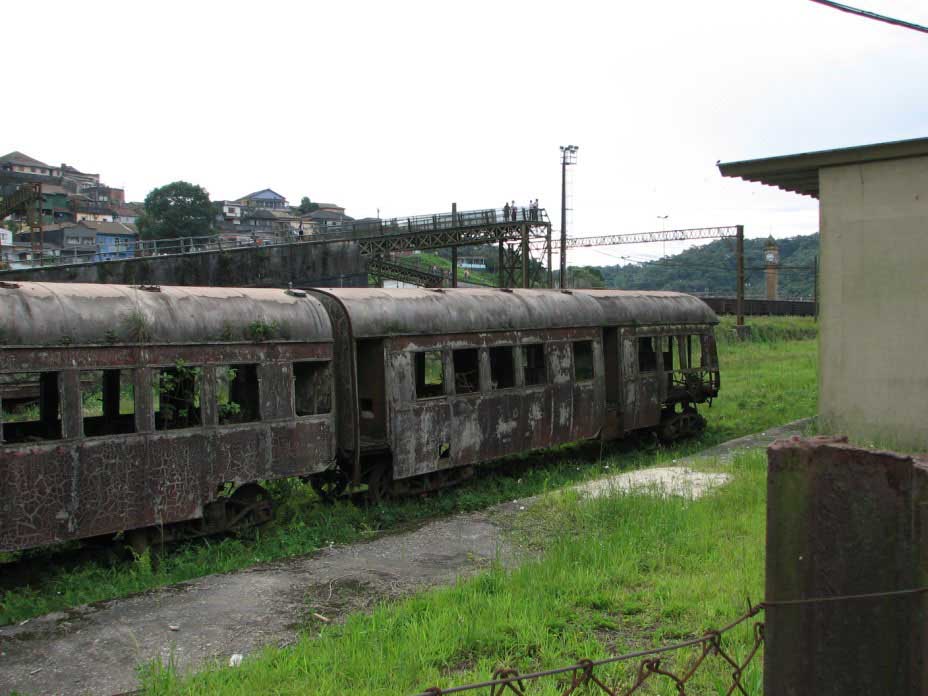
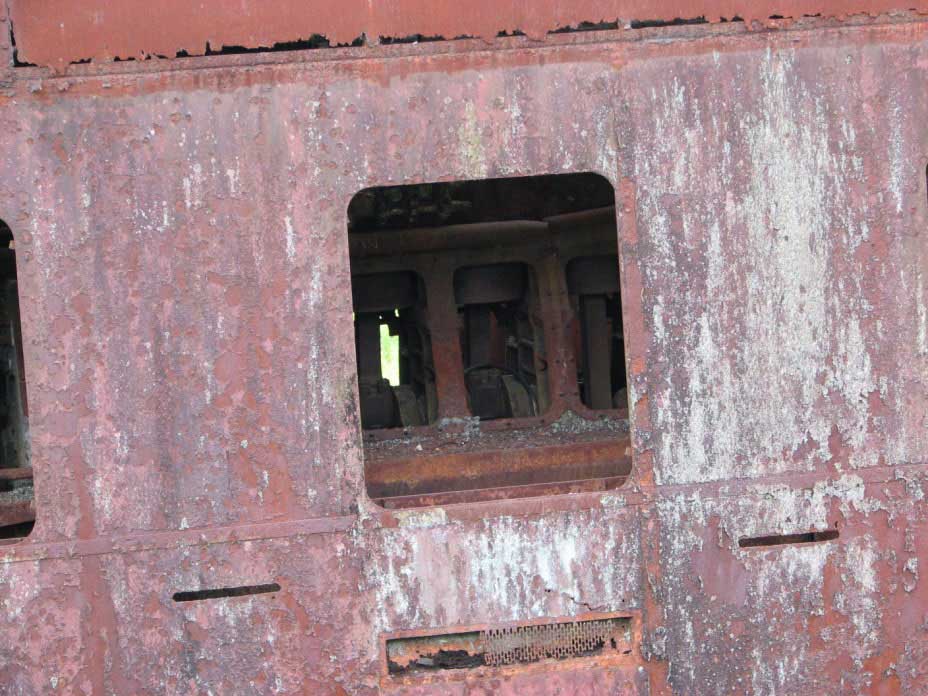
When the Planeta & Estrella were placed into traffic into 1939 the world was a far different place than it is today (March 2009). In updating this webpage with the 1996 views at Paranapiacaba I wondered if the Estrella and its two coaches were still present. Now with the help of the Earth's satellite images created by Google it is possible to look down at Paranapiacaba and sure enough three railway vehicles remain in the same position as the in the views above. Assuming the satellite views are recent (2008/2009) then a little piece of British railway engineering history remains about 70 years after it rolled out of the Workshops in Smethwick and Newcastle.

A look at Google's satellite images of the yard in April 2012 still show the vehicles are present, although the exact date of the taking of the satellite images is uncertain. The street level views also show the three vehicles being present during April 2012. It is reported the two coaches nearest the camera were scrapped during 2014.
The satellite images when viewed during February 2020 reveal the two coaches have disappeared, only the carcass of the locomotive remains. It is not known when these satellite images were obtained.
Some details about the route and the inclines.
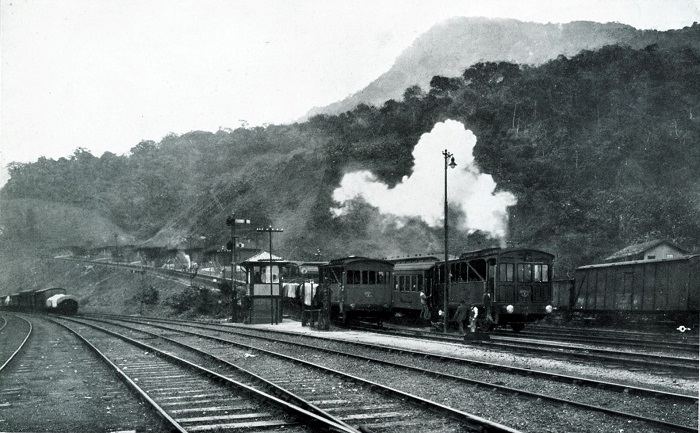
The original San Paulo Railway Company was formed in 1856, the main line being from Santos to Jundiahy via Sao Paulo. The distance was 86.5 miles and was opened in 1867. It was a single line, gauge 5ft 3in, in 1895 the line was doubled and a series of five new inclines constructed. The elevation change from Santos at sea level to Sao Paulo, sitting on the tableland is 800 feet.
The route was divided into three categories: the locomotive line, the Old Serra inclines and the New Serra inclines.
1/ The locomotive line started from Santos, running to the foot of the New Serra inclines at Piassaguera (km 19) and from Alto de Serra, the top of the Serra inclines (km 30) to Jundiahy (km 139), the junction with the Paulista Railway.
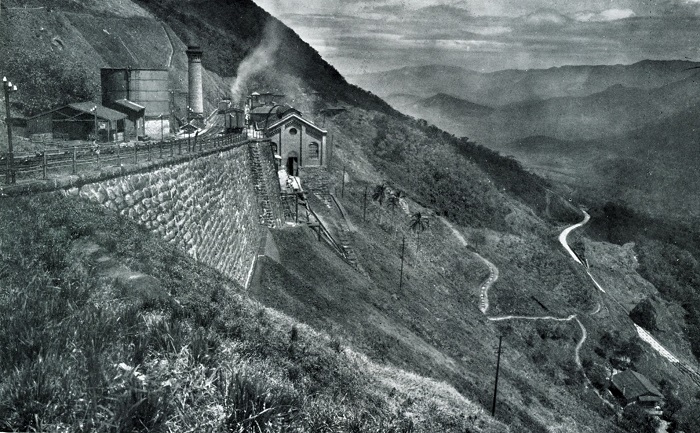
2/ The Old Serra inclines were constructed in 1857 with a length of 8.5km and worked on the tail-end system of rope haulage. The line was laid on 68lb per yard rail, utilising cast iron pot sleepers connected with tie bars. The completion of the New Serra inclines in 1900 saw the Old Serra route dedicated only to goods traffic.
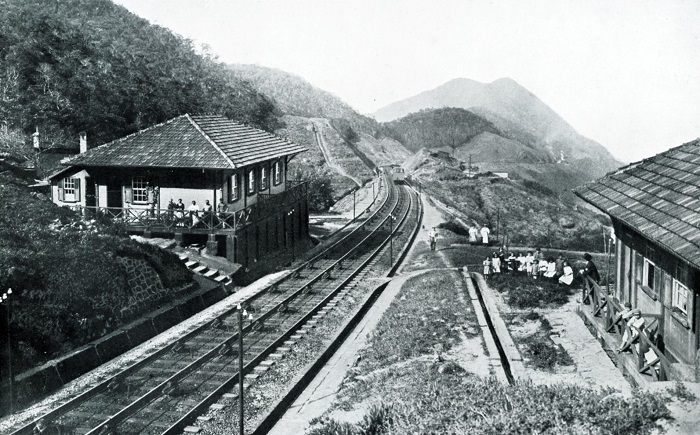
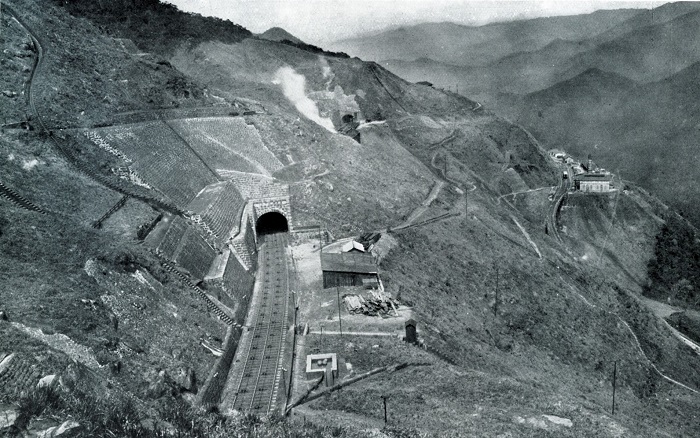
3/ The New Serra inclines were completed in 1900 with a length of 11km and utilised rope haulage on the continuous rope system. The line utilised 95lb to the yard flatbottomed rail with sole plates laid on hardwood sleepers.
There were 16 viaducts on the line, the longest being 190 metres (nineteen 10 metre spans), a 122.70 metre viaduct (three 20 metre spans and two 30 metre spans). On the New Serra line there were 13 tunnels, one being 260 metres long, two others were 150 metres. On the inclines extensive protection works were required, with many areas honeycombed with lengthy maintenance galleries.
The Railway Gazette in an article from December 6th 1926 stated "It may safely be said that no other railway in the world worked either by rope or rack can be quoted which handles 6,000 tons of goods per day in the uphill direction alone, as well as 60 bogie passenger vehicles conveying an average of 3,000 passengers daily over the rope or rack section".
The rope inclines controlled traffic flows between Santos and Sao Paulo. The five inclines each with its separate hauling plants, worked simultaneously. Thus if there were five trains ascending, there would be five trains descending, trains on one side of the rope being balanced by those on the other. Passenger trains on the incline were worked in three coach units at nine minute intervals. The fastest passenger journey time over the fifty miles between Santo and Sao Paulo was 1 hour 54 minutes, of which 43 minutes was spent on the inclines. Goods trains were worked inbetween the passenger services on the New Line or between 4pm and 8am on the Old Line. Freight traffic volumes were determined by the arrival of ships at Santos and by the export of coffee, with 556,000 tons of coffee carried by the railway in 1925.
Eighteen special locomotives were obtained for use on the inclines.
Page added September 11th 2005.
Page updated May 5th 2021.
Return to Sulzer page
Return to Picture menu