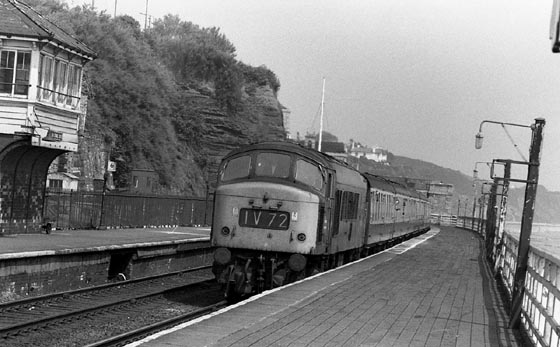
The delivery of the first of the BR/Sulzer Type 4’s from Derby during 1959 was the beginning of a lengthy and well traveled career on British Railways for most of this fleet of 193 locomotives. Their initial use on the Western Region was minimal, but as this page will show as the years rolled by and changes took place the services covered by the Peaks expanded greatly from their early beginnings. There are several other pages on this website which deal, to some extant, with the Class 45/46's on the Western Region. This page does cover some of the same ground but relies heavily on the wonderful photographs of Peter Lovell, not only of the Class 45/46's but also of the locomotives they replaced and the locomotives that replaced them.
For your webmaster the NE/SW services always meant those workings travelling between Newcastle/York/Leeds to the likes of Bristol/Plymouth/Penzance. However west of Bristol these cross country services were joined by those originating from Liverpool & Manchester. For many years there particular services were routed through Crewe, Shrewsbury, Hereford and Newport, then through the Severn Tunnel and on to Bristol where they then intermingled with the services from the North East, making for a very busy mainline west of Bristol during the summer season. The motive power for the Liverpool and Manchester services usually required a change at Newport or Bristol from diesel electric to diesel hydraulic power, though there were diagrams which would take the diesel hydraulics, particularly the Warships through to Crewe.
Eventually the Liverpool and Manchester services were rerouted through Birmingham New Street, increasing the traffic over the Birmingham - Cheltenham - Bristol lines.
Bristol
For many years Bristol marked the furthest west normally reached by the Peaks, D93 (45057) had been loaned to St Phillips Marsh during April 1961, leading to their increasing use on passenger and parcels workings on the Birmingham – Bristol route during June & July as more were delivered from the Workshops. By October ten Peaks were allocated to Barrow Road (D33 – D42, later 45019/119/117/031/009/032/033/133/147/034), covering four diagrams, with the Peaks working as far north as Newcastle.
By 1967 the Peaks were occasionally used on the 07.00 Severn Tunnel Junction – Exeter freight and had seen infrequent use on local passenger services west of Bristol. During February 1967 D155 (46018) was noted at Bristol for crew training, which included the afternoon freight to Yeovil Junction. During 1968 more Peaks were noted on inter-regional freights reaching as far west as Exeter.
At the start of the 1971 summer timetable the Nottingham Division saw its allocation of Class 46’s transferred to Bristol, leading to their increased presence in Devon and Cornwall, including their use on more freight trains.
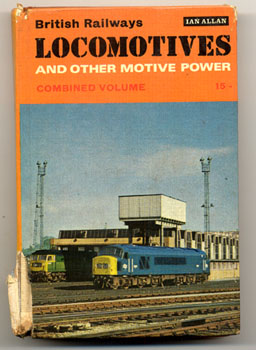 | As mentioned elsewhere in the text Bristol Bath Road depot was very visible from Bristol Temple Meads station. Any movements on and off the depot provided the rail enthusiasts with easy to get numbers and many photographic possibilities, depending on the co-operation of the weather. The 1970 Ian Allan ABC combine even featured a view of Bath Road on its cover. This was the first ABC combine purchased by your webmaster, at the princely sum of 15/- (75p) it was a considerable investment all those years ago. The combine presents an interesting view of the BR fleet at the time. In particular the diesel hydraulic fleet is mostly intact; all 74 Westerns are in service, the Warship fleet is almost complete, only 800/801/802/830 have been retired, whilst the smaller Class 22 have exactly half of the original 58 members still in service. The most frequent diesel electric Type 4 visitors to the West of England (Classes 45/46/47) were complete with the exception of several retired Class 47's. |

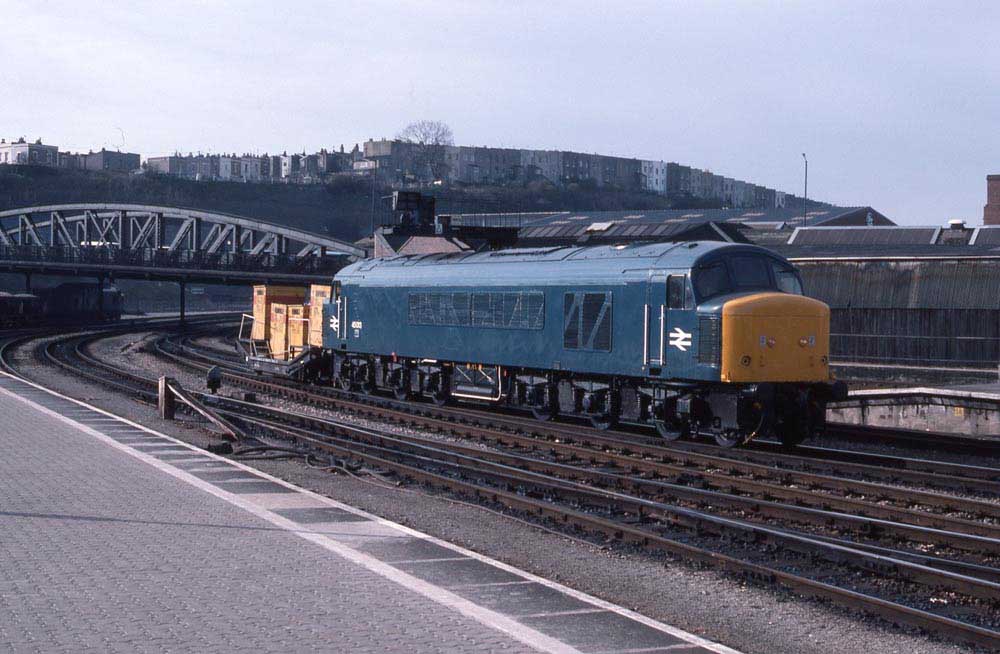
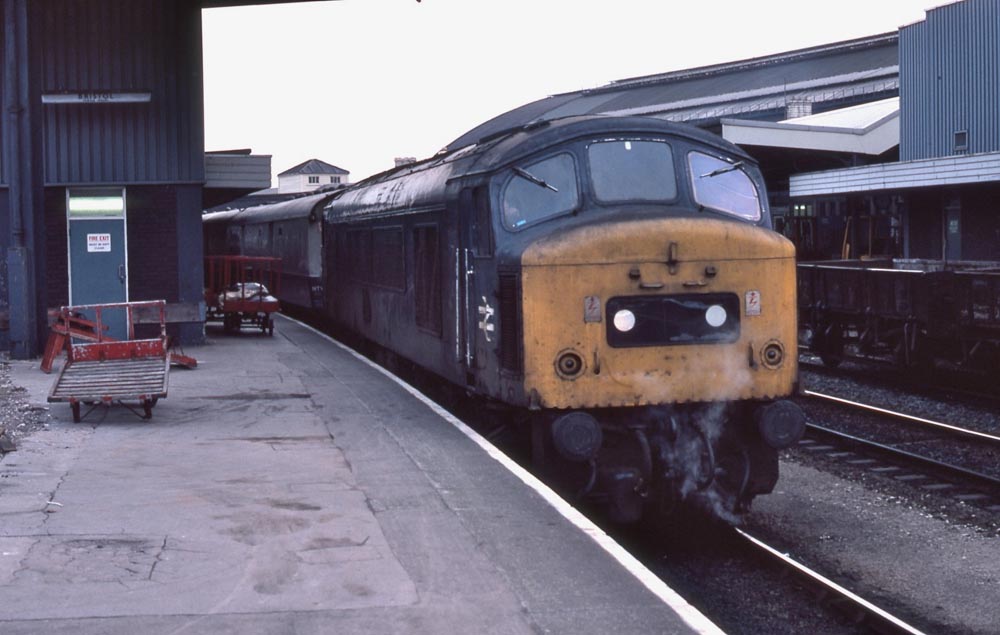
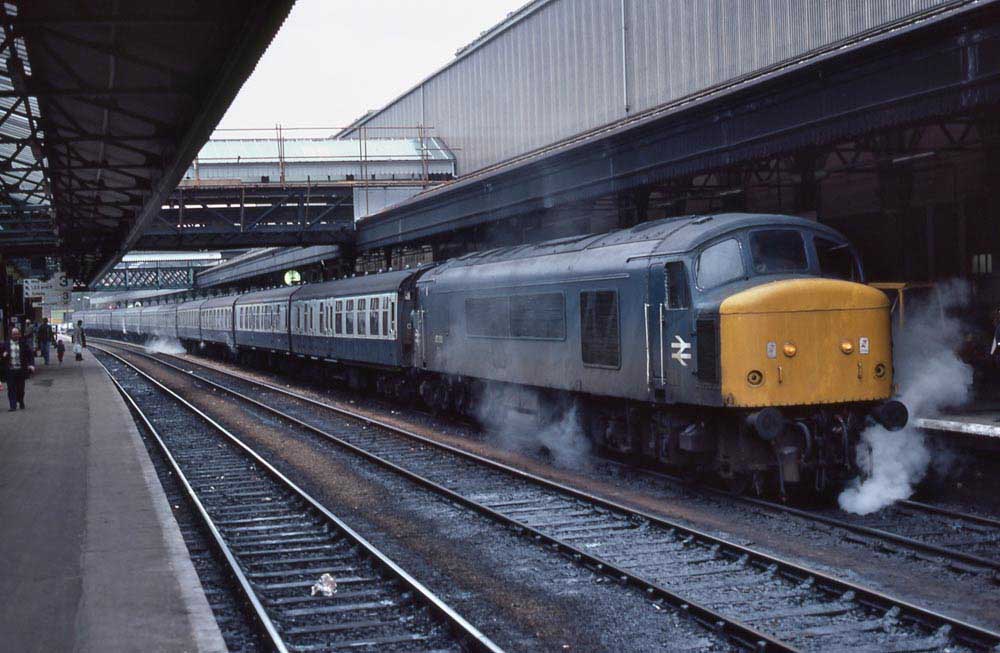
On a visit to Bristol Temple Meads on April 3rd 1984 Peter photographed examples of Class 45/0, 45/1 and 46 working through the area.
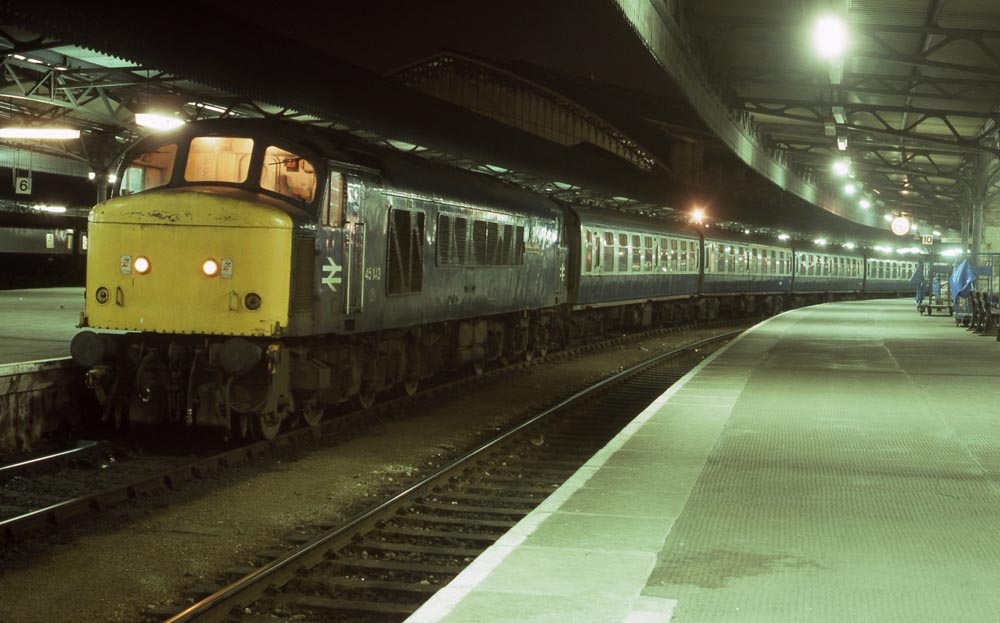
The seventy six miles from Bristol to Exeter which the Class 45/46's would work for many years was constructed without the need for any major engineering feats, with perhaps the exception of Whiteball tunnel south west of Wellington. The Bristol & Exeter Railway had initiated passenger service over the thirty three miles to Bridgwater in May 1841, which included the single line branch to Weston Super Mare. The loop through Weston was not opened until 1884. The remainder of the line through to Exeter was opened to passenger traffic on May 1st 1844. The route was engineered by Isambard Kingdom Brunel and was built to support broad gauge lines, this clearly reveals itself in some of the photographs below with the wider than normal right-of-way.
Although the Class 45's were primarily intended for use over the NE/SW route in the early years, the Bristol crews would find them diagrammed on shorter out and back turns to a variety of places, prior to returning to their NE/SW diagrams.
Likewise as the careers of the Class 45s drew to a close their forays west of Bristol became less and less, and in between the NE/SW diagrams they ventured out on short out and back turns to the likes of Taunton and Weston super Mare.
Weston-Super-Mare
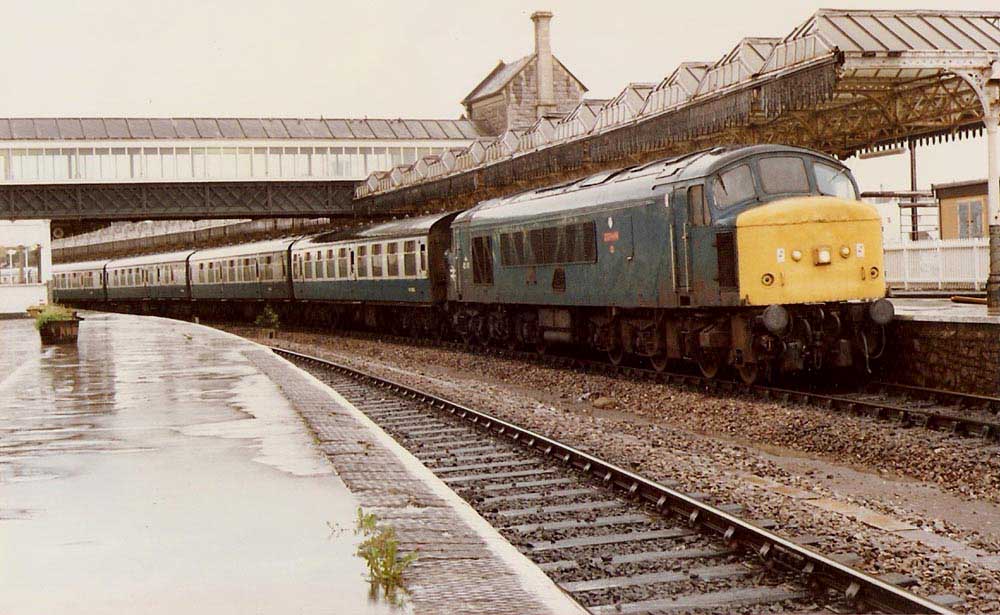
Heading south the route passes through Bridgwater and Taunton which were occasional stops for the NE/SW services. Bridgwater almost became the location of the first Class 45 to be withdrawn when 125 was involved in a rear-end collision here on October 23rd 1974. The locomotive was extensively damaged and spent time at Derby Works on decision before repairs were sanctioned. This locomotive had the dubious honour of being the last mainline locomotive to receive TOPS numbers (45071) and the first of the Class 45/46's to be equipped with the sheeted over nose ends panels and equipped with headlights.
Taunton
Between Bridgwater and Taunton the line skirted the east end of the Quantock Hills, afew miles east of Taunton the West of England main line joined the Bristol - Exeter line.
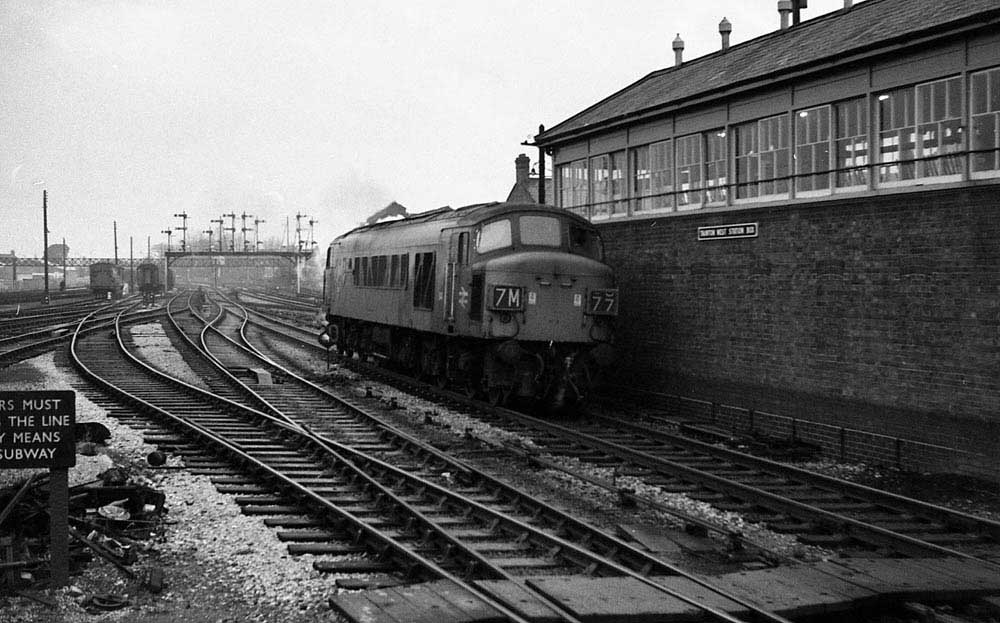
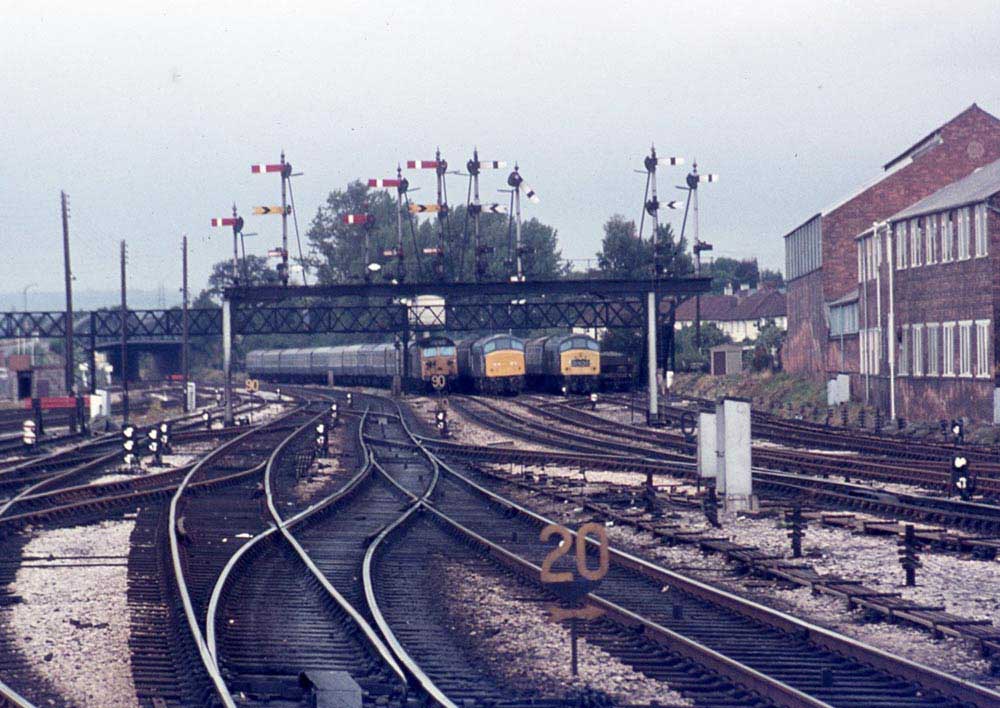
Beyond Taunton the route continued in a south-westerly direction, at Norton Fitzwarren the line to Minehead branched off, the mainline continued on towards Wellington. Passenger services at Wellington were discontinued on October 5th 1964.
Wellington
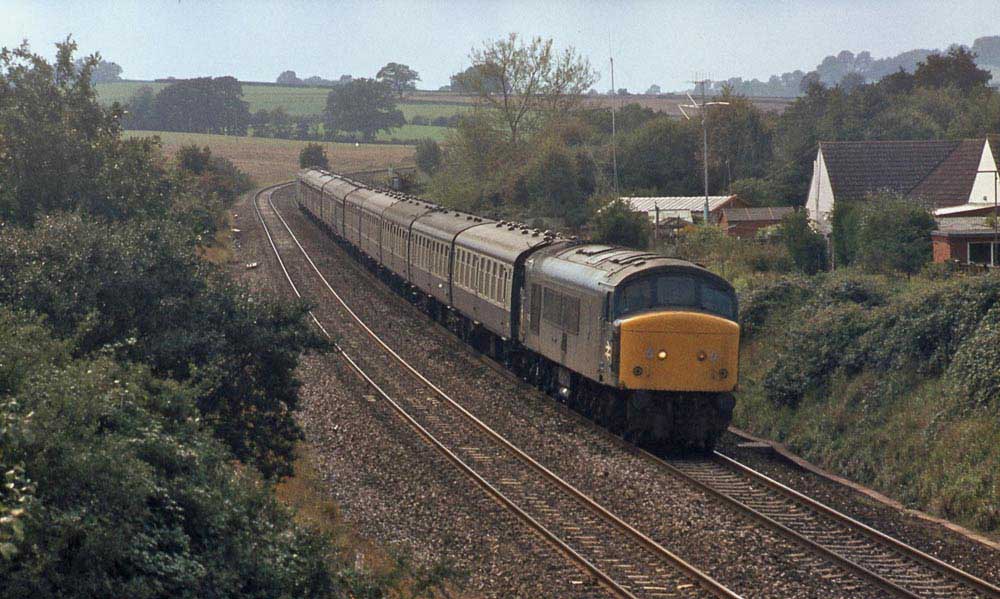
From Wellington the route climbed to Whiteball tunnel.
Whiteball
Although the line did not present the railway engineers with any serious challenges, the crossing of the Black Down Hills required the construction of the 3,280 feet Whiteball Tunnel. This was bricklined on a gradient of 1:128, the railway line crosssed the Somerset/Devon boundary whilst in the tunnel.
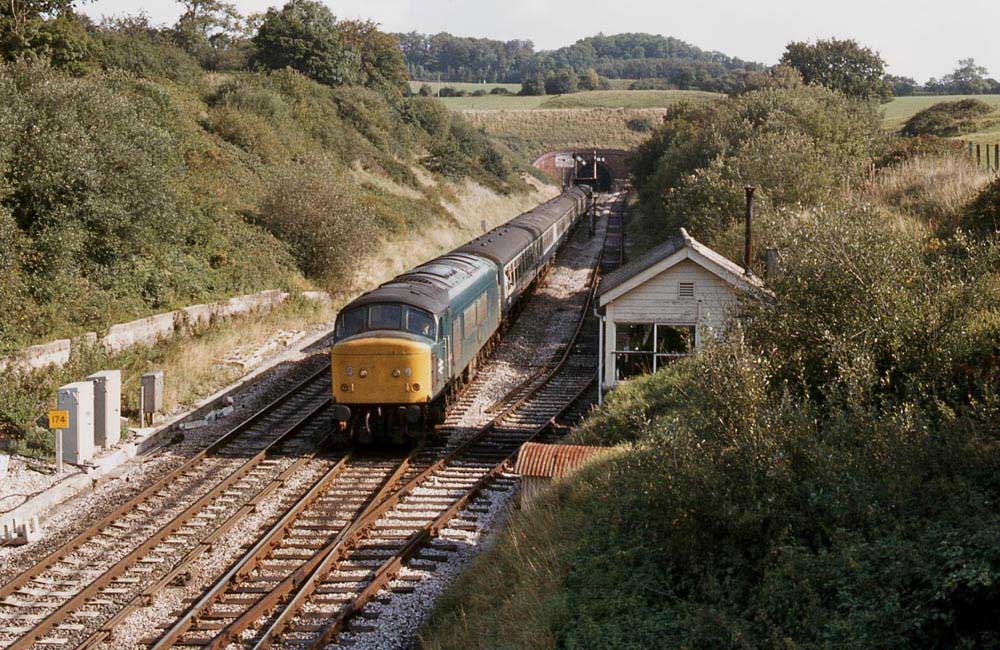

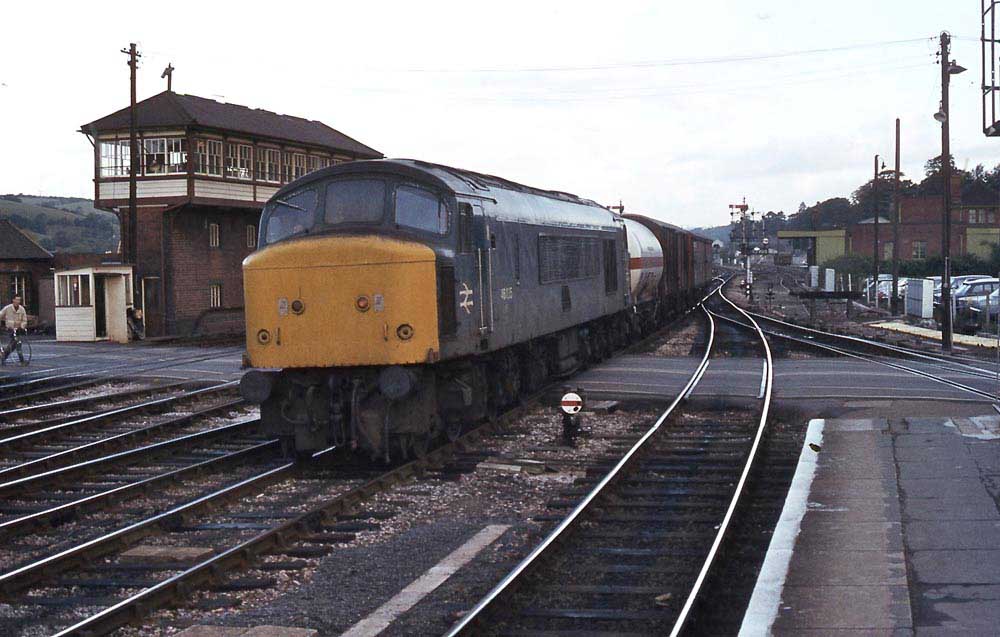
Beyond Whiteball the route curves slightly more to the south to head more or less in the direction of Exeter using the Culm Valley. From south of Burlescombe to Hele the railway has been joined by the M5 motorway. One station to survive on this section of line is Tiverton Junction, once the stopping off point for service to Tiverton, the passenger service on this line being taken away on October 5th 1964.
Tiverton Junction

Rewe
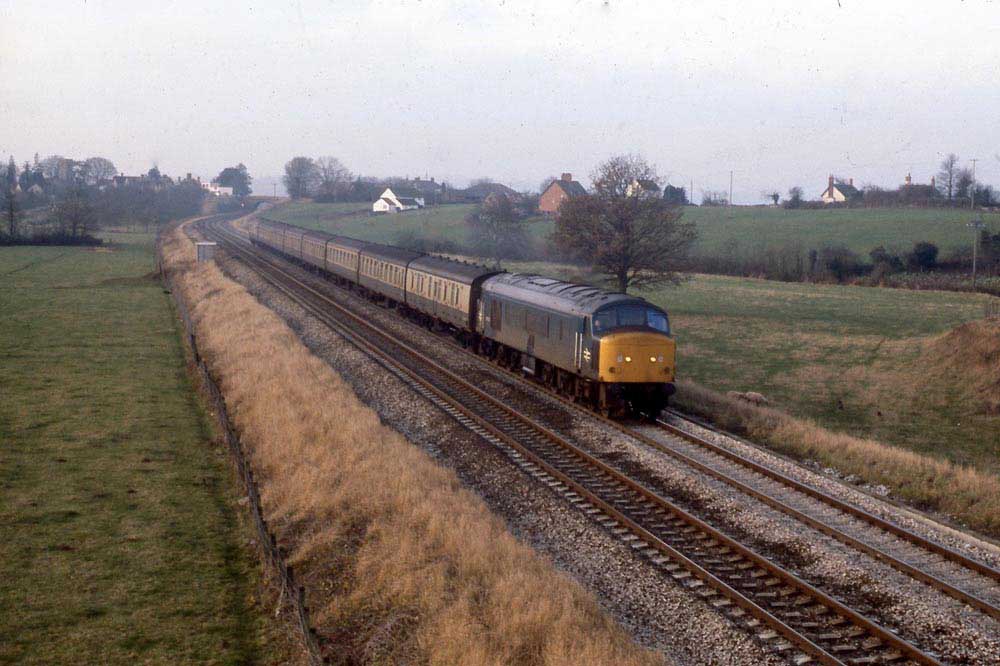
Stoke Cannon
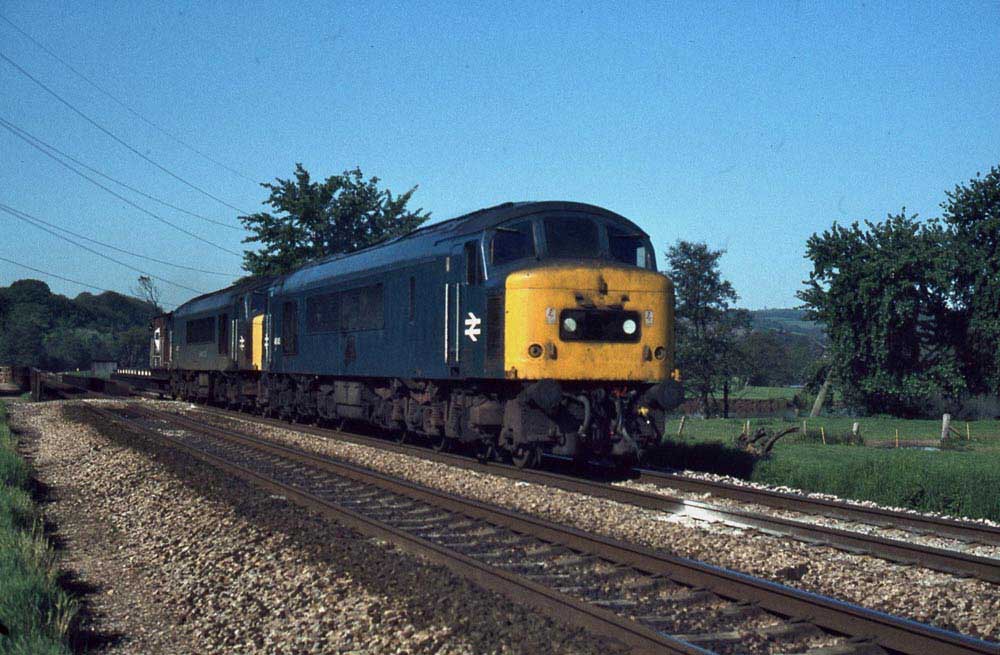
Hobbies are frequently unintelligble to family, friends & strangers, what provides great enjoyment to one is completely baffling to another. Hopefully the above view strikes a chord with the railway enthusiasts - whether your watching the trains roll by at the end of a station platform, or lineside somewhere in the heart of the countryside on a gloriously warm sunny day. The latter clearly applies in the above view! On such a busy line as this the regular timetabled passenger & freight trains would provide plenty of activity. Beyond this would be the unexpected workings, the relief passenger services, additional freights and light engine movements. And thrown into the mix would be the effects of locomotive failures, which might include locomotives from distant depots being called upon to fill in.
On the approaches to Exeter the route passes the picturesque Cowley Bridge Junction. The former LSWR route from Waterloo & Salisbury, once the route of the famed Atlantic Coast Express operating to destinations on the 'withered arm' such as Ilfracombe, Great Torrington, Bude, Padstow & Wadebridge relied on operating rights between Exeter St Davids and Cowley Bridge Junction in order to reach its right of way connected to the destinations in Devon & Cornwall. Portions of this route still remain, in particular the route to Barnstaple and the stub of the mainline to Okehampton and the quarry at Meldon. The latter route saw the operation of heavy ballast trains to various destinations, many of which were hauled by the Class 45/46's.
Cowley Bridge
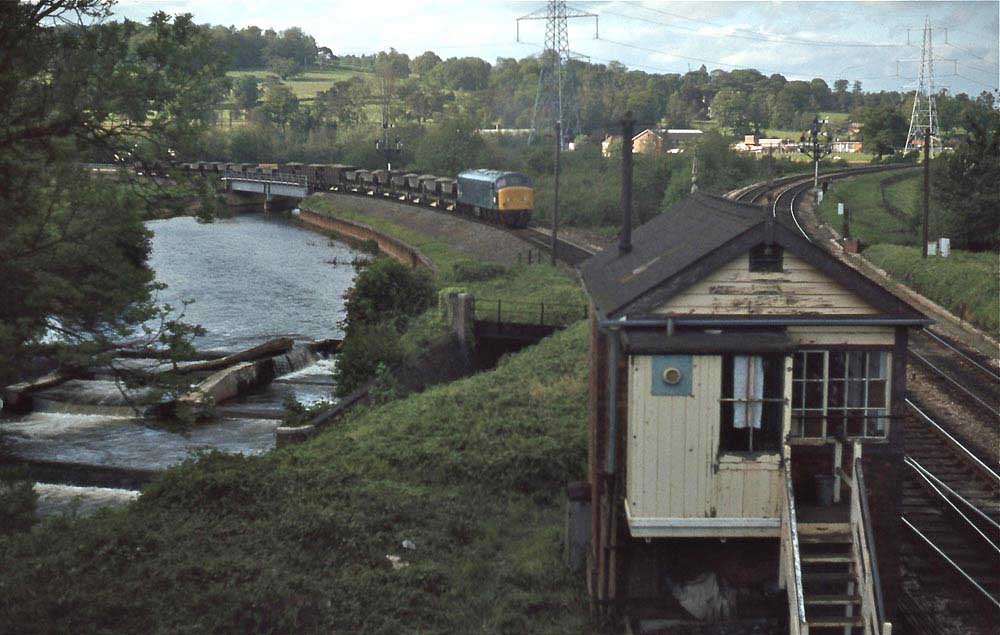
Beyond Cowley Bridge the widening valley of the Exe provided space for the construction of Exeter Riverside yard.
Exeter Riverside
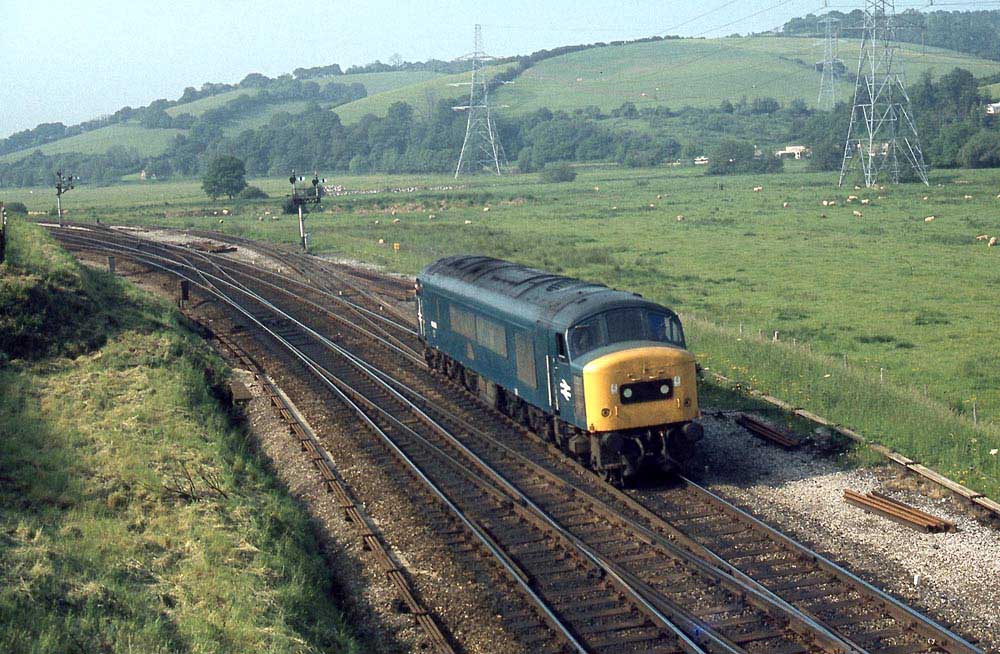
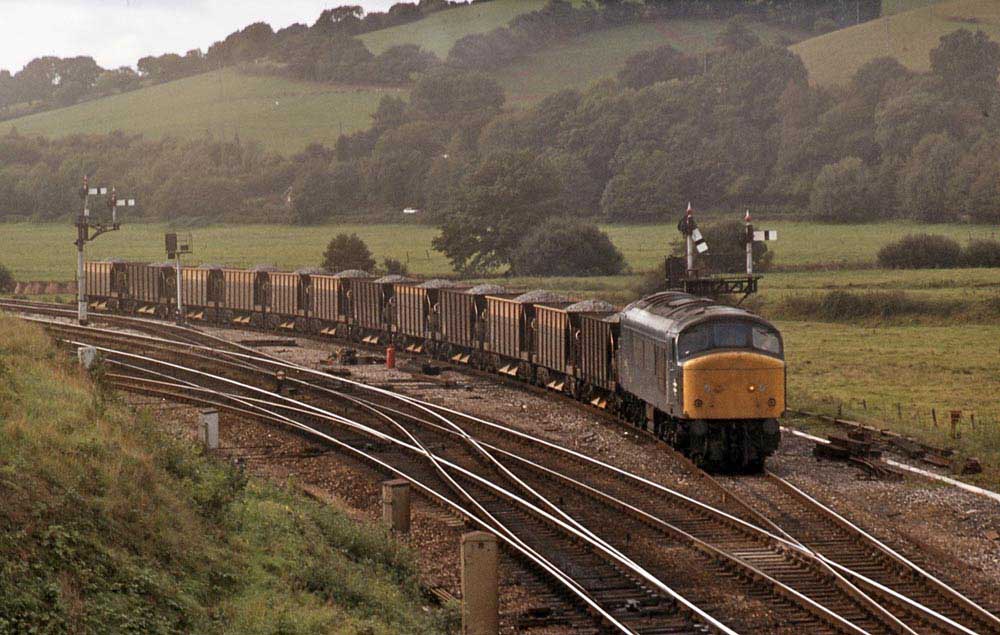
Exeter Riverside yard provided the start of that typical approach to many principal railway stations, of increasing railway activity, once busy sidings and if you were lucky some sort of facility for refuelling & servicing locomotives. Exeter once boasted a steam shed, code 83C, a subshed to Newton Abbot. With the end of steam the shed was no longer required, although it would be demolished the site remained as a signing-on point for the refuelling and stabling of diesel locomotives.
Exeter Depot
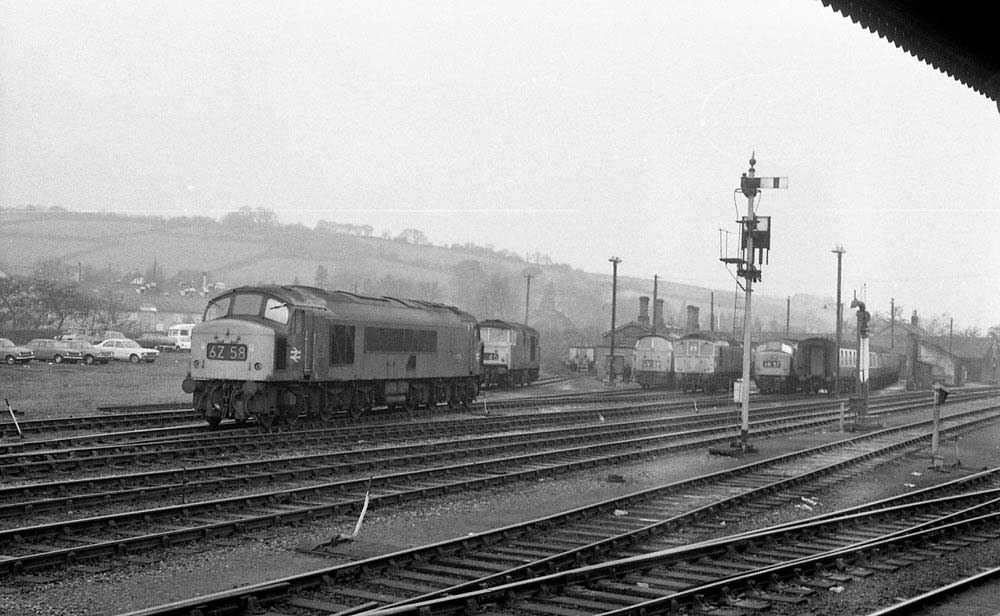
During the period of the phasing out of the diesel-hydraulic fleet the variety of locomotives to be seen at Exeter was considerable. Of course there was the expected Class 08 shunter, diesel hydraulic classes 22/35/42/52, regular diesel electrics 25/33/45/46/47 and occasional visitors of classes 31 & 37 arriving usually on inter-regional freights.
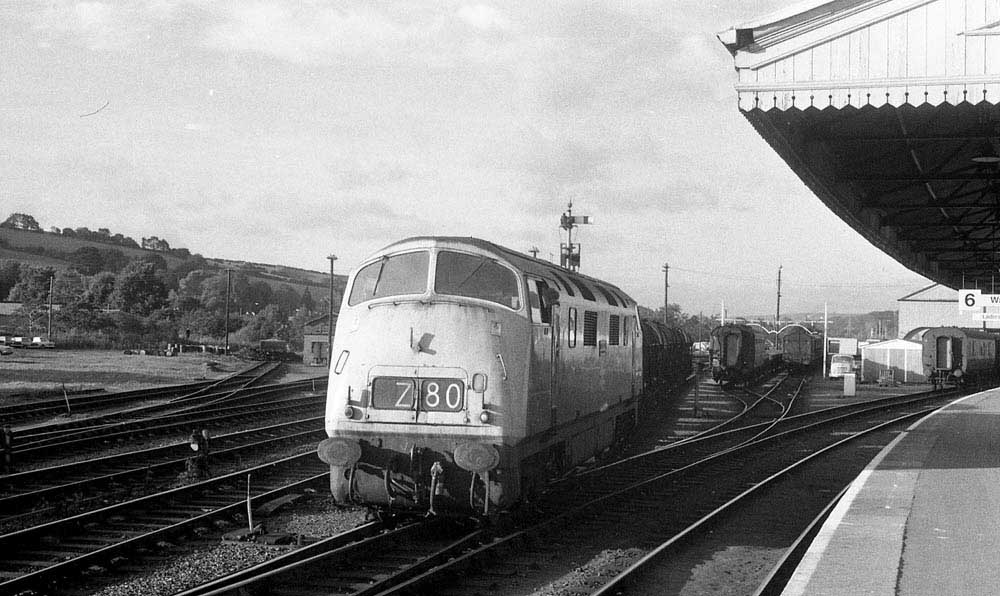
In the above view Class 42 No.806 Cambrian is in its last year of service, it would be retired on November 2nd 1972 after thirteen years of service. The increasing presence of Classes 45/46/47 west of Bristol, the introduction of Class 33s on the Waterloo - Exeter service and the allocation of all the Class 52 Westerns to Laira would deprive the Warships of many of their passenger & freight workings. Their low axle loadings did permit use on many branch line workings, such as the various milk jobs, unfortunately the arrival of the Class 25's took these turns away from the Warships. By the middle of December 1972 the final Warships were taken out of service, for 806 the end would come at Swindon Works during April 1975.
Exeter St Davids
For about a decade the diesel hydraulic classes dominated the passenger workings between Bristol and Penzance. In those early years the workings out of Paddington were of course Western or Warship hauled, whilst inter-regional expresses coming in from the north of England would change locomotives at Newport or Bristol.
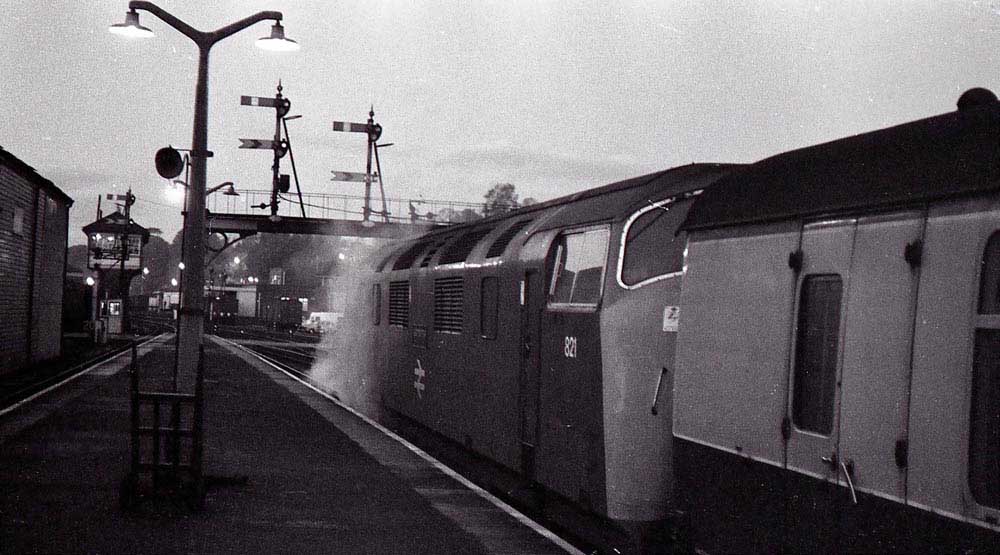
By the end of 1972 all the Warships class locomotives had been taken out of service, though many remained at Swindon Works awaiting scrapping whilst afew lingered at depots prior to their last movement to Swindon. This would leave just the Class 52 Westerns as representatives of main line diesel hydraulic traction.

In contrast to the view of 1061 above, the scene at the west end of Exeter St Davids on the same morning was probably one which would dampen the heart of any true diesel hydraulic enthusiast. The 'new' order was coming and it was in the shape of the ex-LMR Class 50's as replacements for the Class 52's. These WCML cast-offs could provide the Western Region main line services with something the diesel hydraulic locomotives could not - electric train heating to supply power to the fully air-conditioned coaches now becoming very common on BR's services.

In the view above the lines to the immediate left provide access to the former LSWR route to Exeter Central and the route to Salisbury and Waterloo. After the end of steam these long distance services from Waterloo to Exeter and beyond were mostly cut back to Exeter and utilised the Warships. With their demise the Southern Region Class 33's took over. The introduction of the HST's allowed cascading of locomotives and so the Class 50's would eventually take over these services.
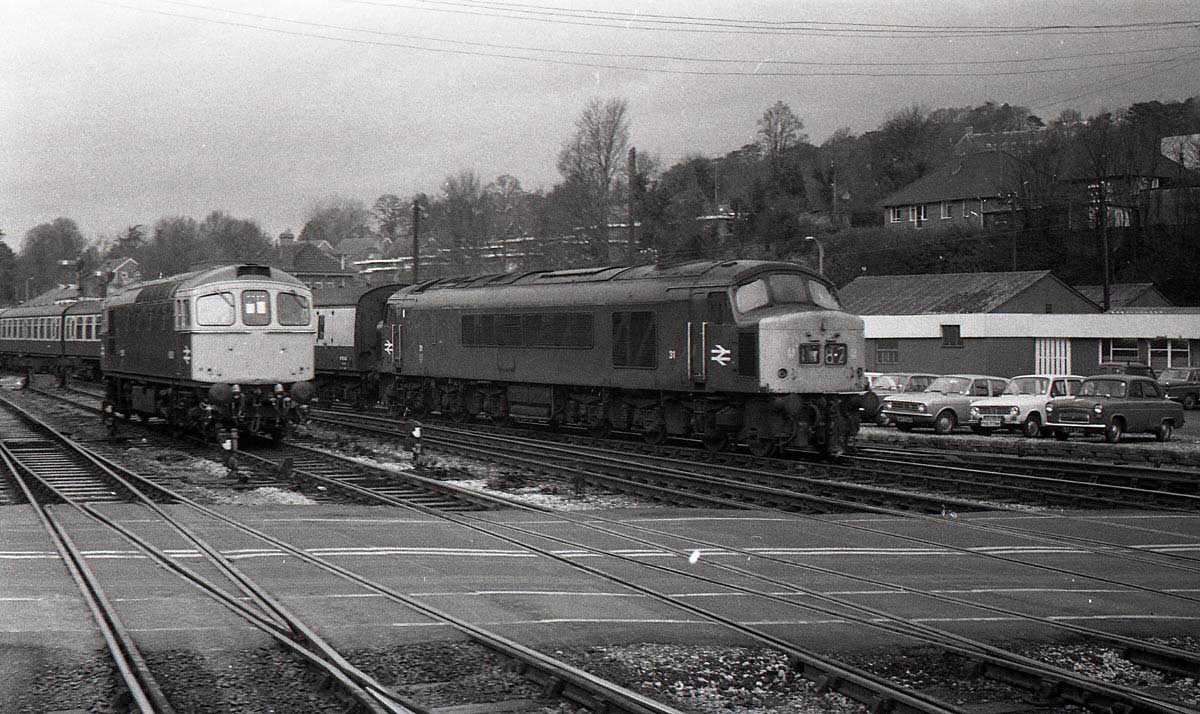
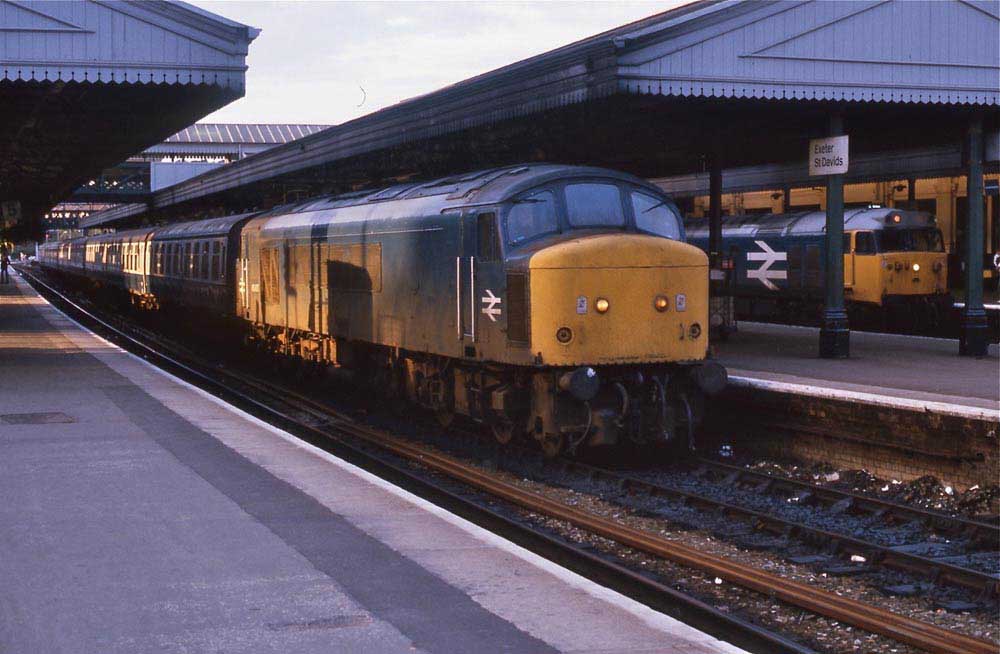
Ten years have rolled by and some things seemed to have remained unchanged. Exeter St Davids looks as it always did, semaphore signalling still controls the route and many of the services are still in the hands of the Class 45/46's. But the writing is on the wall, the Class 46's are in rapid decline and inroads have been made into the Class 45 fleet. TOPS renumbering and the sheeting over of the headcode panels on the Class 45/46 noses mark small changes to the locomotives physical appearance, as does the fitting of electric train heating to fifty Class 45's, which will allow their use on many services well into 1988.

After the Bristol - Exeter Railway had reached Exeter, the engineers immediately started work in 1844 on the South Devon Railway for the next fifty two miles to Plymouth. The local geography restricted the route available to the engineers whilst limited financing caused the route to have sharper curves and steeper gradients than Brunel would have liked. The route chosen encompassed the gentle run alongside the Exe estuary, the dramatic seafront real estate from Dawlish Warren to Teignmouth, then moving away from the sea to skirt the southern boundary of Dartmoor, with its associated curves and gradients before dropping down to Plymouth. By April 1849 the route was open to Plymouth.
Exminster
The major contributor of images to this page, Peter Lowell, spent part of his youth in the Exminster area which has resulted in a varied selection of views of Peter's 'backyard'. The north-south orientation of the mainline in this area allowed for many opportunities to photograph the trains running in both directions and throughout the seasons.
At one time Exminster possessed a passenger station, but the local passenger service was discontinued after March 30th 1964.


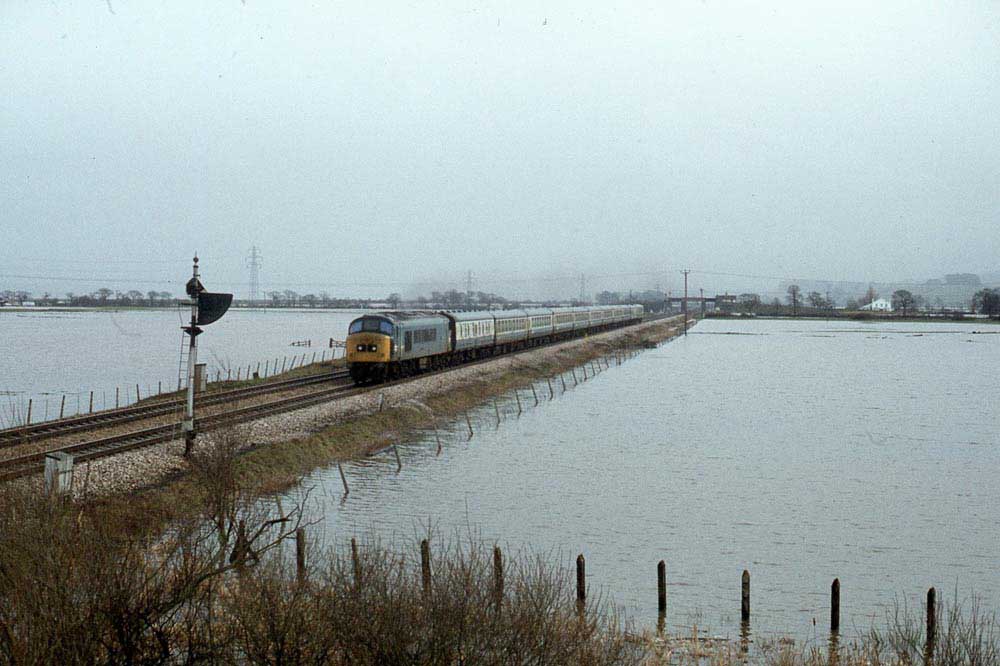
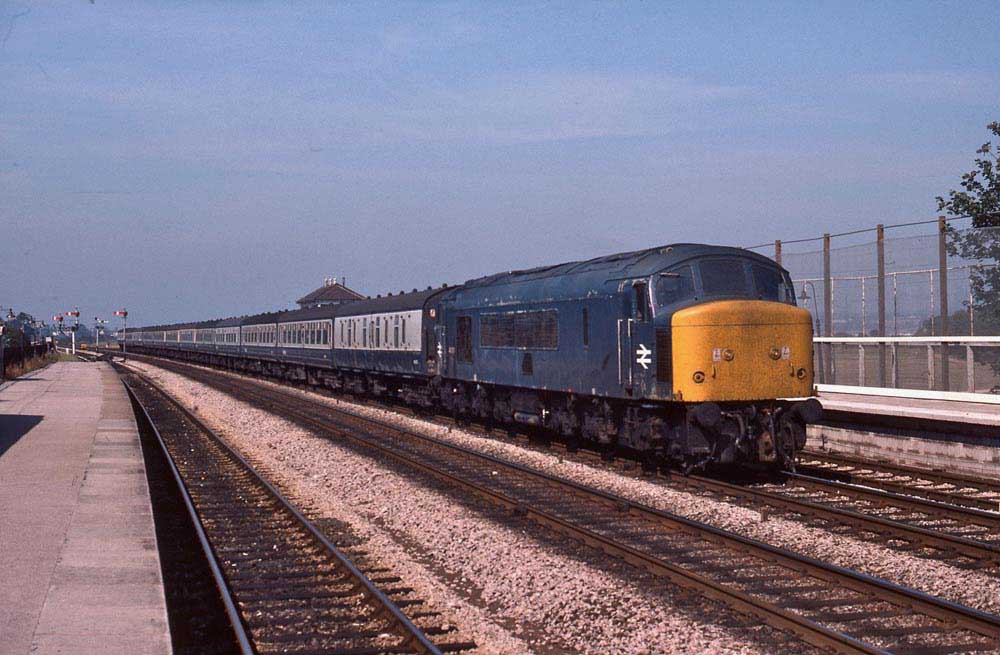
(Above) An unidentified Class 45 & train during February 1978.
(Middle) 45071 on New Years Day 1979 heads the 14.36 Paignton - Leeds.
(Top) 45002 on September 24th 1982 with the 13.45 Penzance - Bristol.
For the left hand view flooding was not unusual at this location, although it may have been caused by melting snow. The field to the right of the train was known locally as the wet field. This area is re-claimed marshland and forms part of the Exe Estuary flood plain and is regularly flooded in winter, by snow, rain or the Exe breaking its banks slightly further north. Over to the left is the Exeter Canal. This was extended in about 1830 to reach the Exe somewhere above the locomotive. The height of the water in the canal and at high tide is probably well above the height of the water in the field, so drainage is difficult if their is a period of prolonged rain.
On February 18th - 20th 1978 heavy snow fell with the south & west bearing the brunt of the storm. Fourteen inches fell at Exeter and Cardiff with snow drifting to 25 feet on Dartmoor and Exmoor. By mid afternoon traffic was seriously disrupted west of Bristol. The 14.40 Leeds - Plymouth was cancelled at Taunton, the 16.30 Paddington - Plymouth picked up those passengers, and was noted passing Newton Abbot at 01.30am! Exeter made use of steam lance equipped 45065 to free numerous points in the area. When the thaw set in the result can be seen in the left hand view above.
Heavy snow and freezing conditions at the end of 1978 and into the New Year plagued services with delays and faulty equipment compounded the problems for the Operating Dept. In the West Country Exeter proved to be a graveyard for frozen up locomotives, with temperatures reaching down to -13C, most things simply froze up. The 00.05 Paddington - Penzance was reported eighteen hours late at Plymouth, the local services out of Exeter were cancelled since the dmu’s were frozen solid. Exeter contained eighteen frozen up locomotives including 25052, 25206/225/263, the only serviceable machine being 46020, which had been equipped with steam lances for the freeing of pointwork and rodding. The center view above gives some indication of the weather conditions experienced at the beginning of 1979.
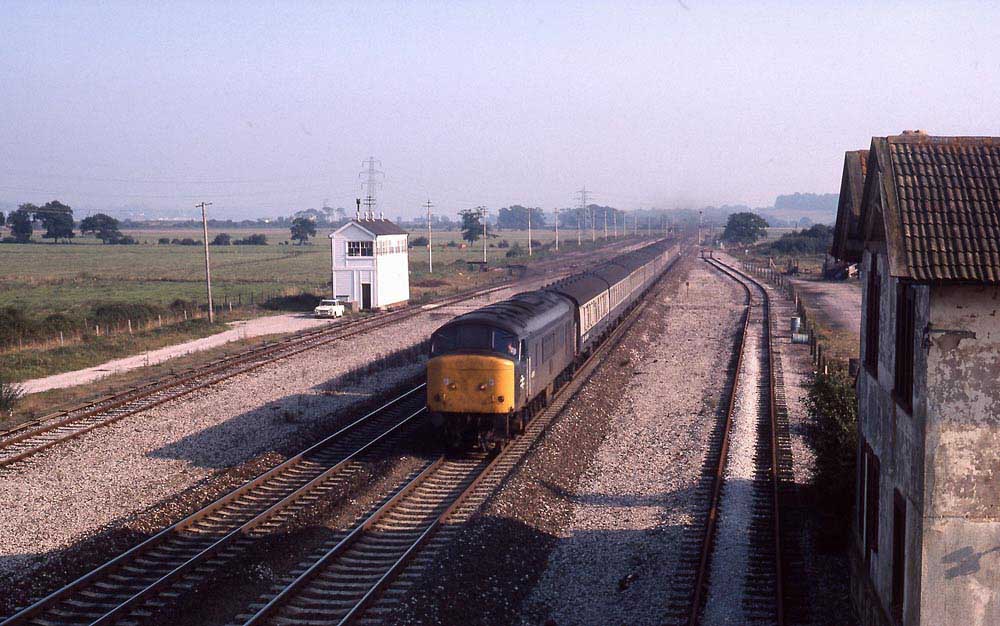
Beyond Exminster the route drew close to the estuary of the Exe, through Powderham, Starcross and Cockwood, providing the photographer with many opportunities to capture those glorious summer views of sea, sunshine, boats and trains!
Powderham
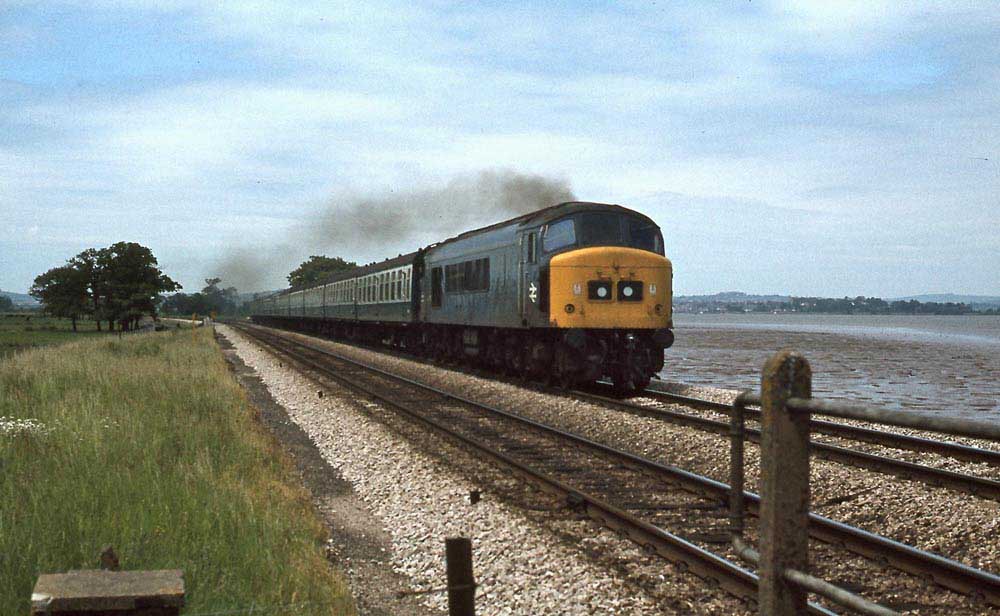
Cockwood
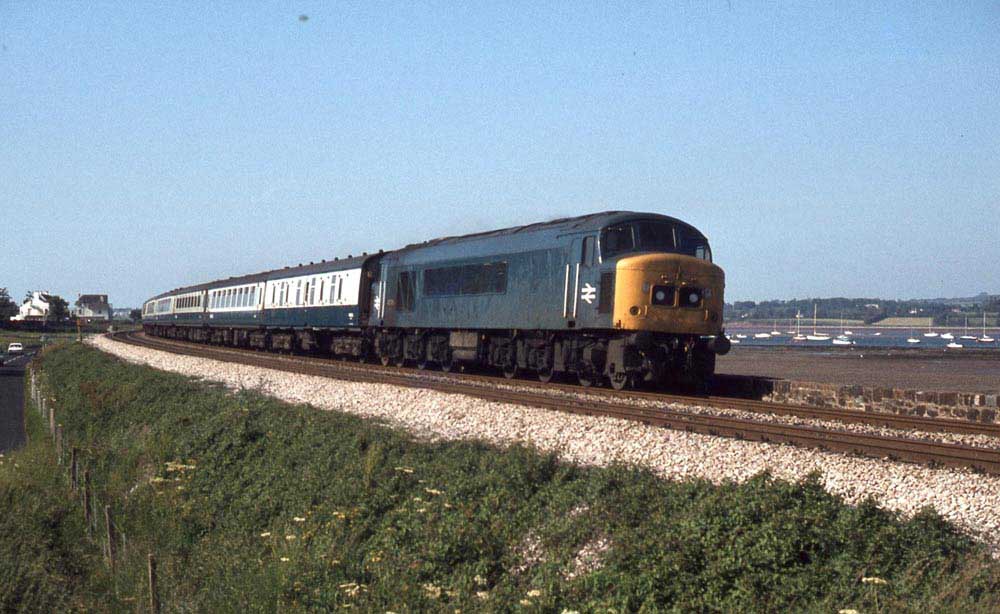
Dawlish Warren
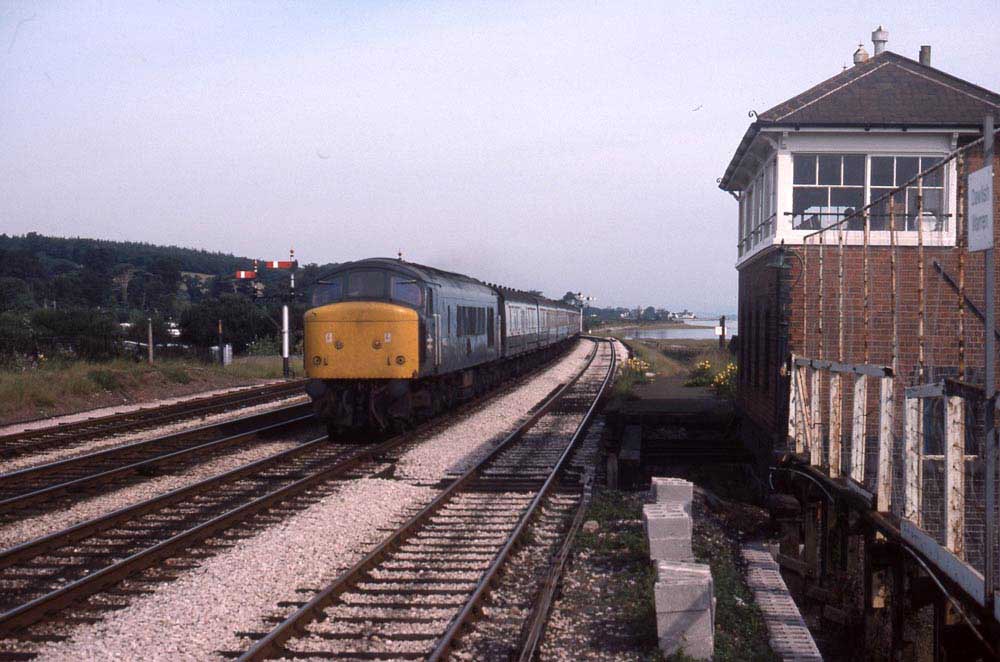
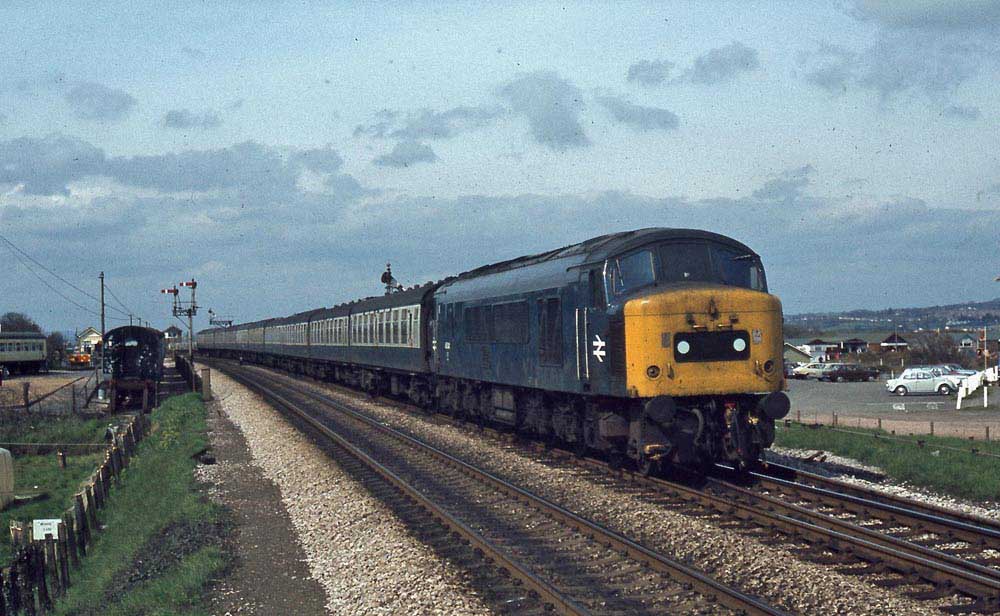
Just beyond Dawlish Warren the railway runs along one of the most photographed sections of line anywhere in the United Kingdom, along the seawall from Dawlish to Teignmouth. (For more about this section please visit the Laira page, but before we move on here is a scenic view of Dawlish, its seafront and the railway line).

At Teignmouth the railway turned away from the sea and followed the estuary inland to Newton Abbot.
Newton Abbot

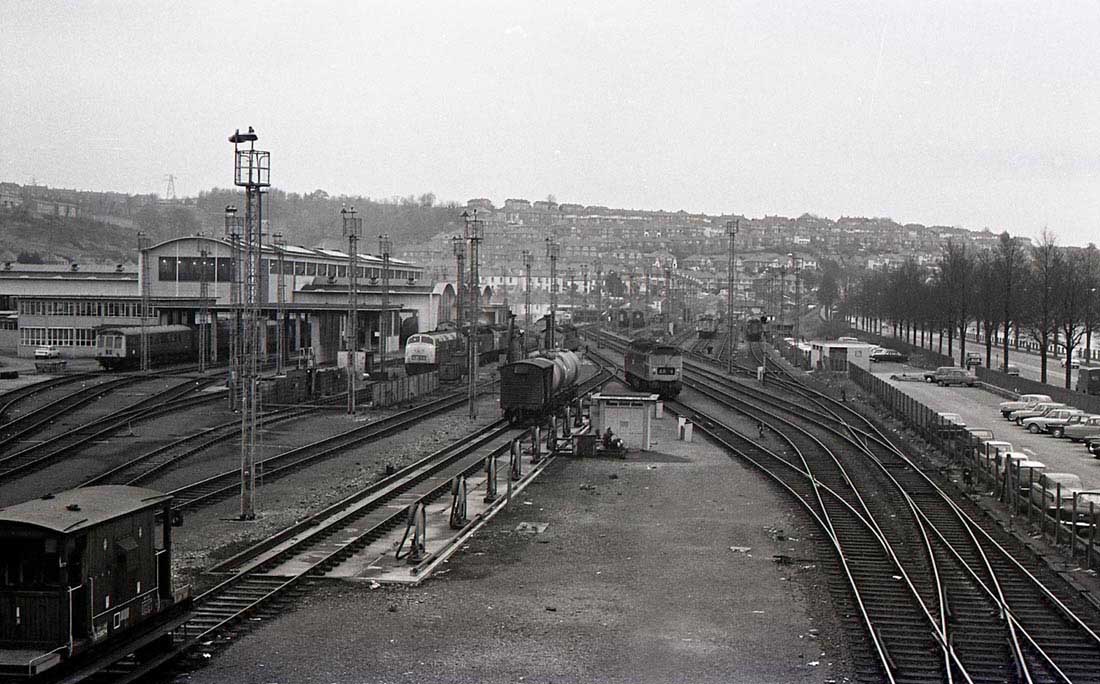
Newton Abbot was home to the locomotive works for the South Devon Railway, later expanded to cover carriages and wagons. The last steam locomotive outshopped from the Works departed during July 1966. New facilities were added in the early 1960's to accommodate the newly arriving diesels. The intention had been to make Newton Abbot the primary diesel locomotive depot in the West Country, however a later decision was taken to give this status to Plymouth Laira. Out of this decision came the plan to use Newton Abbot as the primary servicing depot for the Warships, with many being allocated here rather than at nearby Laira. The servicing facilities were frequently visited by the Class 45/46/47's in the 1960's because Newton Abbot was responsible for the trains originating from Paignton & Torquay.
As mentioned elsewhere it was initially the Bristol crews that would bring the Class 45/46's into the West Country, which by 1967 would include the Friday's only motor-rail services from Newton Abbot to Sutton Coldfield and Newton Le Willows, using either Peaks or Brush Type 4's.
A short distance from Newton Abbot the traffic for Torquay, Paignton & Kingswear departed from the mainline at Aller Junction, whilst the mainline headed for Totnes and Plymouth crossing the southern edges of Dartmoor with many small streams to cross, creating a rollercoaster twisting route which would challenge any locomotive. The first obstacle was that of Dainton Bank which was just over two miles in length with grades varying between 1 in 38 and 1 in 57 and included Dainton tunnel.
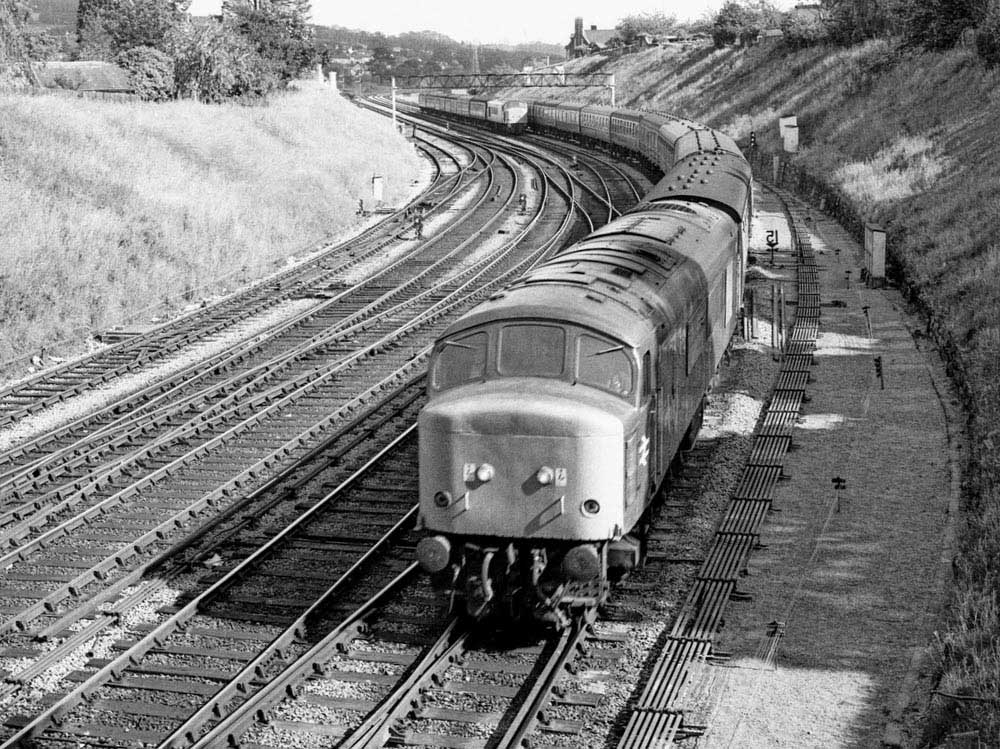
Totnes
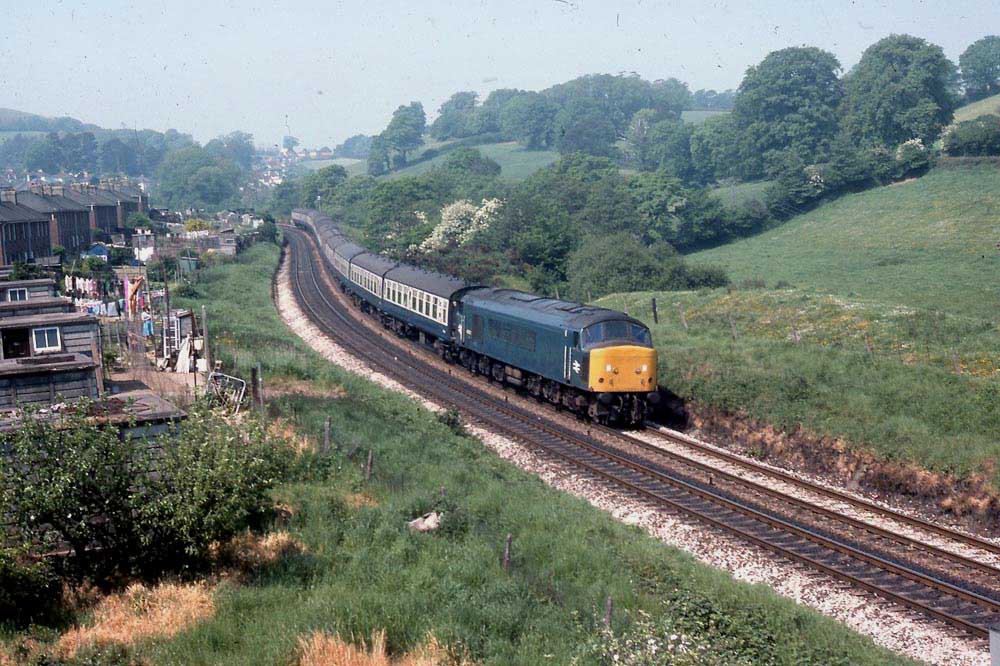
Beyond Totnes the route faces its second challenge, Rattery Bank, just over four miles of grades varying from 1 in 90 to 1 in 45. Hemerdon Bank was the third stiff grade on this section of line, involving 2.5 miles of 1 in 42, the grade easing as the line approaches Plympton. For those NE/SW workings heading west their journey was almost over, with most of these services terminating at Plymouth. For those NE/SW services heading northwards the South Devons banks provided a stiff challenge within minutes of leaving Plymouth. Not the best place to find out if the diagrammed locomotive was not in fine fettle. On the approaches to Plymouth the mainline ran past Laira depot, the primary diesel depot for servicing and maintenance in Devon & Cornwall.
Plymouth Laira
Laira provided a home for the newly arrived diesel hydraulics in the late 1950's & 1960's, later servicing the Class 45/46/47's which worked into the area in the late 1960's onwards and some of which would eventually be allocated to Laira as the diesel hydraulics were withdrawn.
The 1969 winter timetable saw Laira and Newton Abbott crews begin training primarily on the Class 46’s allowing these locomotives to work through to destinations such as Plymouth and Paignton without the need for a locomotive change at Bristol. By December the Class 46’s were being used all the way to Penzance. One such turn worked was the 07.40 Plymouth - Bristol, the 08.40 Liverpool - Penzance, and back to Laira on the 21.00 to Plymouth.
The end of the 1971 summer timetable saw major inroads into the Western Region hydraulic fleet whilst all the Westerns were now allocated to Laira.
The allocation of diesel locomotives at Laira at the end of 1971 totalled 96 comprising six types:
Class 03: 2
Class 08: 6
Class 22: 4
Class 25: 10
Class 52: 74
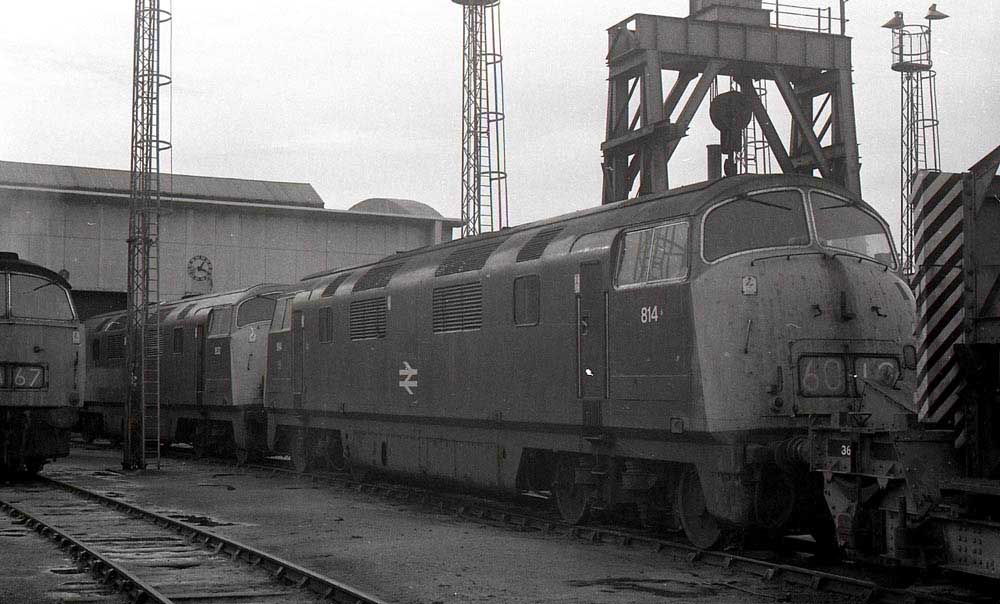
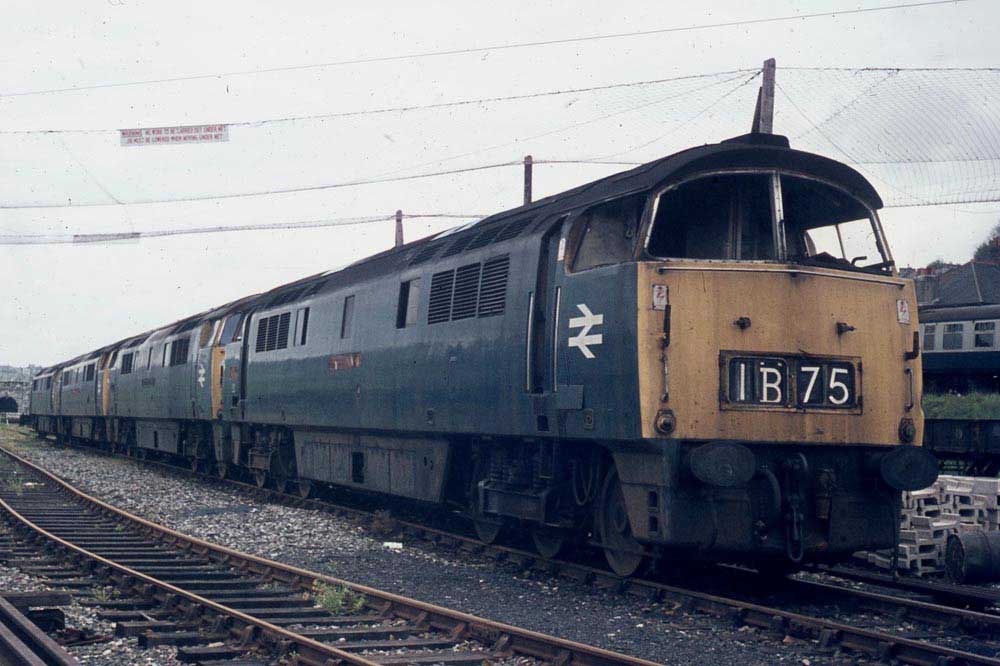
Six Class 46s (138,139,140,148,153 & 160) arrived at Laira during October 1972, by which time the operational Warships numbered ten and these would all be withdrawn by the middle of December 1972. The build up of the Class 46's at Laira was slow, with more examples recieved in February & May 1973, October 1974 and October 1975, by which time 138 - 164 (46001 - 46027) were all allocated to Laira.
By May 1973 Laira’s last Warship had gone, its last – 821 ‘Greyhound’ headed east on May 24th. At about the same time the first inroads were made into the Class 52 fleet when 1019 & 1032 were withdrawn and initially being dumped at Laira (see view below).
Plymouth
Whilst the Class 45/46's would normally be associated with the NE/SW cross country workings, they did occasionally get turns that took them all the way to Paddington. On Fridays in the 1970s there had always been two additional Paddington - Plymouth trains. These had run up from Plymouth earlier in the day. The first was the 16:53 Paddington (this later ran every day) whilst the second was the 18:30 Paddington - Plymouth. The regular 18:30 air braked stock ran on Fridays as an additional 18:27 limited stop train to Plymouth and the twelve coach vacuum set covered the 18:30. During 1979 this became a regular Class 46 working as Exeter men worked the locomotive on both the inward and outward turns.
After the arrival in Plymouth the challenge to the railway engineers was the construction of the Cornwall Railway, with the goal of Penzance, this was a more severe task than that of the route just completed from Exeter. The route would commence with the challenge of crossing the Tamar, eventually completed by the 2,200 feet Royal Albert Bridge. Beyond this sharp curves, steep gradients and deep valleys would confront the railway engineers. The Plymouth - Truro section opened in May 1859 and required 34 viaducts, when added to the 8 viaducts on the Falmouth branch, the total length of these viaducts was four miles. A further nine viaducts were required to get the line to Penzance. A narrow gauge line had been authorised in 1839 for mining interests, the route being adopted for the broad gauge single line. During March 1867 the first Paddington - Penzance broad gauge passenger service took place.
The railway engineers had barely reached the city limits before they confronted their first major challenge on the route to Penzance - the estuary of the Tamar. Construction on the Royal Albert Bridge began in 1853, borrowing design features from the Chepstow bridge. The two arch shaped trusses consist of oval tubes, 16 feet 9 inches wide and 12 feet 3 inches high in section, with vertical ties and crossbracing supporting the decking. Each truss provides a 455 feet span, 56 feet high at the centre and weighs over 1,000 tons. During construction these trusses were floated into the river and raised into position 110 feet above the high water level. It took six years to complete the bridge, by this time Brunel was too ill to attend the opening of the bridge by the Prince Consort in May 1859, and he died four months later at the age of 53.
Once across the Tamar the line generally kept on the south side of Cornwall, only after reaching Truro would the line take a more northerly path through Cornwall.
Liskeard
Liskeard station features a bridge which crosses the railway in a cutting, it is known as the 'Flying Bridge' - the arch is supported by the walls of the cutting rather than the more normal piers and abutments.
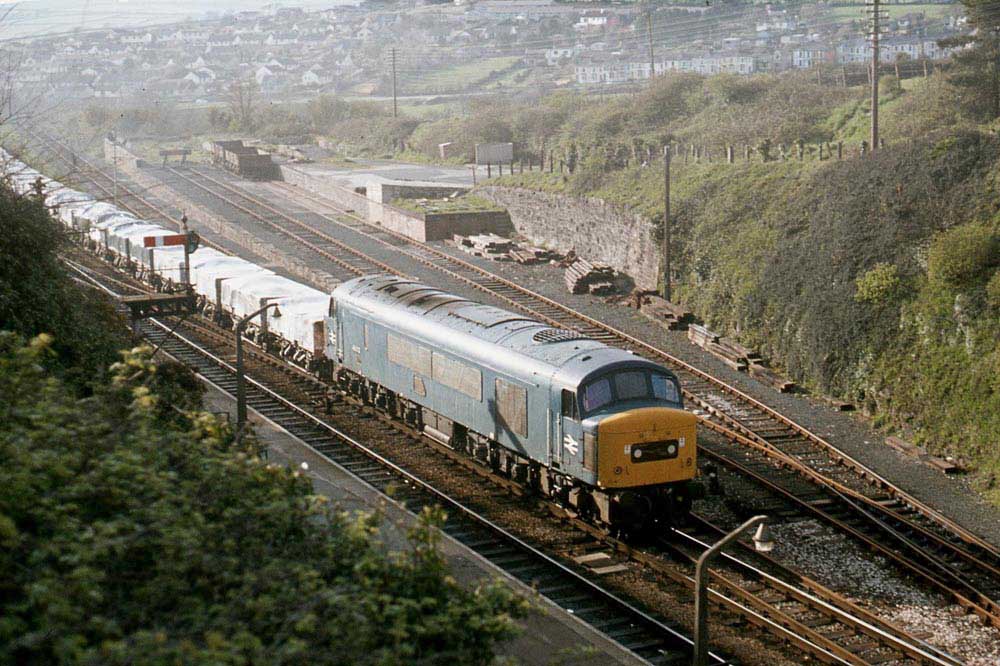
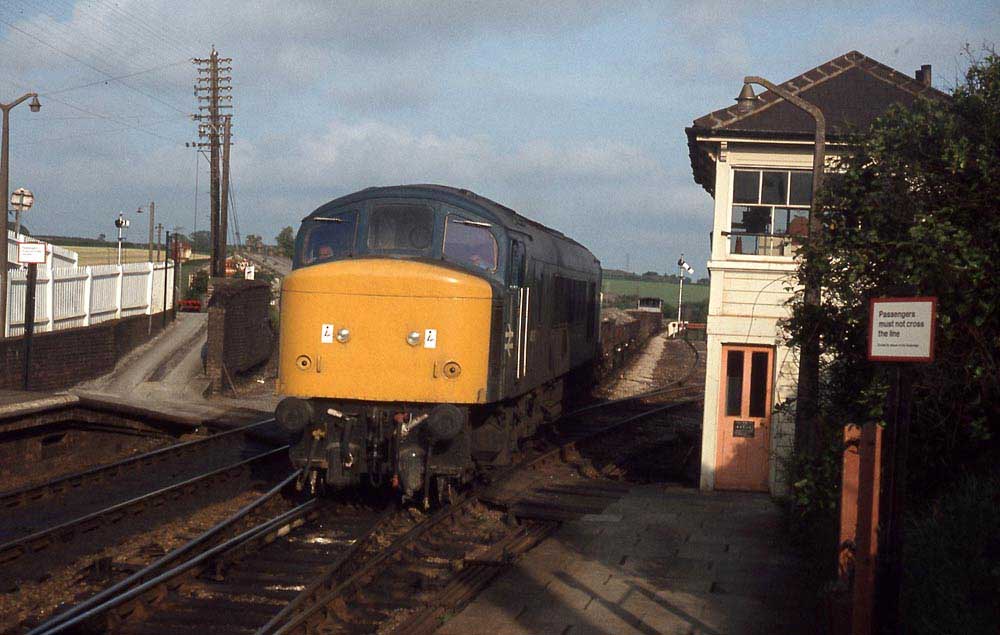
Beyond Liskeard the railway uses the valley of the River Fowey to travel deeper into Cornwall, following this natural feature to reach the coast at Par.
Respryn Bridge (west of Bodmin Road)
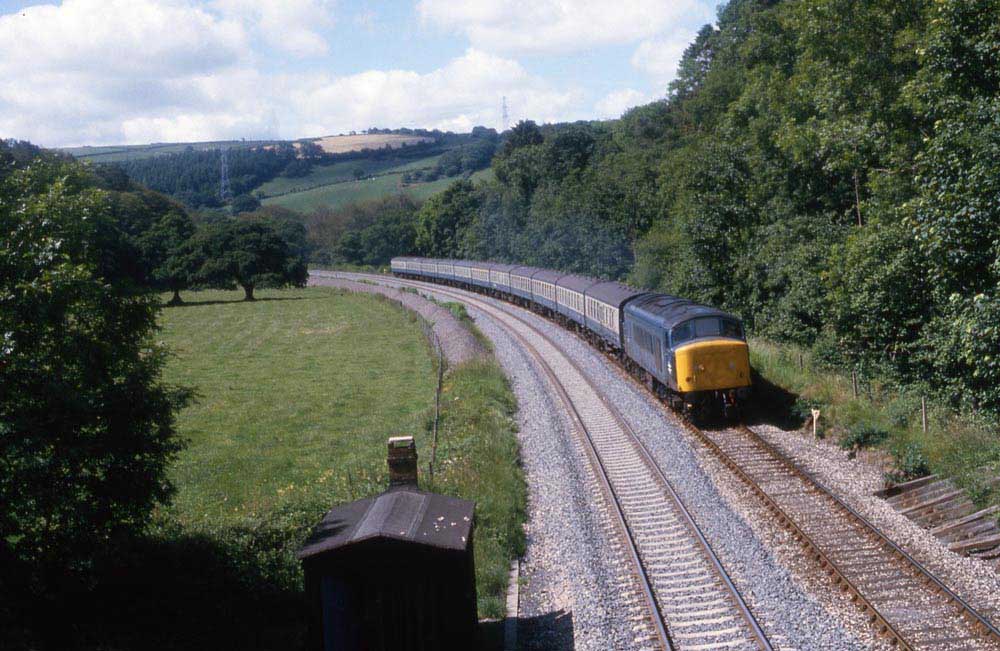
Tywardreath
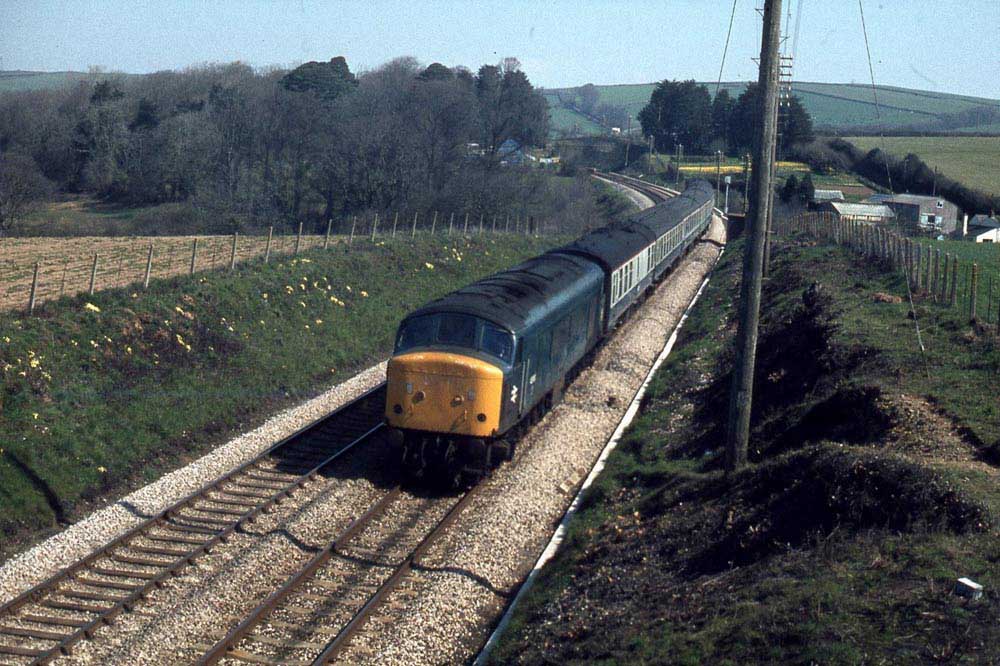
Par
West of Par the line comes as close to the ocean as at any time since crossing the Tamar at Saltash. Also only a stones throw from Par station is St Blazey depot, which never carried an allocation of the Class 25/45/46's but there were always examples of the Classes on the depot or working out of St Blazey goods yard.
Redruth
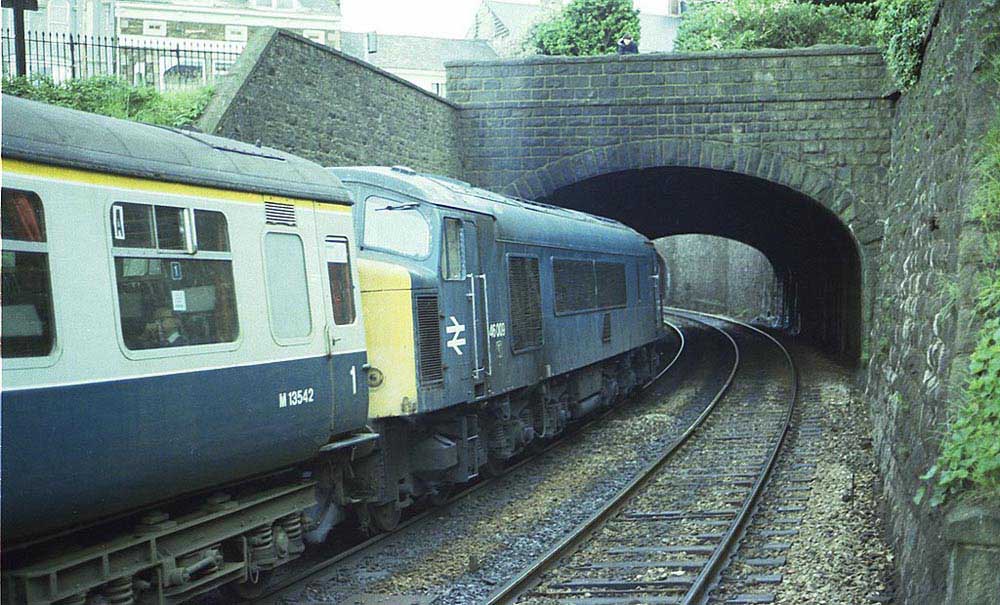
Marazion
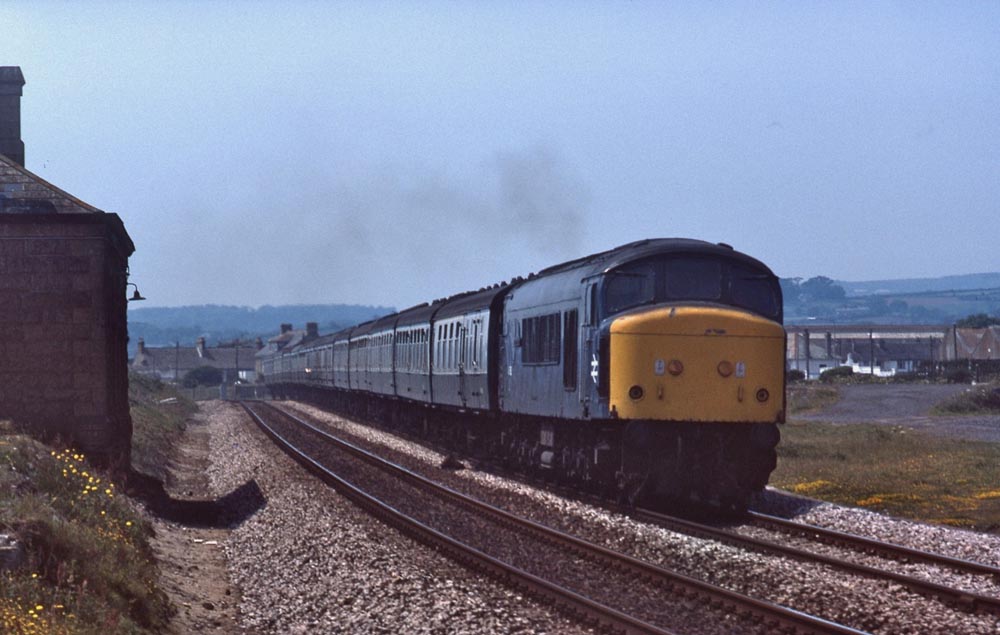
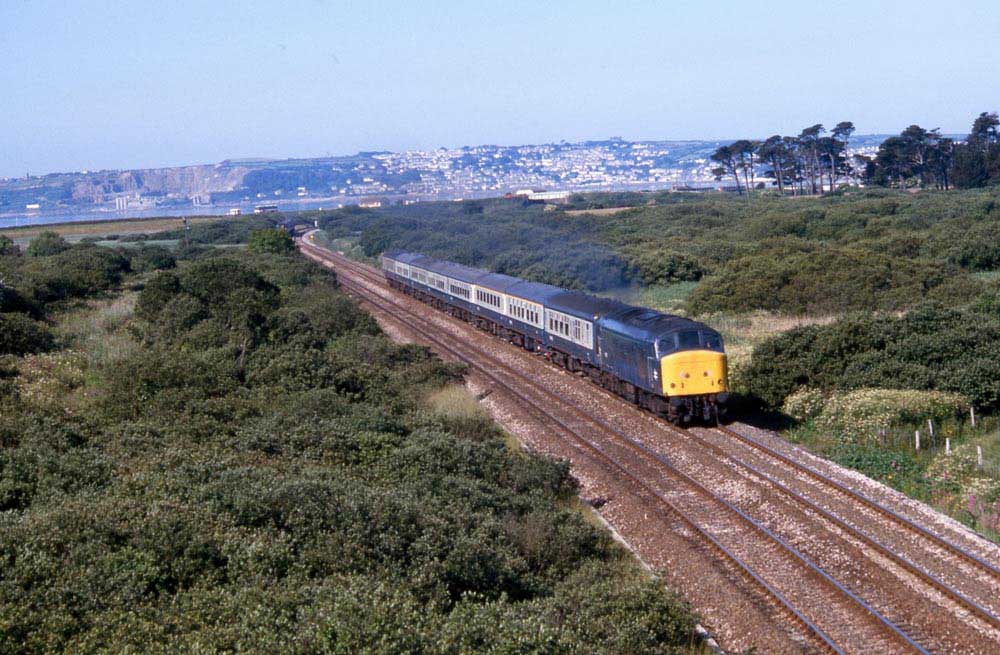
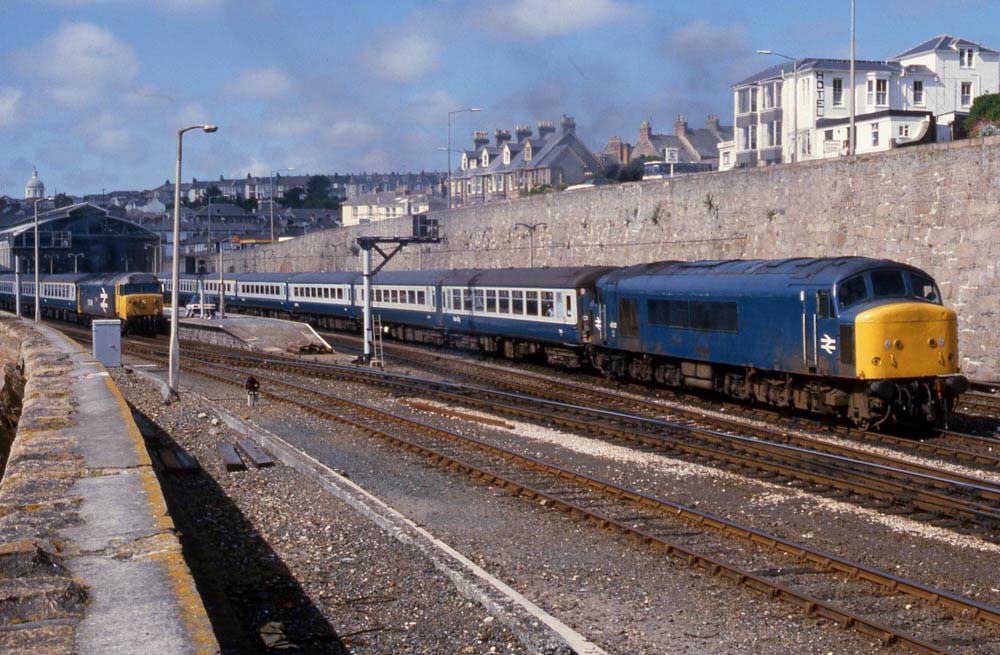
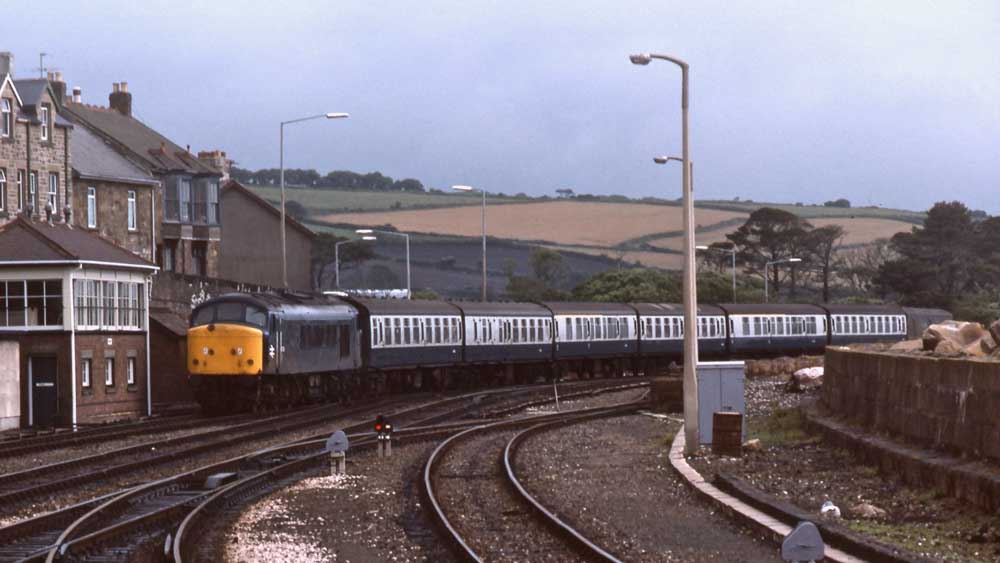
Penzance - the end of the line!
Page added April 3rd 2010.
Last updated April 24th 2010.