This page got to big for its original location, so its been given its own page, and for reasons unknown the notes follow a northbound direction, from Derby to Leeds and Bradford. More will be added as time prermits.
Because there are a number of possible routes between Derby & Leeds that were worked by Holbeck crews this page jumps around a bit and is therefore not in the most logical route order - a bit like some of the thoughts we had about when we passengers travelling by British Rail encountered some of the weird and wonderful things that BR could throw at us!

North East from Derby
Having spent so much time travelling up and down the NE/SW route Michael was kind enough to provide some Holbeck diagrams that feature this route, at this time the Holbeck drivers would not travel beyond Birmingham New Street.
Derby
One afternoon I was set to relieve a driver on a passenger working to Leeds. The train turned up in charge of a Class 45, but the driver advised the horn on the leading cab had failed and that Control had been notified of this. At this time a platform man approached, who was aware of the situation, but didn't have an answer yet to the problem! Sitting in the station at the same time was a goods train also hauled by a Class 45 and headed in the Birmingham direction. The logical suggestion was made to Control at York to swap the two locomotives and then everybody would be on their way with the minimum of delay. This manoeuvre seemed a little too complicated for Control, who wanted to bring a replacement locomotive off Derby shed, which was a brilliant idea except that there was no spare engine available! So Control found a spare locomotive in the Nottingham area, (possibly Toton) and we stood on Platform 1 for about an hour until the replacement locomotive showed up. The goods train was of course now long gone.
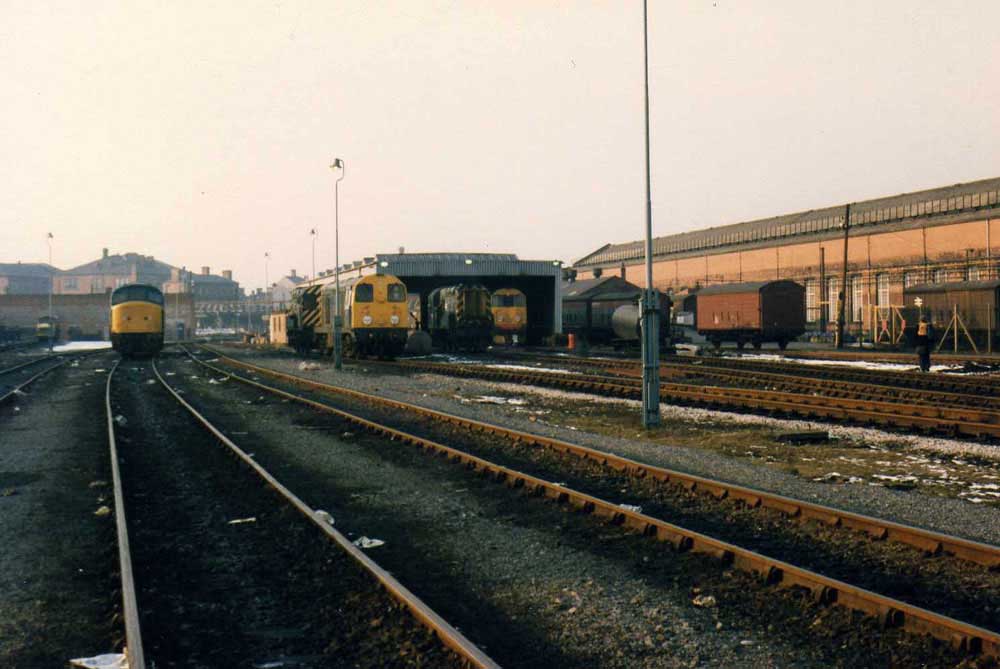
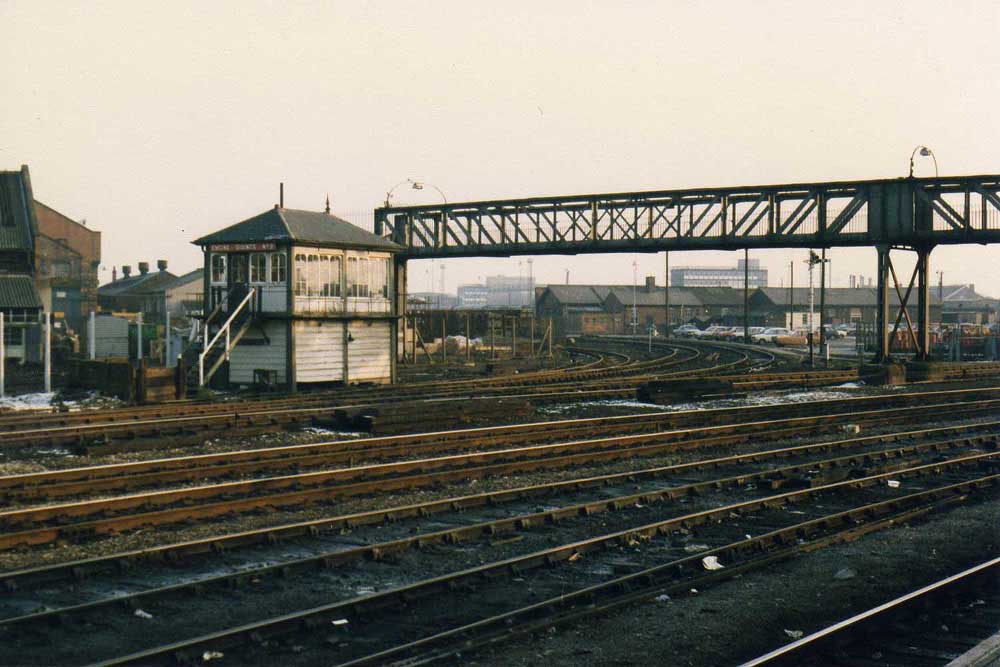
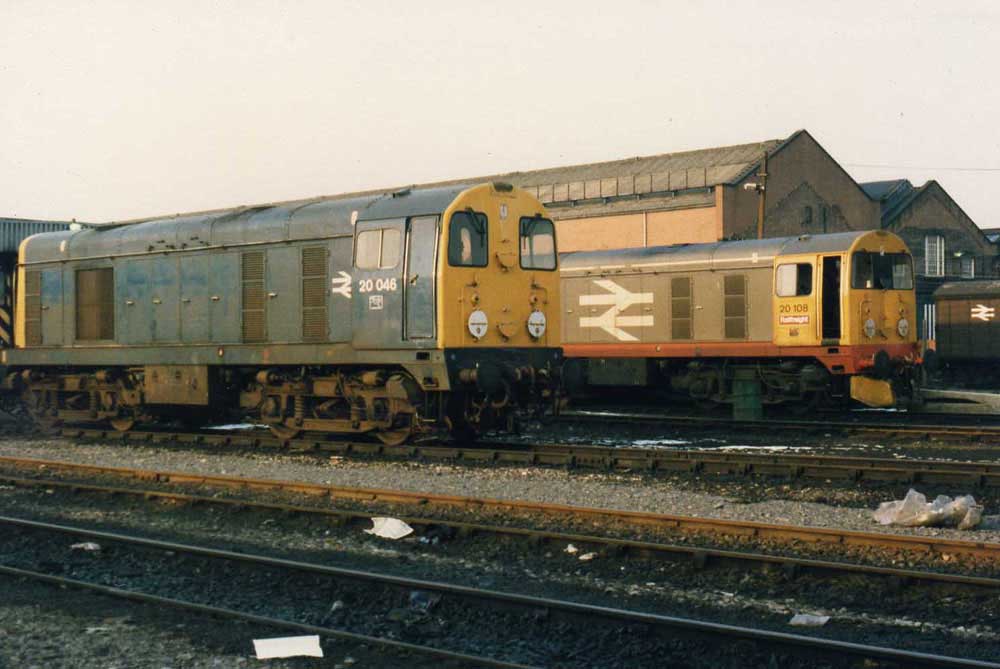
When laying over at Derby Michael would frequently visit the locomotives lined up in the deadlines at the Workshops, there was little demarcation then between the Workshops and the lines that serviced the fuelling point. Also well remembered were the former Research locomotives - the Baby Deltic, the Metrovick and the Claytons.
Frequently on arrival at Derby we used to go over to the canteen for our breakfast, this was a most excellent feast of eggs, bacon, sausage and all the other trimmings of a full breakfast. On this occasion two ladies were serving the breakfasts, my mate was first, we noticed the first lady with her back to us (she was cooking the bacon & eggs) the other lady was taking the orders and serving us the breakfasts. At one point the first lady turned round and in her mouth was a cigarette with the longest ash you have seen, my mate then asked for bacon, eggs, mushrooms and two splashings of ash!
On another occasion we were walking through the Works, when I noticed a 'body' being craned through the air, by the time I told my mate and he'd turned around, the 'body' had disappeared. My mate asked 'Are you on something?' but a minute later this 'body' appeared again, and of course it was missed by my mate. He threatened he would send me home! Some five minutes later he spotted it, apparently some of the staff were having a 'safety day' in their dinner hour, and were practising what needed to be done if an injury occurred to someone in a locomotive, their plan being to crane the injured person out of the locomotive to a safe place, the body was on this occasion was just a dummy!
On one long forgotten day back in 1974 we were heading back north from Derby with one of the few remaining green Peaks, which was also still vacuum only fitted (at this time about a dozen Class 45's remained to be dual braked). All was going well until I came to blow the horn from the secondman's side. The horn handle came away in my hand and a panel came off and fell to the floor. At the same time over on the driver's side of the locomotive the panel below the control handle fell off! The driver looked over and wondered if we were going to make it home OK!
Saturday February 26th 1977
Book on at 13.09 for diagram HK 4 (special workings)
Passenger to Derby, leaving Leeds at 16.38, arriving Derby 18.25
Locomotive 46030 with 1Z72 thirteen coaches 450 tons
Depart Derby 19.10 arrive Leeds 21.10, at Leeds a Neville Hill crew took over to Neville Hill up sidings
March 19th 1977
Book on at 09.04 (Football Special)
Locomotive 45011 with 1Z72 football special ten coaches 344 tons
0Z72 depart Holbeck 09.35 arrive Neville Hill 10.00
5Z72 depart Neville Hill 10.15 arrive Leeds City 10.35
1Z72 depart Leeds City 10.50 arrive Derby 12.30 - return to Leeds as passenger on 13.40 to Leeds
Tuesday November 1st 1977
Book On 19.30 for Holbeck diagram 643 6O62 Leeds - ??
Locomotive 25117 with 9 wagons 288 tons
6O62 depart Holbeck 20.20, arrive Hunslet down yard 20.25, attach 4 wagons, total 13 wagons 488 tons
6O62 depart Hunslet 20.50, arrive Derby 22.45
Return - Locomotive 47013 with 14 wagons 668 tons
6E30 depart Derby 00.45, arrive Hunslet down yard 03.10, detach 14 wagons - this service would eventually go forward to Carlisle.
0E30 depart Hunslet down yard 03.15, arrive Leeds 03.35
Saturday November 12th 1977
Book on at 08.30 for Holbeck diagram 117
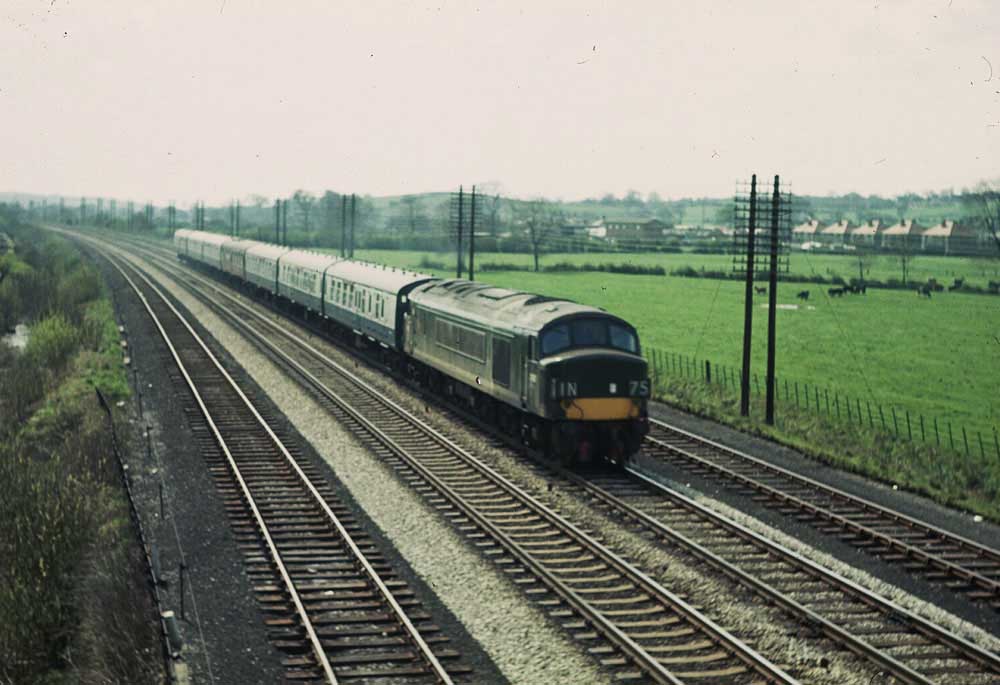
Locomotive 45123 for 1M15 with nine coaches 304 tons
Depart Leeds City 09.40 arrive Derby 11.05, the departure was twenty six minutes late due to failure of the diagrammed locomotive.
Locomotive 45023 for 1E30 with nine coaches 304 tons
Depart Derby 13.41, arrive Leeds City 15.32
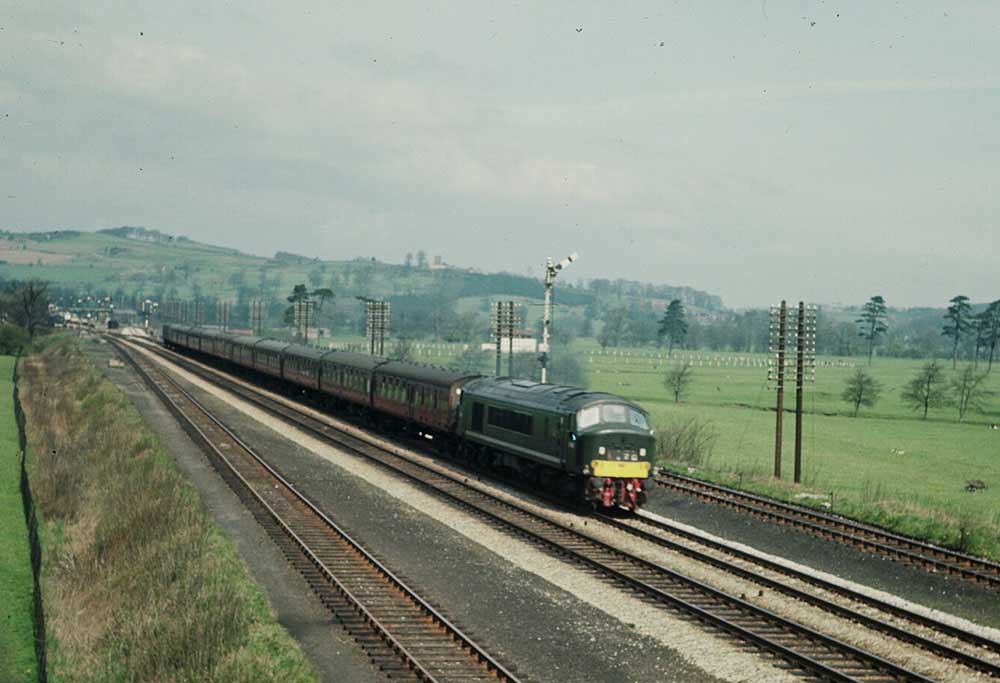
Wednesday March 1st 1978
Book On 01.40 relief for Holbeck diagram 115 4M38 Leeds - Derby
The actual booking on time ended up being 02.16, the secondman had not turned up for the duty.
Locomotive: 45026
0M38 depart Holbeck 02.37, arrive Leeds PCD 02.48, attach 8 parcels vans 406 tons
4M38 depart Leeds PCS 03.04, arrive Wakefield Kirkgate 03.25, detach 4 vans
4M38 depart Wakefield Westgate 03.40, arrive Masborough 04.15
4M38 depart Masborough 04.20, arrive Sheffield Midland 04.27
4M38 depart Sheffield Midland 04.39, arrive Chesterfield 04.55, detach one van & attach one van
4M38 depart Chesterfield 05.20, arrive Derby 05.41
0M38 depart Derby 05.41, arrive Derby Etches park 05.50
Return as passenger Derby - Sheffield 08.15 - 09.00
DMU Sheffield - Leeds (via Barnsley) 09.15 - 10.20 & then walk to Holbeck.
Return - Locomotive 47427 with 7 coaches 234 tons
1E27 depart Derby 15.44, arrive Leeds City 17.38
5E27 depart Leeds City 18.00, arrive Neville Hill 18.10, detach coaching stock
0L50 depart Neville Hill 18.23, arrive Holbeck 18.33
Whilst out and about on our driving exams in 1981, must have been July/August time, we had a trip out to Birmingham New Street. On the return journey after pulling away from Chesterfield station on the 'Down Main' and shortly after passing Tapton Junction doing about 40mph there was a right bang coming from the locomotive, after which the Class 47 didn't sound too good. We stuck our heads out of the window and saw smoke pouring out of the exhaust, big style. Meanwhile in the engine room it sounded like a lot of parrots singing, which told us the turbo charger had blown.
Our Sheffield based traction inspector said 'Right Dan, what are you going to do?', so yours truly here went on to explain, 'It's home time and we are Holbeck Men, we are going to have a go at going up this (Bradway) bank' His reply, 'I'll shaft you if you get stuck in that tunnel, so off we went into the unknown, I could feel the sweat running down my back, watching that speedometer getting slower and slower. Eventually we reached the entrance to Bradway Tunnel and with the Class 47 wide open and not sounding to good, knackered might be a better description, we were doing around 10 mph. The summit of the line is in Bradway Tunnel, which from my perspective now seemed like forty miles long, and not helped by the fact that we were down to a walking pace.
Fortunately the Class 47 held together and we crossed the summit, which was not too noticeable in the blackness of Bradway Tunnel but evident as the speedometer began to climb away from zero! By the tunnel exit we were doing about 10 mph. I'd shut off the engine to let it settle down, leaving us to coast down into Sheffield with the minimum of power applied. The traction inspector told me, 'What a lucky fellow I was (or words to that effect!) and I would have done a lot of walking if we hadn't have made it'. And after that lot he would have shafted me, my reply, 'Good for a Holbeck Man', then a clip around the ear (for being cheeky) and a new locomotive at Sheffield, we got home about ninety minutes late. The blown turbo charger would have reduced the power output of the Class 47 by about 50%. Presumably the turbo charger had ceased to function due to failed bearings, the most likely cause of its demise. If so this would restrict the flow of the exhaust gases and cause increased temperatures at the exhaust valves.
Sometime in 1975/76 we had a football special to Sheffield, we took the engine off Holbeck and got the stock at Neville Hill, to pick up the football supporters at Leeds (I can't remember if they were Leeds fans), I can remember I had the boiler going that day, my mate was a charachter, with his flat cap on and smoking a pipe, (funny isn't it, I can't remember his name, but can remember things like that).
Anyway we were going via Cudworth, Masborough and on to Sheffield, no sooner had we set off than they started pulling the pass com (cord), we stopped at Royston Junction and my mate said to the signalman, can we have the Police at Masborough? I've had enough, also he asked me to turn the boiler off, which I did. Well after several more times resetting the pass com cord, they pulled it again at a place called Kilnhurst, my mate put the brake into emergency (well, we were going to stop anyway!!) and told me to sit there and don't move.
He got out of the cab and went back into the train, after about twenty five minutes he returned somewhat fired up, so I didn't ask anything. Eventually we reached Masborough where there were no police waiting, but the supporters had behaved themselves since Kilnhurst, so my mate carried on to Sheffield.
At Sheffield Midland Station there were two policeman, wow !!!! We were relieved here and worked another passenger train back north. Eventually my mate told me what had happened. He went back, pipe burning heavily, and went through every coach and told the supporters if you pull it again, you won't being going to no football match today, because he threatened them with uncoupling the locomotive. I think it worked because they didn't pull the cord again, but every coach either had a window missing or half the cushions and seats ripped out, with a few fire extinguishers missing.... I think my mate was a bit brave but I think he meant it !!!!
The Old Road
(Chesterfield to Masborough via Killamarsh & Treeton)
This route avoided Sheffield so passenger workings over this route were rare, usually diverted services or excursions. For the Holbeck crews journeys over the 'Old Road' Michael comments that alot of these tended to be at night so the joys of watching the industrial scenery go by was minimal.
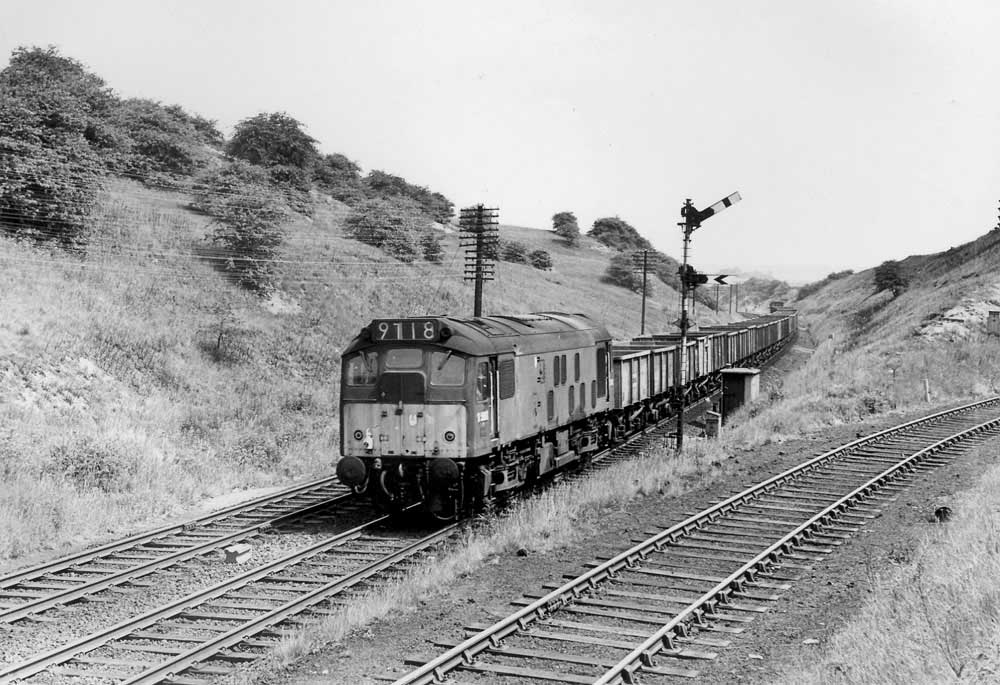
Sunday March 19th 1978
Book on at 15.20 at Holbeck diagram 467 additional
Locomotive 45127 1Z68 with thirteen coaches 420 tons
0Z68 depart Holbeck 15.55 arrive Skipton 16.30 - pick up coaching stock
5Z68 depart Skipton 17.00 arrive Keighley 17.15
1Z68 depart Keighley 17.50 arrive Derby 20.05
Return home to Leeds as passenger on 20.11 to Sheffield, then 22.20 to Leeds
Tuesday December 5th 1978
Book on at 06.02 at Holbeck diagram 116
Locomotive 45003 0V71 depart 06.22 arrive Neville Hill 06.37
5V71 depart Neville Hill 07.11 arrive Leeds City 07.21, eight minutes late awaiting a shunter
1V71 depart Leeds 07.38 one minute late due to station staff, load eleven coaches 369 tons
A signal on at Cudworth North Signalbox cost four minutes and signals and frozen points at Wath upon Dearne cost seventeen minutes
Arrival at Derby was at 09.23 thirty minutes late, then:
1E54 departure from Derby at 11.41 - 47075 had failed here unable to heat the train due to a frozen up boiler, getting the replacement locomotive, 45074 cost eighteen minutes, load eight coaches 274 tons
Arrive Leeds 13.21
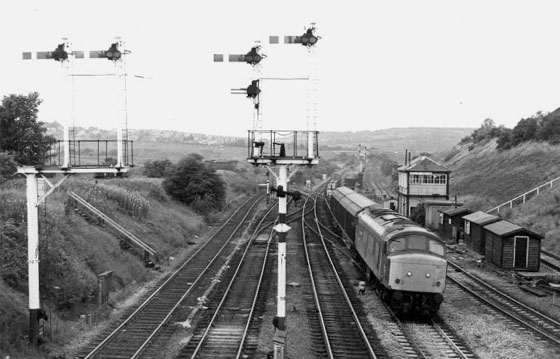
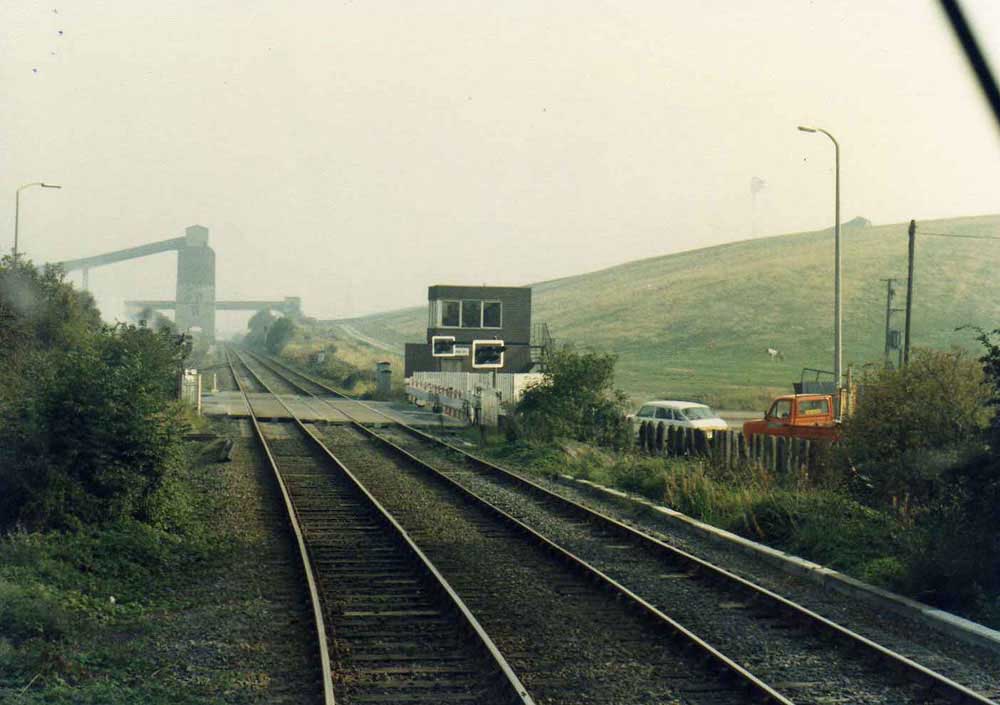
The signals in the foreground are Treeton Junction's home signals, the 'lefthand' semaphore is for entry to Tinsley Yard, the small semaphore below the big one on the bracket is a 'calling on' signal, (this is to tell the driver he must proceed at caution, because you are entering permissive block and there could be another train in front of you), if you look below this bracket, just to the left of it, you can see the 'other' semaphore signal, belonging to the 'down goods line' (with 'calling on' signal).
When we were doing our driving exam, we came to Tinsley to drive a semi-fitted freight train from Tinsley to Toton with two Class 20's, this particular day (our first day) gobby here, got in the seat and told the Tinsley driver about Holbeck Men (he wasn't impressed) - not knowing the road the traction inspector gave me details along with the driver of the road. I can remember it being very steep coming out of Tinsley on the approach to Treeton, so I was a bit careful in order to prevent the train from pushing me. Anyway in the rule book on a semi-fitted or loose coupled train, every so often you must stick your head out to make sure your train is in one piece, in other words you can see the brake van coming. On our arrival at Toton Yard I turned around to the traction inspector, 'good hey' Holbeck men, he pulled me to one side and gave me a dressing down, 'how do you know where the brake van is' ? (I forgot to keep looking out) so I was told... So the following day, my turn again, I was going to show these men who was the best (Holbeck Men), on arrival at Toton Yard I was pulled to one side again, 'you don't have to open the bleeding window every minute, I'm bleeding freezing' said the traction inspector, plus I couldn't light my pipe up !!!!! you can't win, can you !!!!!!!
Sheffield
I was 17 at the time and with my driver Joe Morley we had a passenger job, which started out by taking a Class 45 from Holbeck to Neville Hill to pick up our coaching stock. After leaving Holbeck I got the steam heating boiler going, on arrival at Neville Hill it was my job to couple the coaches to the locomotive and of course a can of tea was involved. We work the empty stock to Leeds and then (I think) it was the 08.16 to Derby. En route whilst going over the Cudworth main line to Sheffield I noticed the white boiler fault light began flickering, so I went into the engine room to investigate the problem, O yes, believe it or not, it was low water, I returned to the cab to inform Joe, who told me 'we can get water at Sheffield Midland station in the platform', nice one.
On arrival at Sheffield, where it was a beautiful but cold, crisp morning, there were a few trainspotters about with cameras ready, my instructions from Joe were that whilst we're waiting for the right of way you get the water pipe onto the loco's filler pipe and get that boiler filled'. 'Easy' I replied! We came into platform 7 which was slightly unusual, but the signalman was 'cock on' putting us in there because it was easier for me to fill the boiler and which also assisted the spotters with their photographs. As soon as we stopped I got down off the Class 45 and began the task of getting the water into the boiler water tank, the spotters began with their photographs, so a bit of posing was involved. On a Class 45 the boiler filling point is just below the solebar, it has an isolated wheel with it, obviously, when closed it keeps the water in the tank for the boiler! I got the pipe from the filling point, of which there were three at Sheffield, pulled the 'lugs' out on the filler pipe and attached it to the inlet pipe on the Class 45, on pushing it in, it clicked - the 'lugs' on the filler pipe now connected to the boiler filler pipe, then I opened the cock under the sole bar and the cock on the filler point in the station and in went the water.
My mate came to the door to ask if it everything was ok, a nod from me confirmed this, the water was going in perfect, after about five minutes Joe came to the door again, 'right Dan turn it off, we are going'. I turned the filler cock off but forgot about turning off the cock under the sole bar, I began pulling at the lugs to get the pipe off, Joe came to the door again, 'Dan come on, we're going!' I was still tugging at this pipe, explaining to Joe that I couldn't get the pipe off, 'well the pipe isn't long enough to take with us to Derby', so he got down from the cab and joined my attempts in getting the pipe off. We both got hold of a 'lug' each and pulled, it came off ok but quickly follwed by what must have been 100 gallons of boiler water from the tank. I dived for the cock under the sole bar to close it, after succeeding with this I turned to Joe, his face said it all, he was soaked, and I got another telling off in the middle of the station and all the way to Derby.
Michael was not too fond of the 'double tripper' DMU jobs on the Leeds - Barnsley - Sheffield diagram. We learned the route in 1982 with the 'old' DMU's. They drove you nuts, stopping at the stations everyday twice all week! There used to be a Saturday job, via Barnsley, it was Holbeck - Neville Hill - Leeds - Bradford Interchange - Huddersfield via Healey Mills, up to Crigglestone, via Barnsley and onto Sheffield then back passenger on the cushions. But you were asked if you could stick with the return working at Sheffield, the only snag with this was it meant a five hour wait at Sheffield. So we got creative to while away the hours, a trip to the local swimming pool, or shopping in Lincoln, or in Manchester, the good old days.....
Barnsley
The Sheffield - Barnsley - Leeds route meant diesel multiple units, Michael has provided afew diagrams worked by Holbeck crews:
Wednesday March 23rd 1983
Book on at 03.55 at Holbeck diagram 510
DMU with power car 50212 5J54 depart Neville Hill 05.20 arrive Leeds City 05.30
2J54 depart Leeds City 05.50 via Barnsley arrive Sheffield 07.10, eight minutes late departing Leeds waiting for a guard
DMU with 50007 2L54 depart Sheffield 08.22 via Barnsley arrive Leeds 09.24
5L54 depart Leeds City arrive Neville Hill 09.57
For these diagrams booking on/off would be at Holbeck, in between 22.00 - 06.00 a van would take us to Neville Hill, otherwise it was by foot!
The same diagram was worked on Monday March 21st 1983 with units 50613 & 56449 outwards and units 50701 & 56313 return. The outward trip went according to timetable but the return working saw an ontime departure from Sheffield but arrival in Leeds at 09.47, prior to working the empty DMU back to Neville Hill.
There were two diesel multiple unit links at Leeds, these basically covered the south & west direction whilst the Neville Hill diesel multiple unit crews covered the north and east directions, if Leeds were short of a diesel multiple unit driver, depending on what direction required covering, the job was then taken up by Holbeck or Neville Hill! The Leeds diesel multiple unit links were mostly voluntary and known somewhat disparagingly as the 'old mens' links. The shifts would start at 5.00 in the morning and finish at 11.00 at night, allowing these drivers to go to bed every night. Volunteering for the diesel multiple unit link had one major drawback, you couldn't go back into another link, one had to transfer to another depot.

The above photograph was taken on August 31st 1985 when myself and secondman Richard Armstrong worked Holbeck's diagram 208. This involved signing on at 04.34 then taking 31437 & 31433 to Neville Hill to attach coaching stock for an ECS move to Bradford Interchange, to work a passenger service (to Weymouth?) via Huddersfield & Barnsley to Sheffield, where we handed the train over to another crew and came home on the cushions to Leeds, booking of at 13.10.
On one of the numerous double Barnsley diagrams we were privy one day to one of those sights that you just don't expect to see lineside. On leaving Barnsley you passed Quarry Hill Junction box and then over the Worsborough (Electric) Railway called Staithes viaduct and on the righthand side trailing in was a disused railway line from Dovercliffe before we headed out towards Wombwell. On this trip we had an older DMU and I was getting the thing wound up for the run to Worsborough when I noticed a car on the trackbed of the disused line that came in from Dovercliffe. This was somewhat unusual and thinking a possible suicide attempt might be occurring I was ready to apply the brakes when alongside the car was seen a lady of one's dreams with stockings and a basque! What a sight, so it was hell bent down to Sheffield in hopes of catching a glimpse of this delectable lady on the return trip.
Sure enough on the return trip the car and the lady were still there, the blinds behind the drivers seat were up so anyone interested in this fine sight got a grandstand view from the train, helped somewhat by a brake application to about 15mph! On the second leg of this diagram the signalman at Barnsley advised the police had been involved in a bit of a 'do' at Staithes Viaduct, what a shame!
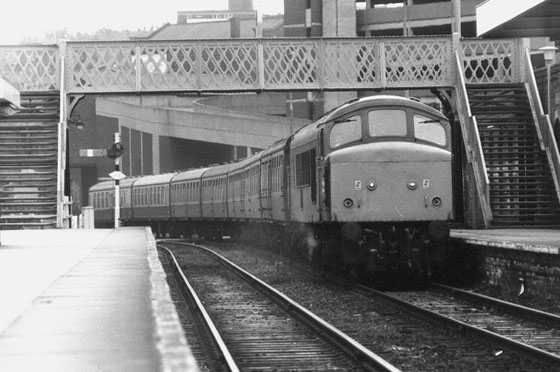

One afternoon on my return trip, Sheffield via Barnsley to Leeds we were approaching Darton station with the distant signal at caution, which was a bit unusual, though occasionally the signalman had to deal with a merry-go-round train that had departed from Gowber Colliery at Silkstone Junction and came in at the back of Darton station to join the mainline. On stopping at the home signal I eventually got on the phone with the signalman and was told to pass the signal at danger and proceed into Darton station at extreme caution. On approaching the station three merry-go-round wagons were stacked on top of one another right in front of me, some wagons were also on their sides. The locomotive, a Class 56 had cleared the offending pointwork, but some of the wagons didn't! Once at the platform it was everybody off the train to carry on by bus to Wakefield Kirkgate, where we joined another train.
On another occasion we had the morning's first Leeds via Barnsley to Sheffield at 05.30. As we left Darton it was still dark and there had been heavy rain during the night. The DMU was a three car Class 108 used mainly on the Pennine routes, these units were like rockets on take off. We got the tip to leave Darton and off I went, on the approach to Braugh Green on a sweeping right then left hand curve, I suddenly noticed what appeared to be some missing railway line! I stood up, hit the brakes and held on. The track had clearly sunk, as did my heart, it was like being on a big dipper. Fortunately the train stayed on the rails, we came to a halt so that I could place some detonators on the opposite track. We then carried on to Barnsley Junction with the tail lights turned on the front of the DMU. At Barnsley Junction the signalman was notified of the track problems. Apparently for much of the morning the line from Barnsley back to Wakefield Kirkgate (Horbury Junction) was shut.
With the diesel multiple unit running with the red lights lit on the front it would warn an oncoming train to stop and contact the signalman. This condition occurred once for me, whilst working a job back from Manchester Victoria to Leeds. I had just entered Bowling tunnel near Bradford when an approaching DMU swapped his lights over to display red at the front. I pulled alongside the unit and the driver advised that up head some kids had left a lot of stuff on the track which had the potential to cause a derailment. It was a case of then proceeding at caution to the location to determine if it was safe to continue.
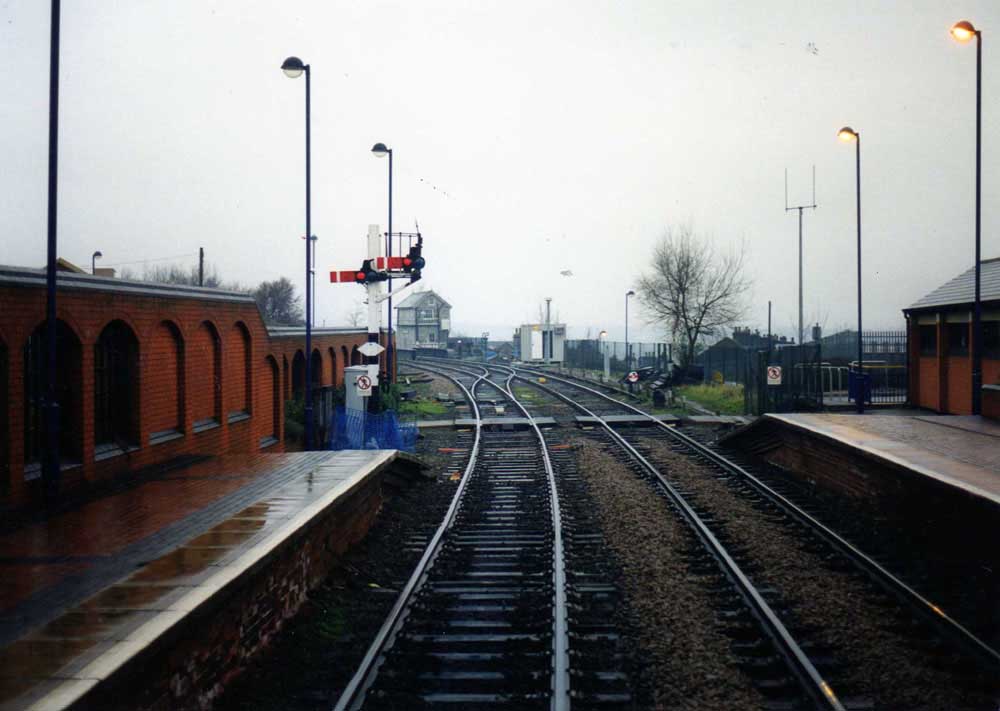

A popular pastime for Michael is to visit railway routes that have long since been lifted, frequently following the formation as far as possible on a push bike or a Honda 250XL trial bike. On one Saturday Michael took the Honda over the disused Great Central line between Crofton and Barnsley. Although the going was steady, as with many abandoned lines many of the bridges have been removed. Usually these were easily identifiable as the pathway would veer off to the left or right, a clear indication the bridge was out ahead. About half way to Barnsley on some nice level formation and with the bike speeding up alittle, without any warning a gap appeared where a bridge had once been. With little time to choose what to do the dare-devil option was chosen. The missing bridge was fortunately only about the width of a tractor, landing on the other side safely, but now with sticky trousers! The rest of the trip was taken a little more cautiously.
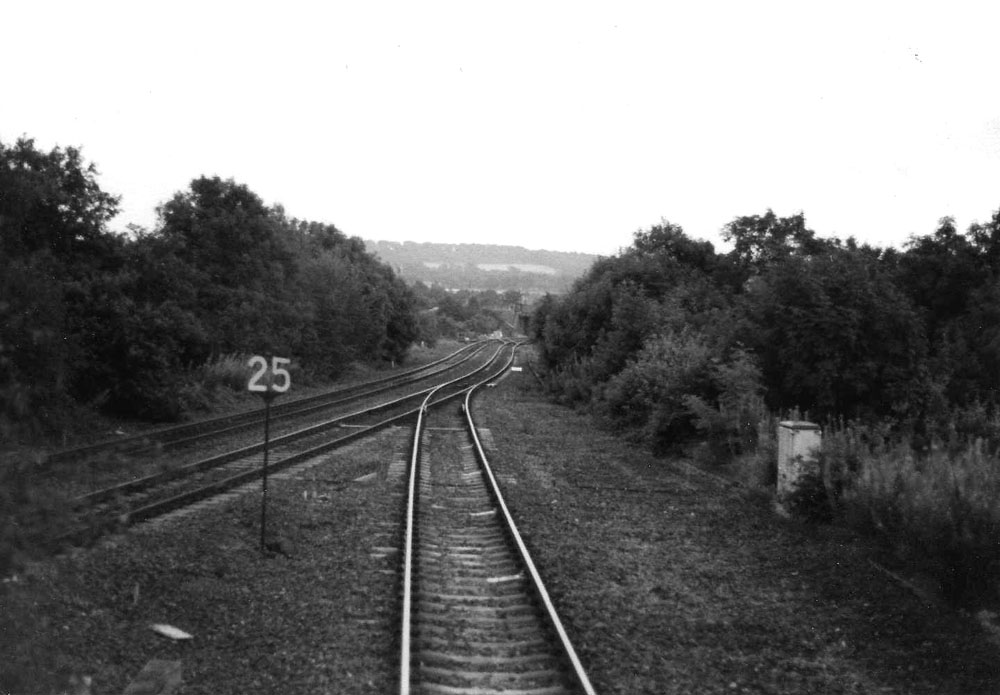
Going to Tinsley
On one occasion we were taking two Class 45's light engines to Tinsley. On approaching Wath-On-Dearne signalbox after coming off the Cudworth line we were stopped by a signal. Pressing the call plunger brought no response from the signalman so we pulled up at the signalbox to find out why we had been stopped. We were advised by the signalman that we were showing the wrong headcode. At Holbeck my driver had told me to put in the headcode 0J03 (the headcode for Tinsley). The signalman advised because we had two locomotives the headcode should be 9J03. I relayed this message back to my driver, who told me the signalman was out of order. So to save my shoe leather walking to and fro between the locomotive and the signalbox I changed the headcode to 9J03, and once clear of the box the headcode was changed back to 0J03, which didn't seem to bother any of the other signalman in the boxes that we passed on the remainder of the journey to Tinsley.
Rotherham/Masboro
One day we were express from Leeds to Sheffield via Cudworth with the only stop being at Wakefield Westgate. En-route the driver and I were well into a lengthy tale, and well distracted, enough to not notice that we were slowing down and then coming to a stop at Masboro! By the time we'd realised what we'd done the platform guy was already walking up to the locomotive. The driver says to me 'Quick Dan, get in the engine room and do something!' I shot off into the engine room whilst the driver is engaged in conversation with the platform staff. I appear out of the engine room, notify the driver I've had to reset the circuit breaker and we were now OK. This satisfied the platform guy and so away we went. If the circuit breaker had tripped our approach to Masboro would not quite have been so controlled!
Cudworth
When Michael started on the railway in 1974 many trains went via Moorthorpe to Sheffield (which is the route they take now!) because a lot of money was put into deep ballasting of the 'Cudworth line', this allowed the line speed up to 80mph, with 90mph possible south of Darfield. The most subsidence occurred just south of Cudworth, where a speed restriction of 50mph was imposed for a long time. Then in 1975/1976 many trains were rerouted away from the Moorthorpe route and on to the Cudworth line. Then an embankment gave way at Chevet followed by a 20mph slack for about six months whilst engineers looked at the problem. Their research found the troublesome embankment contained the remains of a viaduct that had been filled in years ago - it was the viaduct that had collapsed. Deep ballasting was resumed, you were then sent down the slow lines at Oakenshaw to cross over at Royston Junction. With the problem sorted all remained in order until 1984/85 when it was declared for closure. At this time the Moorthorpe route was a series of 20mph slacks - deep ballasting allowed the route to be brought up to a respectable line speed.
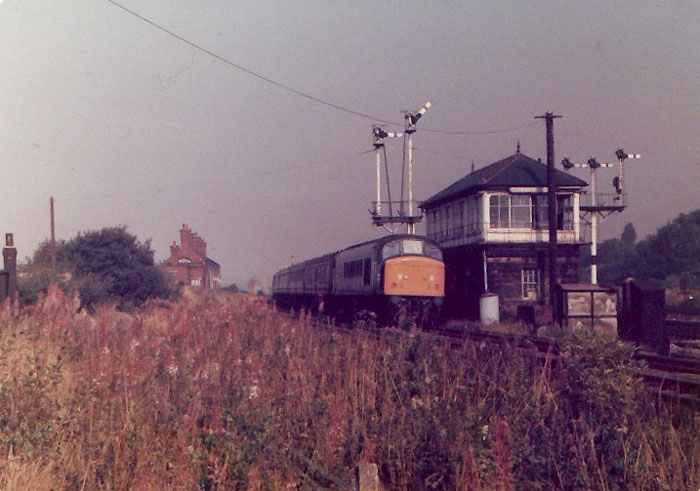
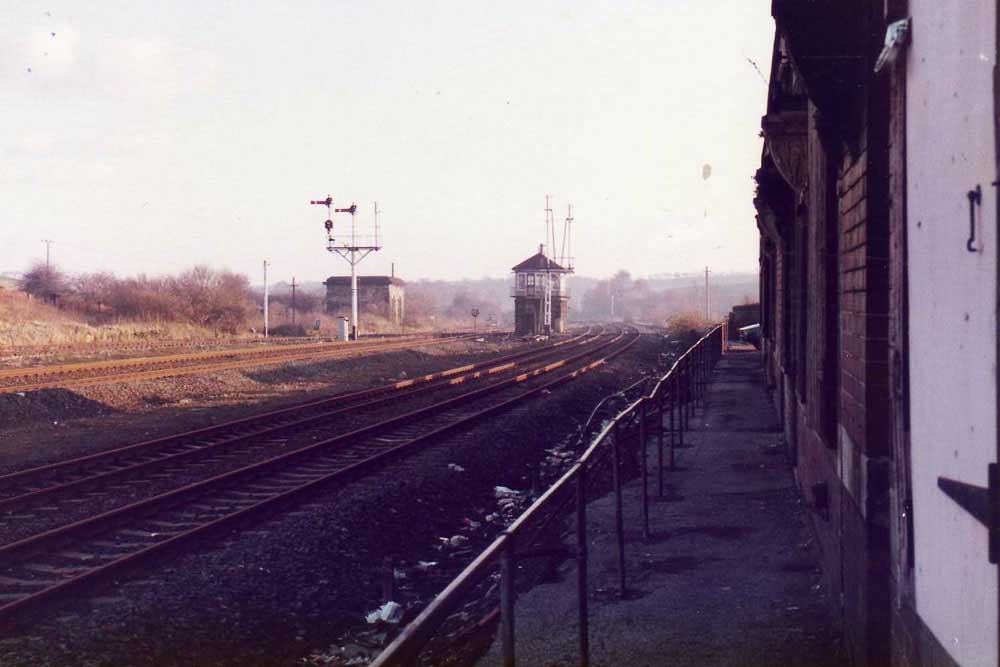

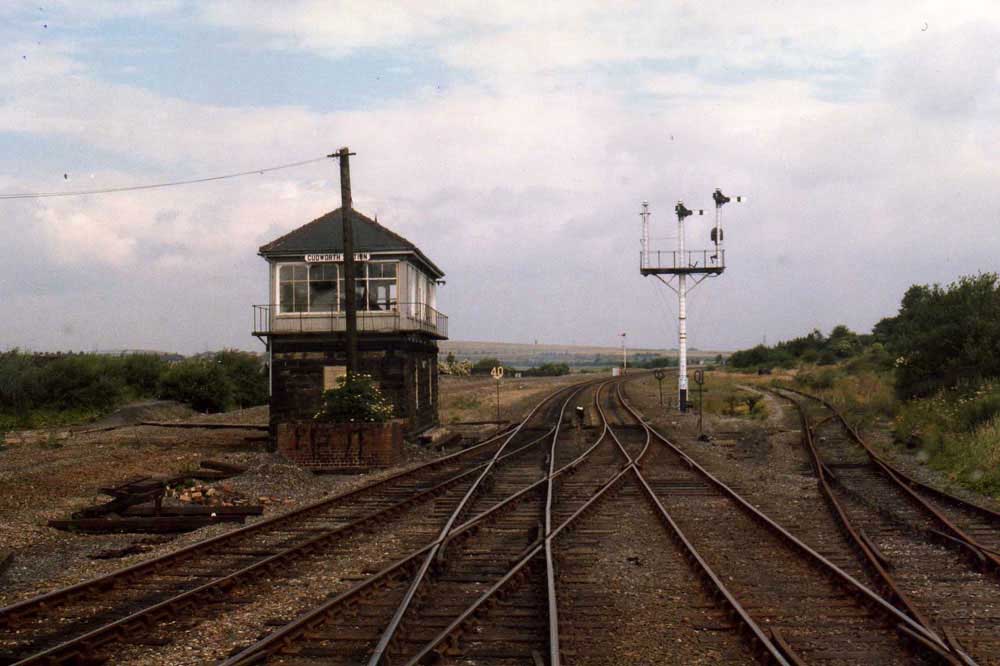
Mining subsidence had plagued this former Midland route for many years, eventually the decision was made to divert passengers trains via Moorthorpe and South Kirkby Jn. In 1985 the seventeen miles between Wath Road and Goose Hill lost their passenger traffic, whilst freight traffic would eventually be confined to the middle section - the closure of Grimethorpe colliery saw the line cut back to Cudworth North Junction, which as mentioned elsewhere continues to serve sand traffic at the Monk Bretton facility - a weekly service from Middleton Towers (Kings Lynn).
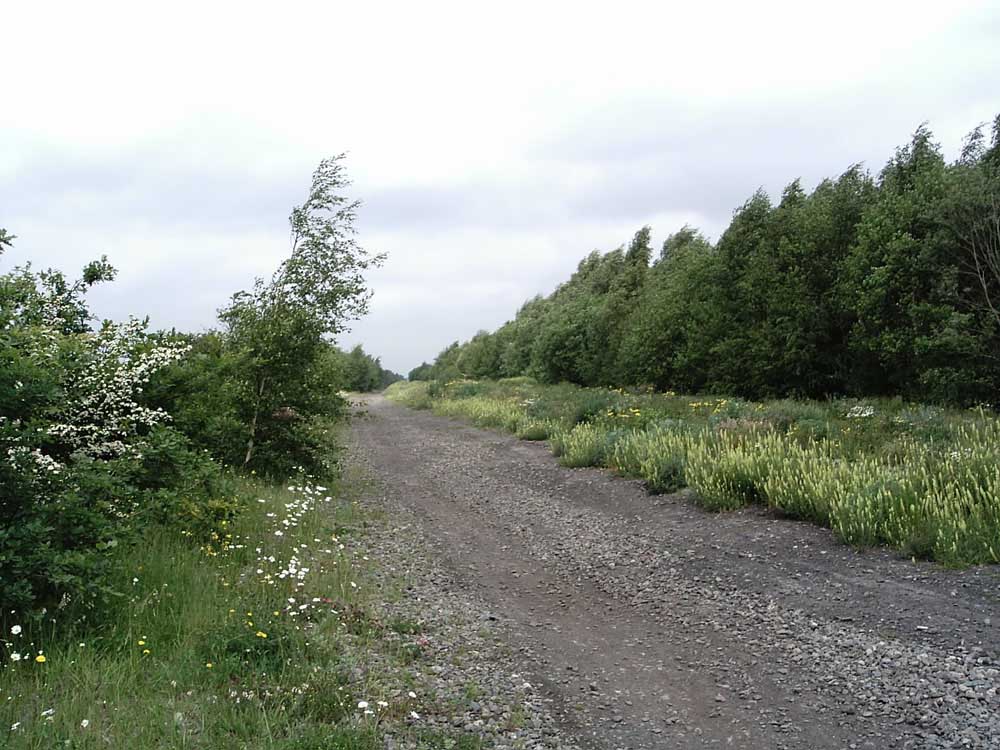
Michael writes - taking the above view did bring some memories back, mostly sad, I could image the trains passing by and yours truly trying to get time back on trips coming back from Birmingham. I followed the route all the way to Wath Upon Dearne Junction, here I tried to capture some views but couldn't get the ones I wanted due to some very large fencing they had put up. I also had a roam around the old G.C. railway up to Mitchells Main and Darfield Main signalboxes, also around Manvers Colliery, where the coke ovensworks used to be.
I can remember when passing these on a cold dark night, it would light up the cab and the warmth was fantastic, really making it cosy in the cab. A driver by the name of Fred Orford told me a story here, and it was in the national papers that when they were coming back from Birmingham 'double headed' they hit a bent rail, and the train went down the bank, sadly causing a few deaths, including that of his mate killed in the cab, and how lucky he was, he was a great driver to be with, and he is still with us.
Also he told me a story, about Carlisle Durranhill Depot, they had relieved a Derby Crew at Holbeck and set of with a brand new 5X to Carlisle Durranhill, when they were arriving Fred was telling me about applying the brakes, the locomotive just kept going because of greasy rails (all the train was loose coupled), he began whistling to the guard and at the same time his fireman climbed down to pin down some wagon brakes. Outside the messroom were a few train crew, they started laughing at our crew, thinking they had come in to fast, but quickly realising this was not the case, they ran across and started applying more wagon brakes, the locomotive and a few wagons finished up in the river, of course Fred had to go and see the Gaffer at Holbeck.
Anyway back to the story and Wath Depot, again I wanted to take a 'now' photograph, and again you can't, the bridge has been removed and the scene is just trees. Near the 'end' of the Cudworth route, we came back from Birmingham with a HST, it was at teatime or early evening, we weren't booked to stop at Wakefield Westgate, but were booked to go that way (I don't know why) so the Driver told the signalmen (and whistled the code at the 'boxes') for going via Goose Hill Junction, arrival time into Leeds was fifteen minutes early and nothing was said.
When we were on the road learning car in 1984/5 with the Knottingley Men (so they could refresh the railway after the miners strike) we went from Bolton Upon Dearne under the Midland Main Line and came out at the big sidings at Wath, present here was a Class 08 complete with its driver in his deck chair having a hour and not a wagon in sight. He jumped up when we came past, our journey would terminate at Darfield main signalbox level crossing (due to a sleeper chained and padlocked over the track), that was the end of the Woodhead Route......it was all sad to see the railway going that way....
Speaking of Knottingley men reminds me of another story! We were once on a road learning car (DMU) doing half a dozen trips between Knottingley and Wakefield, with new stations at Pontefract Featherstone and Streethouse, these having been all re-opened for a new service. Anyway at Crofton there is public crossing with a 'look out man', a kind of 'lollipop man', he was there to watch the cars going over the crossing in and out of the yard, there being no barriers on the crossing. He had a Red flag and a Green flag, when we went past he would wave the green flag (for obvious reasons), then proceed with a gesture, like shooting you with a tommy gun or blow it up like a trumpet. So on one occasion we told the driver to duck down so as to give the appearance of no one driving the unit and we were all going to 'moon' at him. Since this was a little used crossing we didn't think this roll by would be a problem. But as you might guess as we were setting up to complete the mooning, a last look spotted a Land Rover approaching the crossing, at the last second it was utter chaos, with us shouting 'abort', abort'. As we went past it was a lady in the car, we might have made her day, but on the other hand we could have had a lot of explaining to do to the gaffer!
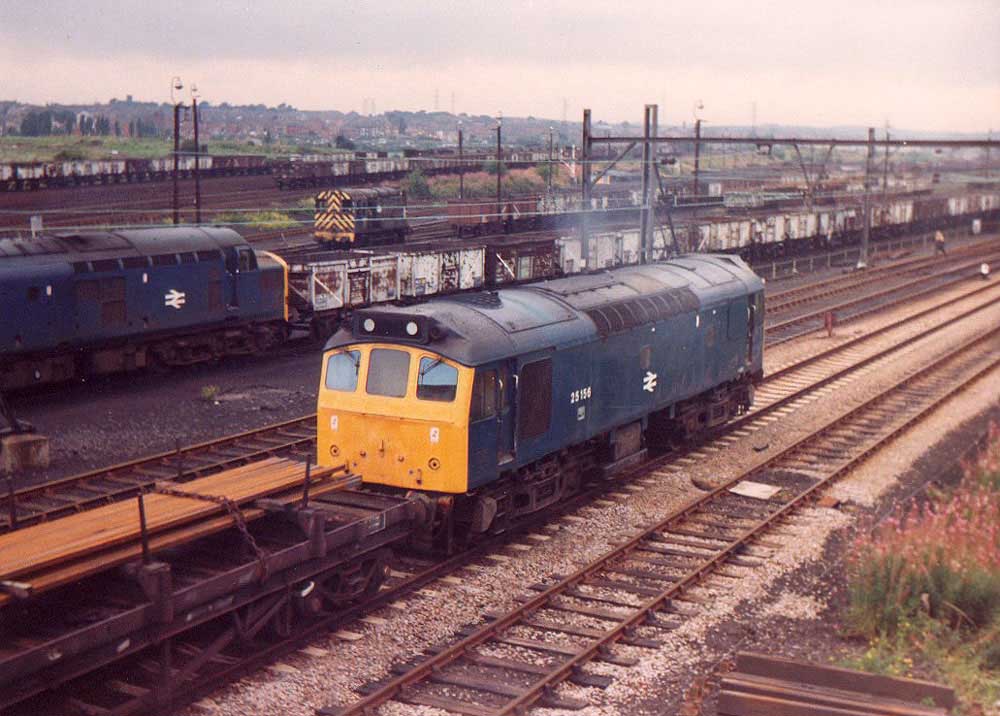
Top photograph courtesy Andrew Walker, with 25156 and a train of steel products passing a very active Wath Yard during April 1978.
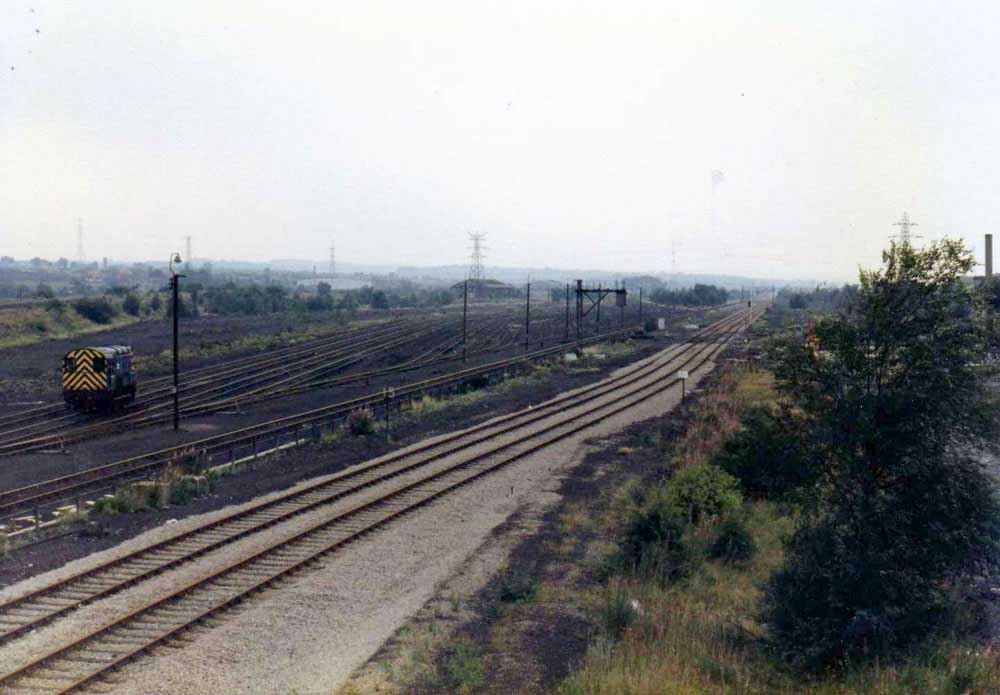
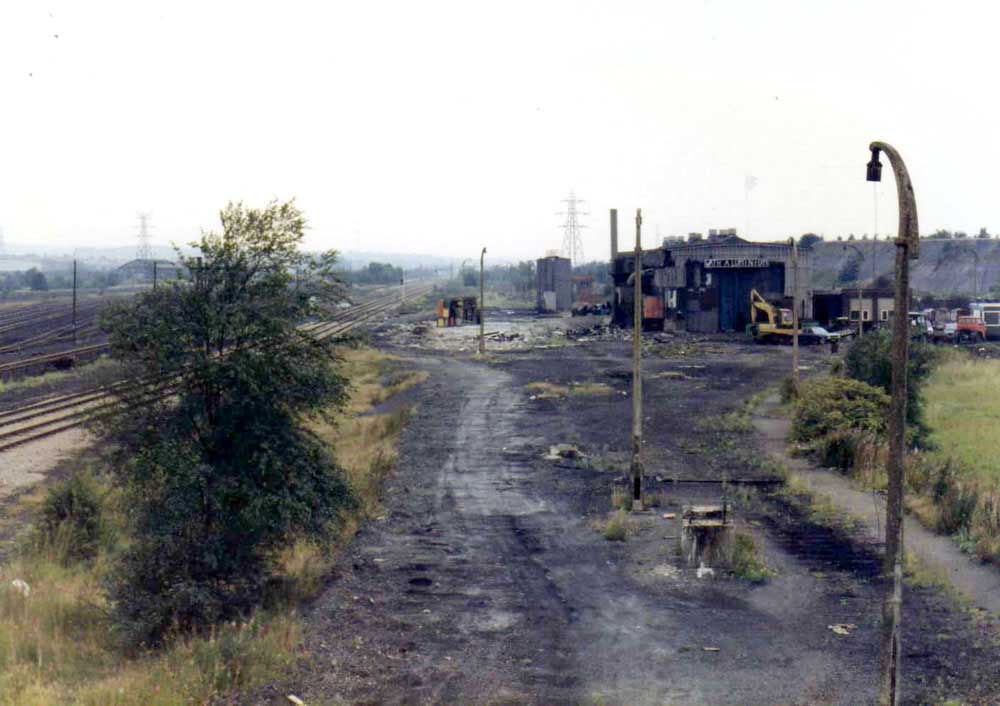
Bottom photograph courtesy Michael Kaye, a grim view of Wath Yard on September 7th 1986 when compared to the 25156 view above. A Class 08 stands alone in the empty yard, with not a wagon in sight one wonders what its functions might be? Wath Depot is off to the right behind the bushes.
The above view of 25156 shows the yard in the background where the Class 08 driver was sat in the deckchair, when we went past with the route learning DMU. The bridge is now gone, the location of the yard is just covered with trees, and the lines occupied by the wagons at the back of the photograph, from left to right, is basically where the new road is.
I can remember my first adventure to this place, my mate came for me one morning and said 'Do you fancy going down to Wath, to see the 76's', it was September 1974. I got my Honda 125 out and he had a Honda 250, my mate led the way, it was like going to the moon! First we turned up at Elsecar Level Crossing to see the gates close and a pair of Class 76's arriving into the yard, soon another pair of 76's went past and a few diesels too, eventually we made our way to Wath Depot, brilliant, like I said it was like going to the moon, everything was different........
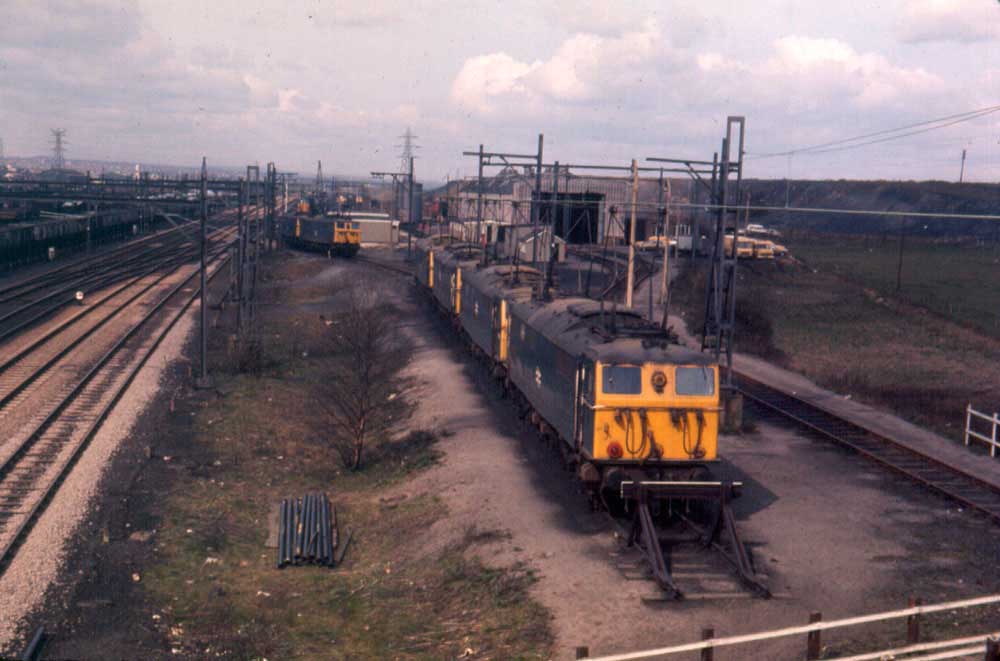
Top view courtesy your webmaster taken during April 1977.
Bottom view courtesy Michael Kaye shows the demise of the depot, taken on September 7th 1986 - how times have changed!
In 1975/76 we got a Sunday job at Holbeck, it was a freight to Derby, then a return passenger train which terminated at Sheffield, here a Sheffield crew took the stock went on to Darnall. The engine returned back to Sheffield, where we 'jumped on' and took the locomotive back to Holbeck via Cudworth. One time I can remember asking my driver if I could have a ride down to Darnall with the stock (he must have thought I was nuts !!!), when coming up to Woodburn Junction it was like a step back in time, all the totem signs were blue, the atmosphere changed, and there seemed to be this humming noise probably from the overheads, of course there were the Class 76's and various other locomotives knocking about, proper railways.
In September 1977, yours truly here had a suggestion, I asked my mate if he would like a trip over the Woodhead route, of course he agreed, so gobby here went to see the Shed Master at Holbeck, I found out that our Shed Master came from Mexborough and Wath, he was soon on the phone organising our day out. When the time came, a Saturday, we finished up on the banking locomotives at Worsborough, on our return to Wath Depot, I asked the Foreman there if we could come on Monday, for the full mashings, a trip over the Woodhead line. Monday came, September 7th 1977 (I think), we 'signed on' at Wath, met our driver for the day, I don't think I blinked that day, we went light loco's to Elsecar Yard, picked up our train of merry-go-round wagons for delivery to Godley Junction, and I can say it was brilliant. Here we waited for a hour, when a couple of 25's came into the yard at Godley, our return train was a mixed frieght, the 25's uncoupled and we coupled up, soon we were back at Elsecar Yard, then light locomotives to Wath Depot. That day went very fast, now all memories, we kept going back to certain locations along the route, (I still do) to see the railway begin to deteriate and eventually close........
Thursday December 17th 1981
Book On 09.51 for Holbeck diagram 24 1V86 Leeds - Paignton
Locomotive: 47497 with 8 coaches 270 tons
1V86 depart Leeds City 10.33, arrive Birmingham 13.55 (45 minutes lost).
This was Michael's first driving job and the 45 minutes lost was caused by two problems:
At Derby it was discovered there was a faulty brake on the second coach. After a discussion with Control it was at first decided to remove the coach, but this was soon altered to keep the coach in the train and make it a 'blow through'. This caused a 20 minute delay. Further down the line the AWS button on the driver's desk got stuck whilst it was being cancelled, this abrubtly brought the train to a halt. Again everybody was informed and eventually the button was prised back and so we carried on, adding another 25 minutes to the delay!
Michael's comments that his first driving job out on the main line was really enjoyable, my secondman was David Lee (he now works for Virgin), David had returned to work after a long illness, with him being a good secondman and interested in the railway, thats what made it really enjoyable. Nobody was really bothered it was my 'first' outing, you just got on with it, but I had eight years experience behind me including a couple of 'driving turns' on Holbeck Shed, mainly taking locomotives to and from Holbeck to Leeds and the Stourton Shunts, shunting the freightliners at Stourton with a large locomotive. I can remember the old drivers saying to us (secondmen that started in the 70's) you're at the bottom of the barrel now, but once they knew that you where interested in the railway, they made you into railway men.
The purpose of the secondman on the locomotive served several functions. These duties included checking all the locomotive lights were working, cleaning out the cab, emptying the ash trays, wiping down the cab floor and cleaning the windows. Looking after the train heating boiler whilst the train was in service was another task as well as making visits to the engine room to check the various gauges. The secondman would also watch the signals and remain with the train if the driver was required to use a signal telephone or visit a signal box. Coupling & uncoupling the locomotive would also be expected if a shunter wasn't available, or if you were working a goods train. And of course the secondman was there to gain experience from his driver as to the operation of the railway and the application of the Rule Book.
Return - Locomotive 47446 with 9 coaches 301 tons
1E37 depart Birmingham 14.50, arrive Leeds City 17.25
Royston
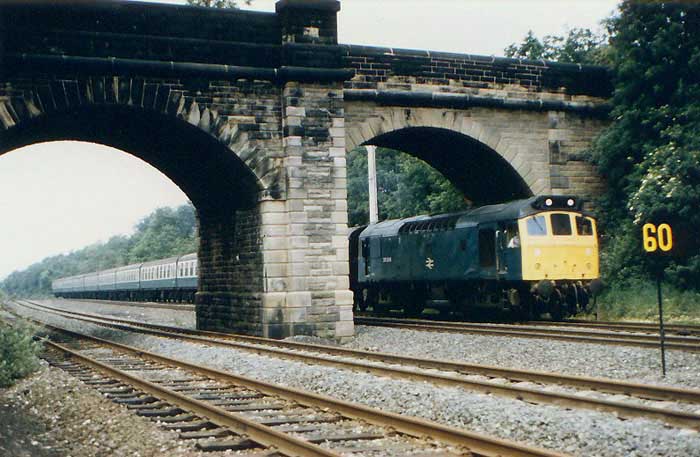
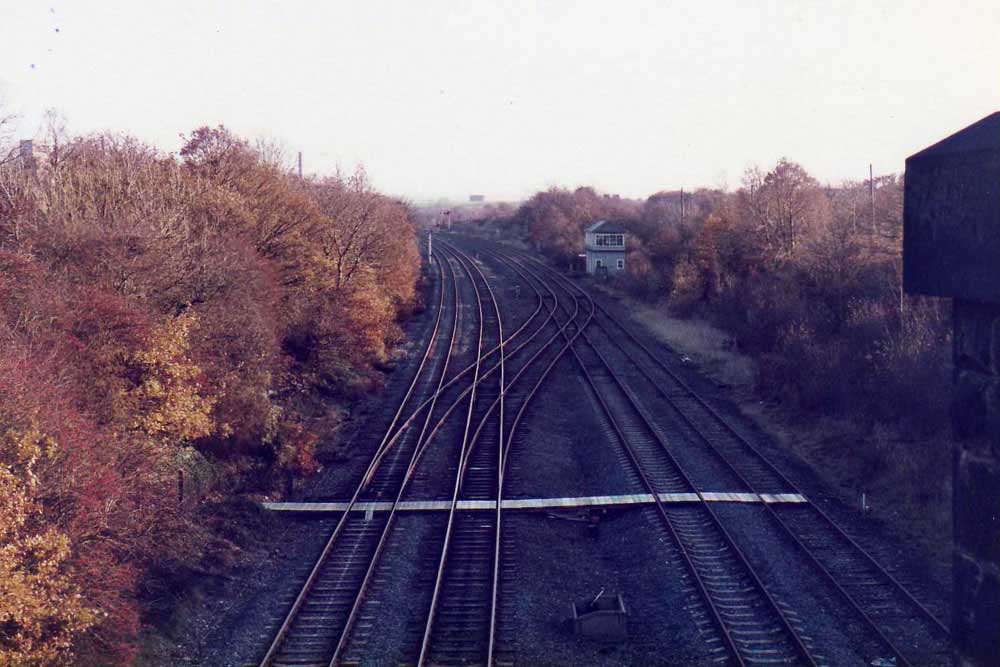
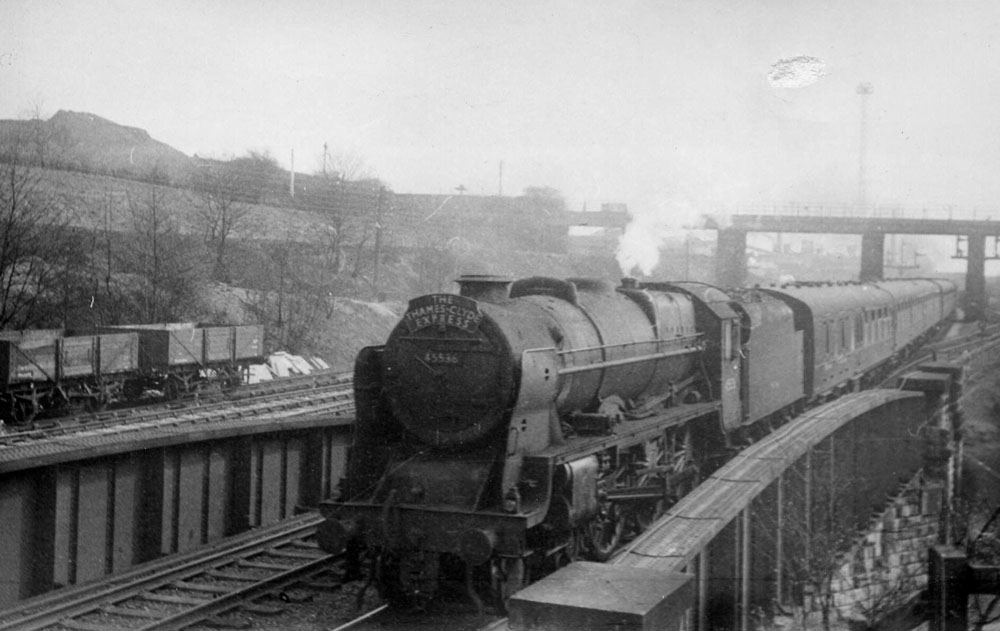
Friday September 10th 1982
Book On 10.49 for Holbeck diagram 49 1V92 Leeds - Cardiff
Locomotive: 47439
0V92 depart Holbeck 11.19, arrive Neville Hill 11.29, attach 9 coaches 301 tons
5V92 depart Neville Hill 12.19, arrive Leeds City 12.29
1V92 depart Leeds City 12.37, arrive Derby 14.21
Return - Locomotive 47427 with 7 coaches 234 tons
1E27 depart Derby 15.44, arrive Leeds City 17.38
5E27 depart Leeds City 18.00, arrive Neville Hill 18.10, detach coaching stock
0L50 depart Neville Hill 18.23, arrive Holbeck 18.33
Walton
North of Royston the Midland route began a gentle sweeping curve towards Normanton. Just prior to the junction with the former West Riding & Grimsby Joint Line which provided access to Wakefield was Sandal & Walton station (later just Walton).
Oakenshaw
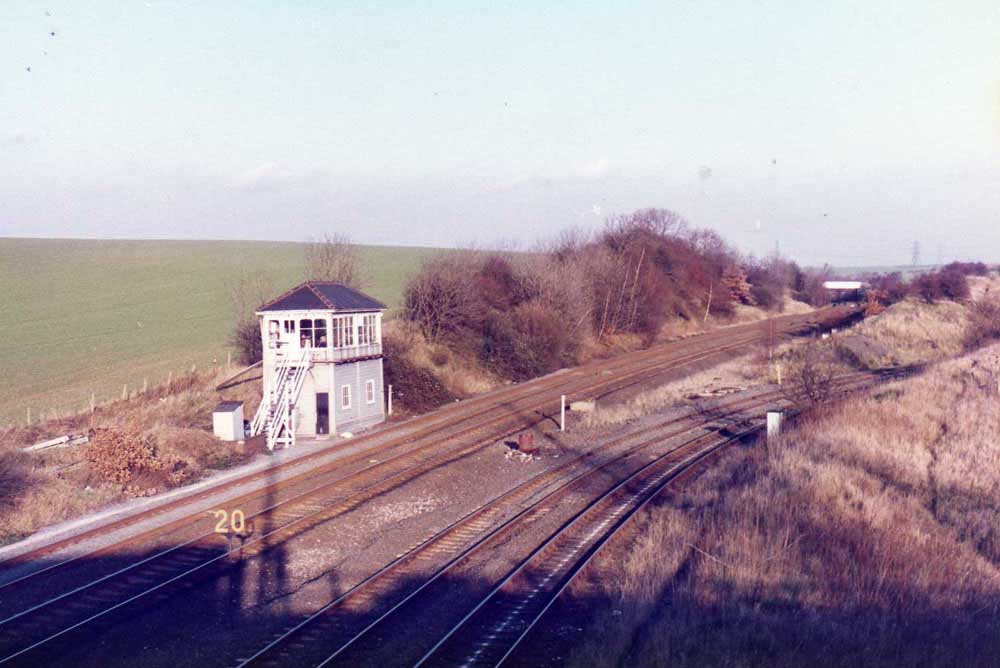
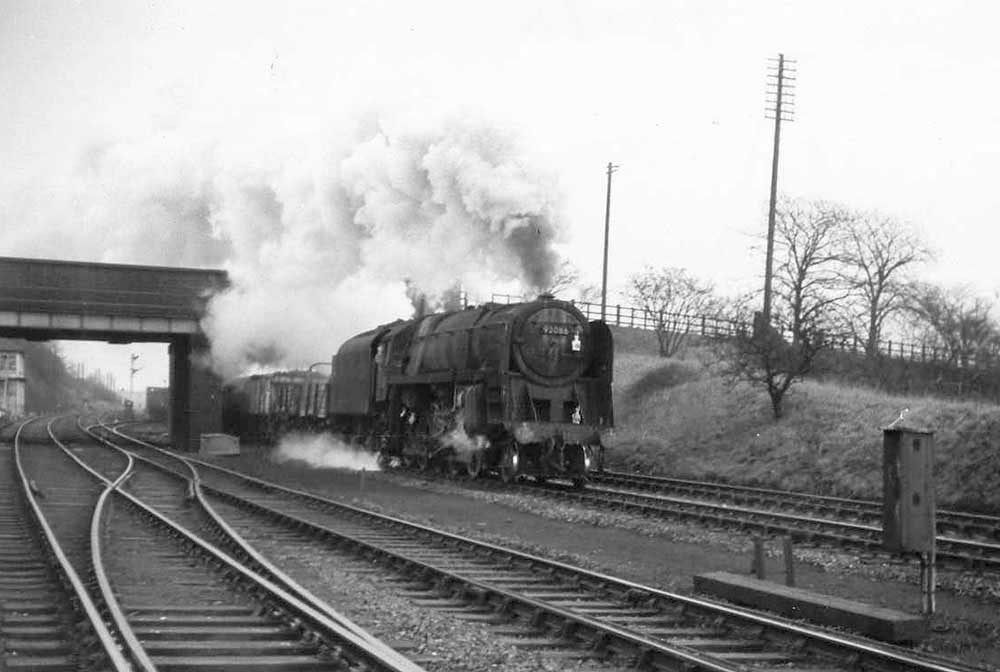
A few miles south-east of Wakefield on the former Midland mainline is the small village of Oakenshaw, the location at one time boasted several junctions and a four track mainline.
Snydale
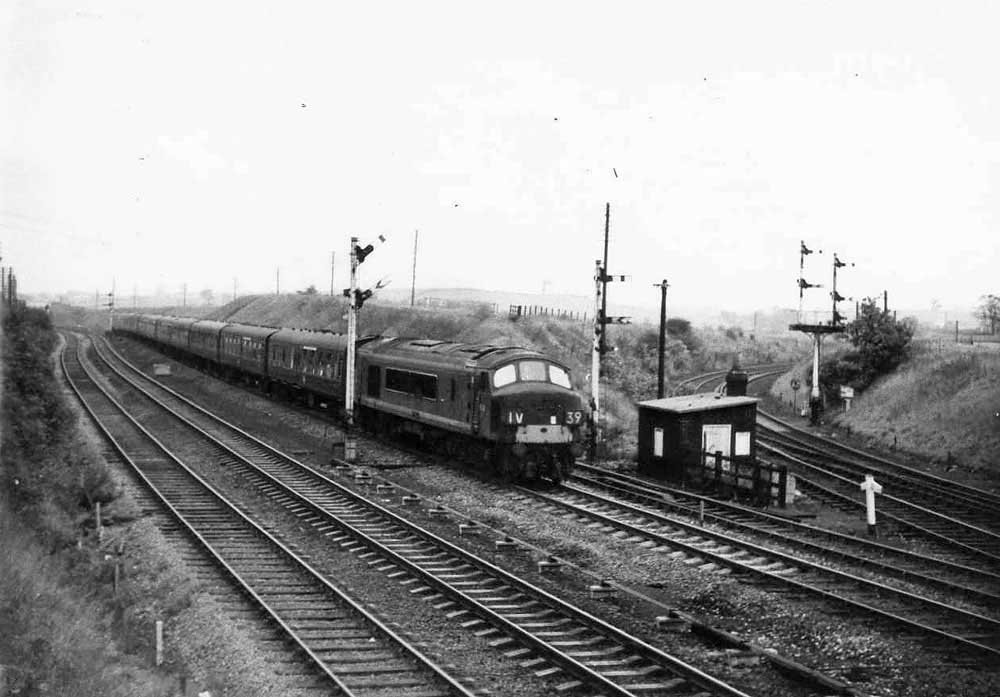
A short distance north of Oakenshaw North Junction was Snydale Junction which allowed access from the ex Midland mainline to a couple of colliery branches. Some sidings served the branches and there was of course a substantial Midland signalbox to monitor everything.
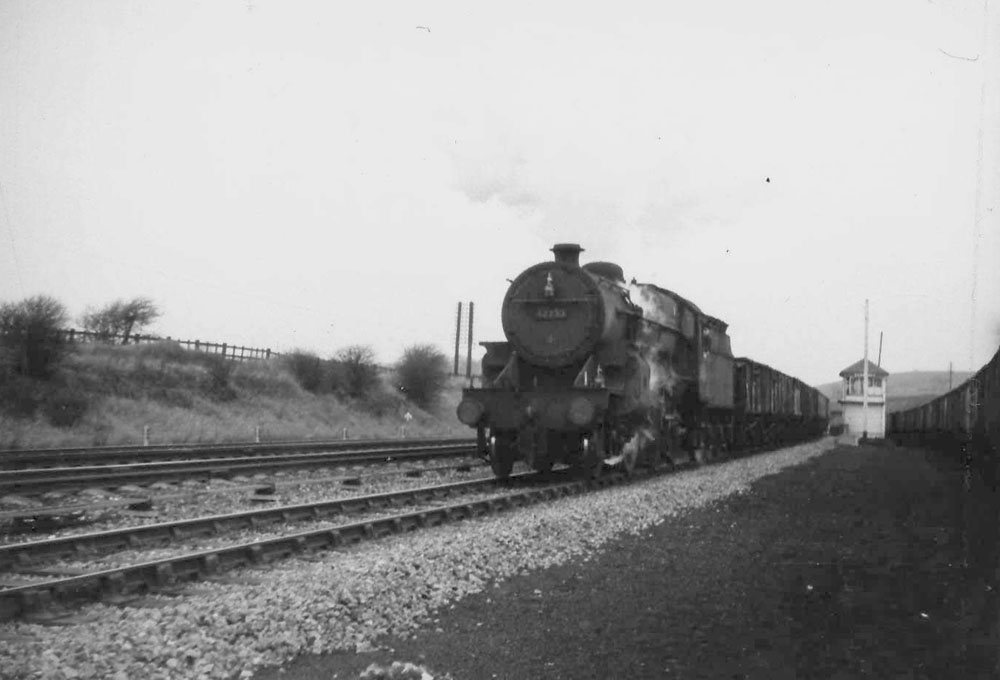
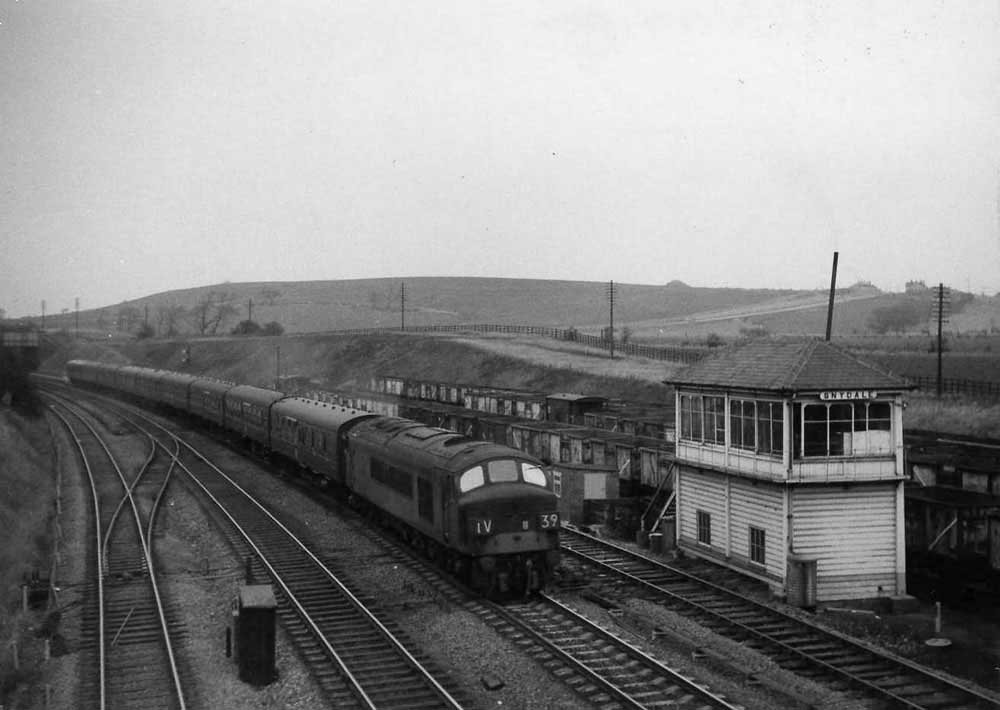
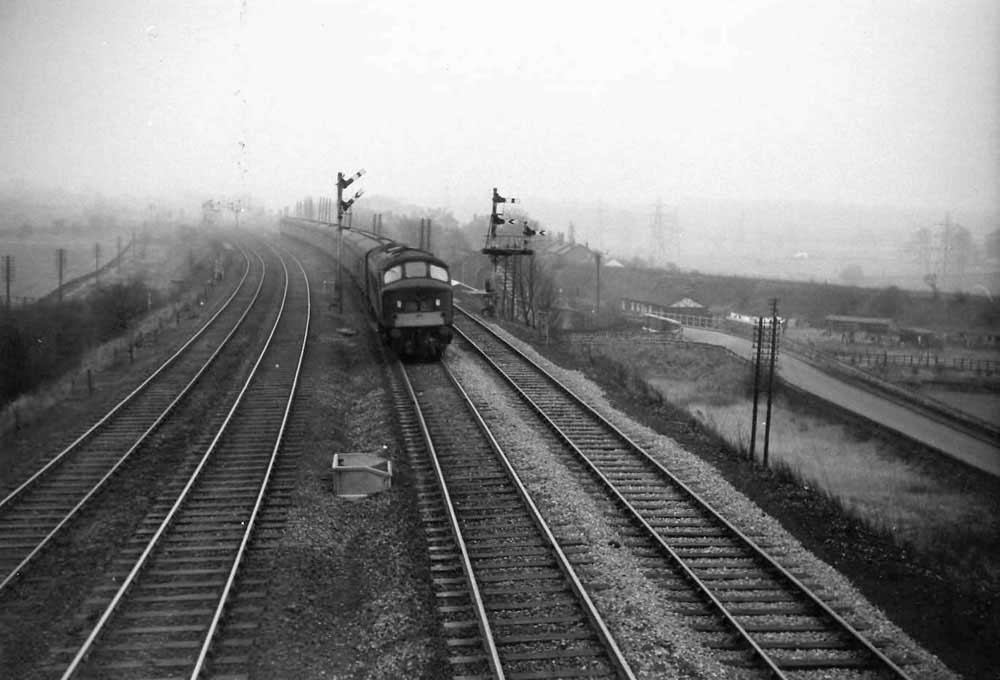
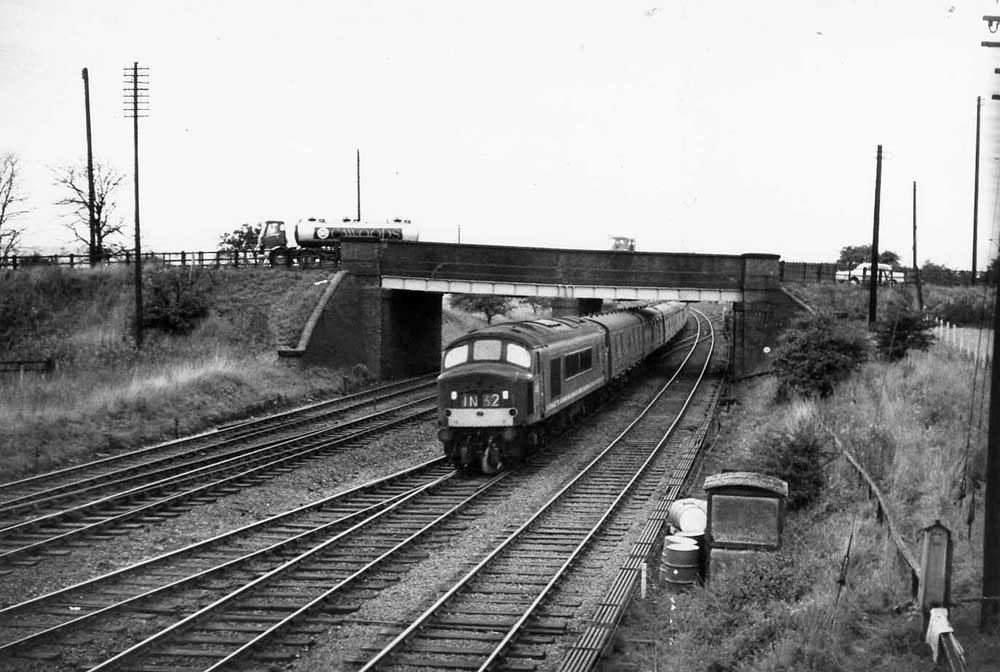
In the above photograph just visible in the distance on the extreme left is an overbridge leading to Pineapple Hill, with the road from Wakefield over the Heath Common towards Normanton. This bridge features in the views below but taken from a different perspective.
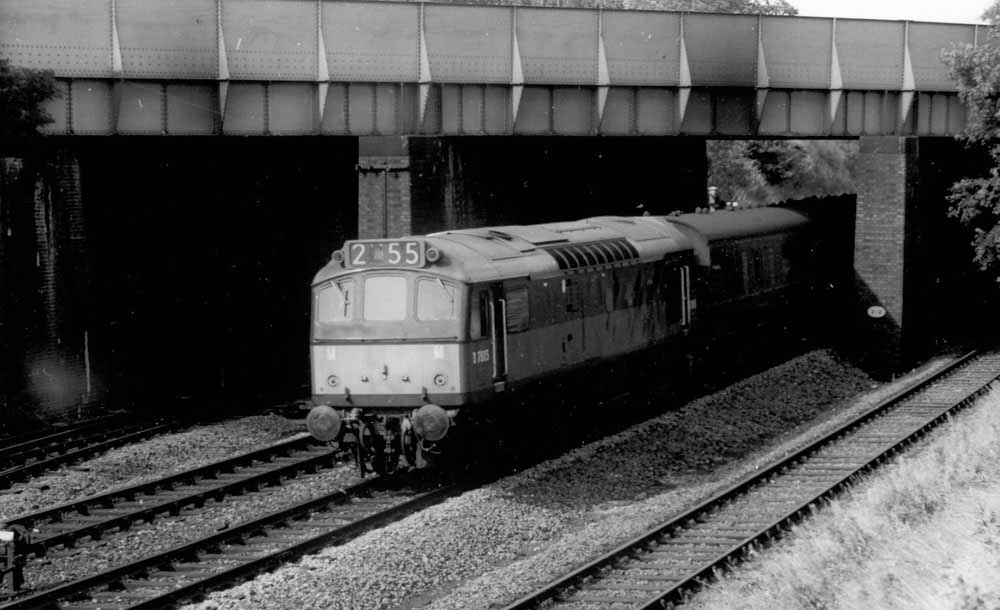
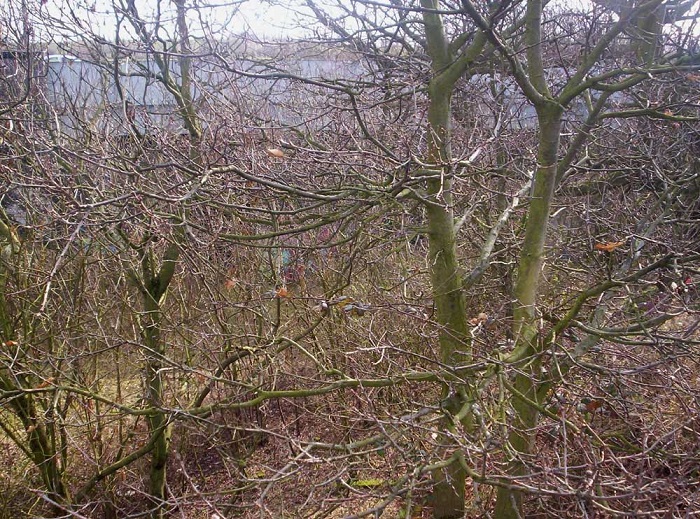
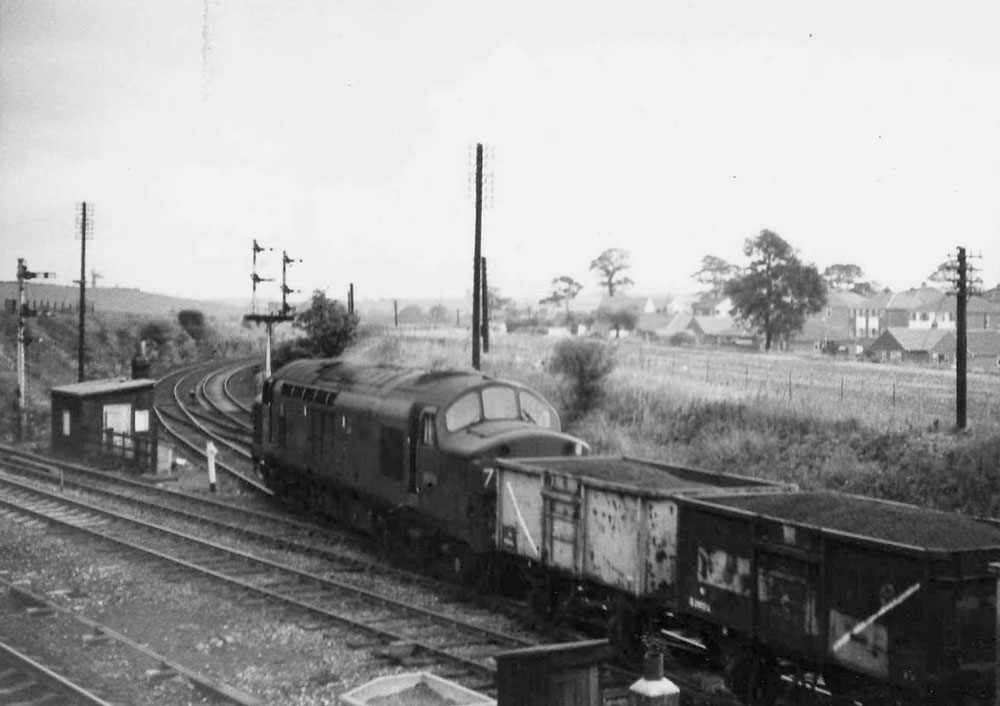
The signals mentioned in the text above were controlled from St John's signalbox which is out of view to the left. Identifying the train was not helped by the missing second digit in the headcode. Most likely it is the 2N55 or 2M55 working. However it is unlikely to be the latter as that was normally a DMU turn. The 2N55 turn was a Sheffield Midland - Leeds parcels, on weekdays departing at 07.06 and due in Leeds at 08.51. If it was a Sunday the departure was at 16.30, arriving Leeds at 17.30. The photograph appears to be taken in summertime indicating this is most likely the 07.20 weekday departure from Sheffield, with a scheduled passing time at Oakenshaw about 08.20am.
D7605 was one of thirteen Class 25s delivered new to Tinsley (41A) during the early part of 1966, so its use on the 2N55 is to be expected. In December 1966 it would move north to Haymarket (64B), it would spend two and a half years here before moving south to the Nottingham Division (D16). It would come to an early demise in December 1971 sustaining major damage in a head-on collision at Lenton South Junction.
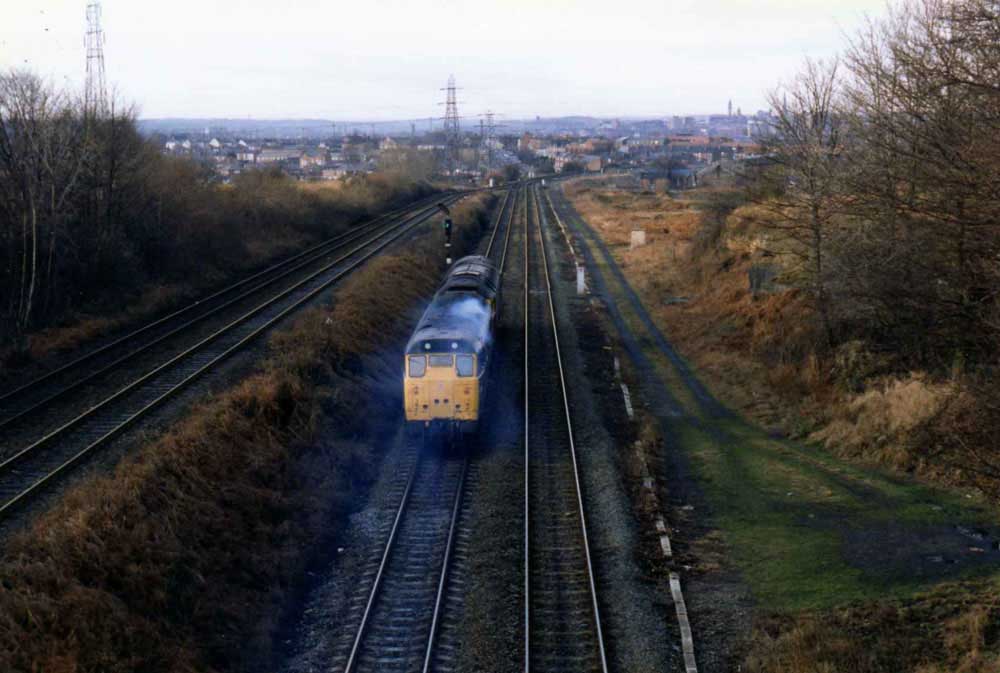
Wednesday October 6th 1982
Book On 04.05 for Holbeck diagram 22 1V62 Leeds - Cardiff
Locomotive: 45112 with 8 coaches 260 tons
1V62 depart Leeds City 05.00, arrive Birmingham 07.40.
Return - Locomotive 47482 with 8 coaches 260 tons
1E10 depart Birmingham 08.50, arrive Leeds City 11.30
Goose Hill Junction

Saturday October 9th 1982
Book On 07.33 for Holbeck diagram 124 1M54 Leeds - Birmingham
Locomotive: 45129 with 8 coaches 243 tons
1M54 depart Leeds City 08.22, arrive Birmingham 11.03.
Return - HST set
1E61 depart Birmingham 10.47, arrive Leeds City 14.33 (booked arrival should have been 14.16, but delayed connections at Chesterfield and a track circuit failure at Bradway Tunnel caused time to be lost).
Thursday November 4th 1982
Book On 04.05 for Holbeck diagram 22 1V62 Leeds - Cardiff
Locomotive: 45121 with 8 coaches 283 tons
1V62 depart Leeds City 05.00, arrive Birmingham 07.40.
Return - Locomotive 45106 with 9 coaches 314 tons
1E10 depart Birmingham 08.50, arrive Leeds City 11.30
We used to have jobs to Masboro', Rotherham, where you took a small freightliner to Masboro', usually with a Class 25 or 31, then passenger to Sheffield to work an express via Cudworth back to Leeds, then light engine Holbeck. One particular Saturday morning, there were three of us (I can't remember why we had a guard?), anyway on arrival at Masboro' with a Class 31, I was the secondman, with 9 years in, my Driver Ken Waterworth and the guard both had 10 years in, so our combined service was of course 29 years! I climb out of the cab, to be greeted by three Masboro' men, all wearing flat caps and smoking pipes, on putting my foot on the ballast a voice said 'alright kid' where's you mate' my reply 'he'll be here in a moment' on seeing my Driver, the Masboro' crew nearly had a heart attack, their guard said, 'where's your guard', and when he saw our guard all three were puffing heavily on their pipes, their combined railway service must have been 300 years...............
Again on the same job and also with the previous Driver (Ken Waterworth) we had another Class 31. We left Holbeck and en-route to Stourton to pick up the freightliner train to take it to Masboro', Ken asked if I wanted to drive, I said OK and took over the left hand seat. Later on in the journey, we were approaching Parkside, near Aldwarke Junction, at Parkside you needed the route-indicator to get across onto the Masboro' - Barrow Hill lines, known to us as the 'old road'.
Ken had his feet up having a minute, whilst yours truly was studying the landscape, when I came across a couple enjoying a kiss and cuddle in a parked car, whilst watching the car bouncing up & down, I noted that the approaching signal was at yellow, but the lineside distractions caused me to overlook the fact that no route indicator was showing for the 'old road'. This error was only noted after just passing this signal, so as I motored down to the next signal I revived Ken from his slumbers, he gave me a right dressing down and basically said I'd have to talk my way out of this one.
To make matters worse this train had to go via the 'Old Road' because of the 6ft 6in containers. On arrival at the next signal, it was my turn to explain to the signalman why I had taken the wrong signal, (in them days, the signalman then spoke with control) after telling the signalman the right story, he had by now got permission from control to carry on to Sheffield. Here the train was given special orders to continue at 10 m.p.h. through the tunnels at Sheffield.... Moral of the story, always watch what you're doing............. my moral, i'm only a man, watching nature !!!!!!!!!!!!!!!.
Methley Junction
Once clear of Normanton the former Midland route makes a large sweeping curve to the left through Altofts, Methley and on to Woodlesford. The railway now runs close to the River Aire as it sweeps into the southern suburbs of Leeds.
Trouble at Methley
Part One
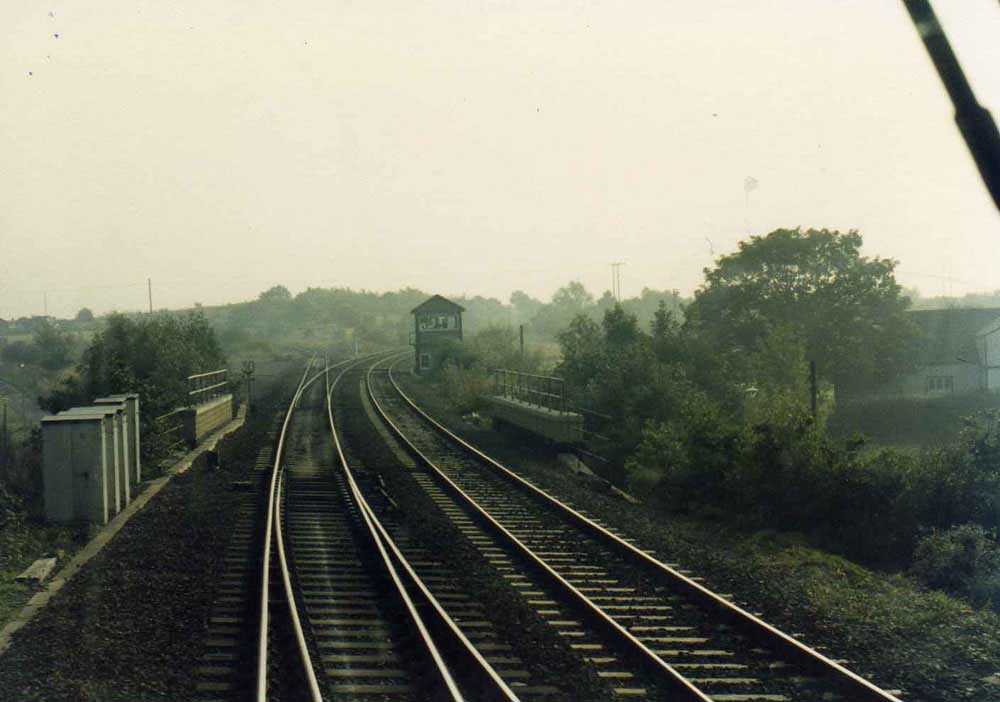
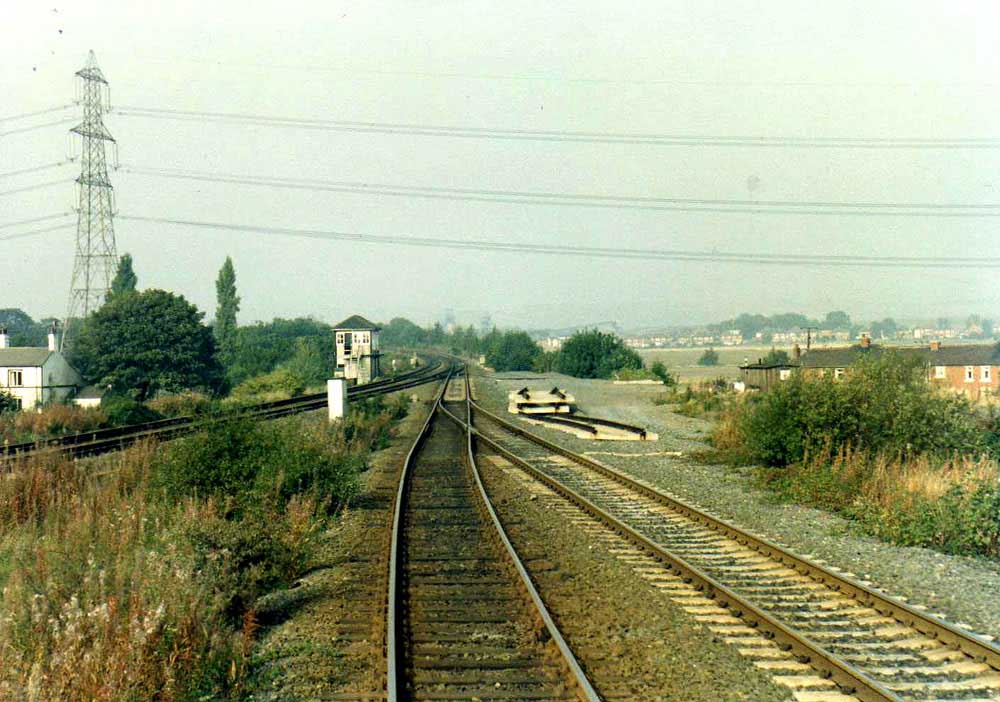
Not too long after I started on the railways I was on one of the tripper jobs with Driver Charlie Ward. We were with a Class 24 and were off to the Stanley branch for a shunting job at Newmarket Colliery. This was at one time a through line between the GN at Lofthouse North/South Junctions then heading east for several miles before connecting with the NER and L&Y lines south west of Castleford. By this time however the line had been cut back to Newmarket Colliery with access only from the east (Castleford) end. At the colliery we picked up about 20 - 25 wagons and set off eastwards along this 'up & down' route, not taxing for the locomotive until we reached the east end where there is a noticeable hump in the line with quite a severe gradient on the approach to Lofthouse Junction.
Because of this severe gradient the rules for working this branch allowed only ten wagons for the Class 24 with the branch maximum speed set at no more than 25mph. So here we are with more wagons than we should have and going faster than we should be, 35mph instead of the 25mph maximum. But we were of course on a bonus, so things like gravity and brake force play second fiddle to a little extra in the paypacket. So we used the extra speed to successfully surmount the hump at Methley, but now on approaching the end of the branch we find the distant is on. Charlie starts braking and blowing on the horn, at this point I'm told to 'hang on' (thinking am I being wound up here?). The junction signal is pulled off and I move to the open cab door in order to return the branch token. This is done by tossing it into a bunker, missing the bunker invariably puts the token in the local canal, but this day despite all what's going on I manage to get the token in the bunker.
Charlie was yelling at the box, notifying them of our predicament as best he could! We sailed passed the box, cresting a brow in the line we saw the signals were off at Cutsyke Level Crossing/Junction Box, Charlie still laying on the horn. Here if you crouch down at desk level you could just make out the signals for Glasshoughton Colliery, from this position we could see the road was set for the colliery yard. The shunter here came out to greet us putting his hands into the air, normally a handsignal telling us to come to a stop. Not this day however, the surprised shunter losing his cigarette as our train ran past him, fortunately we came to a halt before the limit of the yard track was reached. The brakes on the locomotive and brake van were all smoking badly!
The possibility of jumping from the locomotive did cross my mind, but the speed factor was not making it a recommended option. But once everything had calmed down and the obligatory cup of tea was made it was back to work.
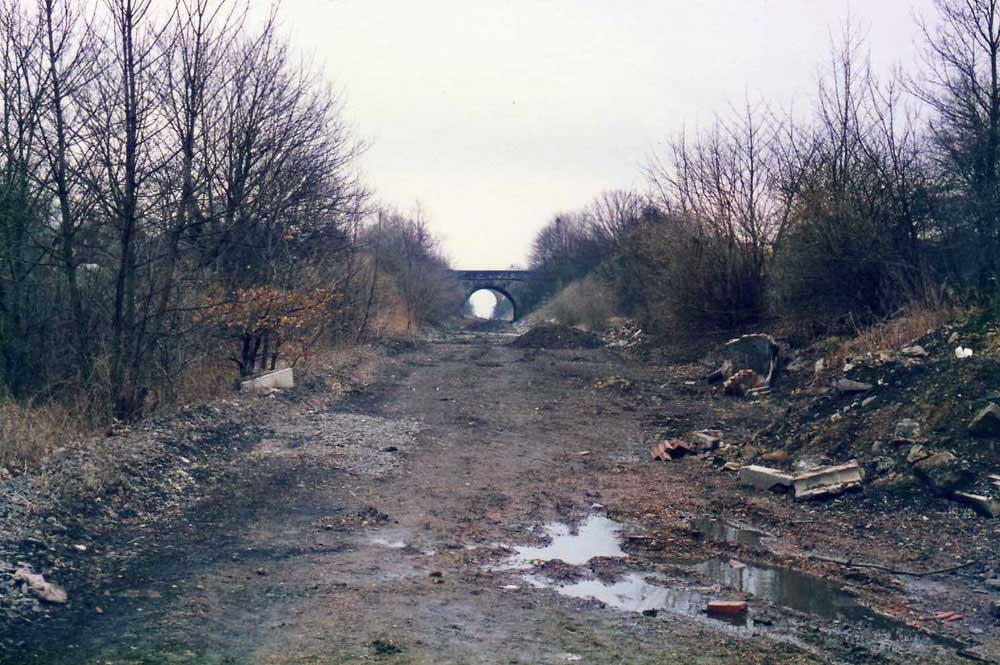
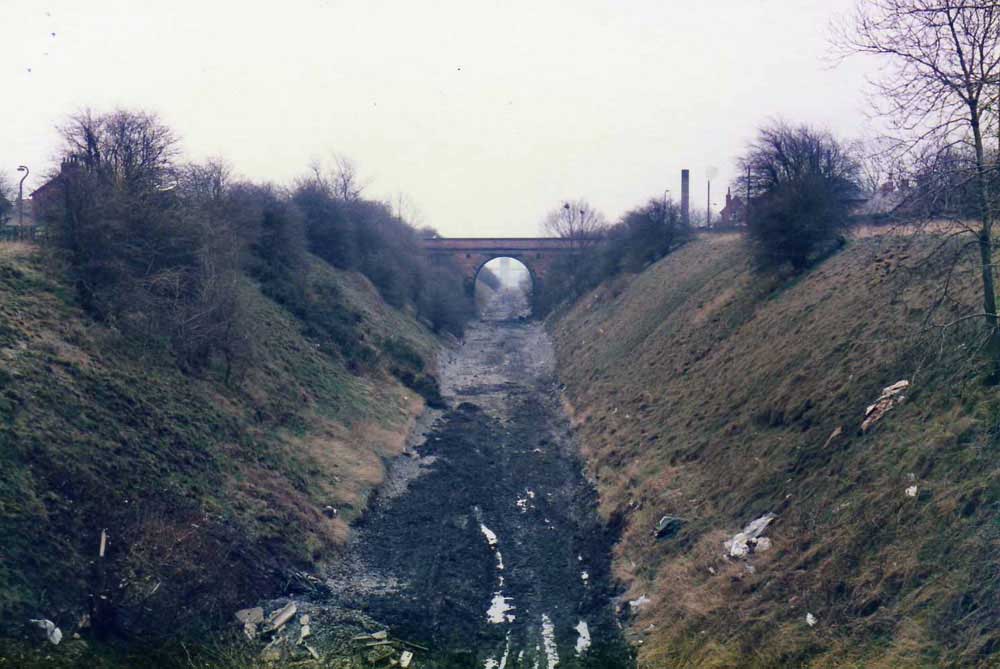
Today (2007) all is radically changed, Newmarket Colliey is little more than a mound of dirt although the colliery house is still occupied, a short piece of track remains in place where it crosses the road. A retaining wall at the site of Stanley station still remains but the rest was demolished in 1970 to make way for a housing estate. The cutting between the A642 and Lofthouse East Junction is now filled in, and Lofthouse Colliery is now playing fields.
Speaking of Newmarket Colliery, a short distance from here was Wrenthorpe where we once started off a memorable eighteen hour job very badly because we couldn't find our engineering train! We'd been told the train was near Wrenthorpe so the crew van dropped us off at Wakefield Westgate, from here we starting walking to our train. Which took awhile because the train was actually at Lofthouse. The crew we were relieving were not happy when they learned their transport home was sitting at Wakefield! One bright spot was that in the middle of all this we were able to take breakfast at my mum & dad's. Once the engineering work was completed it was noted that we were on the wrong running line facing in the wrong direction, so we had to go to Wakefield Westgate 'facing road' and then run round the train at Wrenthorpe sidings, push the train back out onto the mainline and then go via Ardsley/Whitehall Junction/Holbeck & Normanton to get the train back to Healey Mills and then the locomotive back to Holbeck!
Trouble at Methley
Part Two
At one time there was an afternoon job from Holbeck which took two Class 31's light to Kirkstall power station to collect empty tanks for delivery to Doncaster, them home passenger. On one of these jobs we had passed Methley Sidings Box and were on the approach to Methley Junction. Looking across the fields (which are now a housing estate) we saw several people waving at us, naturally we waved back. Jokingly the driver asked me if I knew these people, obviously the answer was no. We both noted that the approaching semaphore signal had returned to danger so my driver asked me to look out the window. I couldn't believe it, the second Class 31 was on fire and I mean well alight. Having come to a stop I jumped down and set the fire extinguishers off on the locomotive and began to hook it off to get it away from the train. The fire brigade had been called so my driver used the leading Class 31 to drag the well toasted one to a location where the Fire Brigade could do their work.
Healey Mills sent down a locomotive to collect the burned up locomotive whilst we went about our job getting the tank wagons to Doncaster. Several days later I was summonsed by the gaffer, expecting some praise for stopping Methley from getting blown up by those empty tank wagons. Instead I got the rule book thrown at me, which clearly states that when dangerous goods are involved, you walk away from the train. After this ticking off I was told to get on with the job!!!
Woodlesford

Via Wakefield
If one stayed with the former Midland route to Leeds one missed the delights of Wakefield and the former GN route in to Leeds. On one now forgotten day we were coming back from Derby one afternoon with a Class 45 or 46 and were routed through Wakefield, Ardsley and into Leeds on the GN metals. On leaving Wakefield Westgate the locomotive started to falter and loose power, it quickly becoming apparent that the turbocharger was in the process of failing. Unfortunately it is quite a climb to the summit of the line at Outwood (formerly Lofthouse & Outwood), but my driver decided to make ago of it because it was home time! The locomotive continued to struggle and expired completely at the summit, unfortunately with most of the train on the wrong side of it, so we were stuck. Because of all the DMU traffic in the area it took quite awhile for a relief locomotive to makes its way to us and get us on our way to Leeds, so near yet so far!
One Saturday night sometime during 1981 we booked on with the shift starting badly and one that would only get worse. We were told our train was at Wakefield Westgate, so the mini bus dropped us off there, but there was no train in sight. My mate, who was a great character Denis Ward (nickname - concrete gnome) decided we should walk to our train, so Denis, the guard Paul Micklejones and yours truely set off walking. It was around midnight when we set off in the general direction of Leeds, we passed the site of Wrenthorpe and then approached the cutting at Lofthouse, two miles down the track and still no train in sight. We kept walking, at the end of Lofthouse cutting the railway curved to the left, and there was still no train in sight, soon we came to the original location of Lofthouse South Junction Box and station, and where the 'Stanley' branch turned to the right, still no train!
Eventually, at Lofthouse Colliery, we found the train around four miles and ninety minutes walk from Wakefield Westgate, mind you we were telling stories and looking at peoples bedroom windows en-route! On arrival we told the other crew where the mini bus was, their driver told the signalman via the signal telephone to get the staff at Wakefield station to bring the mini bus to Lofthouse! Denis, Paul and I settled down for a couple of hours, while work around us went off, it soon broke daylight but something strange had happened, nobody was in sight, no workmen, no ballast trains, nothing, we were on our own, so we decided to sit it out until someone could come and tell us that we could move. I told Denis that we lived just over there, pointing towards the district of Outwood and adding it was only a fifteen minute walk away, Denis replied, 'think we could call in and have breakfast at your mum's', my reply was, 'maybe', but after a few minutes a guy came towards us and asked us 'what train are we and what are we doing here?', Denis replied, 'great question, where has everybody gone?
Well now we couldn't go anywhere and couldn't move without permission, so a few more hours went by before another guy came to us, he'd been called back to the site because he was the person in charge and the only person who could tell us what to do. Two problems still faced us, the train was facing Wakefield and it needed to get to Healey Mills. The other problem was we were on the wrong running line (facing road), the guard decided to ring the signalbox and asked for permission to use the ground frame, which worked a treat, now on the right track we were on our way, by the way we had now eleven hours on duty. The 'ground frame' at Lofthouse allowed you into the yard and cross over from 'main to main'. Eventually we got to Wakefield Kirkgate, the signalman there told us, 'that we had to go round to Calder Bridge' this was to 'run round' our train, to get it in the direction of Healey Mills. Wakefield Kirkgate station was full of ballast trains so we couldn't run round in the station. On arrival at Healey Mills we dumped our train, but now we couldn't get back to Holbeck (0L50) with our locomotive, so Denis decided to go via Ravensthorpe (Wessy Junc) and Dewsbury to get home, perfect and after all that we made fourteen hours....nice to be home....
Lofthouse / Outwood
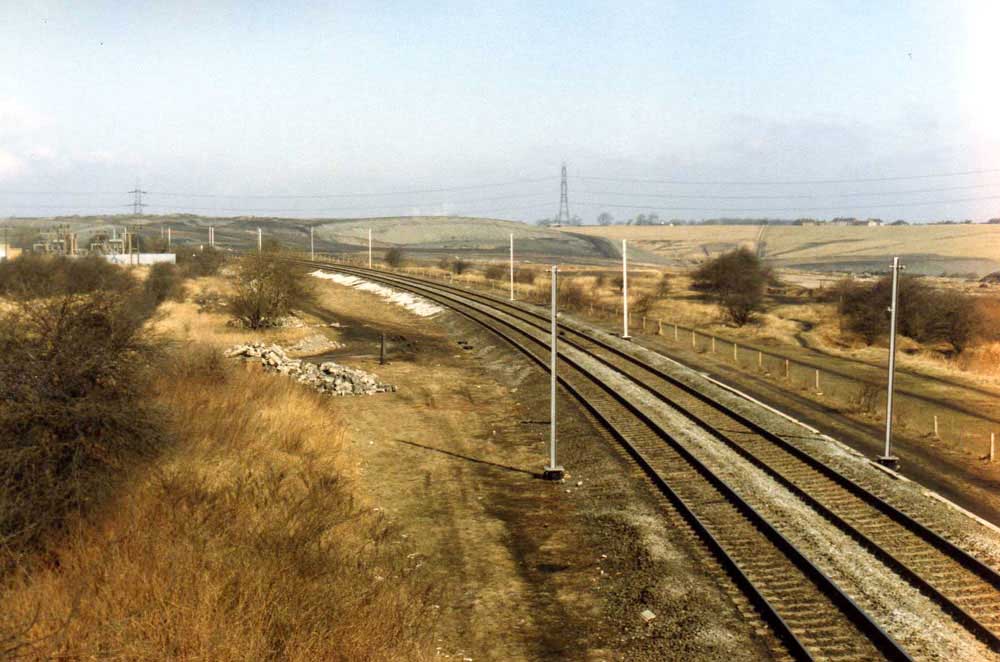
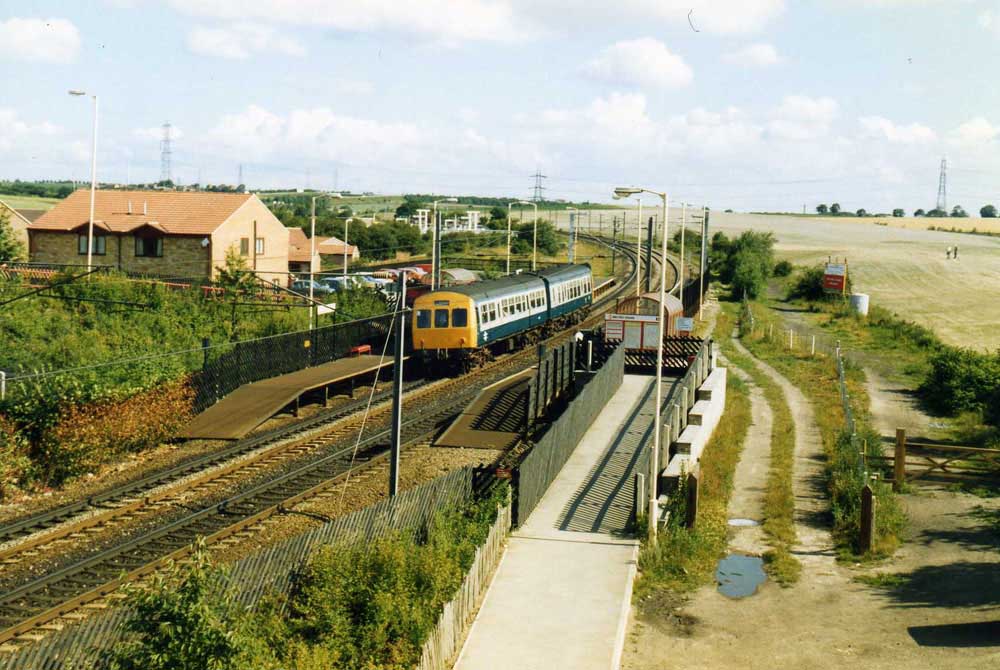

Three views from Outwood, only separated by five years, but it seems a lot longer! The bottom view is 25034 with a parcels train on April 23rd 1985, the train is on the Up line heading towards Wakefield. The other two views are looking towards Ardsley. The top view is taken on April 3rd 1986 and shows the location of Lofthouse Colliery to the right of the lines. The middle view from April 1990 captures a Metro Cammell diesel multiple unit on the Down line stopping at Outwood station - progress is clearly evident with the arrival of electrification and the new station. Lofthouse Colliery had been lifting coal for just over a century (1877 - 1981), in the 1970's producing about 18,500 tons of coal per week. After closure the mine was demolished in 1983 with the site being returned to parkland, the center view giving few clues as to the industry that once was there. With regret it should be mentioned that the location is the gravesite for six of seven miners killed on March 21st 1973 when an abandoned mine working flooded one of the working coal faces. Six days of rescue attempts were unsuccessful with only one body recovered. A memorial to the colliery and its workers can be found adjacent to the Victoria Public House in Outwood.
The pleasant sunny view of Outwood station with the Metro Cammell unit (above, right) hides a great quantity of railway memories now consigned to the pages of history. This used to be the site of a triangular junction, the south curve located right behind the photographer. Above the DMU near the electrical sub-station a line cut off across the fields to the right, where the people are - this formed the northern side of the triangle, at one time there was a signalbox on each angle, Lofthouse North, South and West. This line went east to Stanley and Castleford, Michael remembers seeing his first Class 24 at Stanley on a coal train heading towards Haymarket Pit. Again where the electrical sub station is, another line branched off and headed north through Robin Hood, eventually coming out at Stourton. Ironically the Class 50 photograph below was taken at the spot where this line joined the former Midland route into Leeds. Also, just visible above the house roof is the M1/M62 interchange, which happens to be the site of what used to be Arsdley Depot (56B in 1962).
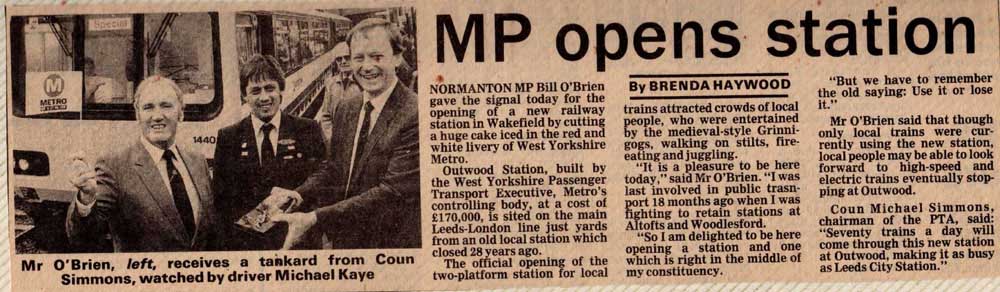
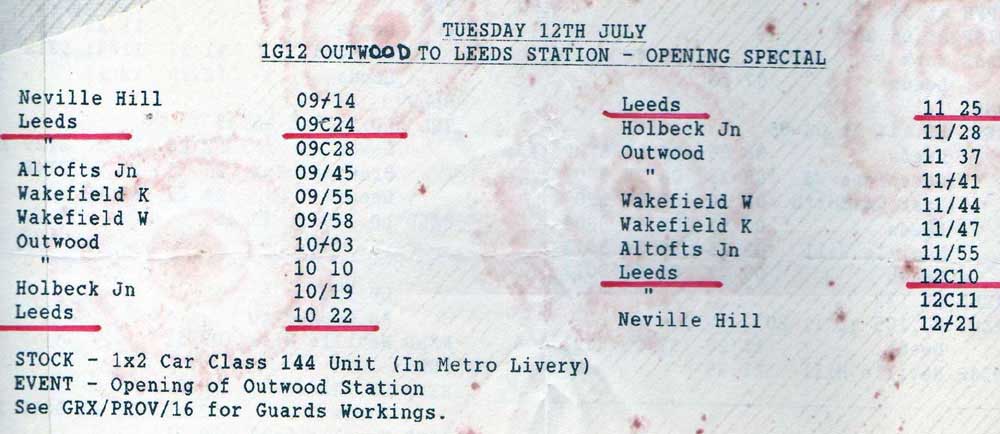
For the grand opening of Outwood station, the day began for Michael at Neville Hill in picking up a Metro liveried Class 144 multiple unit. At Leeds the Metro manager and a guard joined us, already with me was a fitter to ensure that should anything happen to the 144 it would be fixed in record time! The manager asked if he could sit in the front of the unit with me, I told him that I'd prefer the fitter. On leaving Leeds we went via Normanton, Wakefield Kirkgate through Westgate and approached Outwood on the down line, heading towards Leeds. Having lived in the area for forty odd years Michael was more than fully able to answer all the manager's questions about Lofthouse & Outwood and the local railways. Once at Outwood we were greeted by a big council official and another Metro man along with around fifty school children. After the ceremonies we took the kids to Leeds, here they were shown around Leeds Station, whilst the unit then went off into traffic.......
One day late in August 2008, the 18.03 Kings Cross - Skipton had failed with an AWS fault before even getting away from Kings Cross so a 'Thunderbird' was sent down to Kings Cross to bring it back to Neville Hill. One might ask why the much closer Bounds Green depot could not recieve it for repairs to be made, but the railways do seem to be full of odd working practices. Unfortunately on its way northwards the Class 67 'Thunderfailed' failed at Outwood two miles north of Wakefield, causing a considerable backlog of units arriving onto Neville Hill!
Stourton
During Michael's time Class 50's were rare visitors to Leeds. They would occasionally show up on the afternoon Leeds PCD - Birmingham parcels job. They were sent after overhaul from Doncaster Works usually straight to the parcels train at Leeds station, they didn't venture on to Holbeck depot. Since Holbeck men were not trained on the Class 50's they would require a traction conductor to allow them to work west.
Hunslet
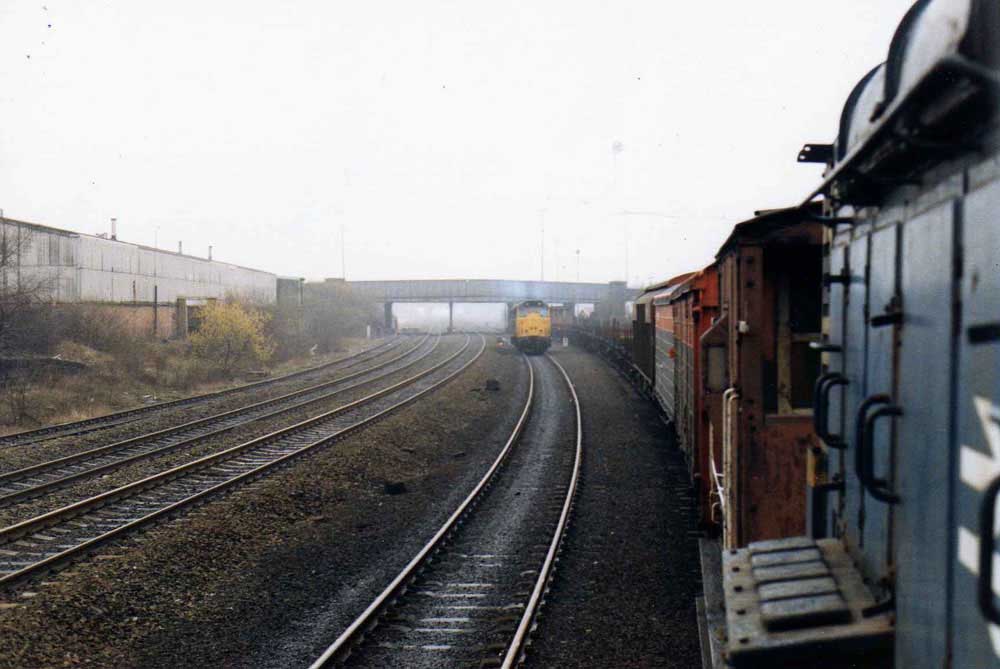
On the last day of operations at Hunslet Lane Yard we took a Class 08 from Holbeck to collect a crane and a couple of wagons from the yard before it closed completely. The yard had already undergone some rationalisation with various points and sidings taken out of service. For some reason we stopped at Hunslet Down to pick up somebody (a gaffer of some sort), then off down to Hunslet Lane to do our work. With the rationalisation of the yard we could no longer just couple on to the wagons since we didn't have a brake van. So my driver says we'll run round the train and push them out of the yard. The gaffer said we can't propel them this way, which was the only option we had, so my mate, having had all his suggestions turned down loses it with the gaffer and gives him a right telling off. And to get the job completed we propelled the train out of the yard and got it all back to Holbeck, job done!
A social event that brought together a number of Holbeck crews for a friendly soccer match was of course followed by a celebratory drink or two. Memories were relived and complaints heard, including one from a modern day TOC driver complaing about a day of just under ten hours on duty. In sympathy out of the memory came this truly long shift!!
The Holbeck Docket Clerk (the unfortunate soul who allocated you your week's work, if you were a week's spare or if it was to cover for another Driver and so on) notified us on the Thursday that there was a Saturday into Sunday engineering job which was going to be a long one, would we be OK with this? Geoff Oliver and I agreed to this, also another crew was involved but I can't remember the driver's name, Les Waterworth was the secondman. It was recommended that we bring plenty of grub for the job.
We all booked on at 22.00 on the Friday night, two Class 40's departed from Holbeck shed to Hunslet Down, this to pick up the engineering train, on departure from Hunslet, we had to go on to Whitehall Junction and Holbeck West Junctions, this was to renew the junction and trackwork between the two aforementoned junctions. Because of the incline on this section track the two Class 40's were required for the braking of the train, arrival at Whitehall being around one in the morning, so it was feet up and nap time, not resurfacing from my slumbers until about 10.00 on Saturday morning!
My mate was amazed, (so was I) but on climbing off the seat, my back was killing me, I couldn't straighten up! Being asleep on a Class 40 for so long is not recommended, right, now it was breakfast time or nearly dinner time, we did a bit of cooking on the stove in the engine room and also a cup of tea. I went to get the newspapers, on the return we all settled down to of course read the days news.... also I brought a radio to listen to the football on Radio 5. Time now getting on, it was our afternoon snack, so we had a couple of pork pies, tea time soon arrived and then of course, back on the stove to have an onion in tin foil, nicely and steadily done in the oven, cooked for about an hour and half. The crew on the other locomotive were becoming restless, well the driver did, saying he was getting fed up. Eventually they hooked off their Class 40 and set off back to Holbeck (so I quite couldn't understand why we had needed two Class 40's).
Eventually the permanent way gang didn't require us, so now we were asked if we could return the train to Neville Hill. We had to go via Wakefield Westgate down through Wakefield Kirkgate, Normanton past Holbeck, up through Leeds City and on to Neville Hill. With only the one Class 40 my mate had to drive the train slowly in order to keep it under control, the guard also doing his job, by using the brake van to great effect. It was now Saturday night and our food had run out! so for the next few hours we had the good old cup of tea, arrival at Neville Hill was just after midnight, it was now Sunday! On arrival at Neville Hill we were asked if we could shunt the train out of the way into the sidings, which we did eventually arriving on Holbeck Depot at about 02.00.....
Bradford Forster Square
Looking at the photographs below of Forster Square its very obvious to see the this station has lost the majority of its status and grandeur - fortunately there still remains a train service from this location, but now the services are very much of a local nature. Long gone are the through services to the West Country and north across the Scottish border. The dated summer Saturday services, including the Devonian are now but a memory.
Although Bradford Forster Square was once a station of considerable size this quality was not apparent in the crew messroom. This was about ten feet square complete with oven/cooker, kettle and resident mouse, who was apparently well fed and listened ardently to the tales of the train crew.
Bradford Forster Square was the former Midland Railway's access to the city.
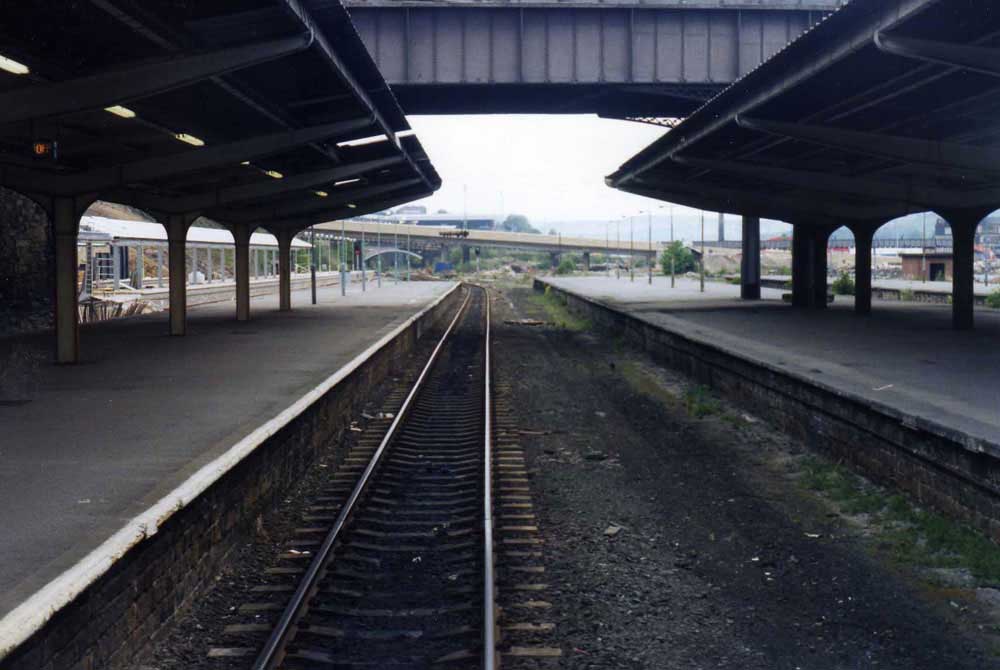
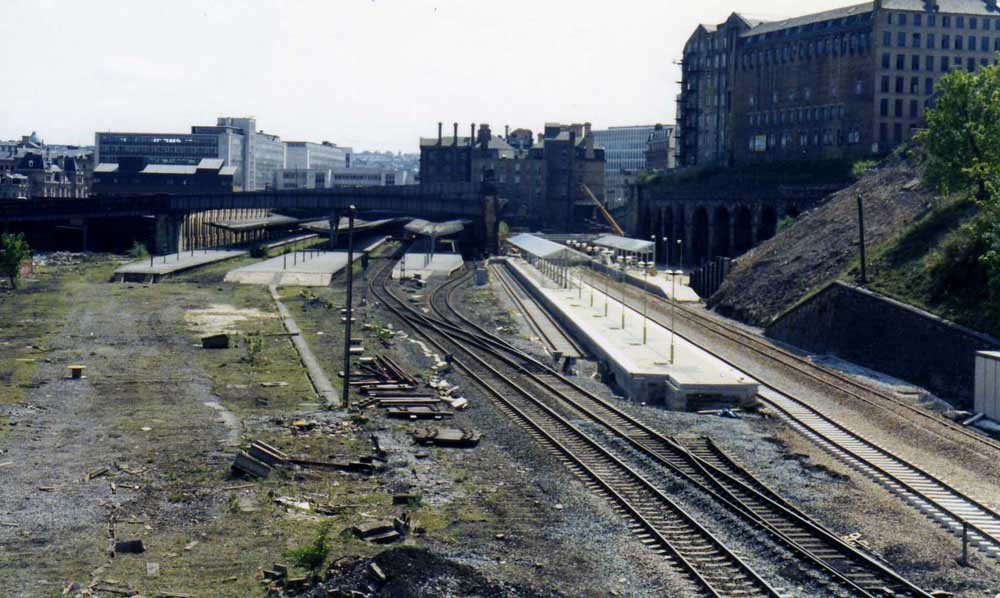
Close by the station was Bradford Valley Goods Yard, the entrance to which was via Manningham Junction. We would take the tripper jobs here, if we were there about teatime (16.30 - 17.30) there could be as many as four tripper jobs waiting to leave the yard. At the time there was a shunter 'Ginger' who would not ring you out of the yard at this time because it was considered the rush hour at Manningham, which comprised the sum total of two passenger trains per hour!
One night we were diagrammed for a parcels train to Stockport, the station activity seemed unusually quiet quiet, after waiting about twenty minutes my driver went up to the signalbox only to find the signalman suffering from a heart attack. The signalman made a healthy recovery but in waiting for a replacement signalman we were so late we could only get the parcels train as far as Leeds.
When the old station was bulldozed a number of cellars were opened up and found to contain a variety of LMS items; paperwork, cutlery, lamps and uniforms to name but afew, some was taken up by the NRM York but most went to the rubbish dump.
Bradford Exchange
Bradford Exchange (now Interchange) was the location 'shared' by the the former Lancashire & Yorkshire and Great Northern companies. It is over the former GN metals from Leeds that the Class 24/25's would have many workings, including the well recorded steam/diesel combinations towards the end of the steam era in this area.
I can remember my first trip to Bradford Exchange on 1974, the new station was just about complete, just some final trim work and embellishments remained. After I ran round the train I walked over the road to see the impressive original station, trying to imagine what it was like in its heyday (i.e. in the steam era). It was odd really because as you dropped down from Mill Lane Junction you could see the original station roof above the road bridge and the canopies of the new station. You almost got the impression you were going to be routed into one of the old station platforms, instead you entered up at the more modern and austere concrete structure. I also remember one time whilst laying over with an evening job noticing that the BR logo that was prominent on the front of the station had the panels in the wrong way round, the BR Arrows were backwards!

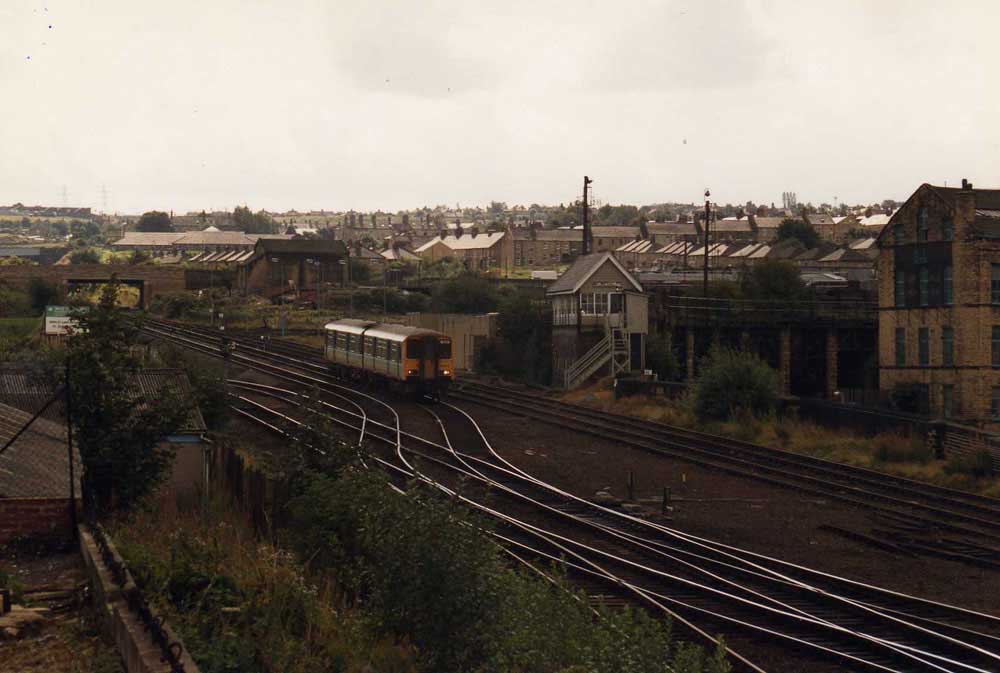
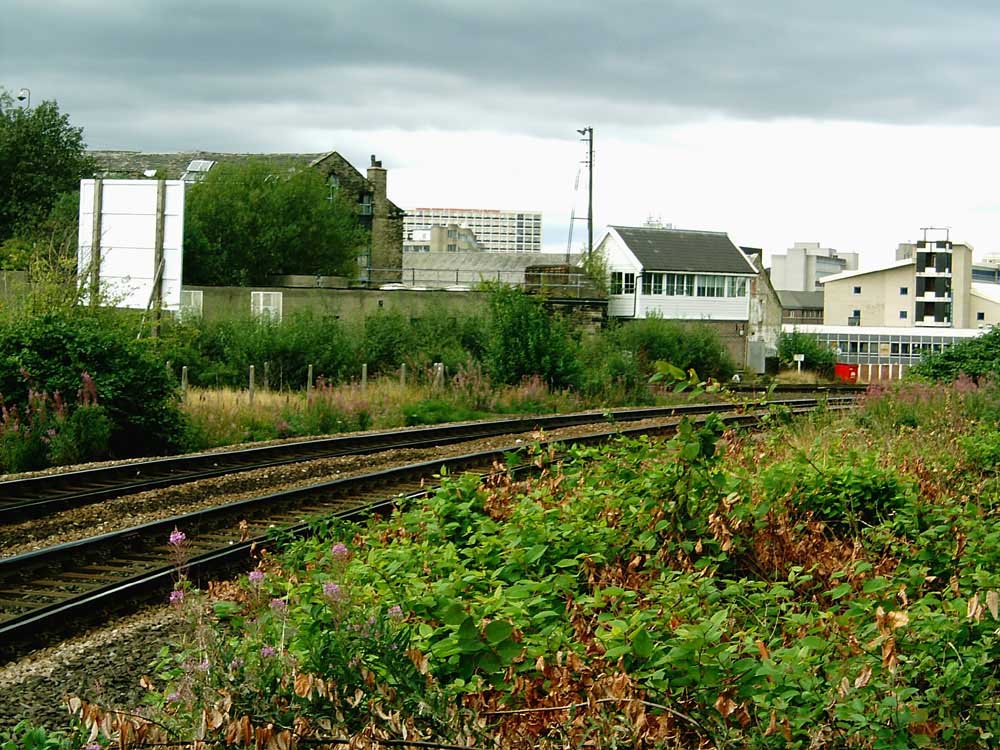
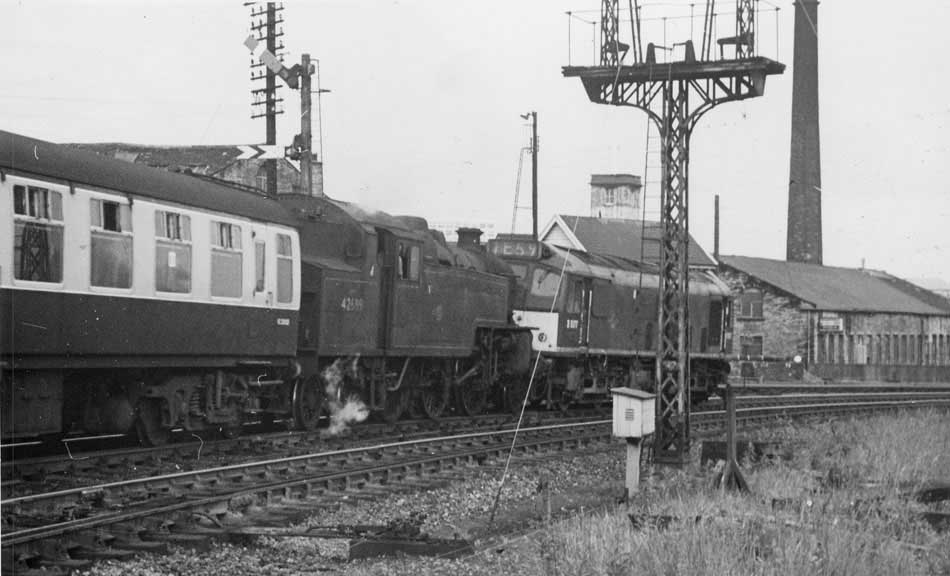

One afternoon at Holbeck three of us, driver, guard and myself were given a job of taking a Class 31 to Doncaster Works to pick up some DMU's that had been released from the Works after completion of repairs. On arrival at Doncaster West Yard there stood three 'twin' diesel multiple units, we coupled up and made our way to Bradford Hammerton Street. Hammerton Street depot was the remains of the L&Y steam shed which had been converted in the 1950's to house the newly arriving DMU's. The shed was built on level ground, but the yard was built on a bad incline, the mainline itself which ran past the shed was on a 1 in 44 gradient.
On arrival at Hammerton Street we entered the depot area with our diesel multiple units. The pilot would have to position himself in the yard so as to drop down onto the back of our train in order to pull it back up the yard which would then allow us to navigate back to the mainline and return to Holbeck. In starting this manouevre my driver recognised the Class 08's driver. 'Oh, this'll be good' he said 'Basher Deacons on the pilot'. As his name suggests Basher had a bit of a reputation, well he coupled onto the dieselo multiple units and shot up the yard like a rocket and then waited until we had made our way to the outlet signal to the mainline. While waiting for our signal Basher roared passed us in the opposite direction now headed for the depot. The gradient of the yard and Basher's generous use of the throttle led to only one result. With a big bang and a cloud of dust everywhere the diesel multiple units came into very heavy contact with the buffer stops at the end of the depot road. It appears the pilot was in airbrake mode whilst the units were vacuum braked only, gravity and the inadequate braking force of the Class 08 left only one result! A look at the units revealed a few minor repairs and some new buffers would get them all back in order. Basher got a ticking off from the Shed Master and we returned to Holbeck, another job well done!
Page added July 7th 2007.
Page last updated April 21st 2010.