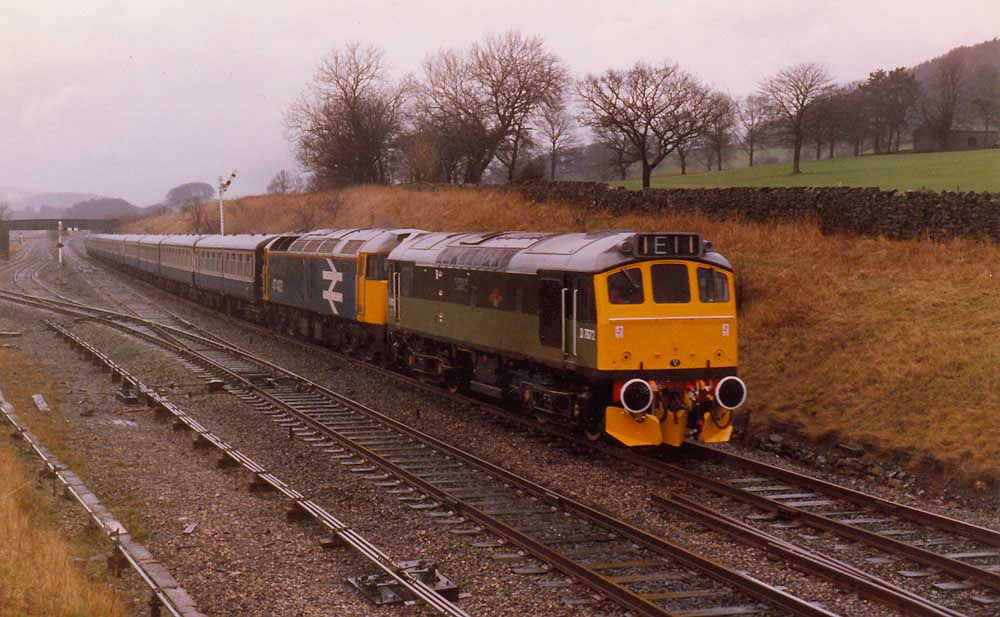
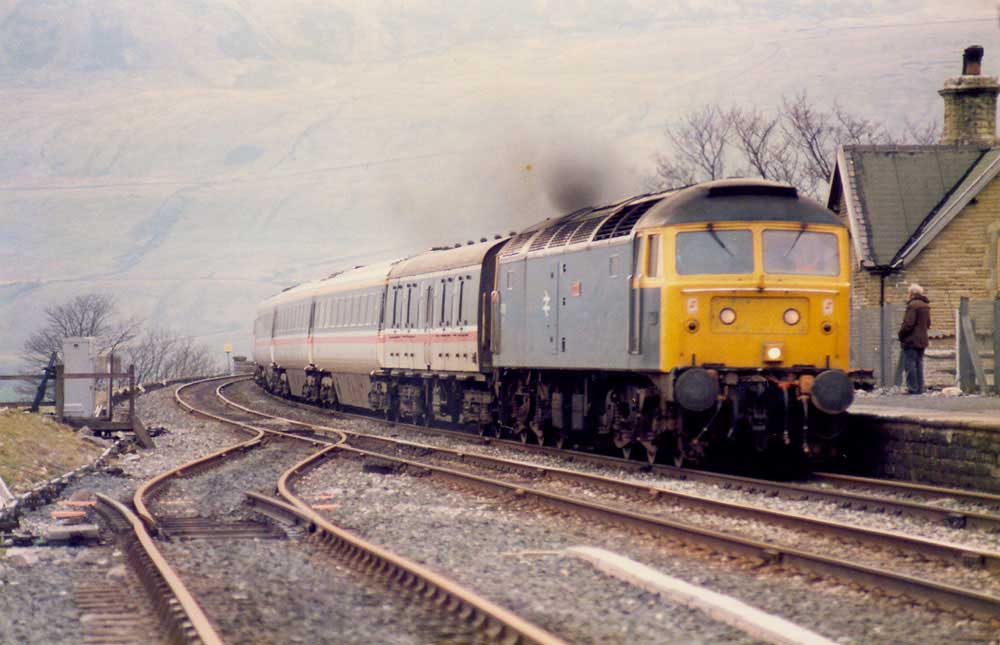
And this view features the human element, our storyteller Michael is in the cab of the Class 25, whilst the photographer, Stephen worked in a permanent way gang that covered parts of the Settle & Carlisle route. This page contains memories from both Michael and Stephen, those memories from Stephen are identified by (SH). And of course this view is of D7672 on its historic working over the S&C during February 1990. The view is taken from Settle Junction signalbox.
North West from Leeds
The plethora of lines radiating from Leeds allowed for the crews from Holbeck to gain route knowledge over many lines. This included perhaps one of the most famous lines in all of England, the former Midland Railway route that runs between Leeds and Carlisle, literally over the top of England. This page is anchored with the views taken by Michael during his time working over this route, along with views from other photographers, with memories provided by Michael of happenings over the route.
The splendour of the route is certainly not apparent as one waits at Leeds City for a service to Carlisle. The built up urban area that was a powerhouse of Victorian industry lingers for many miles on either side of the line. The route stays close to the River Aire and it is not until the train has passed beyond Keighley before the Yorkshire scenery so familiar with the Settle & Carlisle starts to unfold.
For the purposes of this text the 'Up line' refers to trains heading towards London, the 'Down line' services are heading northwards to Carlisle.
This page originally contained the route from Leeds to Settle Junction, this has now transferred to a new page which includes the route to Morecambe and lines to Bradford. (March 2007)
Some sample workings over this route:
Friday April 15th 1977
Book On 01.20 for Holbeck diagram 100
Locomotive 45053 with 12 coaches 377 tons
0S24 depart Holbeck 02.00, arrive Leeds City 02.10.
1S24 depart Leeds 02.37, arrive Skipton 03.20 (train originated from Nottingham).
Locomotive 40069 with 29 wagons 737 tons (7E64 Carlisle - Hunslet).
7E64 depart Skipton 04.25, arrive Holbeck 871 signal 05.15. This day the freight was going forward to Tinsley manned by a Sheffield crew.
Friday June 16th 1978
Book On 13.00 for Holbeck diagram 5Z96
Locomotive 25257 with 1 wagon (?)
5Z96 depart Holbeck 87 signal 13.33, arrive Carlisle 16.34.
Passenger home, Carlisle depart 18.20, arrive Leeds 20.44
Tuesday July 18th 1978
Book On 08.27 for Holbeck diagram 101
Locomotive 45040 with 8 coaches 253 tons
0S49 depart Holbeck 08.47, arrive Leeds City 08.53.
1S49 depart Leeds 09.15, arrive Carlisle 11.36 (train originated from Nottingham).
Mini bus: Carlisle depart 11.45, arrive Carlisle Holding Sidings 12.00 (holding sidings were basically Kingmoor fuelling shed).
Locomotive 45007 with 9 coaches 300 tons.
0M86 depart Carlisle Holding Sidings 12.48, arrive Carlisle 12.53.
1M86 depart Carlisle 13.23, arrive Leeds 15.46 (train arrived from Glasgow with two Class 27; arrival at Leeds was 14 minutes late, two ladies who had forgotten to detrain at Appleby, waited for connecting service at Settle.
Wednesday July 19th 1978
Book On 08.27 for Holbeck diagram 101
Locomotive 40107 with 8 coaches 280 tons
0S49 depart Holbeck 08.47, arrive Leeds City 08.53.
1S49 depart Leeds 09.15, arrive Carlisle 11.36 (train originated from Nottingham).
47404 was brought from Carlisle Holding Sidings to work 1M86 Carlisle - Leeds but was failed when coupled to train, traction motor blowers failed. 40175 was then brought from the sidings outside the signal box at Carlisle.
Locomotive 40175 with 8 coaches 283 tons (train originated from Glasgow).
1M86 depart Carlisle 13.44 (21 minute delay, arrive Leeds 15.46.
0L50 depart Leeds City 16.17, arrive Holbeck 16.27.
Settle Junction & Settle
Settle station - 41.5 miles from Leeds, 71.5 miles from Carlisle
At Settle Junction two route diverge, the Settle & Carlisle line beginning its famous climb to Ais Gill, whilst the former Midland Railway route to Morecambe & Heysham heads off to the west. Both routes were worked by Holbeck crews.

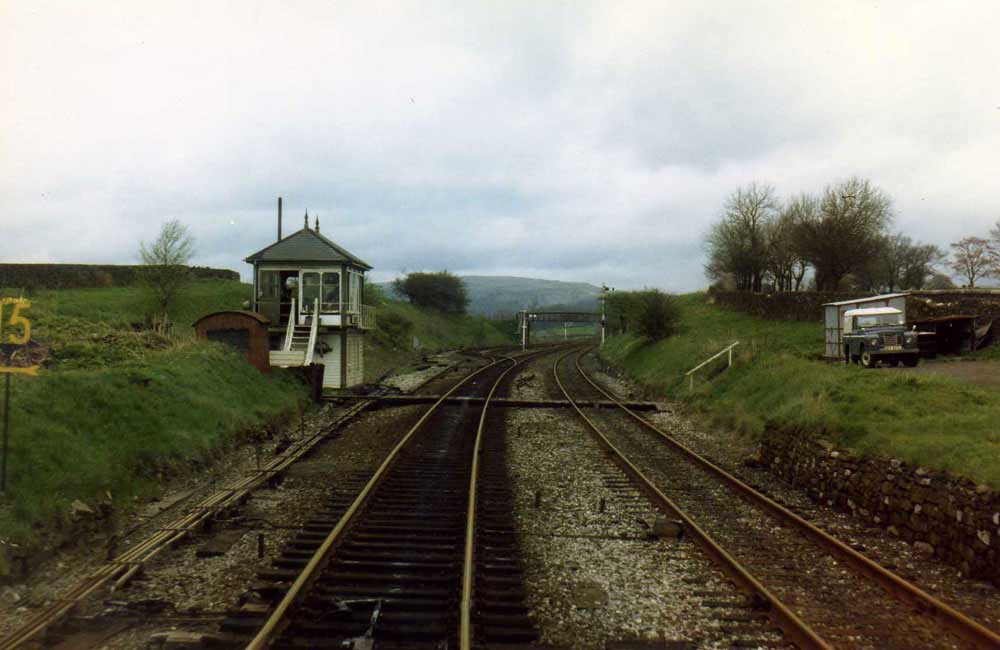
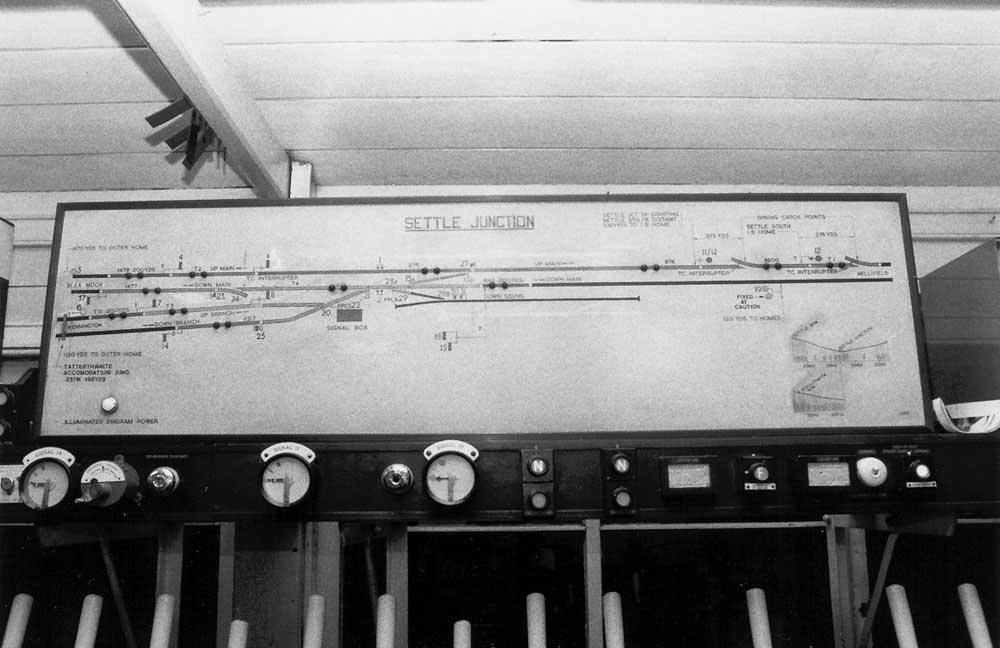
On the morning of December 7th 1978 Driver George Cuthbertson and myself were on the 6M75 Ribblehead job (diagram 608, the return working was the 6E54), the locomotive was 40003, which I remember well, because it was the first time I'd seen a Class 40 with a 'funny looking' train brake handle. This locomotive was 'vacuum only' and the brake handle was chrome with a 'trigger', which you squeezed to apply the brake, only the first ten of these locomotives had this type of brake handle. On relieving the Healey Mills men at Holbeck, George asked me if I was ok with the road, my reply was yes. George then said 'Remember, if you don't know, ask!' So off we went, all was going well until we reached Settle Junction where the distant was at caution, so I slowed the train down to come to a stand at Settle Junction's Home signal, the junction signal.
Now George was otherwise engaged, and when I looked around the signalman had just pulled off the 'Left Hander' to Morecambe, which was the wrong route. After a minute he put the signal back to danger, then pulled it off again, so I nudged George who could be a bit 'firey', so it was a gentle operation, waking him up! When he came to he asked me what the matter was, so I explained that the signalman kept 'pulling off the wrong signal'. And as I said that, sure enough, the signal came 'off' again for the Morecambe Branch, so George stepped down from the locomotive to go to the signal telephone, as I was watching he was holding the telephone at arms length from his ear! Within seconds he rammed the phone back into the socket and made his way to the signalbox. From where I was sitting in the driver's seat you could just see into the box, all I saw were two pairs of arms flying about.
After what seemed like ages, a very angry, red faced George came back to the locomotive, I sat there very quiet (unusual for me), and again the Left Hander came off for Morecambe. George went on to explain that we had a faulty wagon with the axles running hot, so we were to put it into the siding, which explained the reason for pulling off the Morecambe branch signal but as George had told the signalman, how on earth do we know what to do when you have apparently pulled off the 'wrong' signal. George went on to tell me the signalman was very very angry, ready to blow a blood vessel, he also told me not to look at him when we pass the signalbox. So on informing the guard in what we were going to do, we set about the shunt and eventually left the wagon in the siding. As we passed the signalbox the signalman came onto the verandah, he was in full voice, calling us every name he could think of, including some weird names that I'd have never heard of.
With the manouevre completed we coupled up to our train and with the correct signal set for the Carlisle line, off we went, passing the signalbox again, the signalman came out with all guns blazing, George, by now was very angry. On our return journey we were stopped at Settle Station, a signal inspector came onboard and began asking questions about the situation at Settle Junction earlier that morning. So George told him his version, the signal inspector went on to tell us that the signalman in question had suffered some sort of breakdown and had been taken to hospital.

(SH) During the early morning of Sunday May 26th 1991 the gang were required to go up to Settle to remove some rail defects in a section of long welded rail. This required the use of the welders to cut into the rail and then weld up the replacement section of rail. This was done by placing the welding pot onto the rail and heating up the material before dropping the weld from the pot into a mould attached to the two pieces of rail. I was the look-out so was some distance from the location of the welding job. After the welders had dropped the weld they placed the welding pot in the six foot.
One of the gang was coming my way, showing concern that the welding pot was bellowing out quite a lot of black smoke. Then in the blink of an eye there was a bright orange flash immediately followed by an almighty bang with sparks flying everywhere. This resulted in setting fire to the embankments on both sides of the track! This event was followed by the gang taking off their orange high visibility vests and using them to smother the flames. I walked up to the site of the explosion and found a crater in the ballast about eighteen inches deep with a circumference of six feet. In eighteen years on the railway I can say thankfully that is the only time I've witnessed such an event. Because of this I've been very cautious in handling warm welding pots.
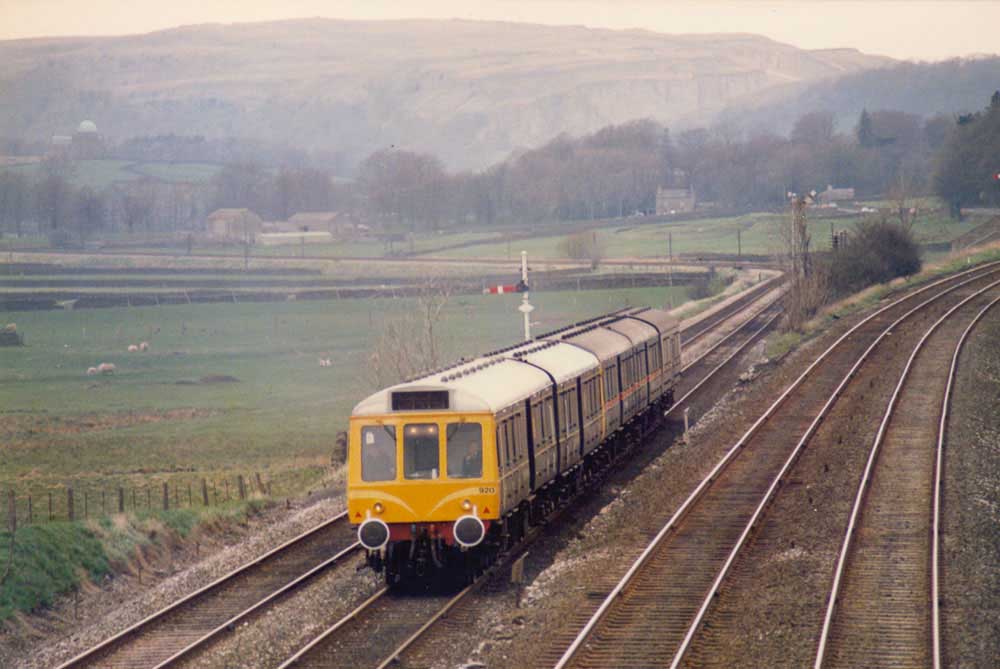
On a now long forgotten day sometime prior to 1977 we arrived at Settle Junction with our train stopped due to snowy conditions. After a short while I went up to Settle Junction signal box to sign the register in accordance with the Rulebook. Conversation ensued with the signalman and a can of tea was brewed. We were soon joined by my driver, in the mean time two Class 25's sandwiched between snowploughs turned up, our journey up the S&C looked like it was going to be heavily delayed. However after discussion with the signalman we were to be sent north via Shap, this was definately turning out to be an interesting day!
My driver knew the road to Carnforth, here we picked up a Carnforth conductor and set out for Shap and Carlisle. Our return was over the more normal S&C route, we had a Class 40. In many places the snow was a foot or so above the rails, you could hear the snow rumbling under the locomotive, my driver providing much assurance that we weren't about to come off the road - what a day that was, and no camera!!
On the southbound trip my driver had dipped into his memories of the route, including some tales going back to the days of steam. One in particular related to the obtaining of a Christmas tree by the train crew as part of the holiday decorations. This required the train to be stopped in section a little longer than normal, so that the tree might be 'acquired'. The next day an explanation was required for this, the driver explaining he'd sneezed and lost his teeth, so they stopped and went back to look for them!
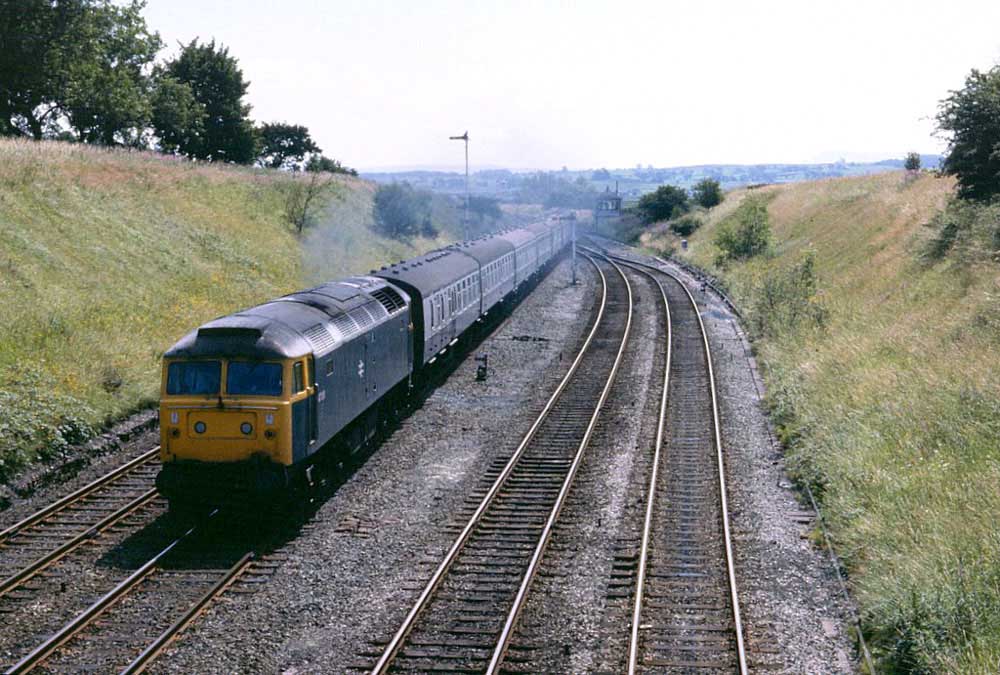
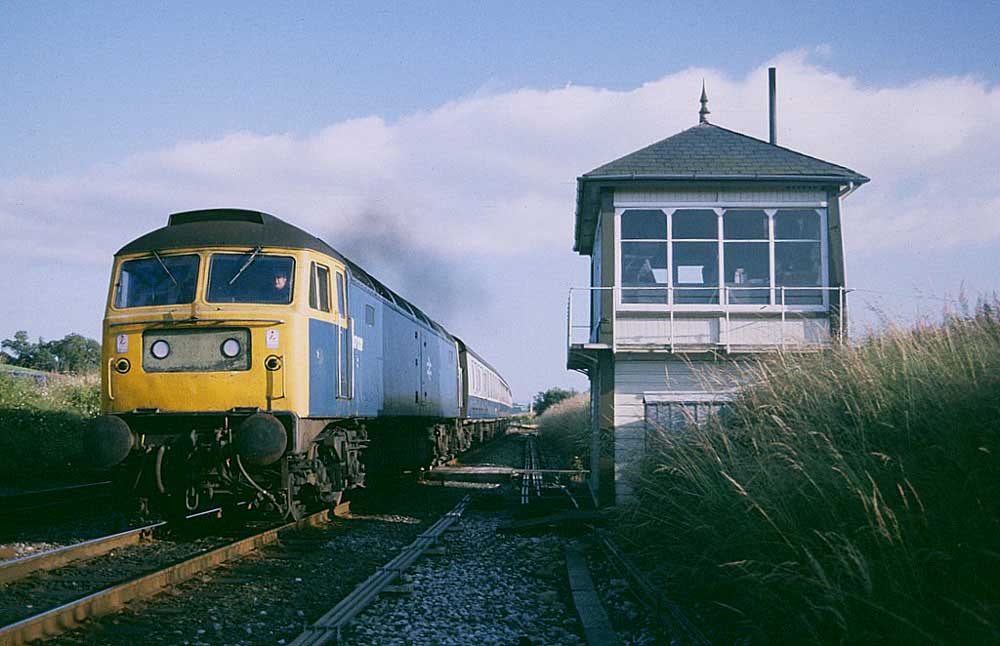
Just another sunny day at Settle Junction - July 29th 1981.
Wednesday July 29th 1981 dawned clear and sunny across much of the United Kingdom. Which was perhaps a good thing for the estimated 600,000 people lining the streets of London, and the estimated 750 million TV viewers tuning in to watch the wedding of Prince Charles and Diana Spencer. Although it had been declared a public holiday the railways still had a job to do and these views taken at Settle Junction show that it was pretty much business as usual.

Helwith Bridge
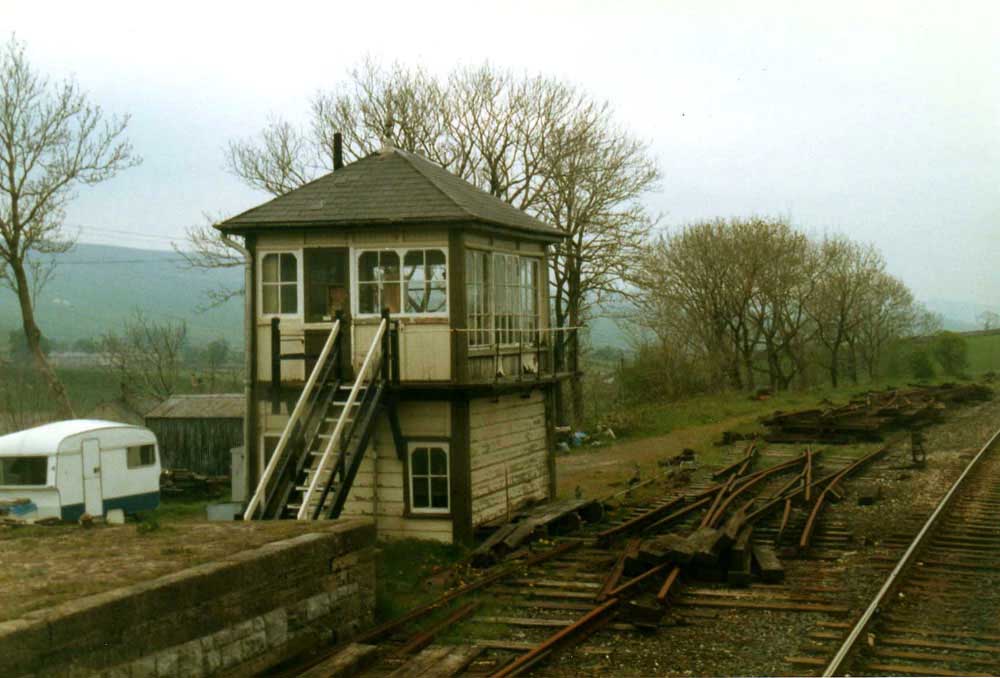
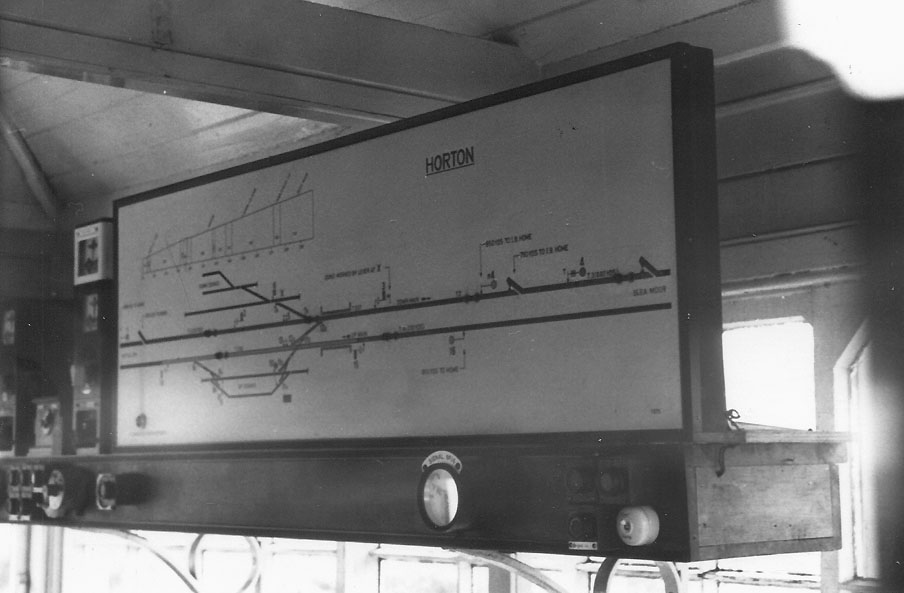
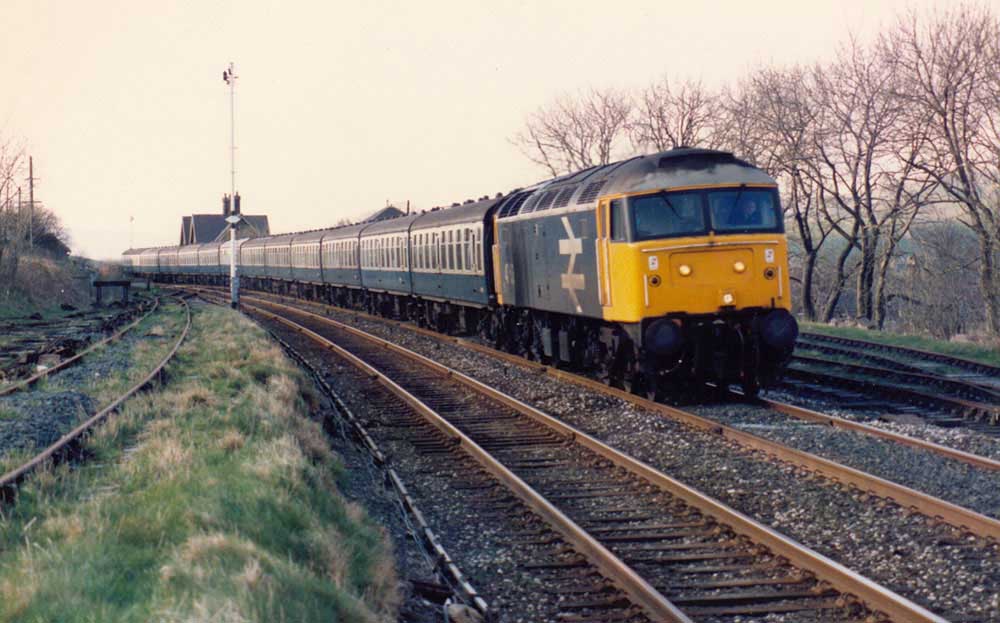
Horton-in-Ribblesdale
46.5 miles from Leeds, 65.5 miles from Carlisle
After leaving Settle the line takes a generally northerly route following the ever diminishing River Ribble.


Ribblehead
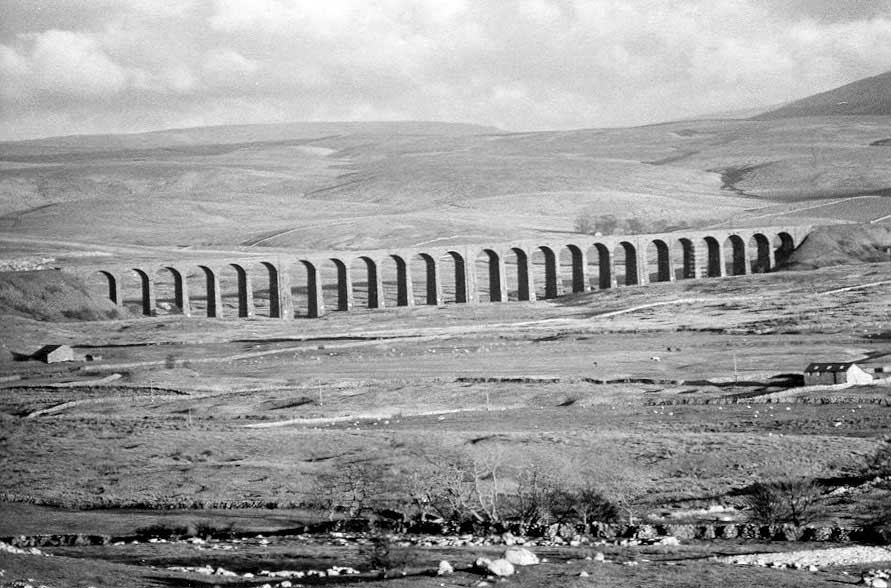
The viaduct at Ribblehead is the largest visible feature on the Settle & Carlisle route, however when scaled against the surrounding geographical features of Whernside, Ingleborough and the rolling expanses of moorland this testament to Victorian engineering is brought down to size somewhat.

A number of trains were operated by British Rail for their own internal purposes, these frequently proved to be some of the heaviest operated on BR and featured a great variety of rolling stock. One such train is detailed below, that of a roundtrip ballast working from Healey Mills to Ribblehead. This was a daily weekday working.
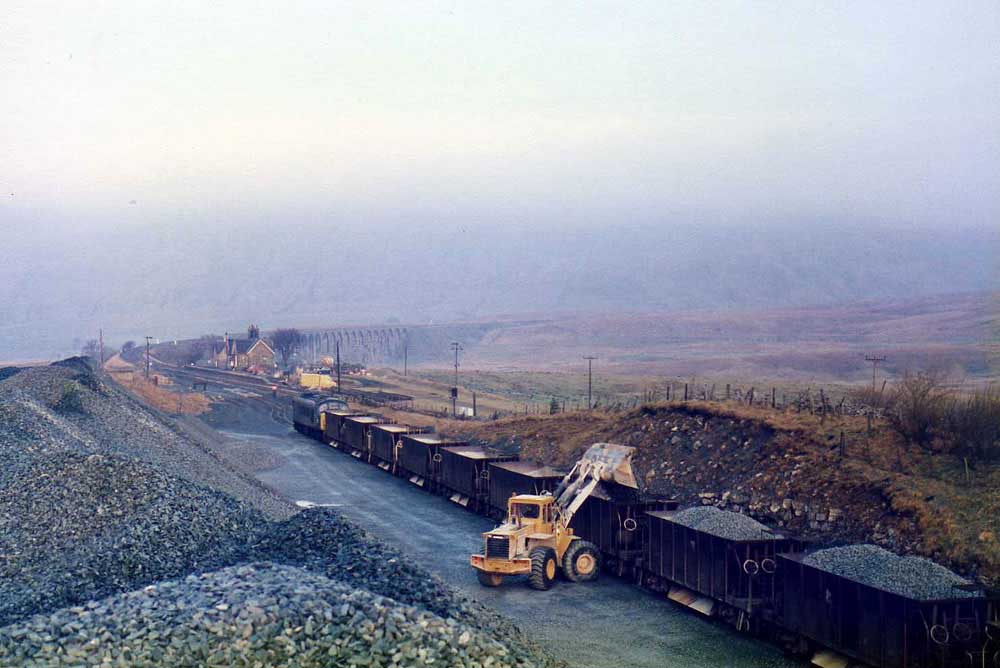
This ballast working began in the early hours of February 2nd 1985 with the booking on of a Healey Mills crew at Healey Mills at 02.50. Departure from Healey Mills down departures was at 03.20, arriving at Hunslet Down Yard at 04.00 with the train held here until a Holbeck crew became available. Which of course was myself, having booked on at Holbeck at 05.15 under Diagram 317 and walking up to signal 87 (outside Holbeck under the viaduct), relieving the Healey Mills men here at 05.40. The Healey Mills crew went back home 'on the cushions'. It took but five minutes to change crews and then we were off with the 6M75 to Ribblehead with twenty one empty ballast wagons. Arrival at Ribblehead was at 07.30, reversing into the yard west of the running lines where a loader began filling the ballast wagons. Departure time depended on how quickly the ballast wagons could be filled.
On this day departure was at 10.00 as the 6E54 back to Healey Mills. However it was first necessary to run north to Blea Moor to be able to run round the train. Blea Moor was reached at 10.10, departing at 10.25 and reaching Leeds 871 signal at 14.15 where a Healey Mills crew were waiting to relieve us. Then it was a quick walk back to Holbeck depot.
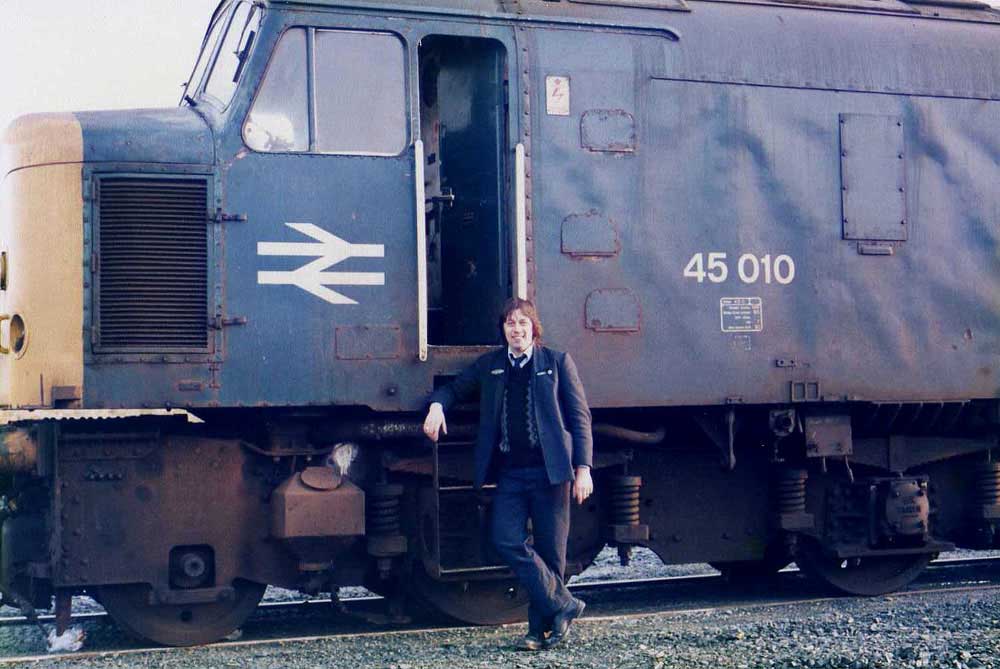
The bottom view shows the typical uniform worn by the train crew during the 1980's, some of the older drivers still preferred the 'flat caps' & 'boiler suits' reminiscent of the steam era. On one red hot summer's day during 1976 Michael had arrived at Birmingham New Street to pick up a Leeds bound service. After the train stopped the driver stepped out of the cab dressed in Hawaiian shirt, shorts and sandals. This was a problem because we had a Traction Inspector with us who was none to pleased by the attire of this driver from down south. He got a telling off from the inspector, but a shortage of train crew at some depots caused management to look the other way, but over time management took a firmer line in the attire worn by their train crews. And as Michael points out why wear out your own clothes when the company provided you with a uniform.
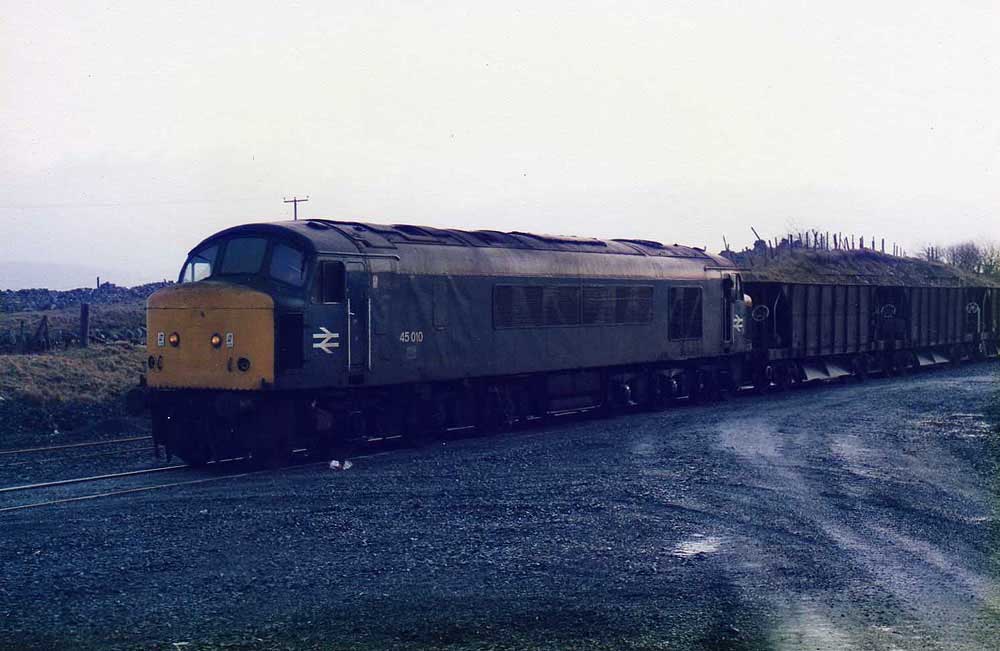
The morning of February 2nd 1985 proved to be a little misty in the Yorkshire Dales with a weak morning sun breaking through as 45010 arrived at Ribblehead sidings to load up twenty one bogie wagons of ballast for delivery to Healey Mills Yard. The locomotive and crew would spend about two and a half hours here whilst the train was loaded, allowing Michael to obtain a few views of the operation, including a fine self portrait. Unfortunately for 45010 time was running short, by the end of the following month (March 28th 1985) it would be retired and put out to pasture at Toton.
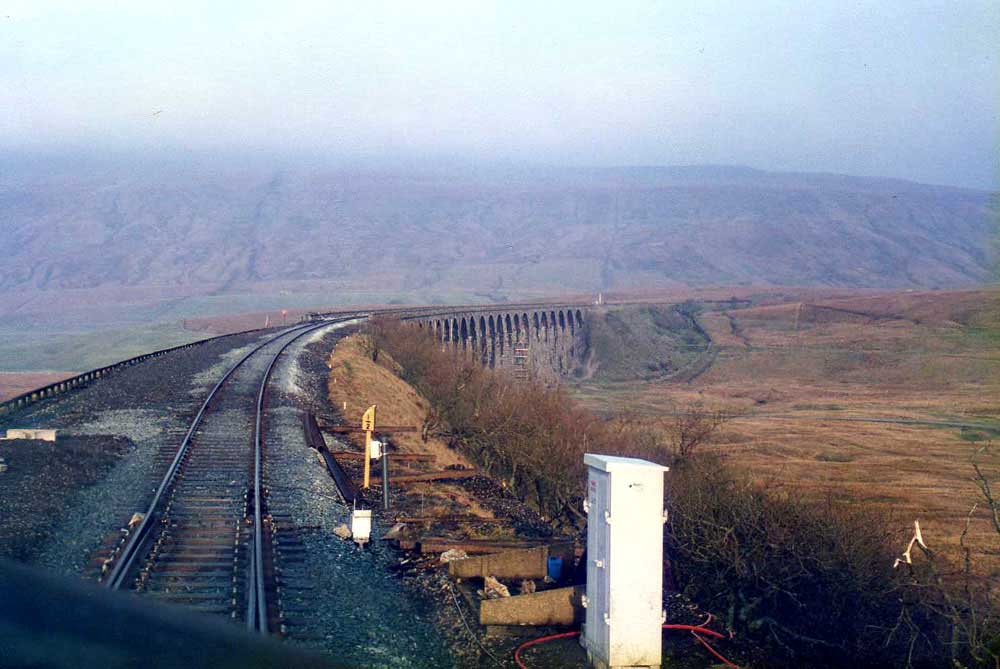

Ribblehead Viaduct


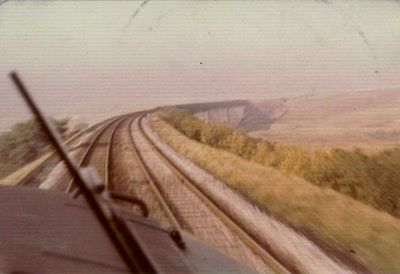 | Another view of Ribblehead viaduct, again a view looking northbound, this time from the cab of a Class 40. The view is taken by Ian Winter, also a secondman from Holbeck depot. It dates from a hazy day in 1976 when the line across the viaduct was still doubletracked. Photograph courtesy Ian Winter |
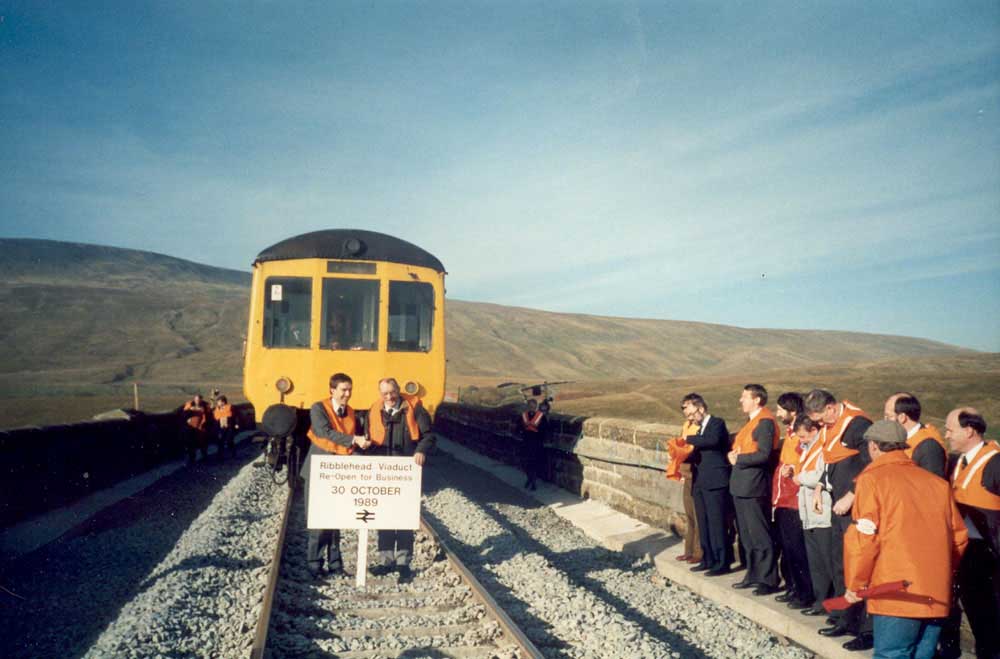
(SH) In October 1989 British Rail set about the task of waterproofing Ribblehead Viaduct which required closing the line down for several days. For me it was a chance to finally get to work on this famous structure. Six months earlier I had joined the railways, my first position was with the Clitheroe permanent way gang, and I was now coming to the end of my probationary period, and determined not to let myself down. Little did I know that this shift was going to prove to be a tough & memorable one.
It was the Sunday afternoon of October 29th and having picked up the gang at Clitheroe it was off to Ribblehead station. On arrival things seemed to be going well, getting out of the crew bus we were required to walk the last stretch to the viaduct, the track had been lifted so there was no shuttle service of any kind!
When we reached the site the ballast was being levelled and we were instructed that the crane being propelled by a Class 47 was to bring the 60ft track panels to our location, we would then bar the panels into position and plate them up.
By now it was starting to go dark with the rain getting harder and the wind getting stronger. I was instructed to go to Skipton to pick up a driver and guard to relieve the current crew on the Class 47. So it was back over the mostly darkened viaduct, the temporary strip lights on the parapet walls made the trudge back a little easier. Coming with me back to Skipton were the crew off the Class 47. I remember the guard had to catch a train from Skipton back to Healey Mills, telling me to put my foot down and step on it. Always obey the last order!! I can still see his face as he left the crew bus outside the front of Skipton station. His hat was at a funny angle and he seemed to be walking sideways, a bit like Norman Wisdom, his comments to me were very colourful!
With the replacement crew on the bus it was now a steady run back to Ribblehead, with the wind getting up and the rain lashing against the windscreen. Not the best of roads to be driving on. Back at Ribblehead I donned my wet weather gear, which was clearly not up to the job demanded of it. The rain gear which was not easy to move in consisted of a heavy long plastic orange coat and a sou'wester hat.
Walking down the track from the station to the viaduct I could feel the wind blowing me about, definately rough weather. The strip lights on the parapet walls were visible, highlighting the rain blowing over the walls as it hit the viaduct from the west. It was like looking at a wind tunnel although when I got onto the viaduct I couldn't feel any wind or rain. Now I've heard the tales on the Settle & Carlisle about a man falling off the viaduct only for the wind to blow him back on the other side, and of the turntable at Garsdale when the wind got hold of an engine which was being turned, the spinning locomotive only being stopped by the shovelling ballast into the turntable pit. I was now beginning to wonder whether there was any truth in these stories as this was a damn rough night.
Continuing through the wind & rain the distant orange glow of the brake van on the back of the ballast train came into view. To anyone who has ever seen a brake van and thought they were basic and uninviting, well trust me this one was a very welcome sight. The gale force wind assisted me in climbing on board the brake van. Opening the door I was greeted by the lads who had got the stove going and were keeping warm between sharing shifts of dropping the ballast. The biggest surprise however was to be greeted by a dog curled up in front of the stove keeping warm. A quick cup of tea, and then it was out onto the back of the ballast wagon to drop some stone.
Somehow the parapet of the viaduct had minimised the full force of the wind & rain but climbing up onto the ballast wagon brought me into the full fury of this stormy night. The wind and rain was really lashing at my face as I rode up and down the track turning the wheel on the hoppers to let the ballast out, the ploughs on the brake van were used to level the ballast. The job was running late and by the time we got back to Ribblehead station it was 00.30 on the Monday morning, three hours behind schedule. The Ribblehead gang were based in the then decrepit Ribblehead station and the last I saw of that dog was when one of the Ribblehead gang lads put it in the station building and locked the door behind it and said "We'll see it tomorrow morning and find its owners."
I still don't know to this day what happened to that dog so if any of the then Ribblehead gang reading this or anyone else who knows then please let me know! As for me I passed my six months probationary period with flying colours - I earned my stripes that night, and have worked on the railways for nearly 18 years, now working on the former Midland Railway at Chinley. I feel honoured and privileged to have been able to spend five years of my career working on the Settle & Carlisle line.
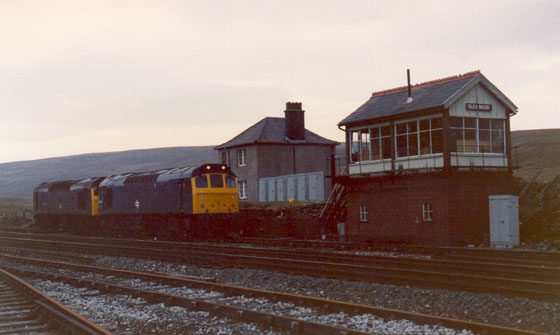
Blea Moor
53.5 miles from Leeds, 59.5 miles from Carlisle
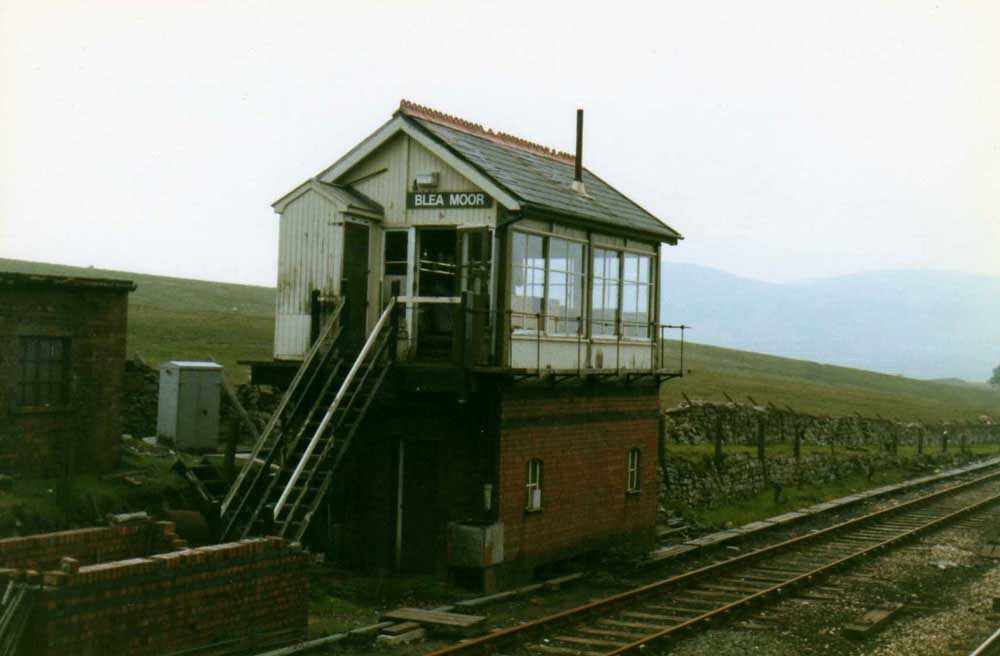
The remoteness of Blea Moor signalbox has some disadvantages, not the least of which was that it had no supply of running water, all water required by the signalman had to be brought in by rail. One such working involved Holbeck crews working an early morning empty DMU from Leeds to Skipton. Here the Leeds guard was swapped for a Skipton guard and the loaded water cans were taken on board. The DMU continued on empty to Blea Moor where the loaded cans were exchanged for the empties. The return run south was an all stations to Leeds. I well remember one passenger joining at Ribblehead and asking if the service would be making a profit. The answer was a definate yes, by Skipton it was standing room only and by Keighley the guards compartment would be filled up too! Even today this is a profitable service frequently using two 156 units.
On one trip up to Blea Moor it was a bitterly cold morning, when the wind seemed just to pass right through you. On reaching Blea Moor I walked backed to the guards compartment to find the Skipton guard huddled up around the very small heater with his heavy coat on - the main heating had failed. Which was not noticed by me since the cab heating comes directly off the engines. The southbound trip was made with the guard thawing nicely in the cab, everyone else got a free ride.
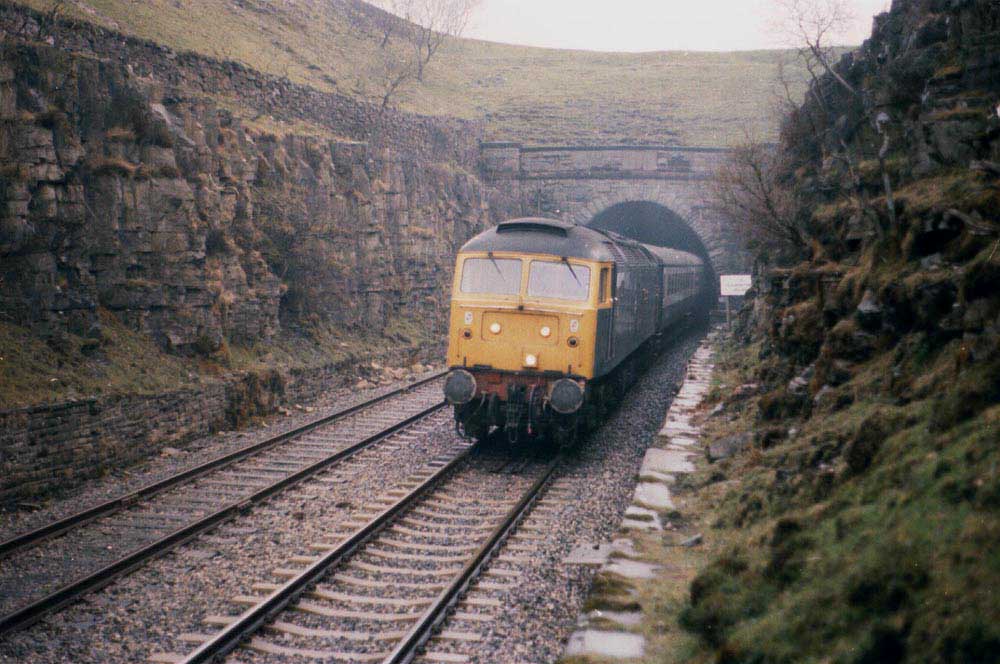
Blea Moor Tunnel
Dentdale
Dent station - 58.5 miles from Leeds, 54.5 miles from Carlisle
The daily humdrum routine of most any job is occaisonally broken by events that'll be remembered long after that day has been consigned to history. One such day was back in 1975 whilst we working diagram 101 (1S49 north, 1M86 south). We were on the down working with an unidentified Class 45 and had just burst out of Blea Moor tunnel on the climb to Dent Head and Rise Hill tunnel. Both myself and Driver Craven noticed an odd sound apparently coming from the locomotive, though we could not immediately pinpoint where it was coming from. Driver Craven looked back down the locomotive from the driver's window, but could see nothing amiss. He then started shouting 'Come here Dan, look at this'. I opened the cab door, we were doing about 60mph - I looked across Dentdale and saw a Vulcan bomber, which appeared to be below us, heading up the valley. A memorable sight, one that'll be treasured for ever.
On another trip we were mixed up with some of the Settle & Carlisle Centenary celebrations, consequently there were many, many enthusiasts and photographers covering the line. Even the well known Eric Treacy was this day at Appleby. Driver Dent had taken the down leg without incident, on the return he asked if I wanted a go, of course 'game on' I replied. Our vacuum braked Class 40 was not drawing the crowds as much as the steam locomotives that were working the line this day and on the southbound leg there were still many people about the line. Somewhere between Dent station and Dent Head viaduct we spotted a photographer with his tripod and camera in our four foot. On swinging on the horn the photographer beat a hasty retreat to safety, but the Class 40 claimed one camera and tripod that day, quite where it ended up we know not!
Years ago coming back from Carlisle with a passenger service bound for Leeds the Class 31's engine shut as we passed Dent Station, I went into the engine room, checked the gauges and found we had run out of fuel! Further investigation revealed there was a problem with the fuel system and a leaking gasket. So the decision was made to free wheel to Settle station, there was enough main air available to allow us to do this. The locomotive could have been failed there and then at Dent but by trying to get as close to Settle Junction as possible would allow the rescue locomotive from Skipton to reach us quicker. This would also minimise the amount of 'facing line' running that they would have to make, stopping at Dent would also required running 'facing line' through a couple of tunnels (not good). To go beyond Settle Junction to say Hellifield would have interfered with two lots of trains, firstly the Carlisle's and then Morecambe's, I was later praised for the choices made. The rescue locomotive manned by Skipton men took the train forward to Hellifield where the passengers, myself and the guard joined a Morecambe - Leeds working. The failed passenger train with its Skipton crew returned north to Carlisle!
It is reported that during the heavy snows of 1947, the snow at Dent was so deep it reached to the top of the telegraph poles. During this period of immense drifts one pole was adorned with a Mickey Mouse figure, which much later could be seen in an archway of a house near Settle station.
Garsdale
61.5 miles from Leeds, 51.5 miles from Carlisle
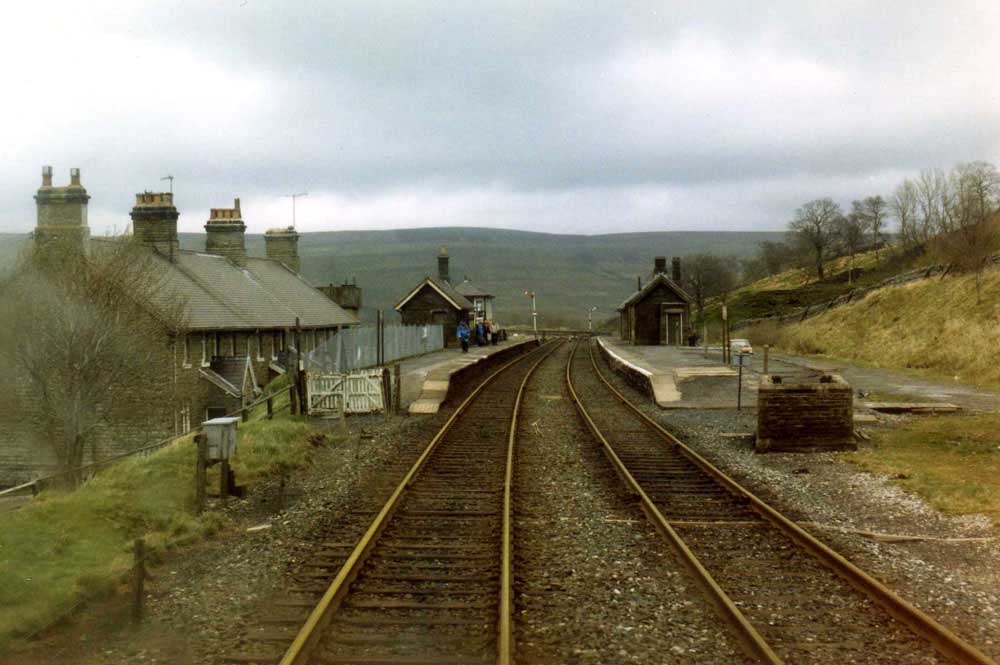
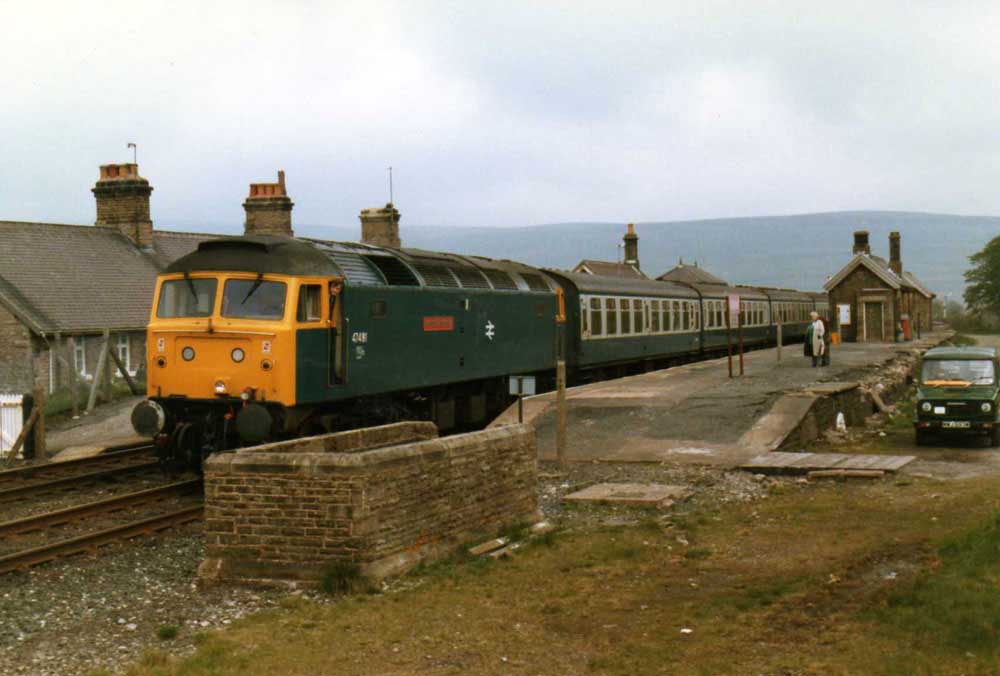
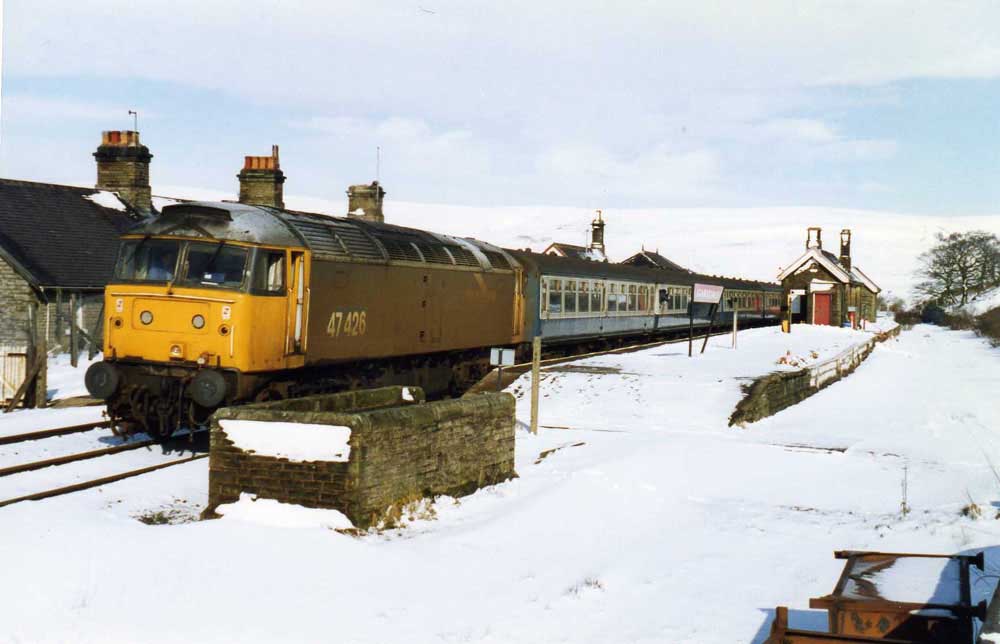
The views below give little indication of the importance once held by Garsdale (formerly Hawes Junction). The small engine policy of the Midland Railway led to the doubleheading of most expresses over this route from Hellifield in the south or from Carlisle in the north. Once the climbing had been done the assisting locomotives were removed at Garsdale and sent back light for the next job. All this activity could make Garsdale a busy place, even requiring a stockaded turntable - required to combat the local Helm Wind which if the conditions were right could spin a locomotive round on the turntable.
Garsdale was also the junction for the short Midland branch to Hawes.
The highest water troughs in the world were also located near Garsdale, these were once steam-heated to combat the cold weather, not surprising at an elevation of 1,145 feet.
Dandry Mire Viaduct
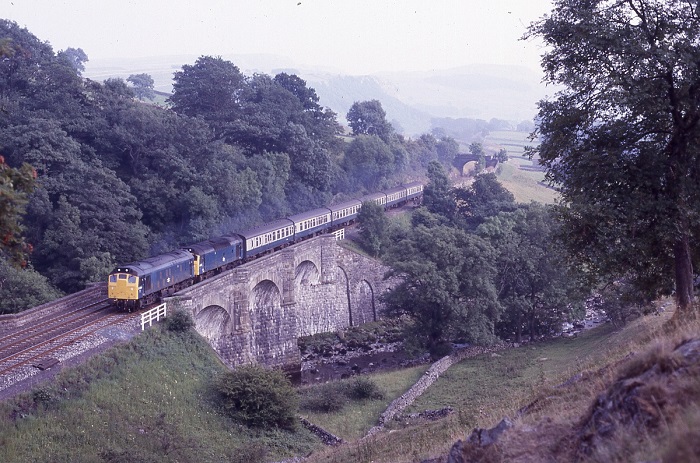
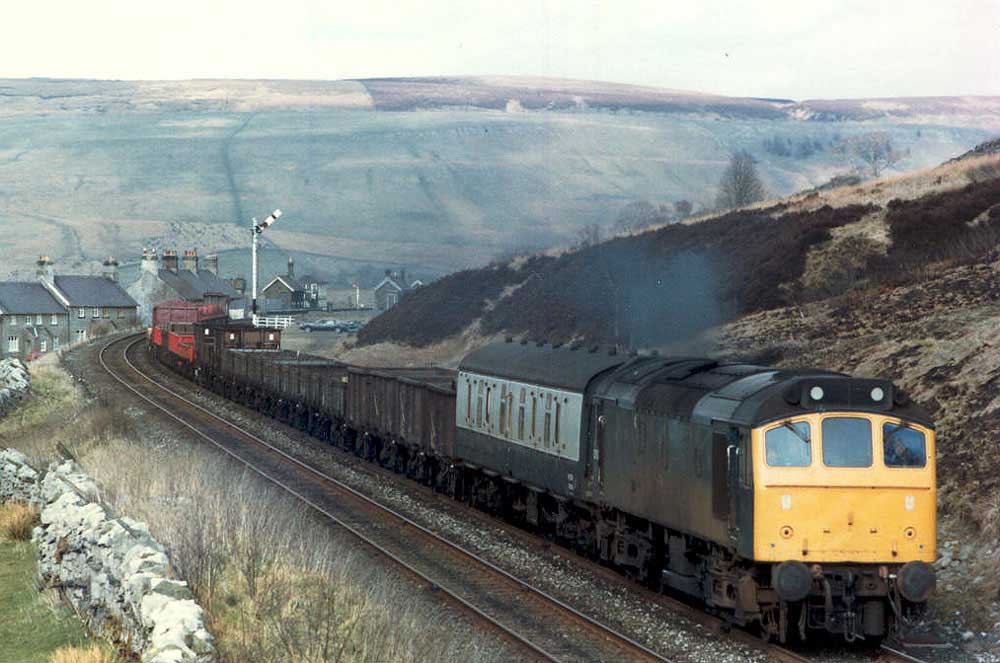
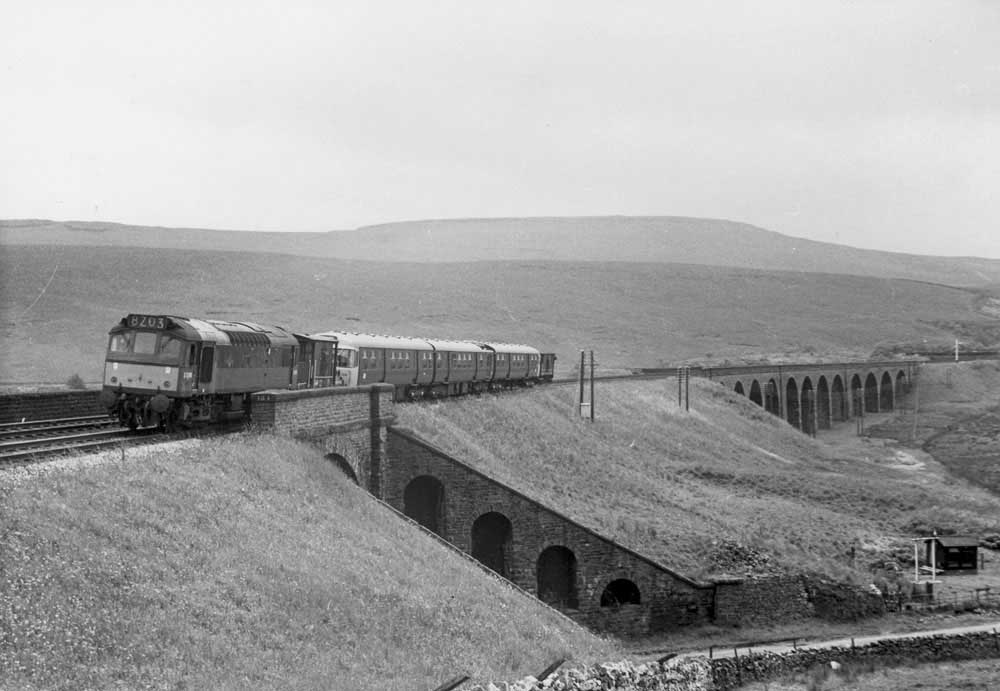
Shortly after leaving Garsdale the line takes a curve to the left crossing Dandry Mire viaduct. An embankment was planned for this location but the local bog kept swallowing the material dumped to create the embankment. In the photograph below the yard at the north end of Garsdale station can just be seen, whilst to the left of the locomotive & just visible in the background is the former Midland Route to Hawes which lost its passenger service in March 1959.
Ais Gill
64.7 miles from Leeds, 48.3 miles from Carlisle
For the northbound train the summit at Ais Gill marked the end of their climb, once past this point the railway descends into the valley of the Eden, remaining on the west side of the river until reaching Great Ormside. From here the railway would stay close to the River Eden with its easy grades on into Carlisle.
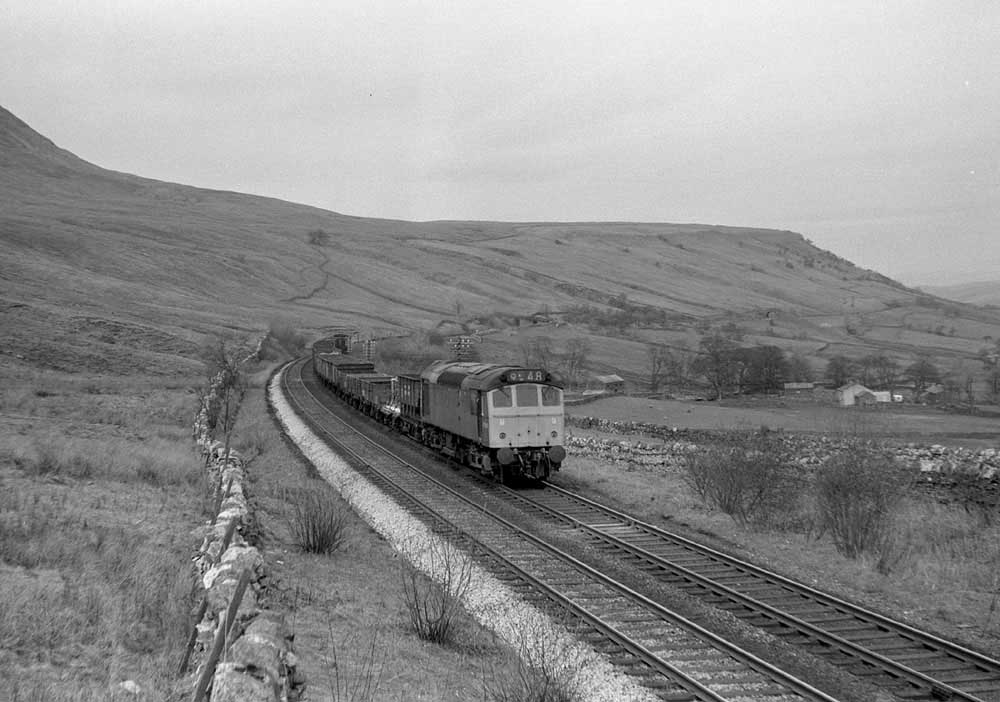
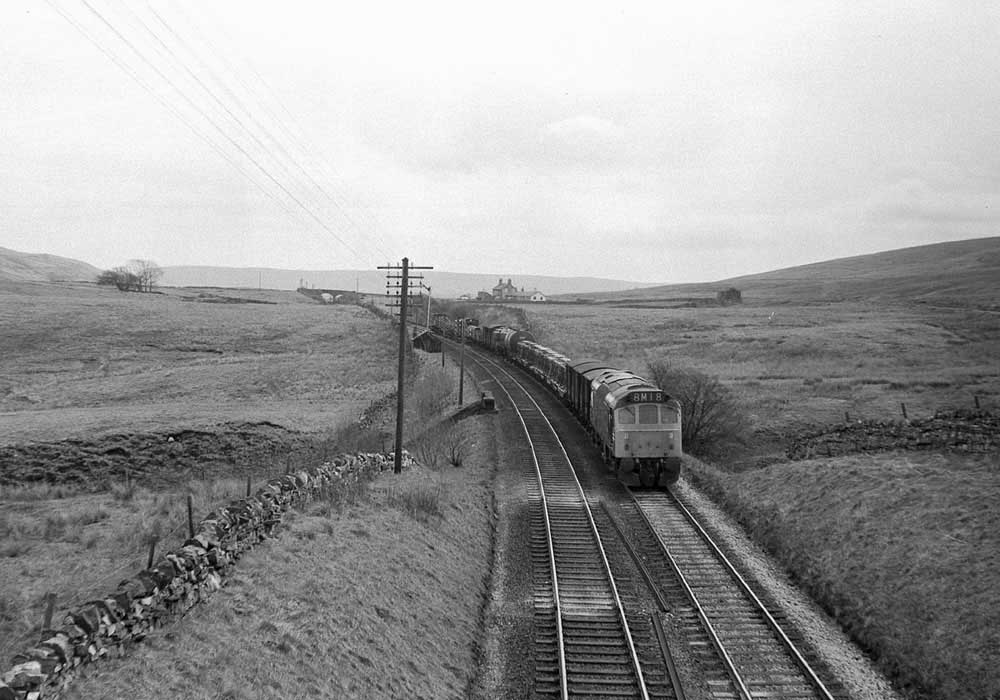
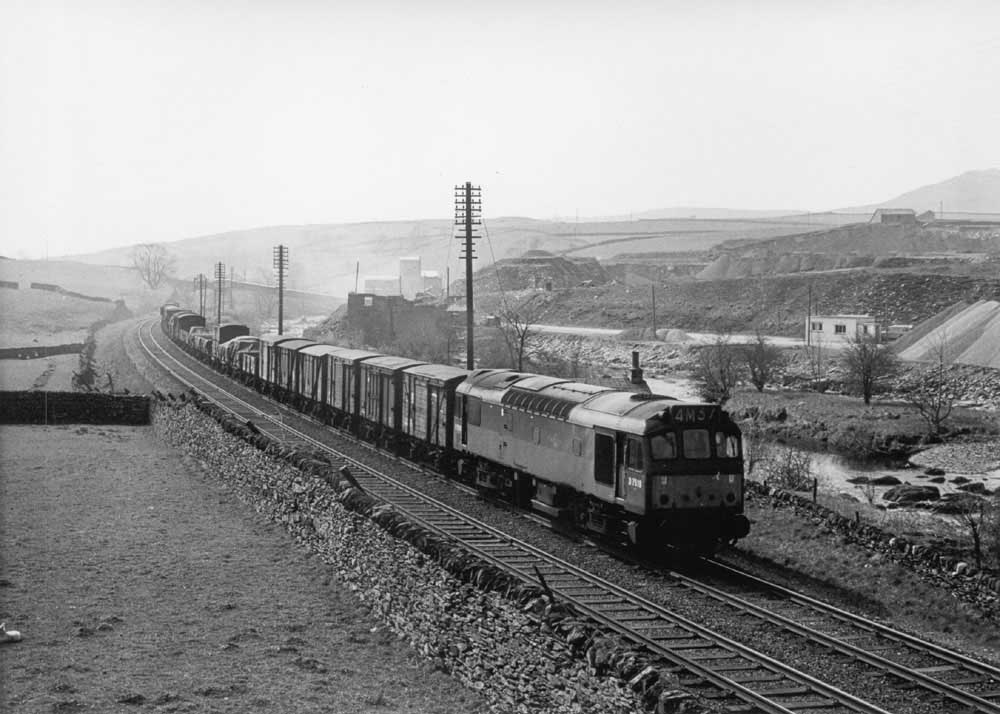
Visible just to the right of the most prominent telegraph pole is the distant signal for Ais Gill signalbox. In steam days the drivers and firemen called this signal 'the star of Bethlehem' - at this point fireman were able to put down their shovel and have a rest after the hard slog up to Ais Gill summit. On one trip whilst re-learning the Carlisle Road we were accompanied by a driver who's home depot was Ipswich, refered to by some some of us as a table top railway (one with no hills). The summit at this time still had the prominent board displaying the height above sea level, explaining to our Ipswich friend that this was not the phone number for Ais Gill signalbox but the altitude and was he OK with his breathing being so high amongst the clouds. His reply was way to colourful!
Kirkby Stephen
71.5 miles from Leeds, 41.5 miles from Carlisle
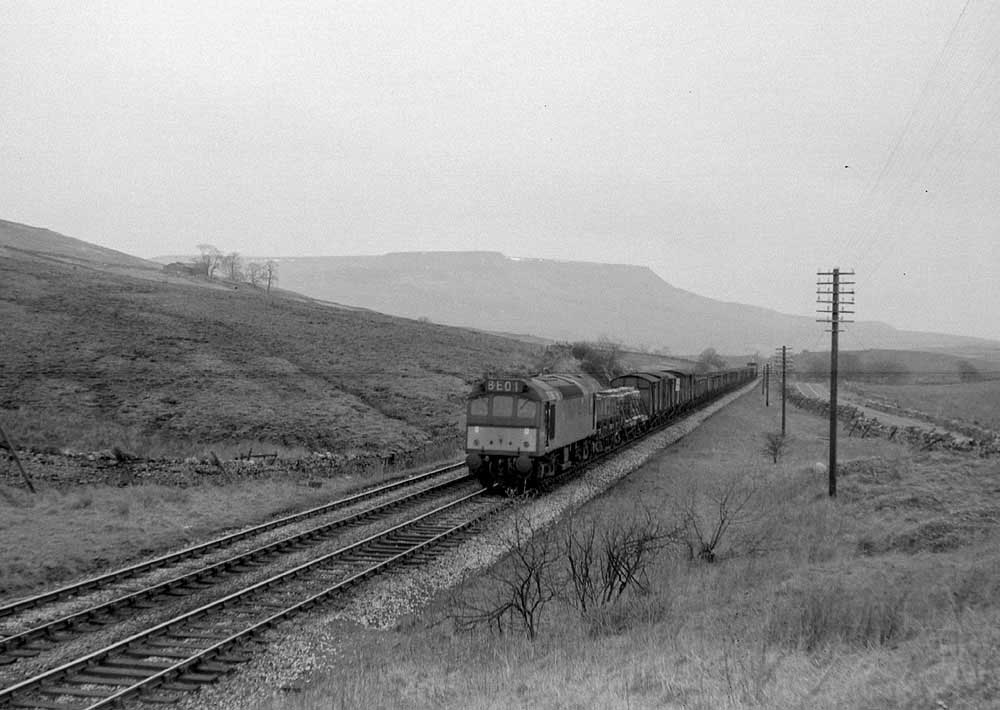
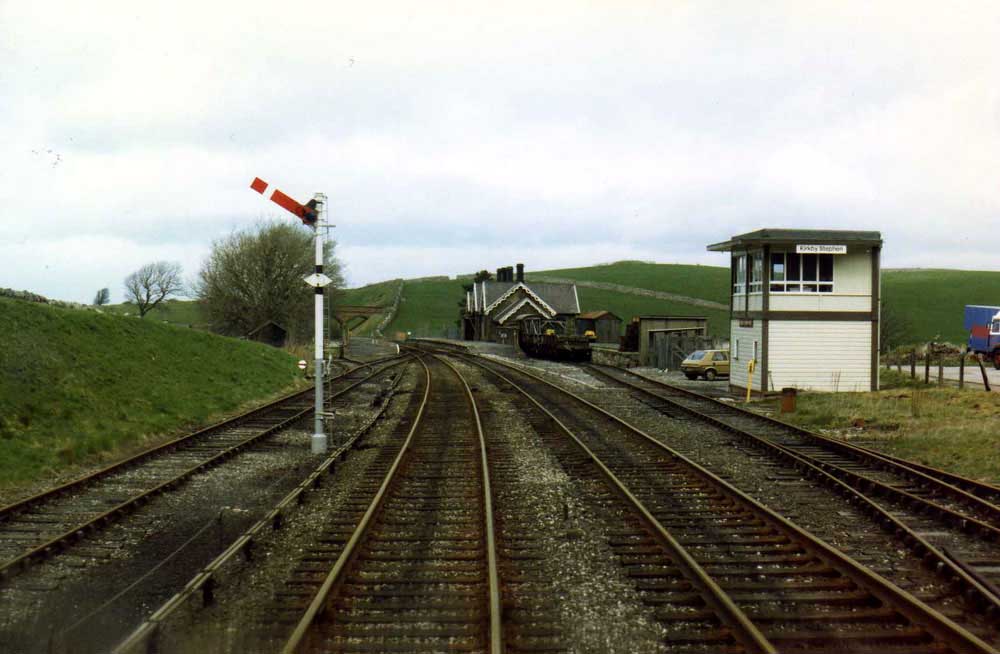
In dropping down to the valley floor of the River Eden the railway did not give up its elevation quickly. Hence although the Midland Railway gave Kirkby Stephen a station it was situated a short distance from the village and required a stiff climb to reach it. None of which is readily apparent in the views of the railway as it passes through the station.
Griseburn
77 miles from Leeds, 36 miles from Carlisle
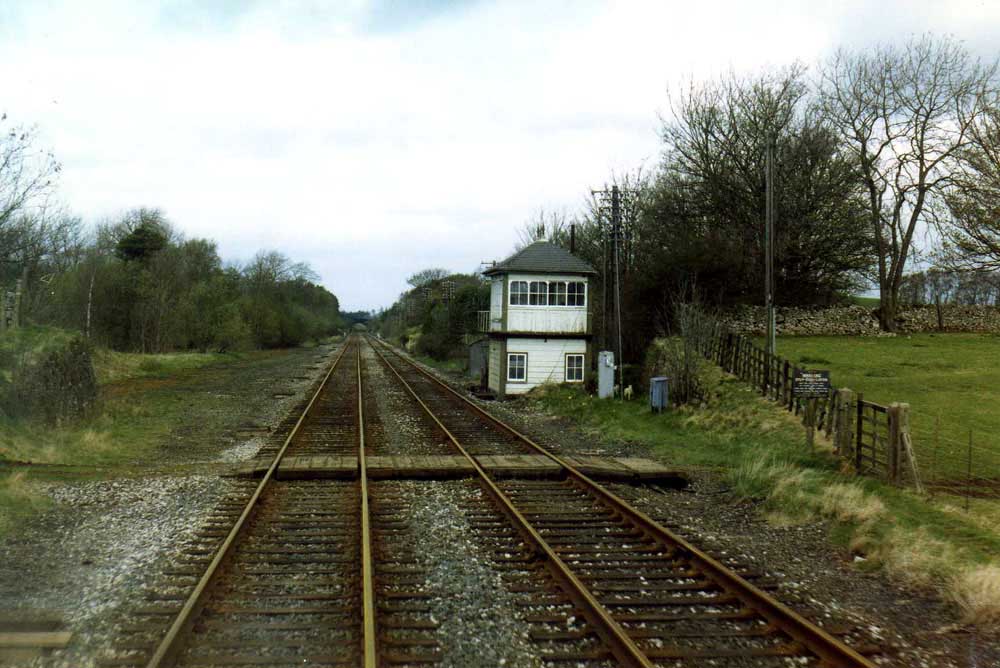
Appleby
82.2 miles from Leeds, 30.8 miles from Carlisle
The Settle & Carlisle line did not pass through any significant centers of population, Appleby was perhaps the largest on the route.
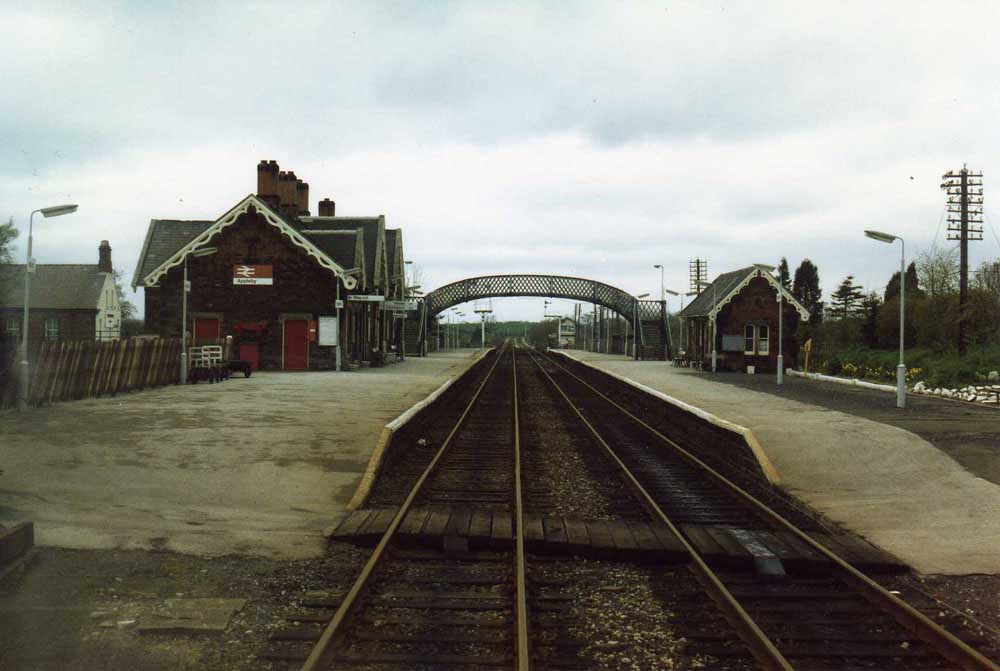
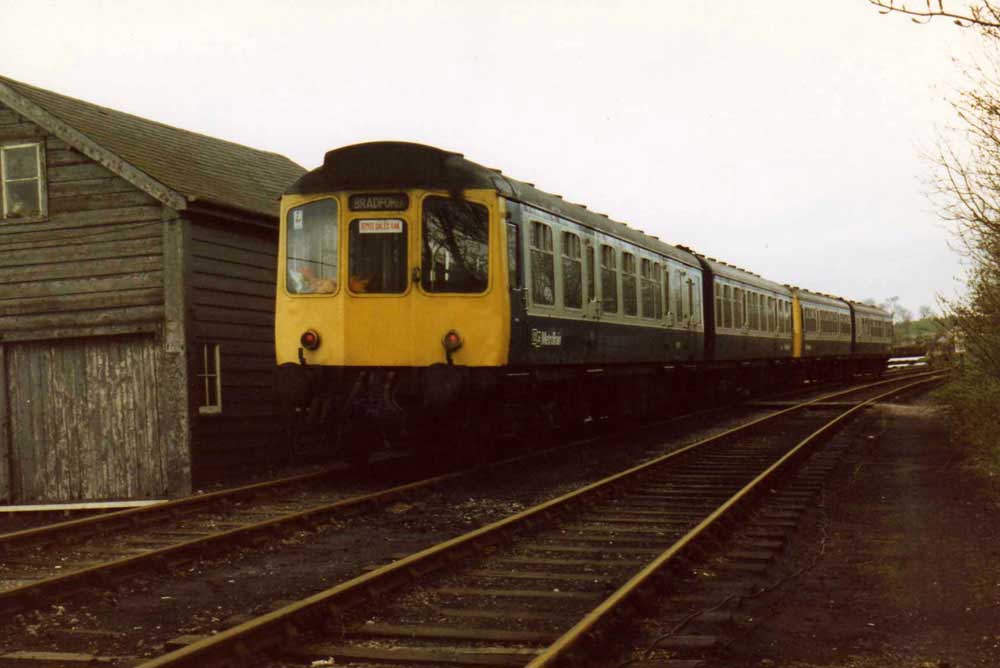
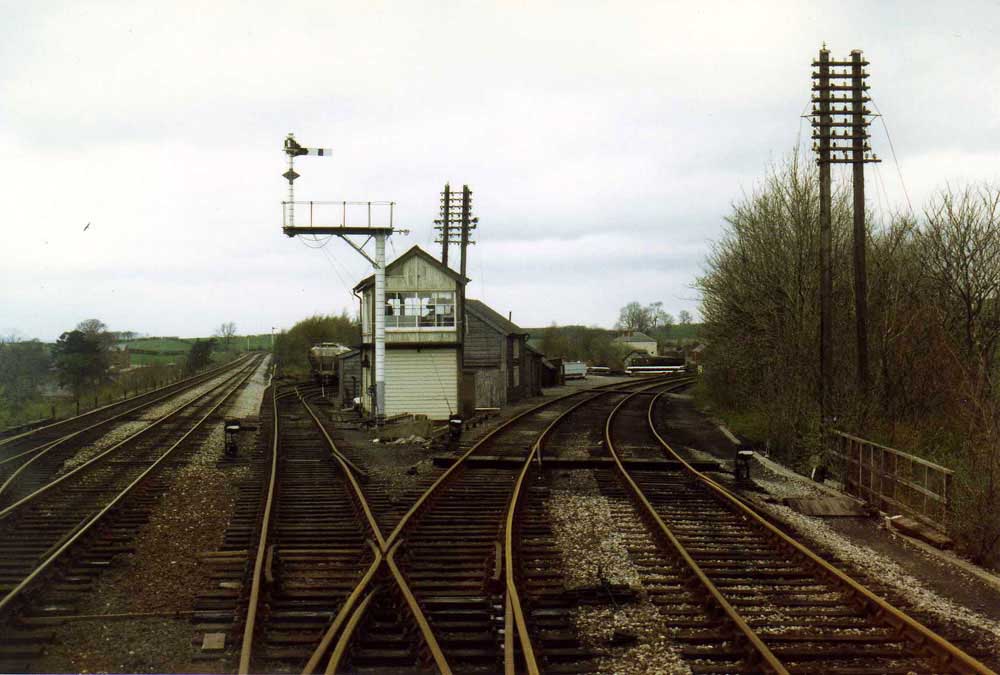
On February 15th 1979 in very snowy conditions tragedy befell two railway staff on snow duty at Hellifield.
The Hellifield signalman was anticipating arrival of the late running Nottingham - Carlisle service, when the signal box down the line gave notice of the approaching express the Hellifield signalman noticed the indication lights for a set of points beyond the Down Home signal were not lit. Compacted snow in the point mechanism had interfered with the electrical circuit, a call by the signalman went out to the platelayers cabin with a request for the points to be freed of snow.
Two platelayers set out to free up the points, which they successfully managed, their action caused the indication lights on the signal box panel to light up, allowing the signalman to set the route for the Carlisle bound express. However the platelayers lingered awhile at the points to set clamps in place to prevent the snow from fouling the electrical circuit again. With poor visibility, wintry conditions and the platelayers well wrapped up against the foul weather they remained oblivous to the approaching express as they tried to finish the job. Desperate measures taken by the driver were not able to prevent the inevitable - the railway can be dangerous at the best of times and fatal when the elements are at their worst.
Culgaith
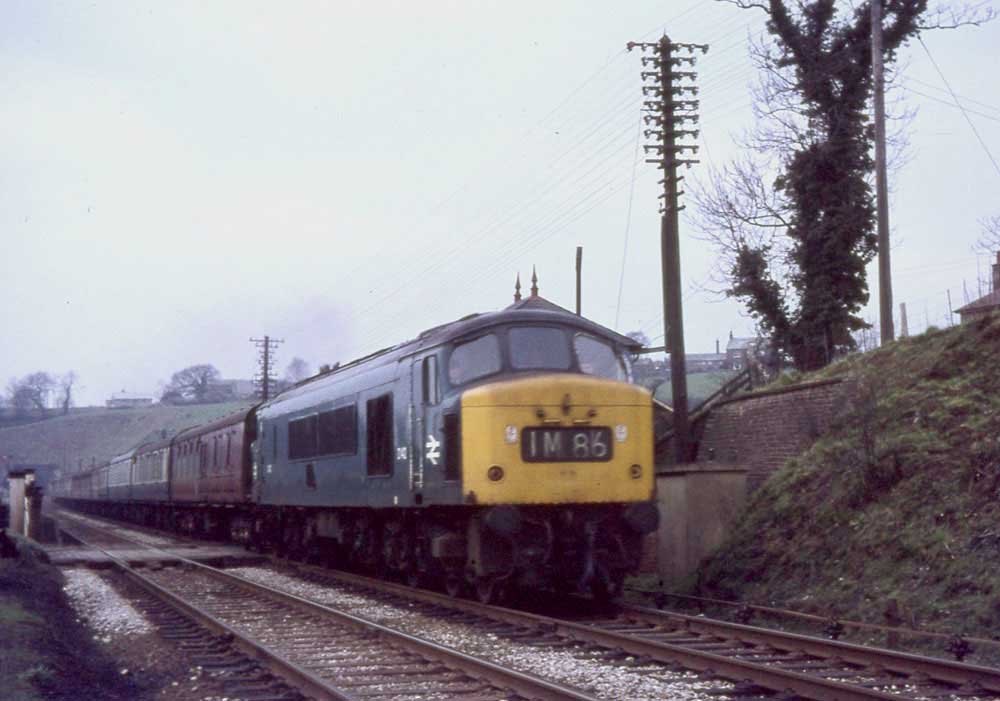
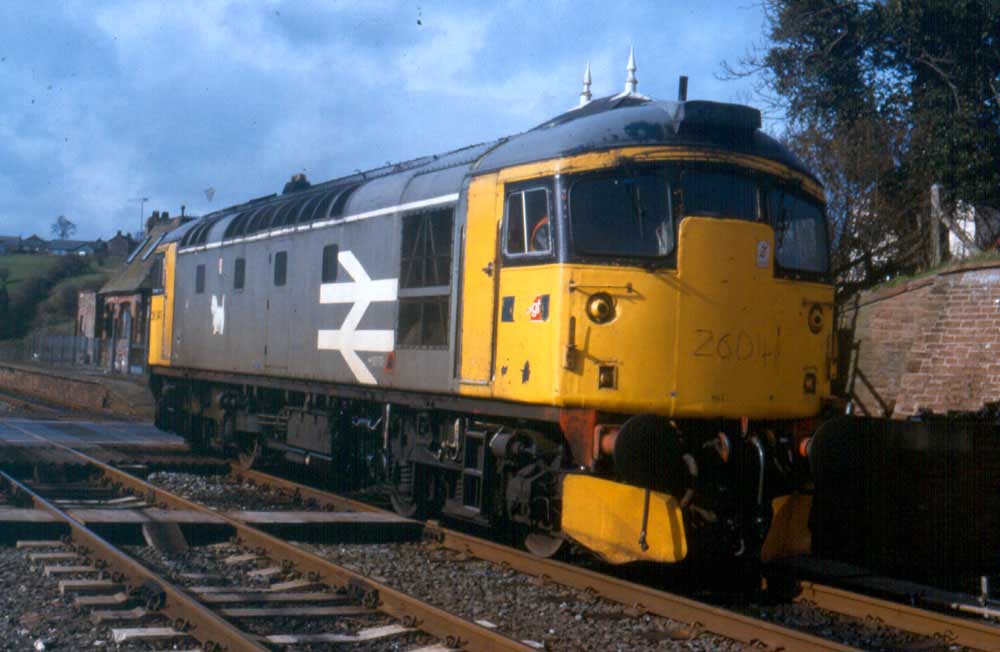
Howe Siding

Armathwaite
102.1 miles from Leeds, 9.9 miles from Carlisle

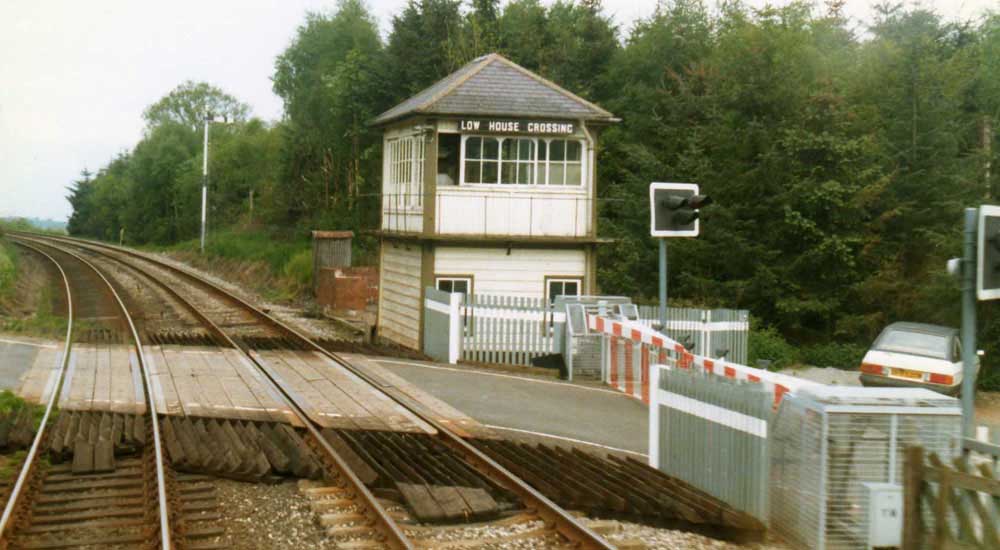
Low House
104.7 miles from Leeds, 8.3 miles from Carlisle

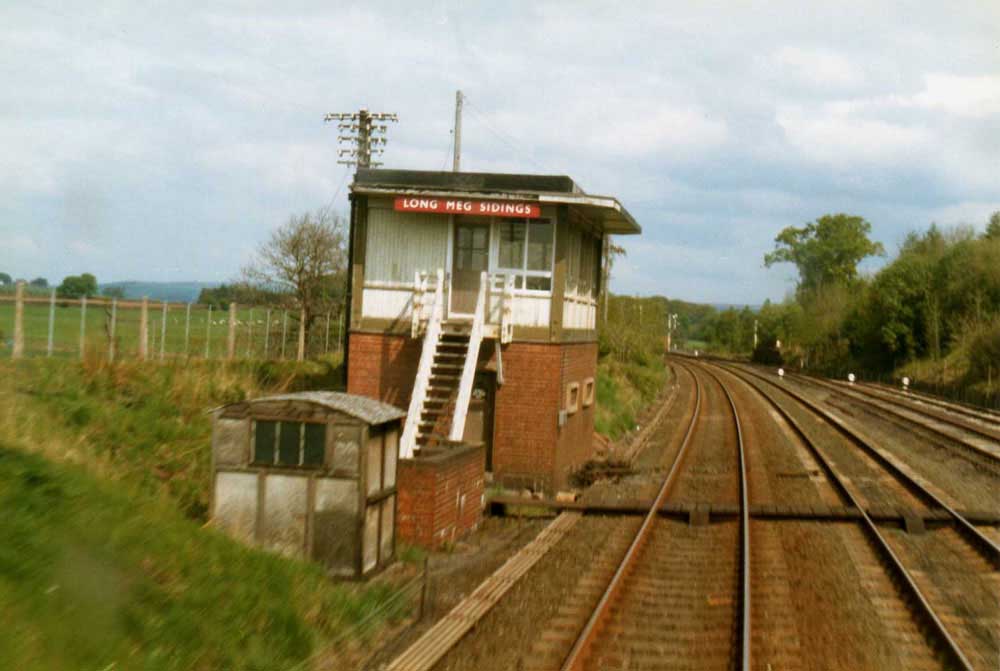
Long Meg
Long Meg - an evocative name in the annals of traffic over the Settle & Carlisle, particularly in the dying days of steam when the well known anhydrite workings from Long Meg to Widnes & Billingham featured steam in all its grandeur with spectaular scenery thrown in for good meaure.
And who was Long Meg? Not far from the railway line is one of the more well preserved stone circles in the United Kingdom, the complete circle offset by one standing rock, known as Long Meg, placed outside the circle as some sort of marker.
Carlisle
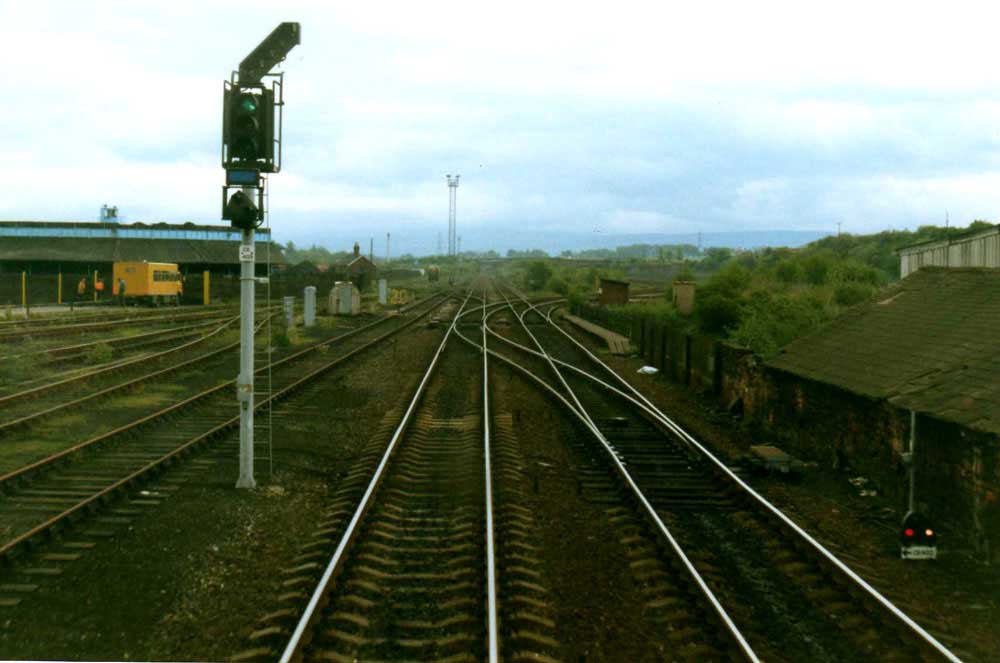
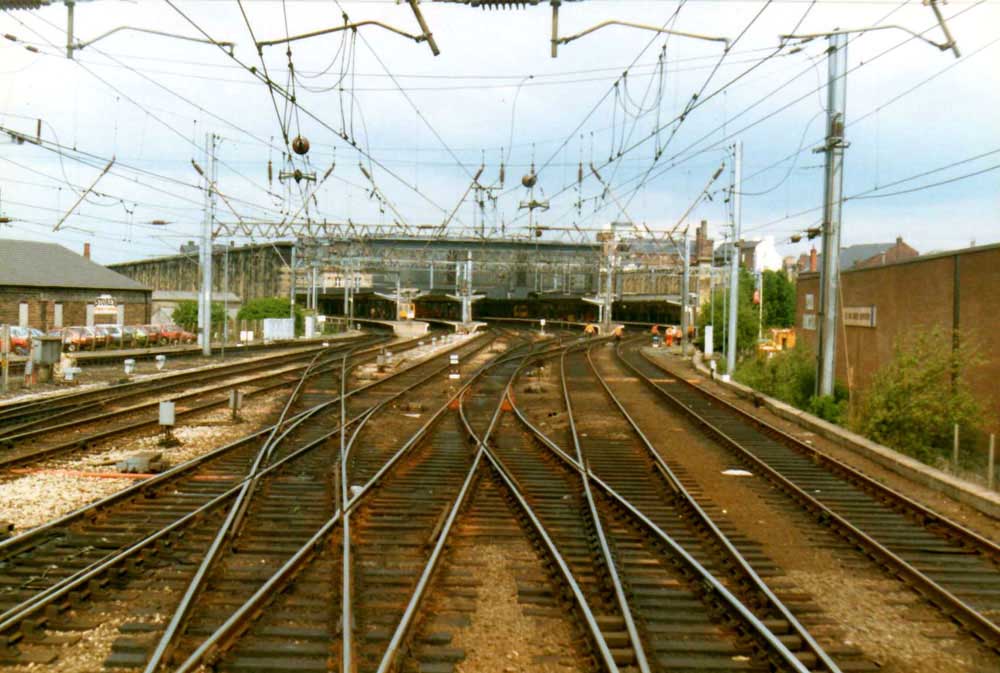
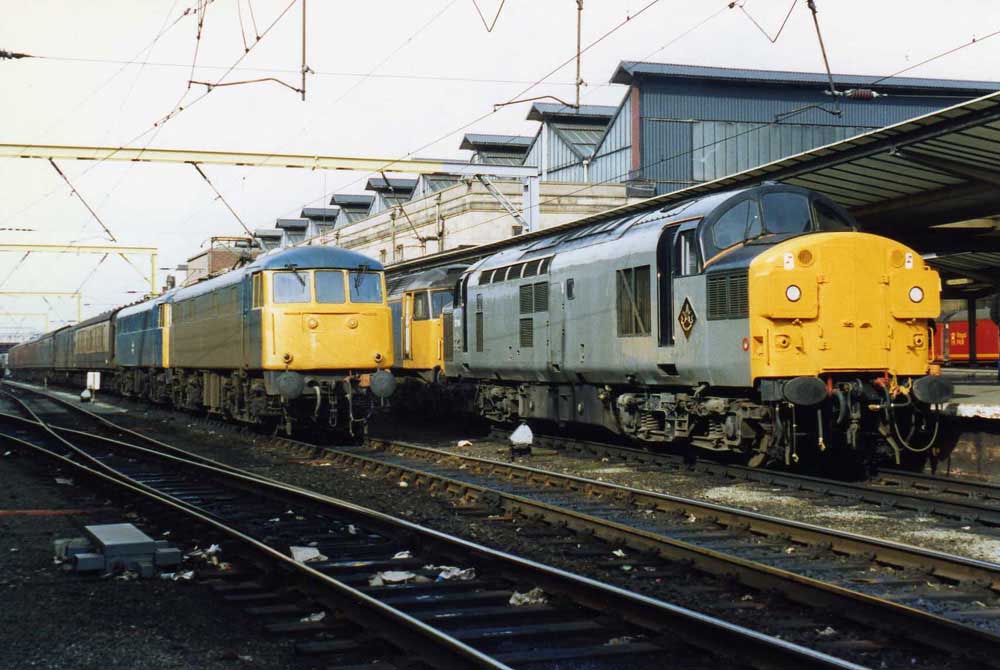
On one very early trip to Carlisle, the exact details of which are now forgotten, we had a Class 25, a brake van, two Class 17 Claytons (8521 & 8598) and two more brake vans en route to Glasgow Works - probably one of the most unusual loads I've taken over the S&C. On another early trip to Carlisle we were relieved here by a Scottish crew. The secondman said something to me but after several pardons on my part the secondman started shouting and getting frustrated because I couldn't understand what was being asked! My driver came over and asked him what was wrong, so the Scottish secondman began telling him. Following this conversation my driver came over and asked if the boiler water was OK, it was but my response to the secondman was not understood. My driver turned to me and said 'thats another thing you'll have to learn Dan in your railway career....translation!'
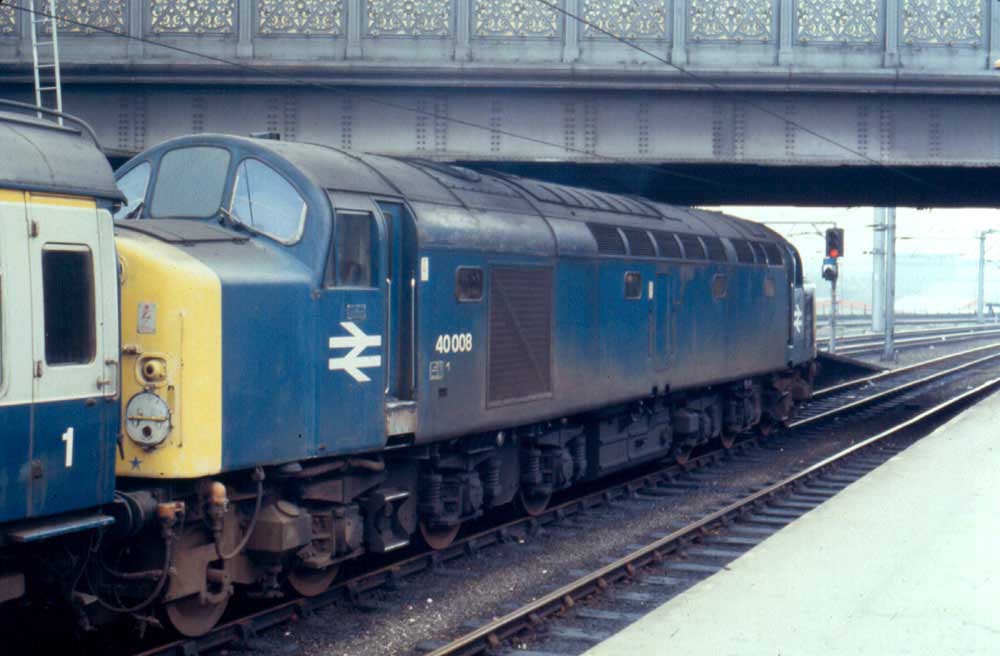
The parking brakes on the Class 40's were none too good. When leaving them both handbrakes were to be applied and wooden scotches placed by the wheels as an added protection. One time at Carlisle we left a Class 40 in the north end bay platform having slightly buffered up to some coaches in order to get the locomotive clear behind the signal. We then went off to do a little shopping at the market. On returning to the station the locomotive had eased off the coaches, fortunately not far enough to trigger the track circuit. If that had happened a number of signals on the running lines would have gone to red causing temporary disruption of unknown proportions.

Page added December 24th 2006.
Last updated March 19th 2020.