History
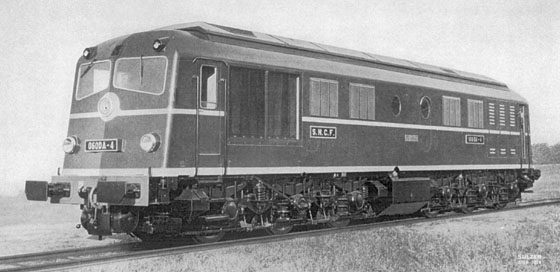
Shortly after the close of World War Two the SNCF sought and received authorisation for twenty 2,000hp six axle diesel electric locomotives for use on the northern half of the Grande Ceinture line. This belt line connected many large marshalling yards found on the perimeter of Paris. The line had an up-and-down profile with several gradients between 1 in 90 & 1 in 100. The trains operating between the various yards tended to be heavy and slow. However the serious shortage of raw materials would prevent the first order not being placed until August 1952, with delivery taking place during July 1955. Haulage specifications required were:
2,000 tons Valenton - Le Bourget, ruling grade of 1 in 166
1,800 tons Le Bourget - Acheres, ruling grade of 1 in 100 and one stretch of 1 in 72
1,600 tons Acheres - Versailles-Matelots, ruling gradient 1 in 90.
Because of the nature of the traffic a starting tractive effort at the wheel rim of 80,000lb was requested, with a maximum speed of 75kph (46mph). The high tractive effort required an adhesive weight of well over 100 tons. With an empty weight of 113.8 tonnes, loaded weight 120 tonnes and a maximum axle loading of 20 tons the builders produced a rugged, sturdy design. The two main longitudinals with dimensions of 310mm x 302mm (12.25in x 12in) ran the length of the body floor. Substantial cross-stretchers carried the bogie pivots and support for the fuel tank. On each side eleven outriggers connected the main longitudinals to lighter channel section longitudinals used to support the floor and the sides of the superstructure. The underframe was covered by a chequered floor plate 4mm thick. The superstructure comprised four parts; the engine compartment, its raised roof and the two cabs.
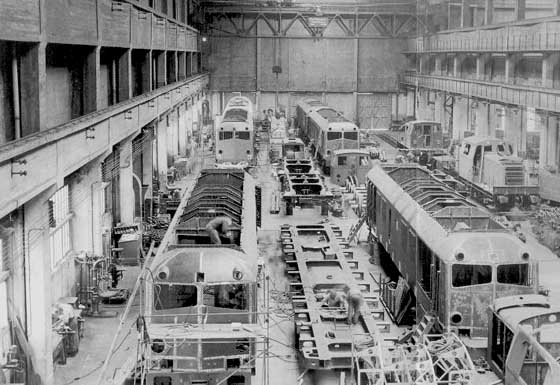
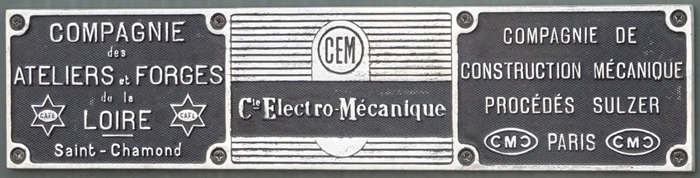
The locomotives were constructed at the Compagnie des Ateliers et Forges de la Loire (CAFL) workshops at Saint-Chamond. Electrical equipment was supplied by Compagnie Electro-Mecanique (CEM), the French associates of Brown Boveri. The first ten power units were supplied by Sulzer, Winterthur. The remainder were built by Compagnie de Construction Mecanique (CCM) subsiduary, at the St Denis plant.
The Sulzer 12 cylinder 12LDA28 powering these locomotives was a derivation of the original 12LDA31 fitted to the earlier PLM locomotive (and its Roumanian counterpart). The original contract called for an engine output of 1,900bhp, however because of the lengthy construction period improvements to the pressure charger and other items allowed the output to be increased to 2,000bhp, the first time this had been achieved through a single Sulzer power unit. Increasing the rpm to 750 would later provide 2,300hp, as was fitted to British Railways's Class 44's (D1 - D10) four years later. Because the UIC regulations called for a ten percent overload for an hour, Sulzer were able to claim that the Sulzer 12LDA28 at 2,530hp was the most powerful engine in service in a locomotive at this time. The 12 cylinder Alco 251 engine at the time was rated at 2,000bhp at 1,000rpm, whilst the Cooper-Bessemer FVBL-12 engine was rated at 1,980bhp at 1,000rpm. Both these engines were available with 16 cylinders but none had yet been ordered for use in rail traction.
Following the completion of the first locomotive in 1955 a further order for five was placed in 1955 and ten more during 1956. Three spare engine-generator sets were provided. It was anticipated that these 35 locomotives would replace 80 steam locomotives.
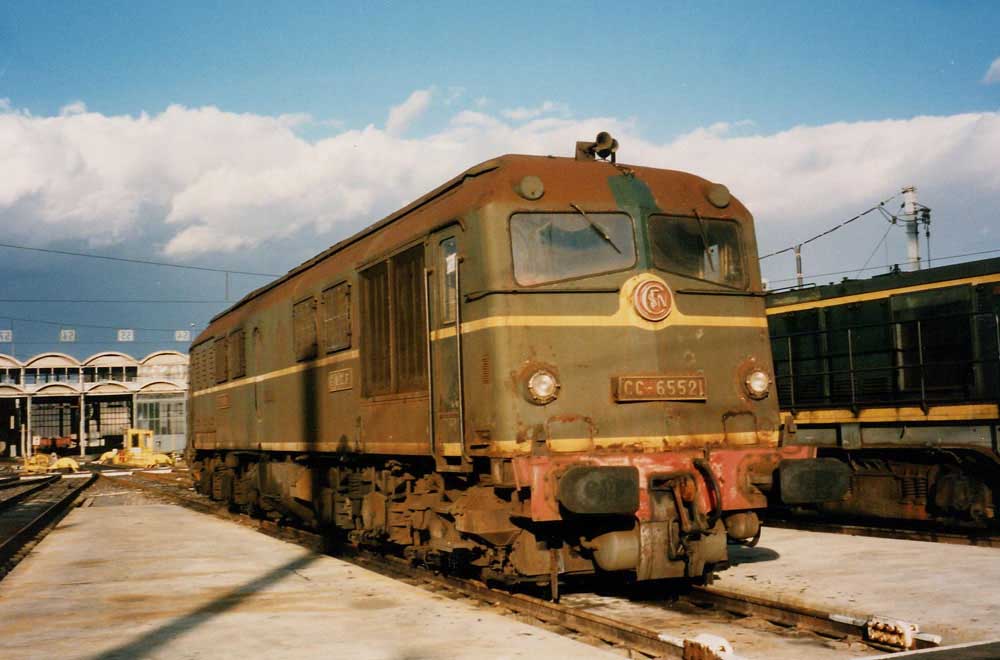
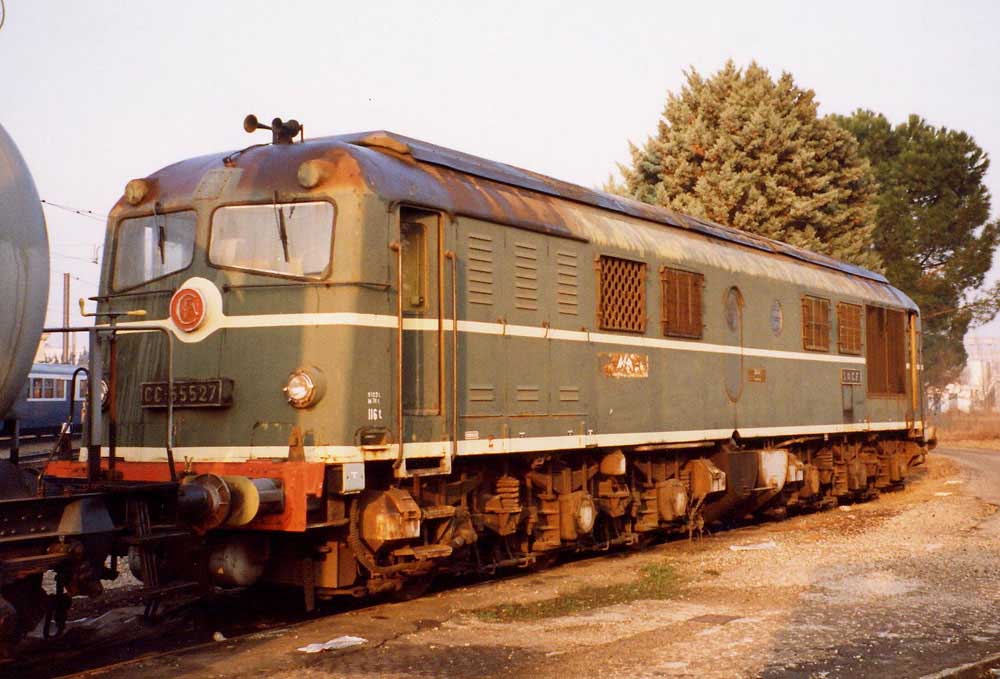
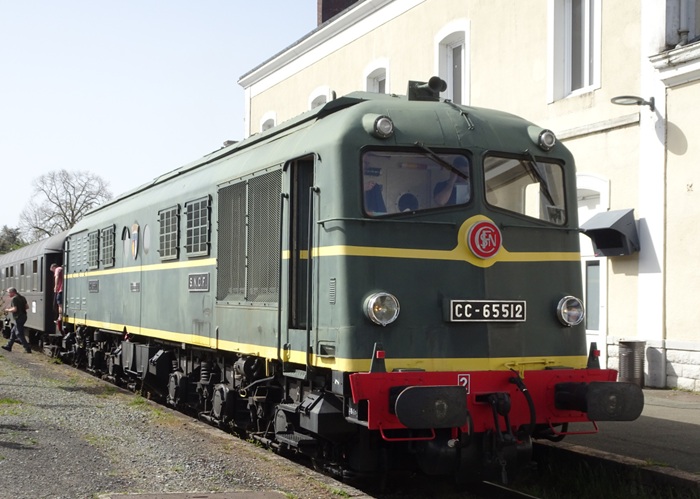
Originally numbered 060DA-1 to 060DA-35, they progressed to CC-64001 to CC-64035 & finally CC-65501 to CC-65535. Similar to many early diesels the numbers were carried on metal plates, both on the cabfronts and the side panels. Much later the last two digits of the locomotives were carried below the driver's front windscreen in large white numerals.
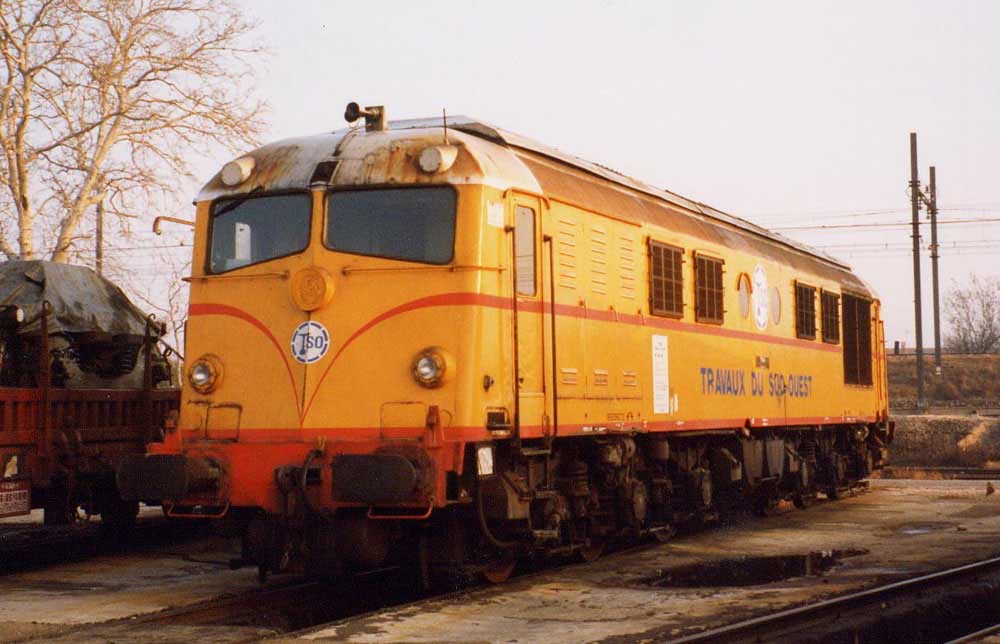
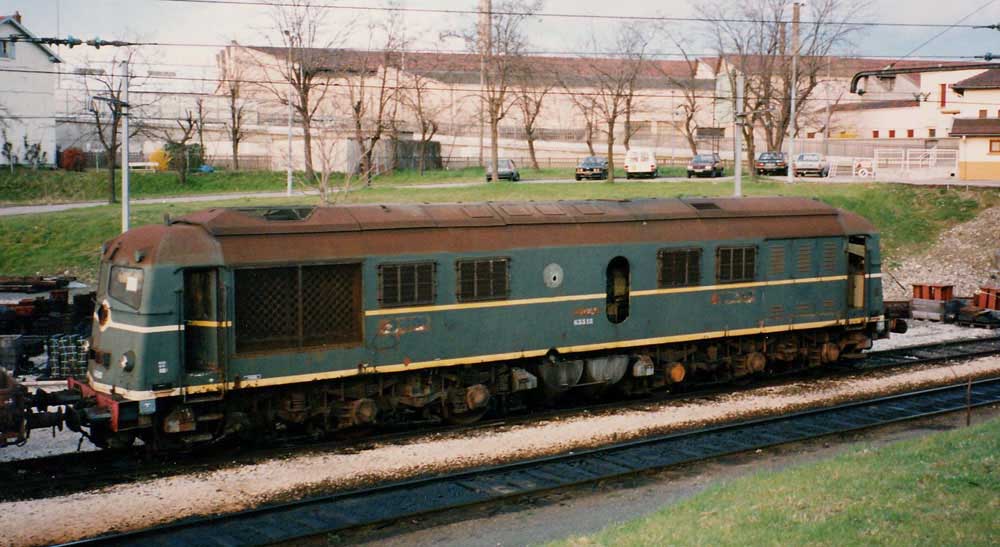
The livery for the locomotives changed little, a drab olive green with red bufferbeams and two yellow stripes was carried by them for most of their lives. However a Pandora's box of colours awaited the locomotives that went into private ownership from the 1980's onwards. Used for basic engineering work and the later construction of the high speed TGV lines, some remained in their SNCF paint, but others gained a variety of yellow/orange/blue paint-jobs.
The first of the class had been delivered four years prior to the nearest British Railways counterpart Class 44 No. D1, remarkably some members of the class were still working in 2001, some twenty years after all the Class 44s had been retired, twelve years after the more powerful Class 45s had been laid to rest and had outlived many of the Class 47s!
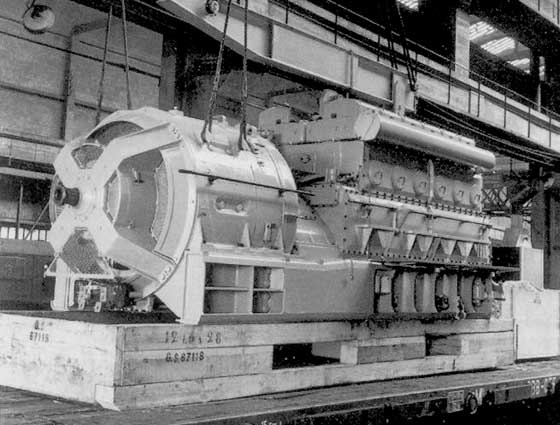
The U.I.C. 100 hour test for the 12LDA28 engine was conducted at Sulzer Brothers Winterthur plant with inspectors in attendance from the French National Railways & British Railways. The test was scheduled on a power basis of 2,300bhp at 750rpm, but because the ambient temperature during the test was 7 degrees Centigrade the power basis was increased to 2,360bhp. The 100 hour test comprised:
80.0 hours continuous run at nominal load,
0.75 hour at overload,
0.25 hour at overspeed,
2.50 hours at partial load at 700rpm (85% of nominal full load)
2.50 hours at partial load at 600rpm (62% of nominal full load)
2.50 hours at partial load at 500rpm (40% of nominal full load)
2.50 hours at partial load at 400rpm (20% of nominal full load)
9.00 hours of alternating loads (6 minutes of nominal load, then 4 minutes idling at 430rpm)
Two stoppages of no more than 20 minutes each were allowed by the regulations. No stop was made during the 80 hour continuous load run, but between the overspeed and partial load test the engine was shut down for about an hour whilst the governor was set to railway service characteristics and the oil level checked.
Fuel consumption at full load and speed was 169gr per bhp hour, under the partial load conditions it varied between 158 & 165 gr per bhp hour. The fuel had a specific gravity of 0.843gr per cubic cm at 20 degrees Centigrade with a net calorific value of 10,090 cal per kg (18,015 B.Th.U. per lb). During the 80 hour continuous test the heat supplied by the fuel averaged:
37.2% converted to power
14.9% dissipated by the cooling water
5.9% dissipated by lubricating oil
42.0% lost in exhaust gases, radiation, etc
The speed of the turbocharger varied between 3,250rpm and 11,800rpm.
060DA-16 was trialled over certain RENFE, Spain routes. It was mounted on 5ft 6in gauge bogies and because of its 20 ton axle loading was restricted to certain lines. It was temorarily fitted with a cab roof mounted headlight.
La Plaine depot
This depot, situated a short distance from the Gare du Nord, Paris station became one of the earliest SNCF depots to become fully dieselised in 1961. The depot serviced the motive power operating the Grand Ceinture and Petite Centure lines. La Plaine depot had been largely destroyed by bombardment during 1944, in its post-war rebuilding thought had been given to its easy conversion to diesel maintenance after steam was phased out. During early 1961 it was responsible for the maintenace of 93 diesel locomotives, including the 35 Co-Co 65500 series machines, 58 510bhp to 725bhp shunting/transfer types and 15 400bhp shunting tractors. Light maintenance and intermediate overhaul was carried out to all components on the locomotives. Facilities were available for bogie removal, allowing full access to wheels, axles and traction motors.
Parts:
Anti-slip brake control: Brown Boveri
Battery: TEM 64 element lead acid
Axleboxes: Athermos, plain bearing, centrifugal lubrication
Brakes: Jourdain-Monneret type, straight & automatic air to standard SNCF requirements
Compressor: Spiros two stage V type reciprocating
Radiators: Chausson, two vertical banks of seven elements each
Radiator Fan: Boirault, 1,600mm (63in); fan bearings - Timken
Lubricating oil filters: Winslow, three cotton filters in parallel
Fuel pump: Guinard; centrifugal transfer type, driven by 10hp electric motor
Servo field regulator: Brown Boveri
Voltage regulator: Brown Boveri
Lubricating oil: RPM Delo No. 1
Generator: C.E.M. type G1.100/10, max 3,600 amp, max voltage 980, speed range 565 - 1,200rpm
Traction motor blowers: Boirault, two driven by 15hp 3,000rpm electric motor
Main electrical contactors: Contacem electromagnetic type
Engine: Sulzer 12LDA28 output 2,000bhp at 710rpm (cylinders 280mm x 360mm)
Piston: forged light alloy 45kg (99lb)
Piston & Rod assembly: 105kg (231lb)
Cylinder liner: 77kg (170lb)
Cylinder head casting machined: 125kg (275lb)
Cylinder head assembly complete: 145kg (320lb), includes valves, valve gear, injector
Camshaft with driving gear: 140kg (309lb)
Crankshaft: 1,050kg (2,315lb), with vibration damper 1,185kg (2,615lb)
Turbo pressure charger: Sulzer type (max pressure 1.5kg/sq cm [21.5lb/sq in])

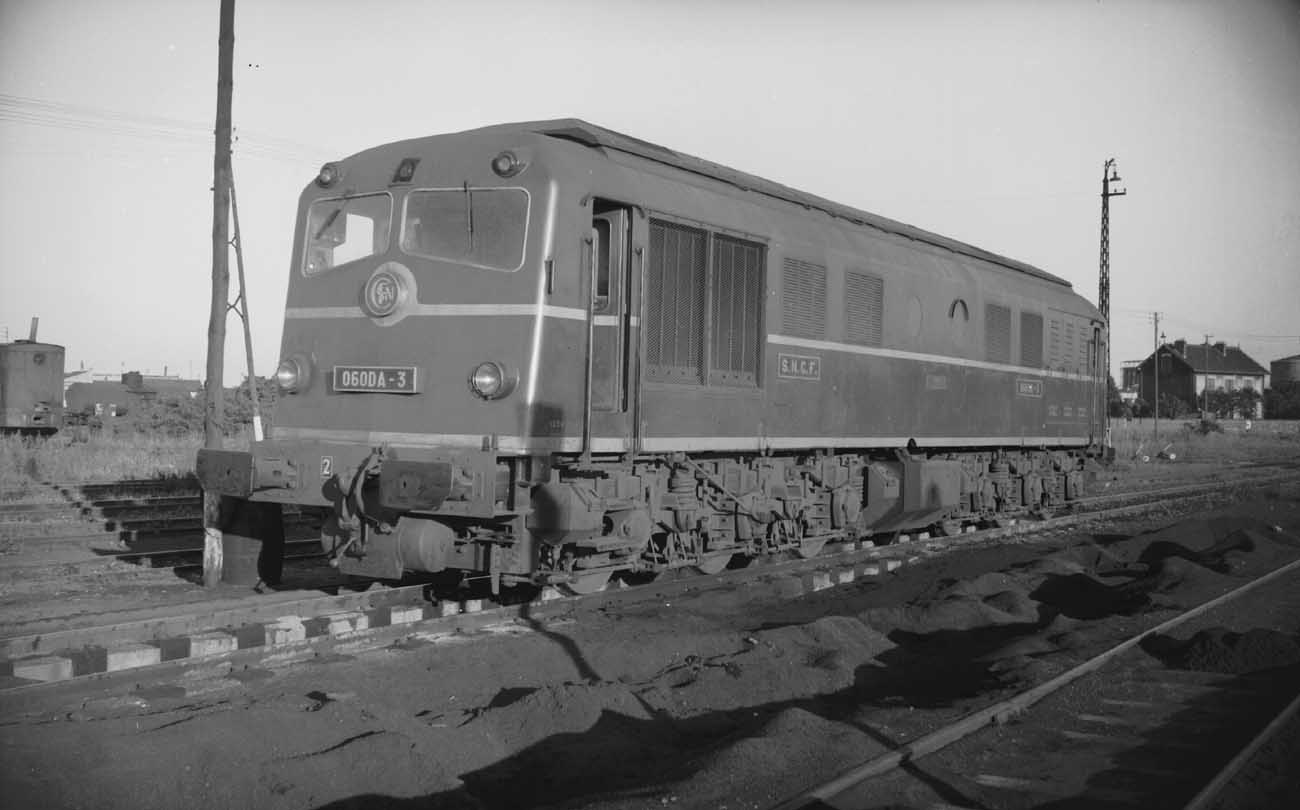
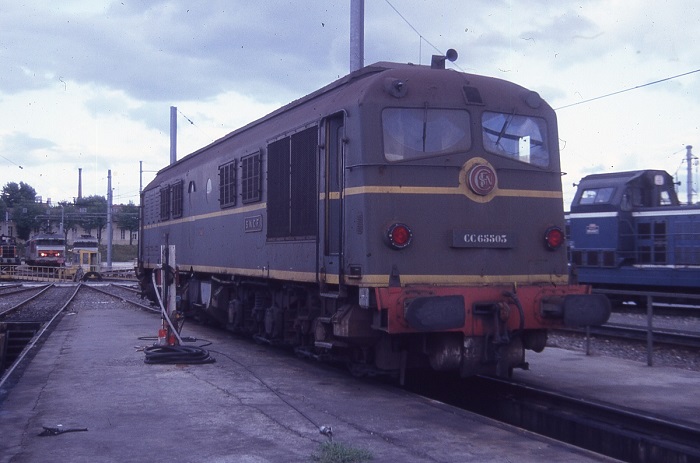

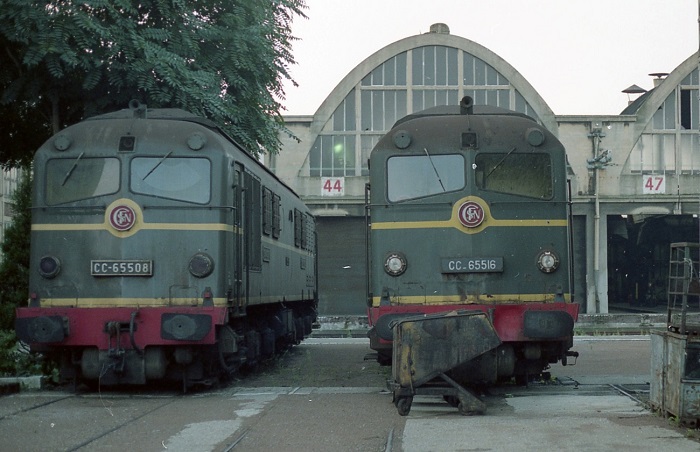
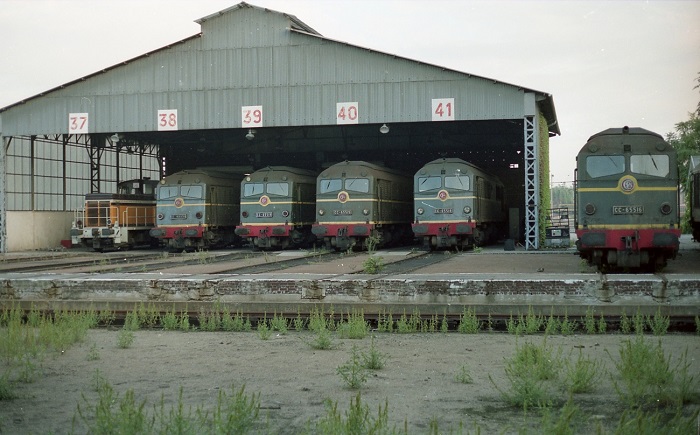
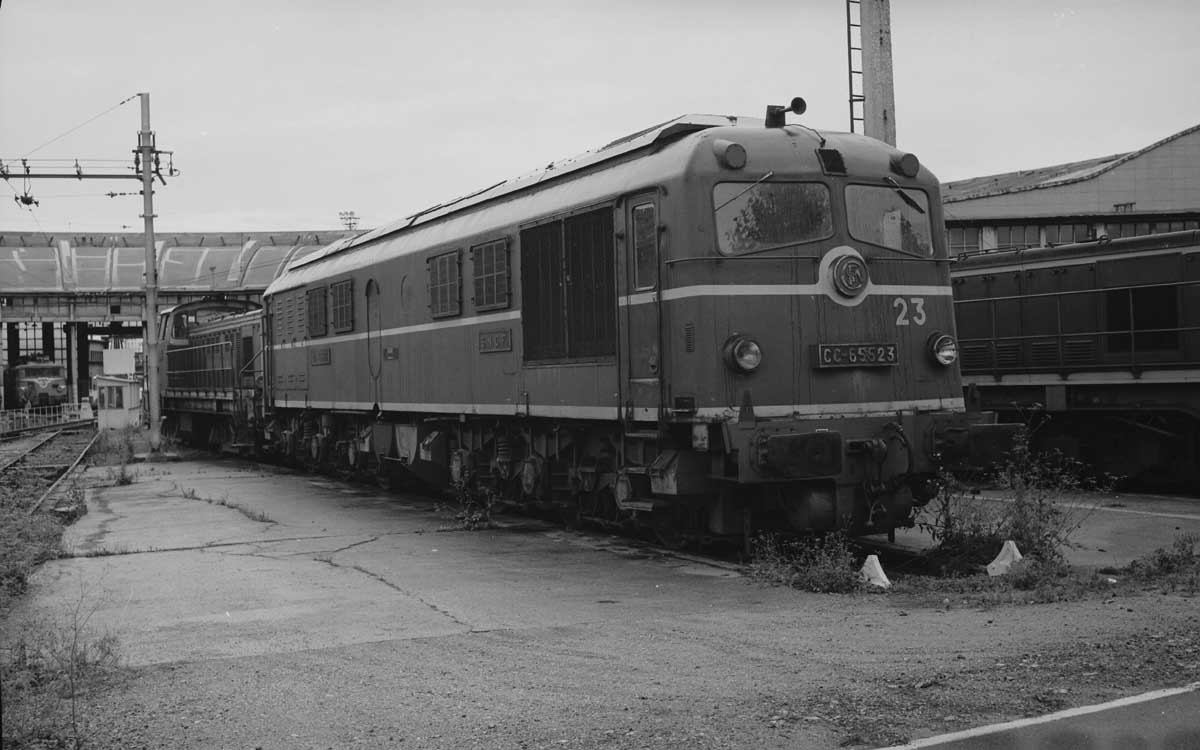
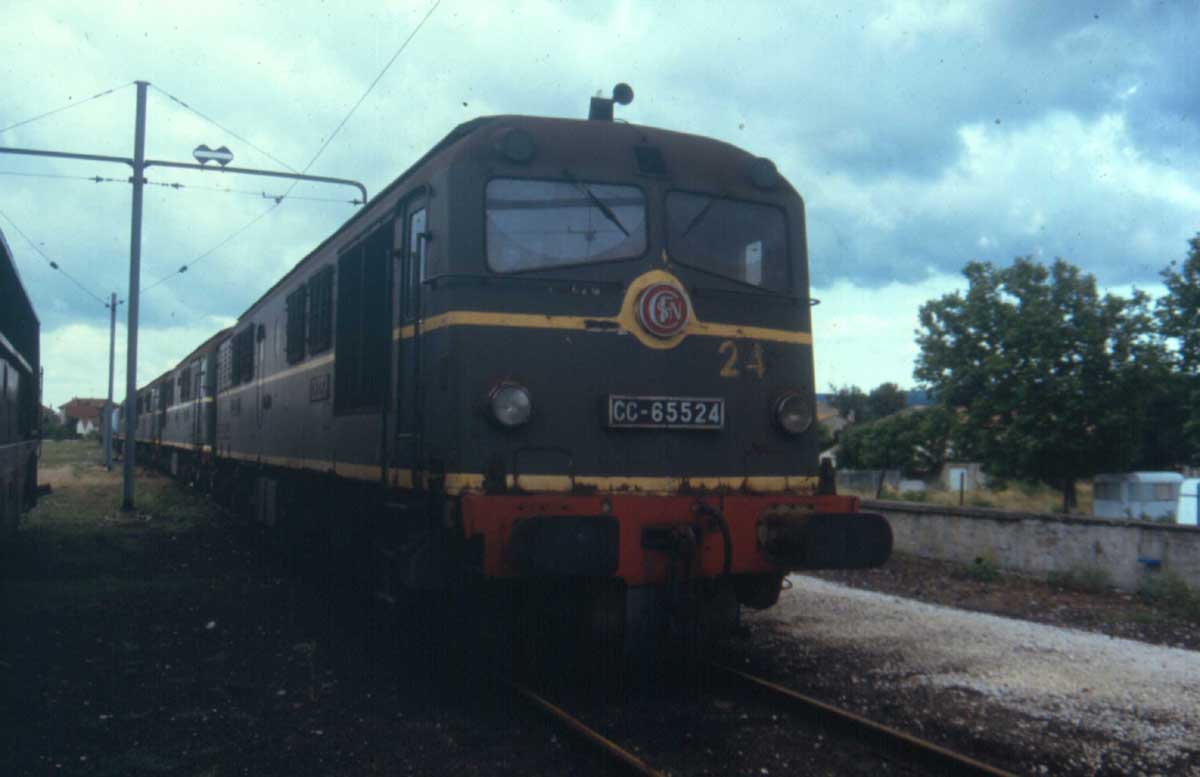
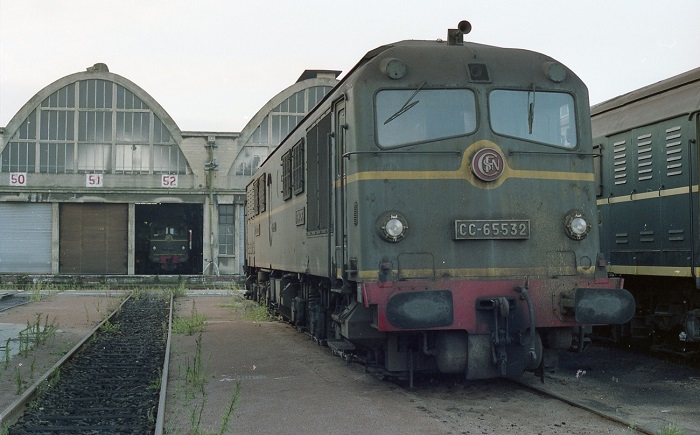
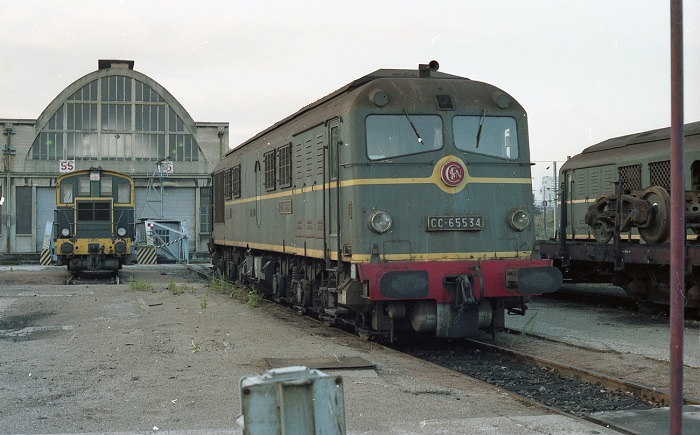
The six views below are from the camera of Mark Jones and reveal the state of the locomotives in the twilight of their careers. With much fading paint & rusting metalwork, some await the scrapman whilst others eke out afew more miles on gruelling permanent way workings. But I suppose after some 45 years of service, with some two million kilometres (1,250,000 miles) tucked away in some of those tired machines, SNCF got quite a workhorse.
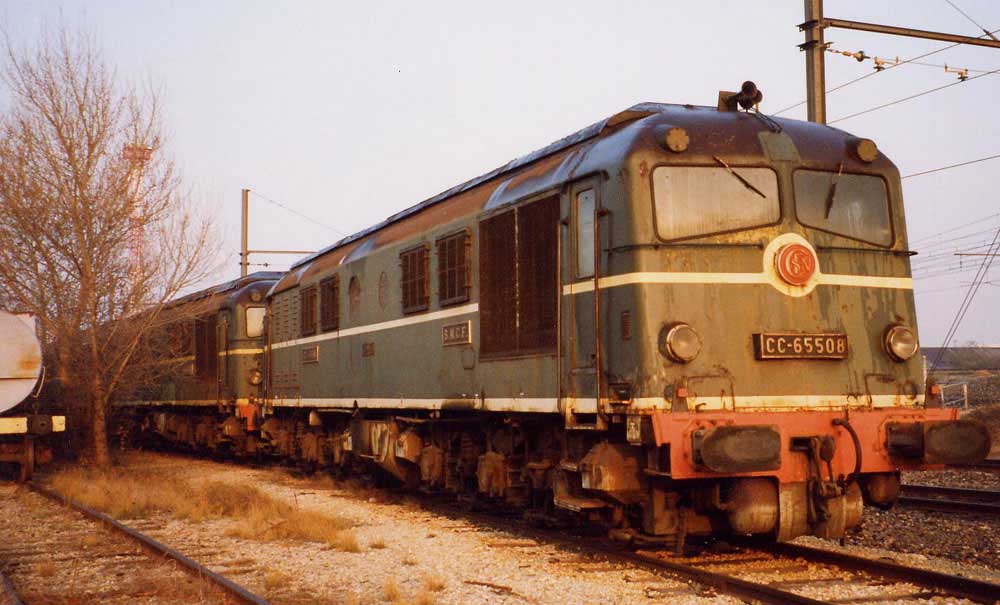
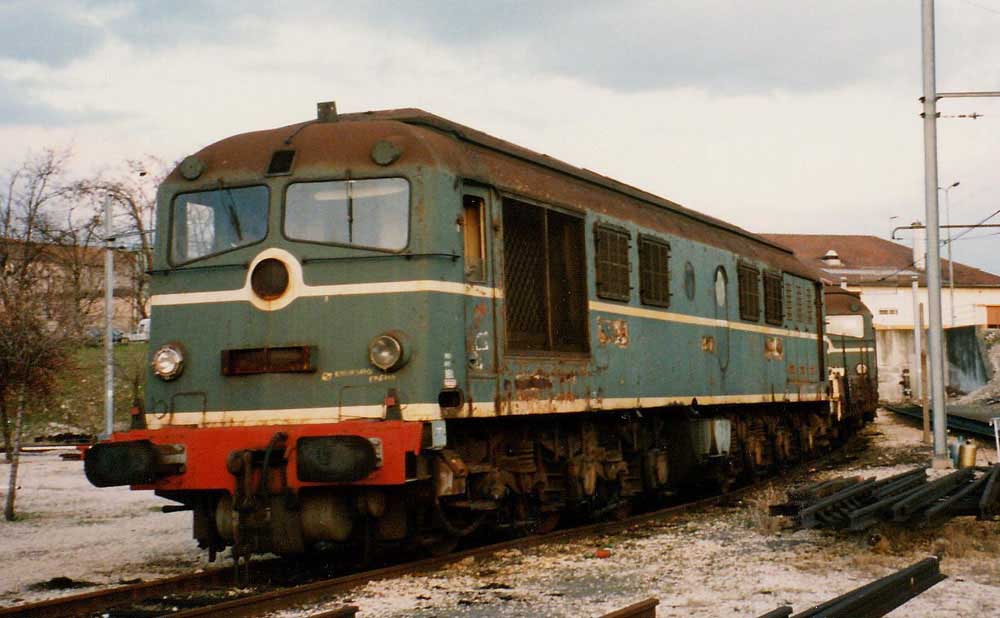
Views from other sources:
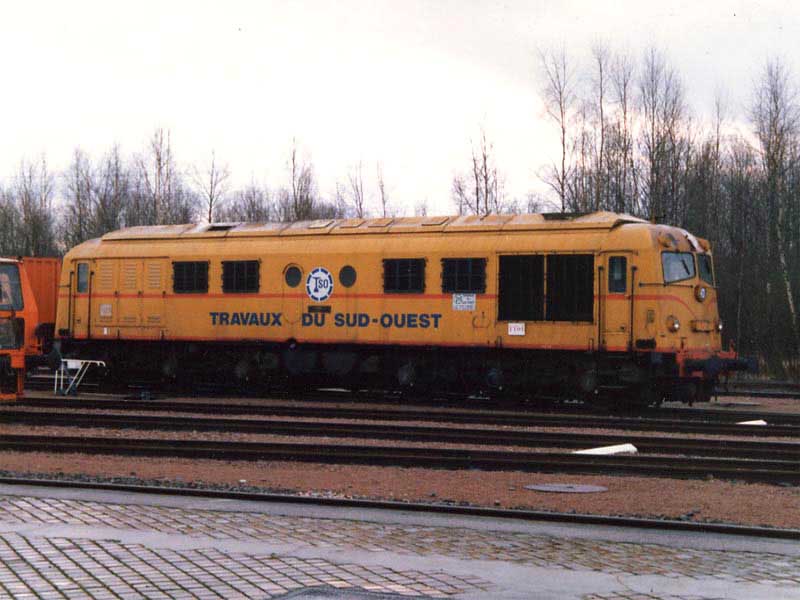
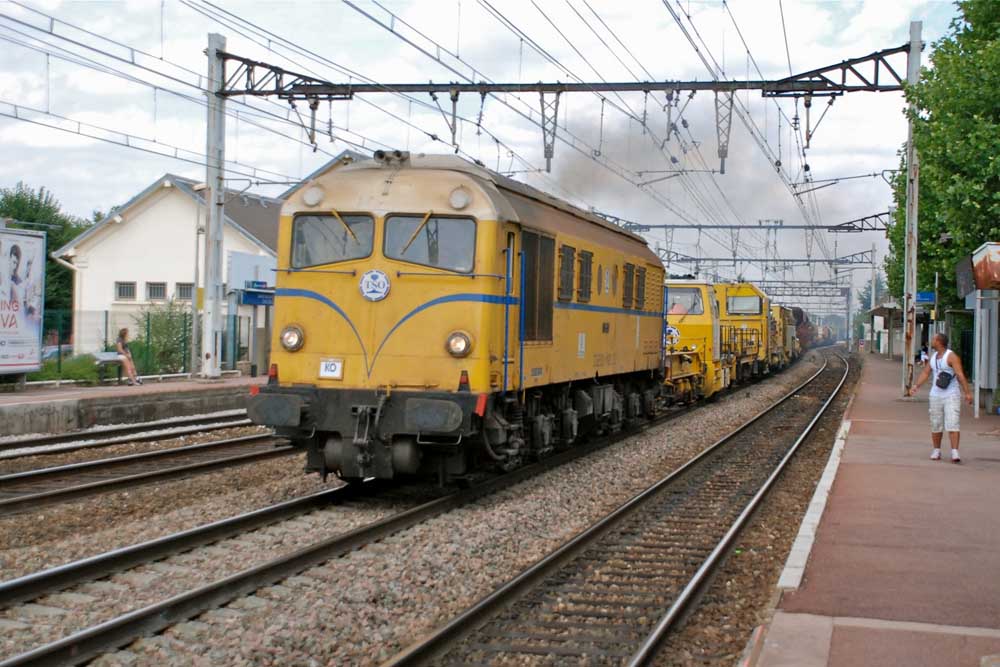

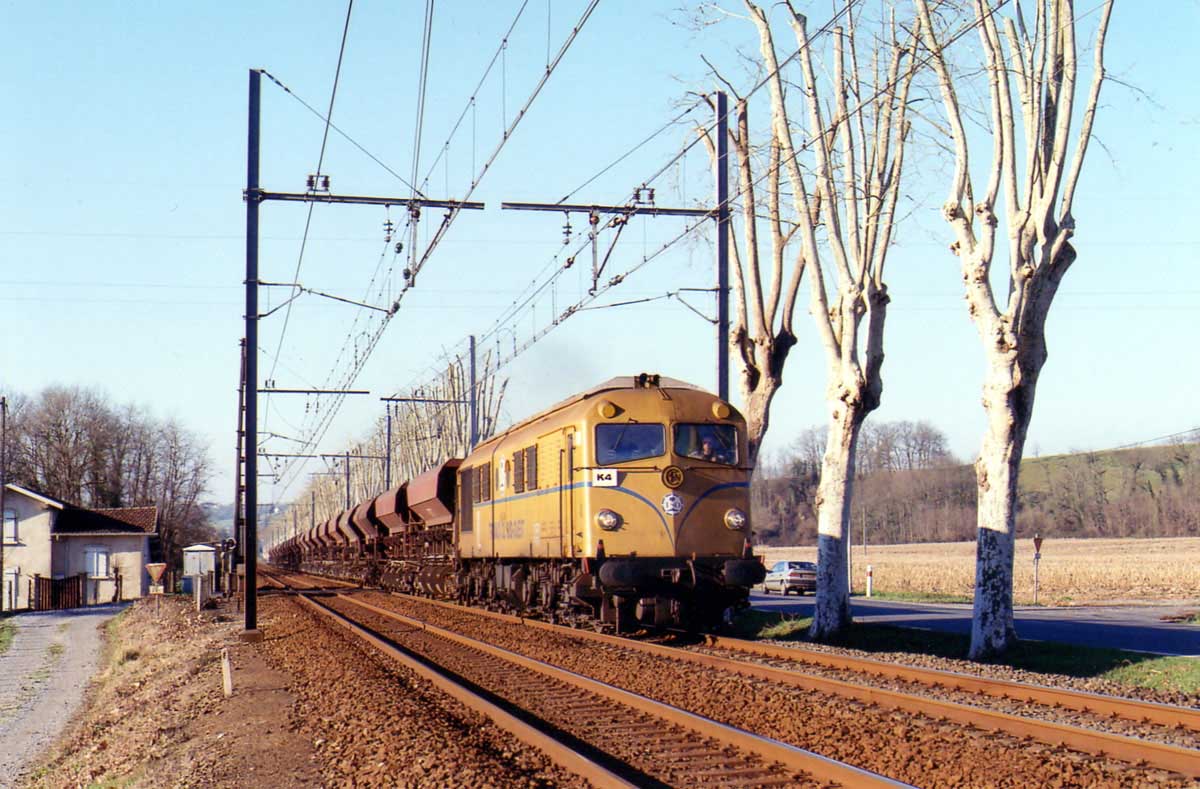
Other Details:
Overall length: 64ft
Maximum width: 9ft 1in
Maximum height: 13ft 11in
Wheel diameter: 47.5in
Bogie wheelbase: 15ft 4in
Bogie pivot pitch: 31ft 1in
Total wheelbase: 47ft 1in
Minimum curve: 265ft
Weight (loaded): 120 tonnes
Weight (empty): 113.8 tonnes
Weight of mechanical portions: 66 tonnes
Weight of power unit: 19 tonnes (or 19.5 tonnes)
Weight of power unit & generator set: 27.5 tonnes
Weight of electrical equipment (includes batteries): 28.8 tonnes
Weight of batteries alone: 2.25 tonnes
Weight of bogie with motors: 25 tonnes
Weight of wheel & axle set with gear wheel: 2.3 tonnes
Maximum axle load: 20 tonnes
Starting tractive effort: 80,000lb
One hour tractive effort at rims: 55,000lb at 10mph
Continuous tractive effort at rims: 48,500lb at 11.8mph
Tractive effort at max speed at rims: 13,200lb
Maximum speed: 46mph (75kph)
Fuel capacity 1,000gal
Oil consumption (full load & speed): 5kg (11lb) per hour
Oil pump capacity: 2,900 liters per hour (max pressure 3kg/sq cm [43lb/sq in])
Detail Difference
During their lifetime the Class did not undergo many external changes, the livery remained unchanged apart from those acquired by companies working on the TGV lines. The Class went through two renumberings from 060DA-XX to 640XX and 655XX.
External changes included:
Removal of the cab front upper marker lights, lenses removed and blanking plates fitted
Additional air horn fitted on cab roof, some locomotives ran with the original air horn still in place, other had blanking plates fitted, some were fitted with two external roof mounted horns
Square body side filters (four each side) replaced with sturdier filters, these protrude more from the bodyside and required gutters to deflect rain running off the roof
Mechanical rodding from No.2 end center axles (driver's side) replaced by flexible hose from No.1 axle to cab (presumed this is for the operation of the speedometer).
Introduced without cab front handrails - added later
Recorded mileage varied from 2,046,101km (65501) & 2,031,804km (65508) to 1,682,056km (65523) & 1,701,714 (65529).
| Number | Delivered | Retired | Notes | |
| 65501 | 10/07/1955 | 29/12/2005 | ... | 65502 | 13/10/1955 | 29/12/2005 | used on LGV Mediterranean (1999), twin air horns, retained original livery | 65503 | 10/11/1955 | 29/12/2005 | ... | 65504 | 10/11/1955 | 31/01/1984 | ... | 65505 | 23/02/1956 | 23/11/1982 | Drouard Freres 1991; ETF 2005 for EGV Est; two air horns & headlight | 65506 | 09/12/1955 | 13/12/2004 | twin air horns; Preserved | 65507 | 05/01/1956 | 26/05/1983 | Desquenne & Giral 1986-1990; Seco Rail, Seco DG 1991, Colas Rail 2007-2015 | 65508 | 07/02/1956 | 29/12/2005 | two air horns | 65509 | 29/02/1956 | 31/12/1981 | ... | 65510 | 16/03/1956 | 04/11/1982 | Drouard Freres 1991 | 65511 | 31/03/1956 | 15/04/1989 | ... | 65512 | 06/05/1956 | 16/02/1983 | TSO 2010-2018, twin air horns; Preserved | 65513 | 31/05/1956 | 20/12/1989 | ... | 65514 | 02/07/1956 | 31/12/1981 | ... | 65515 | 18/07/1956 | 13/12/2004 | twin air horns | 65516 | 17/01/1957 | 29/12/2005 | twin air horns | 65517 | 05/07/1957 | 29/12/2005 | ... | 65518 | 18/10/1956 | 30/06/1993 | ... | 65519 | 31/07/1957 | 29/12/2005 | ... | 65520 | 14/10/1957 | 13/12/2004 | ... | 65521 | 31/12/1957 | 29/12/2005 | ... | 65522 | 26/02/1958 | 01/11/1983 | TSO; two air horns | 65523 | 23/04/1958 | 25/08/1982 | .... | 65524 | 30/05/1958 | 29/12/2005 | ... | 65525 | 22/06/1958 | 31/12/1981 | ... | 65526 | 28/07/1958 | 01/10/1982 | ... | 65527 | 14/09/1958 | 29/12/2005 | ... | 65528 | 10/10/1958 | 15/04/1989 | ... | 65529 | 01/12/1958 | 29/12/2005 | ... | 65530 | 20/12/1958 | 29/12/2005 | two air horns | 65531 | 06/03/1959 | 29/12/2005 | ... | 65532 | 30/04/1959 | 20/12/1989 | ... | 65533 | 11/07/1959 | 13/12/2004 | two air horns | 65534 | 11/07/1959 | 29/12/2005 | two air horns | 65535 | 28/09/1959 | 30/06/1993 | ... |
As members of the Class were withdrawn during the 1980s & 1990s many were store at La Plaine depot, St Dennis. In 1999/2000 18 were assigned to Avignon for Infra use, including the LGV Mediterranean line.
Those noted at La Plaine depot in 1988/1989 include 65515, 65516, 65518, 65519, 65520, 65521, 65523, 65524, 65527, 65528, 65531, 65532, 65534 & 65535.
Those noted at Avignon circa 1999 onwards include 65508, 65516, 65518, 65524, 65529, 65533.
Those noted at Miramas circa 2001 onwards include 65508, 65517, 65519, 65521, 65526, 65529, 65530, 65531, 65534.
Those noted at Ateliers CFD/VFLI de Montmirad (Champagne - Ardennes): 65509 circa 2007.
Those noted at Lyon Venissieux circa 1995: 65513, 65515.
Private operators: dates indicate images of locos observed in the private owner livery
Colas Rail: orange/yellow livery
65507 (2007-2015)
Desquenne & Giral: orange/white livery
65507 (1986-1990)
Drouard Freres: blue livery with two yellow stripes
65505 (1991), 65510 (1991)
ETF: yellow/green livery
65505 (2005)
Seco Rail & Seco DG: orange/white with small blue/white striped warning panel
65507 (1991)
TSO: yellow with blue stripe, white roof
65512 (2010-2018), 65522 (2009)
Resources:
Diesel Railway Traction January 1957
Diesel Railway Traction September 1957
flk 65500-05
gle im 65500
Other French classes: SNCF(PLM) 262 BD 1 , SNCF 68000 , Early French shunters
Page added April 13th 2002.
Page updated October 28th 2025.