The earliest diesel engined rail vehicle dated from about 1894, the result of William Priestman marrying a 30 bhp two-cylinder vertical engine to a very rudimentary four wheeled rail vehicle. From this development during the latter half of the 1890's and into the first decade of the 20th century other manufacturers produced a variety of small diesel & petrol engined vehicles.
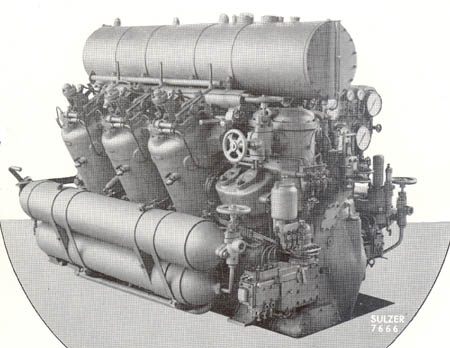
The stakes were raised considerably during 1912 when the consortium of Sulzer-Diesel-Klose & Borsig produced a diesel locomotive of considerable size and power, the celebrated 2-B-2 direct-drive 95ton 1,000hp 'Thermolokomotive'. The engine was a valveless two stroke 4LV38 model coupled to a direct drive transmission. It was tested prior to the start of World War One, but the locomotive was not a success, principally because of the application of the direct drive transmission. Starting the locomotive required air supplied from bottles charged by a compressor. The transition from air to diesel took place at about 7mph, which imposed major stresses on the engine leading to the frequent occurrence of cracked cylinder covers & fractured crankshafts.
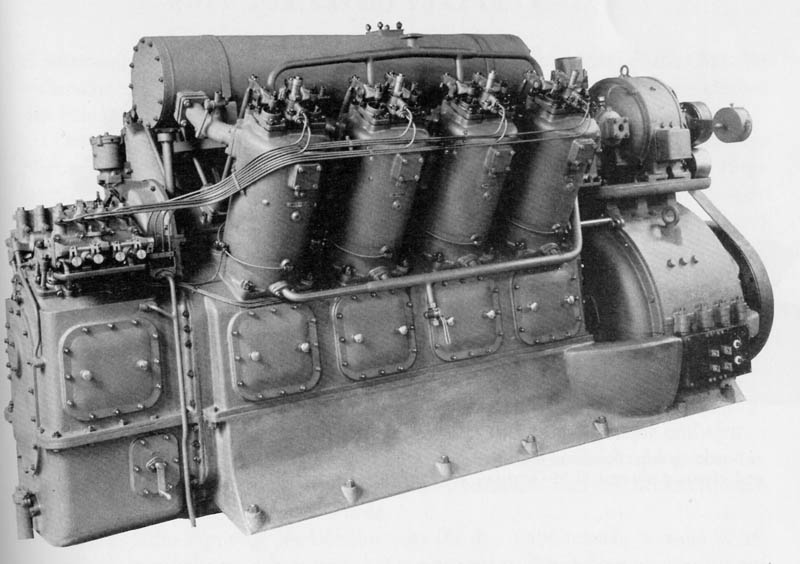
Although the 'Thermolokomotive' was a failure, as would be the few other locomotives built with direct drives, it led to the first real investigations as to what diesel engined rail vehicles might offer. For the moment Sulzer focused on a line of smaller diesel engines suitable for railcar and small locomotive use. The first of these were applied to five railcars for the Prussia and Saxony Railways, orders perhaps influenced by Adolf Klose's connection with the Prussian State Railways. Delivered in 1914 these railcars were powered by a 6LV26 four stroke air blast 'V' engine of 200hp @ 440rpm. World War One interrupted the potential for further development by Sulzer, although two of the Prussia & Saxony vehicles were later repurchased by Sulzer, the engines rebuilt - modifications included solid injection and electric starting replacing air starting. The vehicles were sold to the Val de Travers Railway in 1923, one eventually surviving into preservation - the earliest Sulzer powered rail vehicle still in existance(?). In the rebuild of these engines it is believed that some of the engine compenents came from the 1914 originals. The Val de Travers engines were the first direct-injection diesel engines in railway service.
The four stroke 'V' form LV range continued in development and production through the 1920's. This included an eight cylinder model producing 250hp at 550rpm, cylinder size 215mm x 315mm. During 1926 one was installed in a Tunisian locomotive, putting in over thirty years service, whilst another was installed in one of the first railcars for the Swiss Federal Railways. Although these were a success Sulzer were looking to build a range of larger engines for the developing locomotive market. Other builders were already marketing locomotives developing 1,500hp, leading Sulzer to develop a standard range of engines from 420hp to 1,000hp. To a certain extent standardisation was achieved although several different cylinder sizes were needed to cover the whole range. All models were open-type precombustion chamber engines with individually cast cylinders and a rivetted steel underbed carrying the engine & main generator. In addition from this point solid fuel injection replaced the previous air-blast method.


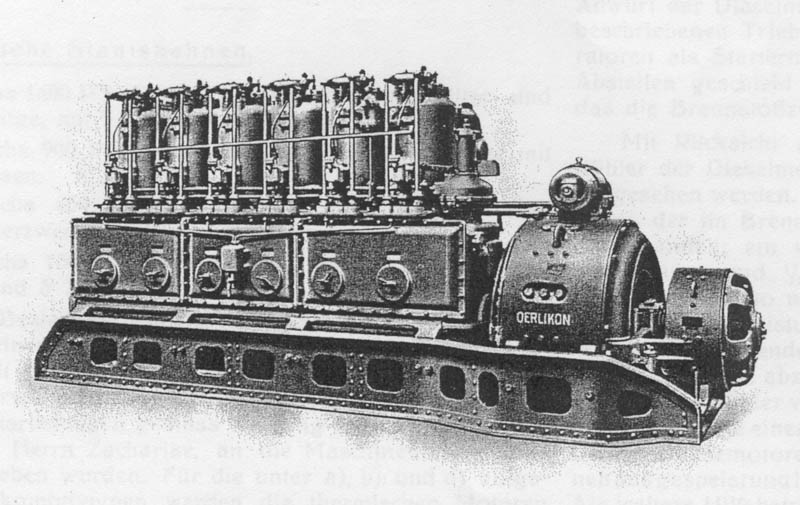
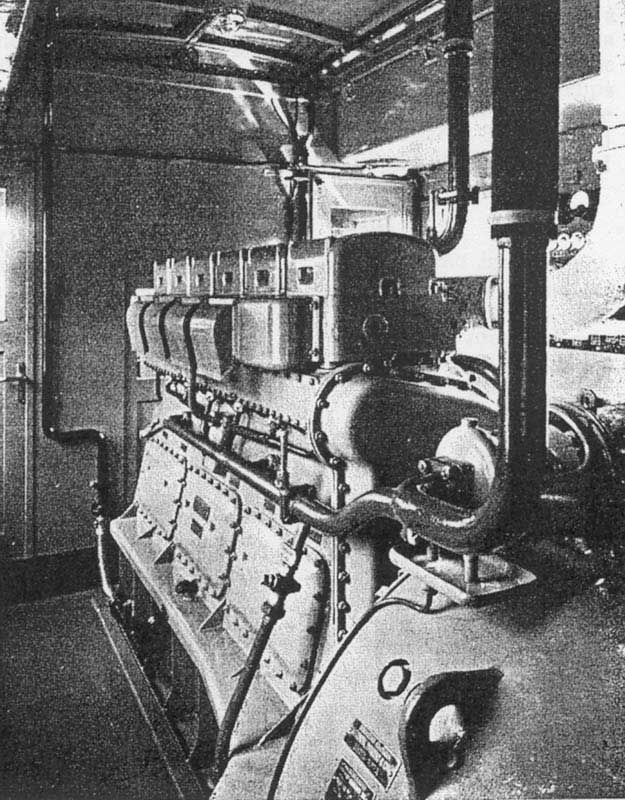
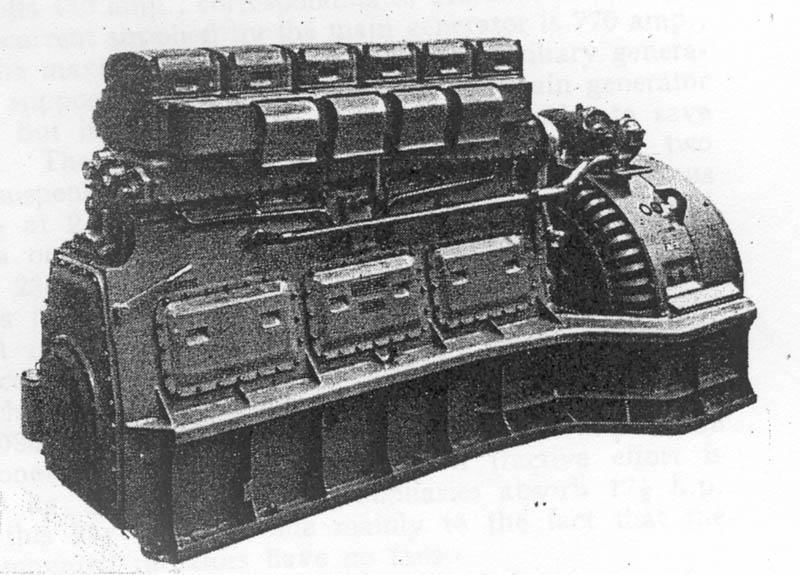
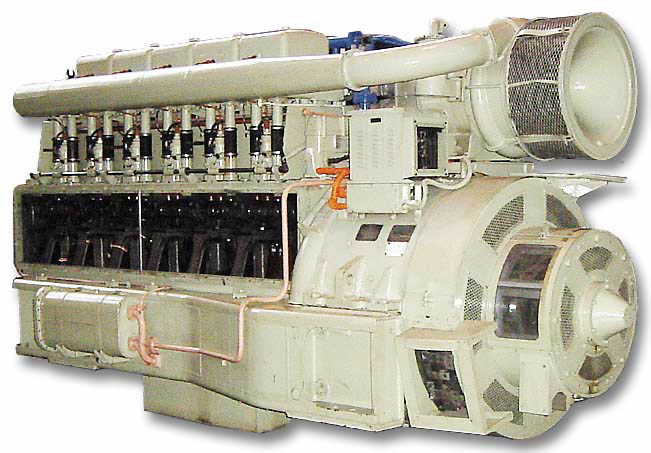
On the left a view of a 330hp 'LV' series engine dating from 1931 and installed in one of the three shunters for the Port of Rosario(S/DRT). On the right an amazing view of one of the same three engines still extent and operating in 1989. Photograph courtesy PA Graham.
The 'LV' engines powered numerous locomotives and railcars from 1929 - 1933, the licensee Armstrong Whitworth sending a variety of machines to Argentina, India & Ceylon whilst other builders sent machines to Siam, France, Russia, Manchuria and Argentina. Of particular interest were the double engined powerhouses/locomotives supplied to Argentina and India, with a total installed horsepower to a maximum of 1,700hp. Sulzer would become the first diesel engine builder to act as main contractor for complete diesel locomotives.
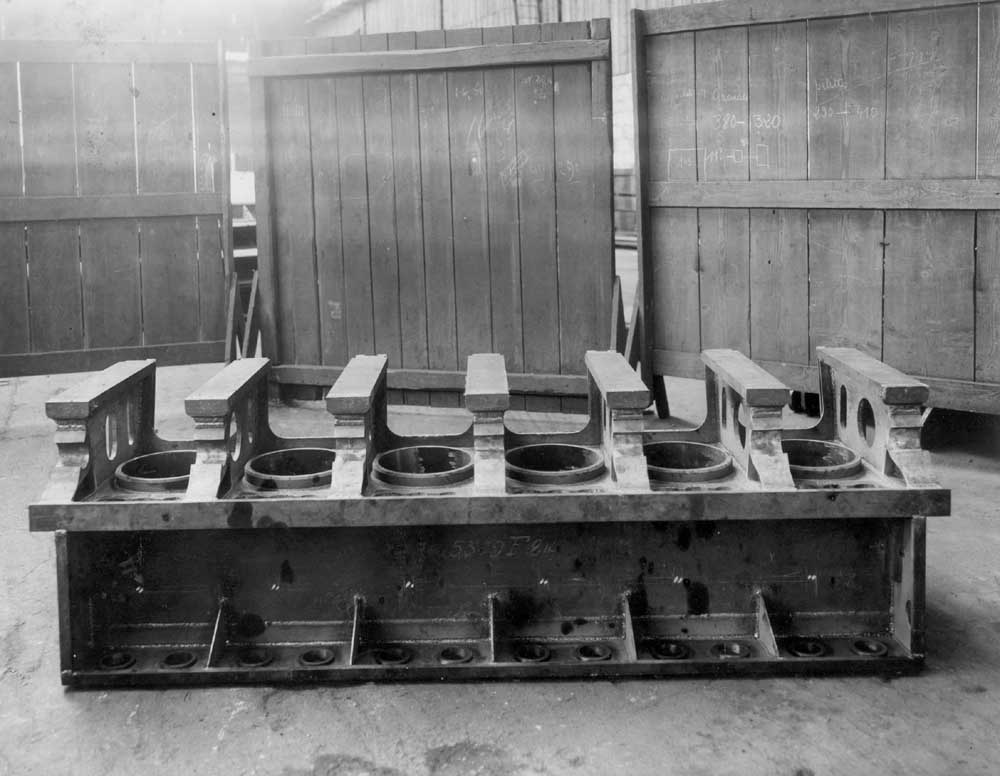
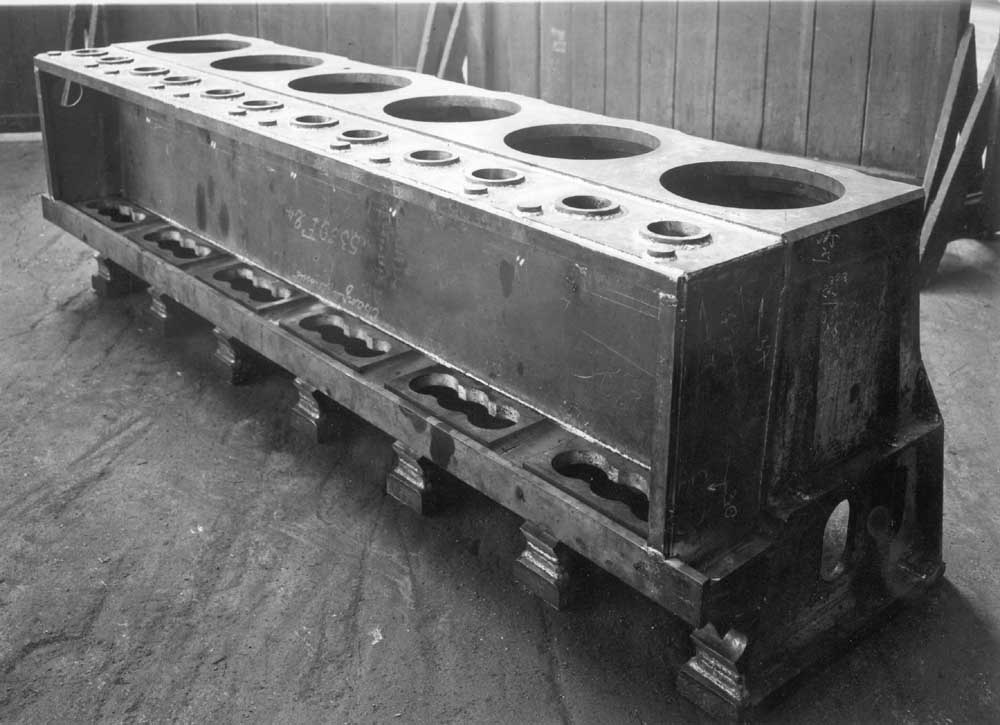
The years 1933 - 1935 were a time of transition, modification & improvement, engines were now available up to 850hp. However a new range was being evolved, this was the 'LD' series, to be available for the next fifty years. Initially offered over the 400hp - 2,200hp range with several different cylinder sizes it incorporated a number of notable features common throughout the range. These power units were specifically designed for rail traction use, there were no compromises in the use of these engines for industrial or marine applications. It embodied substantial cast steel transversals welded into a mild steel crankcase, the crankcase itself was integral with the common underbed carrying the engine & generator. The stiff framing and lateral rigidity elimated many of the problems encountered in previous designs. The cylinder block was welded up of steel plate, the main bearings had fine adjustment wedges let into the structure which avoided the need for studded top or bottom caps, from 1937 onwards the big end bolts had a toothed locking arrangement.
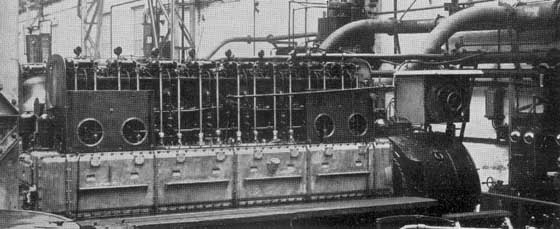
I'm uncertain of the first locomotives powered by the new 'LD' engine, but by 1934 Armstrong Whitworth had delivered a rail-motor to Ferrocaril Oeste, Argentina with a 450hp 6LDA25 engine. By the outbreak of World War Two 6LDA25 power units were in service in Algeria, France, Madagascar & Senegal, with two Swiss locomotives equipped with a 1,200hp 8LDA28. But it is to France & Roumania that the most interesting power units were delivered. Each country acquired a twin-unit locomotive powered by two double bank 12LDA31 engines producing 2,200hp at 700rpm, cylinder size being 310mm by 390mm. The double bank engine was simply two six cylinder engines mounted side by side with additional gearing installed to transfer the motion of two crankshafts to the single generator. This concept was the beginning of the double bank engines which would later be installed in fleets of French, British, Roumanian, Polish, Bulgarian & Chinese locomotives.

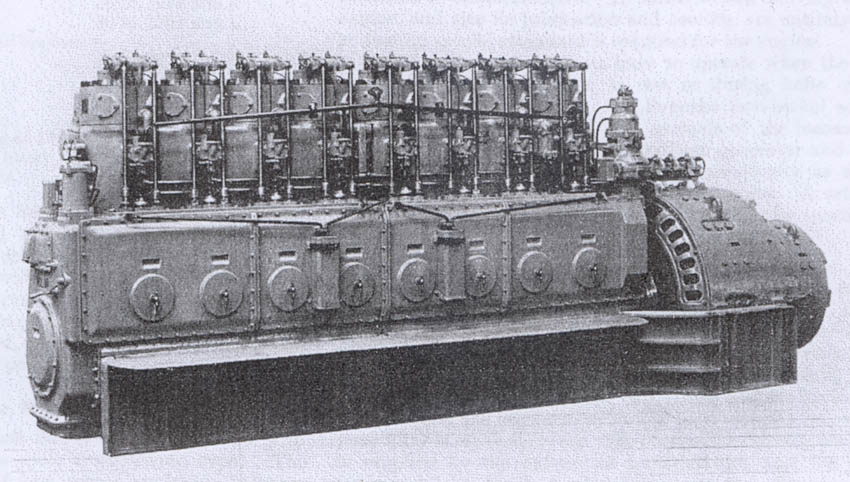
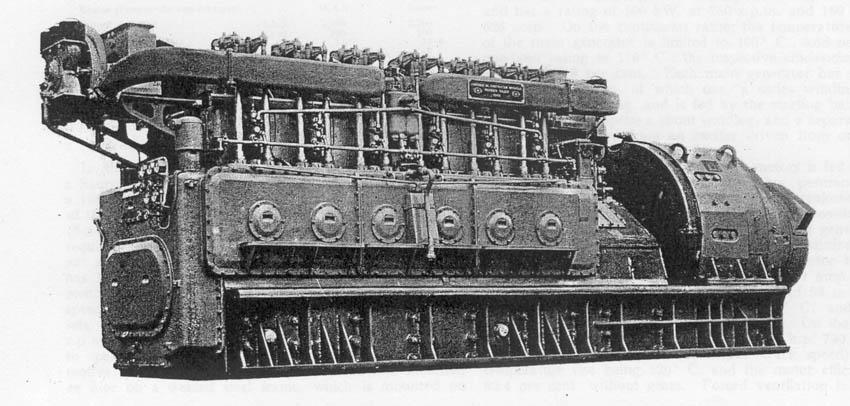
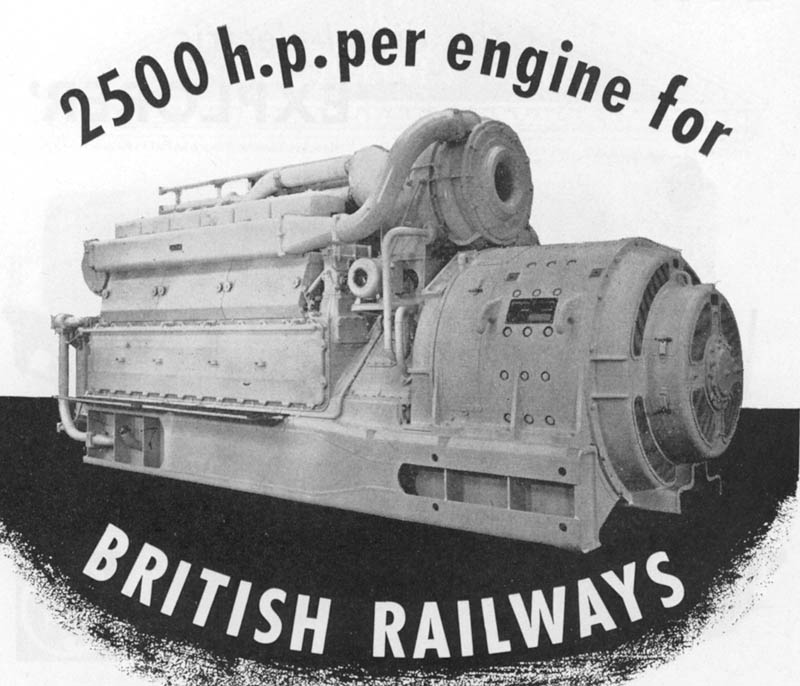
From an advertisement for the Buchi turbochargers comes this view of one of the 12LDA31 power units installed in the Roumanian double locomotive. (DRT) These double-bank engines were the magnum opus of Adolf Brunner and had a power to weight ratio better than any line-service diesel electric locomotive of 2,000/2,200bhp built well into the late 1950's.
In the United States of America the Busch-Sulzer company had developed diesel engines for the marine and stationary markets. A brief offshoot into the railway field saw the construction of a diesel electric locomotive in 1936 powered by a ten cylinder, two stroke, 'V' form 2,000hp power unit. An eight cylinder 1,600hp model was also offered. This offshoot went nowhere with Busch-Sulzer returning to service the military's needs, particularly in light of the approaching global conflict of World War Two. NOTE This offshoot by Busch-Sulzer was based upon designs made by Busch - and bears no engineering connection with the engine models produced out of Winterthur.
The Second World War curtailed orders and developments, but up until the end of 1939 a total of 87 locomotives, railcars & powerhouses had been delivered with Sulzer engines. After peace returned the orders resumed with orders literally going to all parts of the world. The use of Sulzer engines in a series of locomotives built by Alsthom saw many locomotives shipped to countries with a French colonial past. Included were Camerouns, Ecuador, Guinea, Madagascar, Senegal & Tunisia, whilst other European builders sent locomotives to Algeria, Bolivia, Cuba, Senegal & Thailand. Prominent among the orders were the models 6LDA25 & 8LDA25. Operating conditions, for engines designed in Switzerland, varied immensely - from high altitude operations reaching 13,000 feet in Ecuador and Bolivia, hot desert climates in Algeria & Tunisia, to sub-tropical climates across West Africa and Siam.
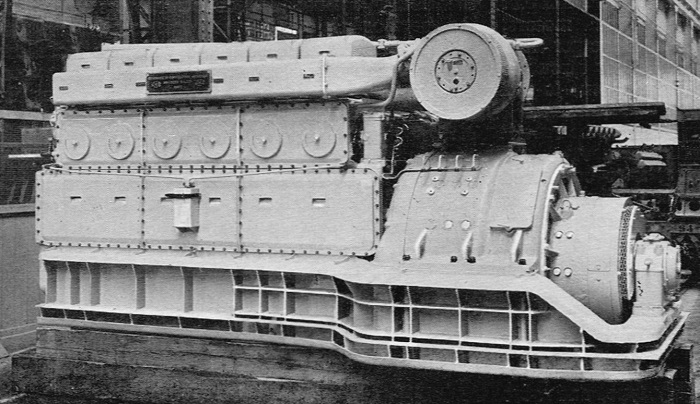
A 6LDA25 with a Brown Boveri turbo blower awaits fitting into one of the Alsthom built locomotives destined for Senegal during 1947. Cylinder size is 250mm by 320mm, developing a continuous output of 655hp at 795rpm, with a one hour output of 735hp at 850rpm. Extreme conditions on the Dakar - Niger line, 100% humidity for three/four months in the wet season and ambient temperatures reaching 112-120F (45-48C) in the summer, the engine output was reduced to 610hp at 795rpm. (S/DRT)
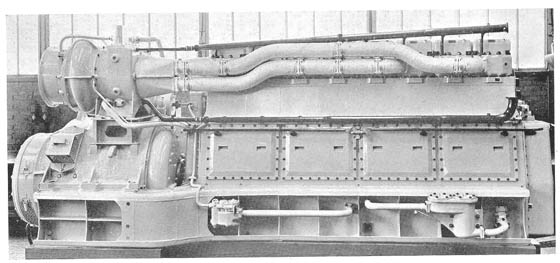
A 1954 8LDA25 built at the CCM-Sulzer works at St Denis awaits installation into a locomotive bound for Algeria. It's normal continuous output was 1,070hp at 800rpm but for use on the Algerian routes it was derated to 960hp to compensate for altitude and high ambient temperatures. Cylinder size was 9.85in by 12.6in (250mm by 320mm). Electrical equipment was by Alsthom. (S/DRT)
During the mid 1950's developments started to speed up. Although the 'LDA' range would remain the prinicipal prime mover available, improved materials and construction techniques would allow greater output to be offered. Additionally major modernisation plans for the replacement of steam power across Europe would allow Sulzer to offer its power units in great volume to fulfill some of these orders. Generally the European nations had only dabbled a little with Sulzer engines, the mid 1930's had seen a small batch of shunters and railcars operating in the United Kingdom, in France & Switzerland Sulzer powered equipment and been received prior to World War Two, though it was in France during the early 1950's that large orders were placed for shunting/branch line locomotives with the 6LDA22 engine. Spain had also ordered a small number of shunting locomotives, one of the few orders to use a hydraulic transmission with the Sulzer power unit. It was perhaps in Ireland where the begining of the postwar development of the 6LDA28 engine began its path of explosive growth.
The two CIE diesels were built at their Inchicore workshops in 1950/51, the engines being rated at 915hp, though later uprated to 960hp. Further orders for the 6LDA28 quickly followed for Australia (1953), Sierra Leone (1954) and Ireland (1956). But it was in the United Kingdom in 1955 that the groundwork was laid for a huge production run of the 6LDA28, almost six hundred to power Classes 24/25/26/27, with a further ninety eight for the 8LDA28 powered Class 33's. The 8LDA had also found favour in Japan with orders placed in 1953 & 1957.
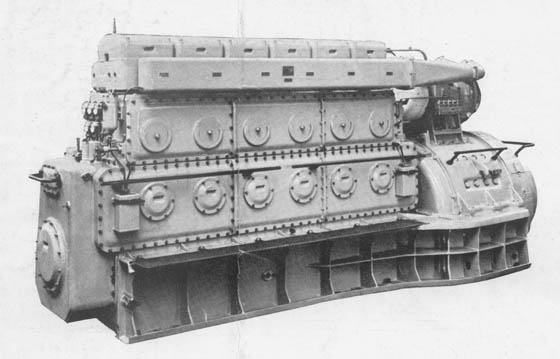
For Australian use the 6LDA28 (see above) with 280mm by 360mm (11in by 14.2 in) cylinders the one hour rating was set at 955hp at 750rpm, continuous output was 850hp at 700rpm. Electrical equipment was provided by Crompton Parkinson. (S/DRT)

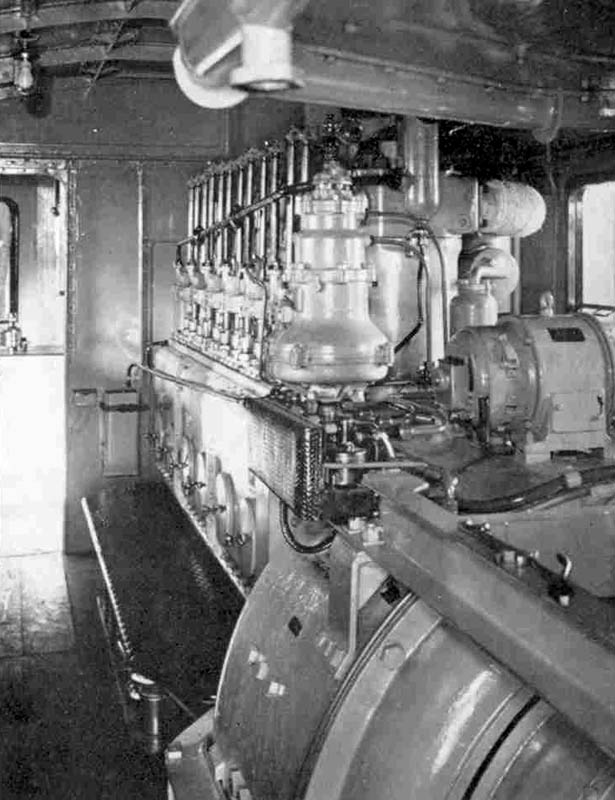
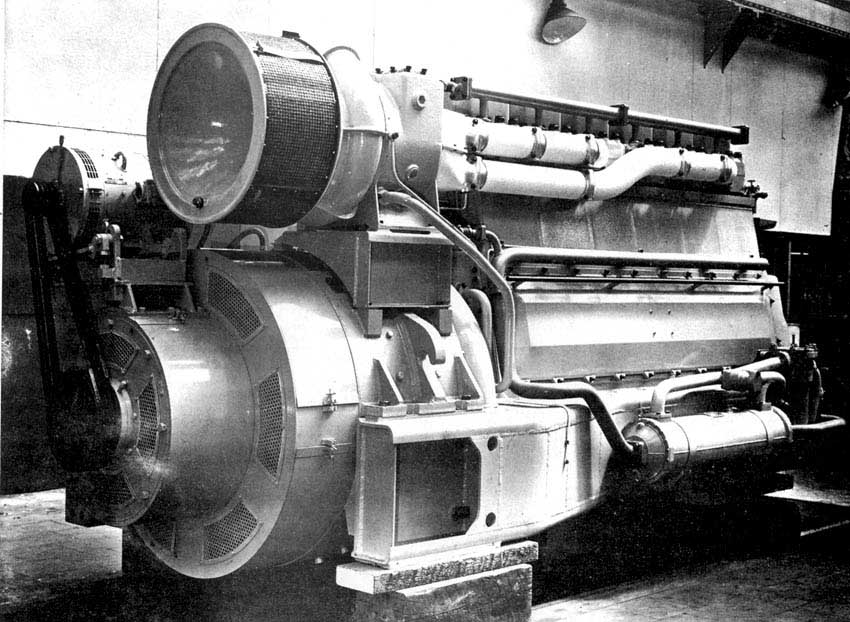
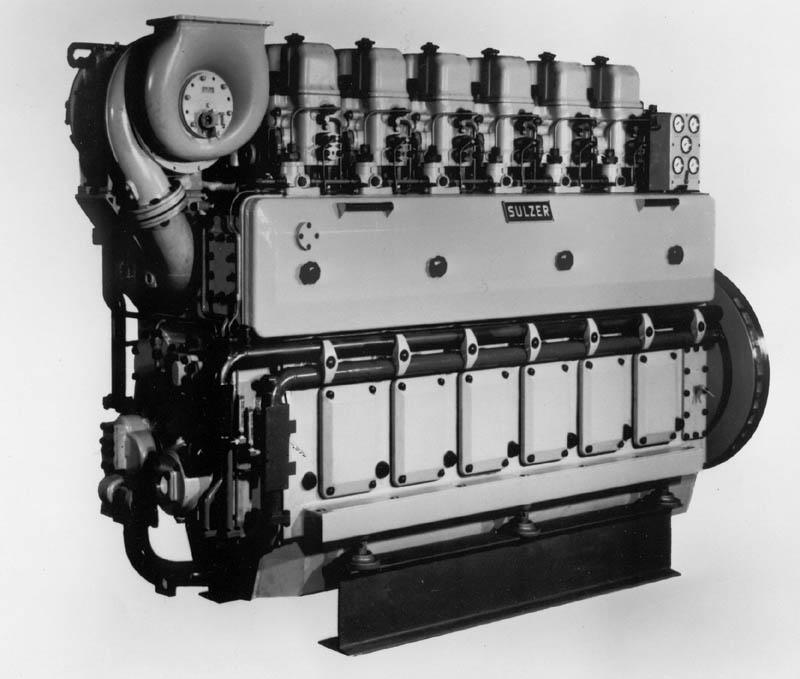
The large fleet of British Railways Class 24/25/26/27's were powered by variants of the 6LDA28. The view above shows one of the early engines equipped with a belt driven exciter, these were only carried by D5000 - D5049. All the Class 24 engines were rated for 1,160hp but the addition of intercooling allowed the horsepower to be increased to 1,250 for the Class 25's. (U)

A 6LDA28B awaits fitting into a Class 25 at Derby Works sometime during the 1970's. This is the uprated 'B' version and clearly shows the air-to-water free flow intercooler fitted between the turbocharger and inlet manifold. (M)
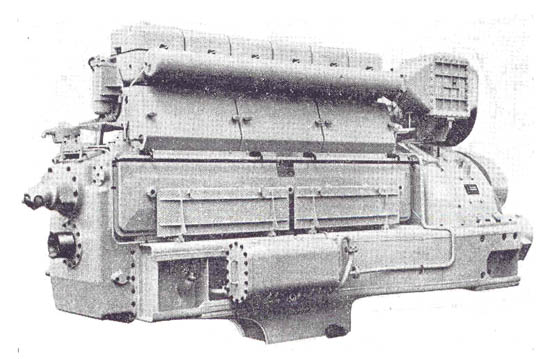
Eleven years after the first 6LDA28's went to Australia a further batch were shipped, these being the 'C' version sporting considerable improvements with a sixty percent increase in output when compared to the earlier CR NSU class. The bore was 11.02in with a stroke of 14.17in. Continuous rating is 1,400hp at 800rpm, the one hour testbed rating was 1,540hp at 800rpm. The power units were built at Vickers Ltd Engineering Group, Barrow, United Kingdom. (S/DRT)
During the early 1960's a further round of orders spread Sulzer's 6LDA28 to countries that had previously not received Sulzer powered locomotives. Between 1962 & 1968 railways in Nyasaland, Trans-Zambesi & Malawi took delivery of the 'B' model set at 1,200hp, Nigeria followed suit in 1964 with the 'C' model set at 1,400hp, a year later the 'C' model set at 1,300hp was supplied to Tulloch for use in Australia. And from 1966 - 1975 Roumania built a large quantity of the 1,250hp 'B' model for a number of orders.
In 1962 Sulzer, seeking to increase the output of the LDA & utilising ideas already incorporated in the LVA series, produced two six cylinder prototypes rated at 1,700hp at 850rpm. Of similar size to the 6LDA28 engine it was planned to be offered only in the six & eight cylinder in line types, and aimed at those world markets where simplicity and ruggedness were essential. Designated as the LDA28-R the cylinder bore remained at 280mm, the stroke altered to 330mm to keep the mean piston speed within acceptable limits. Built by Vickers Armstrong one unit was sent to Winterthur for testing, the other was to be installed in a Class 25. The development was cancelled in 1967 when resources were reallocated to deal with the major problems affecting the 12LDA28C engine and more interest lay in the further development of the LVA line. D5299, the Class 25 chosen as the testbed was delivered out of sequence powered by a standard 6LDA28B engine.
Returning now to the post war 1950's the two double unit 12LDA31 powered locomotives had survived World War Two and continued to see service in France & Roumania. Future orders however were directed at the slightly smaller 12LDA28 model, this engine being better able to fit within loading gauge restrictions and axle loading requirements. France received the first 12LDA28's, set at 2,000hp for use in freight service in the Paris area. By 1955 the engine was rated at 2,300hp for use in British Railways Class 44. An increase in turbo-charging and charge-air cooling led to 2,500hp being available as the 'B' variant for the Class 45. Further charge air cooling improvements, an increase in the engine rpm to 800 and strengthened engine components allowed the 12LDA28-C to be rated at 2,750hp and installed in D0260 'Lion' and the Class 47's. Here the development of the 12LDA28 ends, its reputation certainly not helped by the troubles encountered with those installed in British Railways Class 47's.

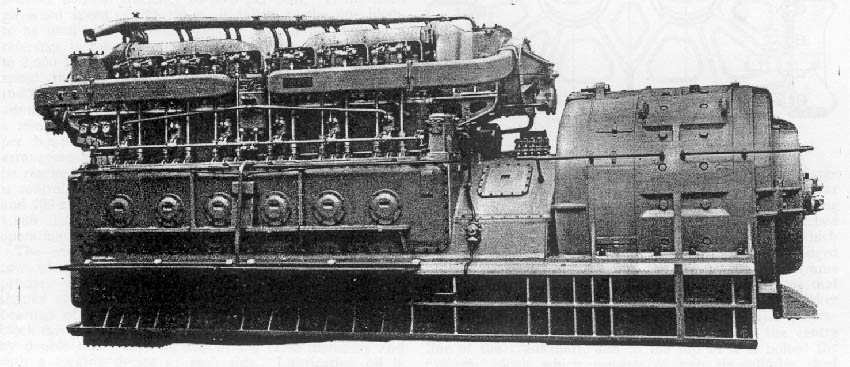
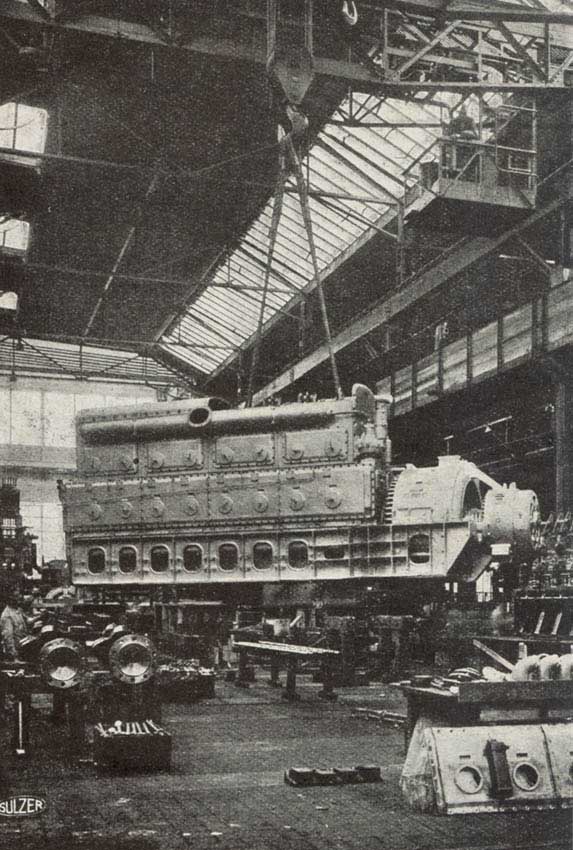
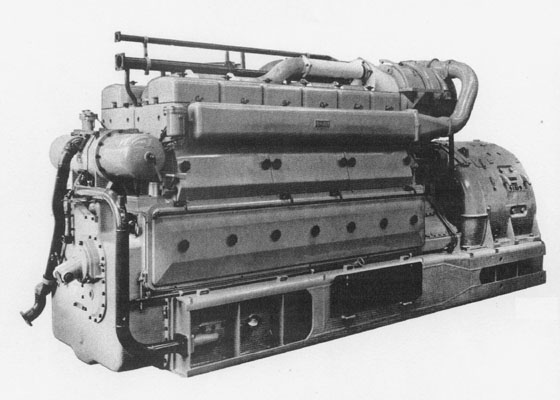
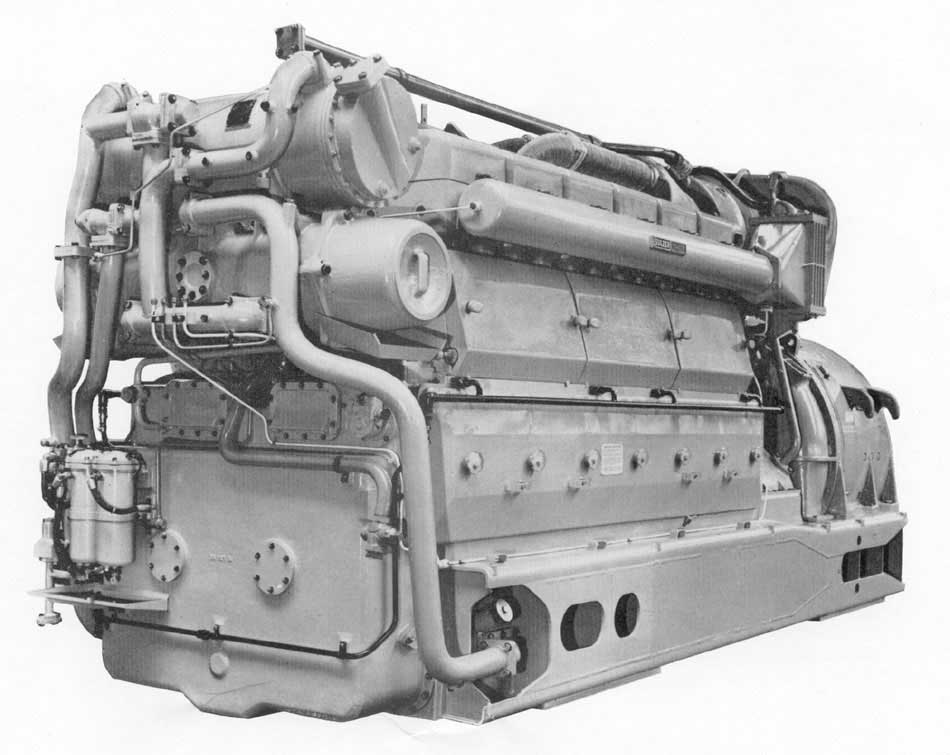
The first application of the 12LDA28 was for the SNCF 65500 series machines. The engine rpm was set at 710 to provide the necessary 2,000hp, increasing the rpm to 750 would later provide 2,300hp, as was fitted to British Railways's Class 44's (D1 - D10) four years later. Until the arrival of the LVA range the 12LDA28 was the most powerful Sulzer engine available. Being basically two 6LDA28's side by side the use of a spur gearing with a step-up ratio of 1:1.44 allowed the engines to operate at 750rpm, the generator running at 1,080rpm which allowed the fitting of a smaller generator. (S/Brochure)

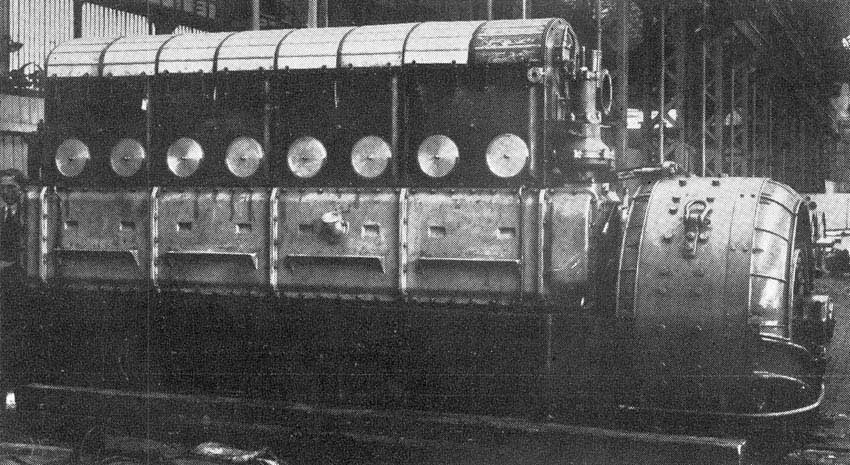
The Class 44's received the 12LDA28 set at 2,300hp, the addition of intercooling brought the rating upto 2,500hp for the Class 45's built from 1960 - 1963. The view above is of one of the 'B' variants awaiting installation into a Class 45 during the late 1970's. Sulzer obtained even more out of this design by increasing the rpm to 800 and reinforcing/strengthening certain components to allow 2,750hp to be delivered. This engine was used in the BRCW/Sulzer/AEI prototype D0260 'Lion' in early 1962 followed by the major order for the Class 47's from 1962 - 1967. (MB)
Back tracking slightly in the midst of the 12LDA28 orders for British Railways came an order in 1959 for a small number of 12LDA28 powered six axle locomotives for Roumania with the engine set at 2,100hp. This led to a major building program that ran until 1990 with one basic design built for railways in Roumania, Bulgaria, Poland and China.
Towards the end of the 1950's Sulzer embarked on a series of 'V' engines, which at the time were most highly rated. The 1,750hp 8LVA24 first appeared in two SNCF locomotives in 1961, the 2,650hp 12LVA24 was fitted to the SNCF's 68000 series locomotives in 1963. A slightly less powerful version was fitted to the ten machines supplied to Cuba by Brush/Clayton in 1965. British Railways also sampled the 12LVA24 in five of its Class 47's in 1965. The end to development came in 1967 with the delivery to British Railways of the Brush/Hawker Siddeley/Sulzer demonstrator HS4000, powered by a 4,000hp 16LVA24. This was Sulzer's most powerful power unit built for rail traction.
The United States again enters the picture in the late 1970's when locomotive rebuilder Morrison Knudsen installed a series of Sulzer power units into several existing locomotives. The first applications were of the marine based 6ASL25/30 & 8ASL25/30 series used in a Morrison Knudsen demonstrator and four units for the Southern Pacific. This was merely reworking of an existing design into a new application.
More exciting however was the fitting of ten 16 ASV25/30 3,600hp power units into locomotives belonging to the AT&SF and Union Pacific. Teething problems plagued these machines and their operation in revenue earning service was brief. Research into correcting their problems continued but was eventually curtailed by Morrison Knudsen late in 1982. These power units were descendents of the LVA range.
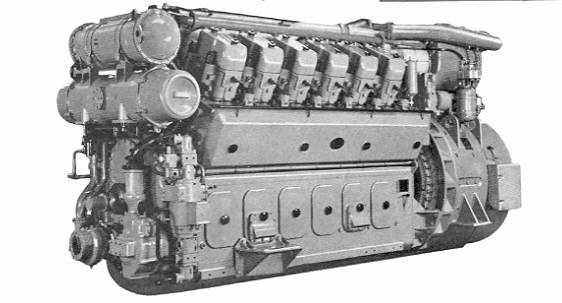
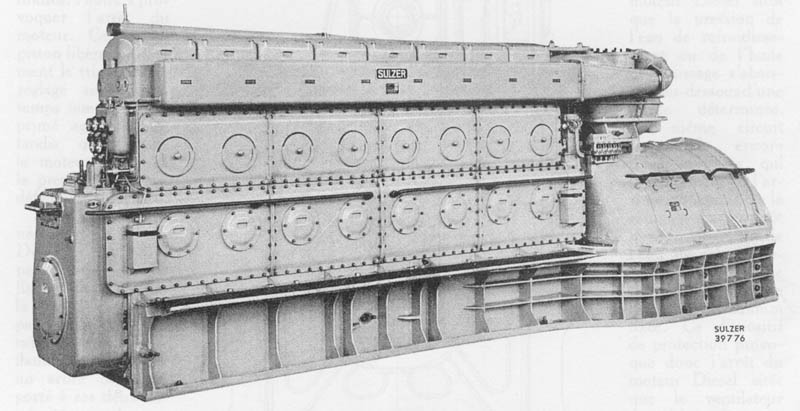
A view of the Mantes built Sulzer 12LVA24 power unit for use in the 1961/62 built SNCF 68000 locomotives. The welded steel construction supported two banks of six cylinders inclined in a 'V' at 50 degrees. The SNCF already had 340 Sulzer 'LDA' engined locomotives in service. (S/Brochure)
| Power units available from Vickers Armstrong, Barrow after 1950 | ||||||||||||||||||||||||||||||||||||||||||||||||||||||||||||||||||||||||||||||||||||||||||||||||||||||||||||||||||||||||||||||||||||||||||||||||||||||||||||||||||||||||||||||||
| Designation | 6LDA22 | 8LDA22 | 6LDA28 | 8LDA28 | 12LDA28 |
| Bore (mm) | 220 | 220 | 280 | 280 | 280 |
| Speed Range (rpm) | 520-950 | 520-950 | 400-750 | 400-750 | 400-750 |
| No. of cylinders | 6 | 8 | 6 | 8 | 12 |
| Max service output | 570 | 750 | 915 | 1,200 | 1,800 |
| Dry Weight (lb) (excluding generator) | 9,700 | 12,500 | 18,600 | 23,800 | 40,000 (1) |
| Dry Weight/lb per hp | 17 | 16.75 | 20.25 | 19.75 | 22.25 |
(1) Includes weight of generator and gears.
| Power units available from Sulzer Brothers, Winterthur after 1950 | |||||||||||||||||||||||||||||||||||||||||||||||||||||||||||||||||||||||||||||||||||||||||||||||||||||||||||||||||||||||||||||||||||||
| Designation | 6LDA19 | 6LDA25 | 8LDA25 | 6LDA31 | 8LDA31 | 12LDA31 |
| Bore (mm) | 190 | 250 | 250 | 310 | 310 | 310 |
| Speed Range (rpm) | 600-1,100 | 465-850 | 465-850 | 385-700 | 385-700 | 385-700 |
| No. of cylinders | 6 | 6 | 8 | 6 | 8 | 12 |
| Max service output | 420 | 735 | 960 | 1,135 | 1,500 | 2,250 |
| Dry Weight (lb) (excluding generator) | 7,050 | 14,000 | 18,000 | 23,600 | 30,800 | 49,300 (1) |
| Dry Weight/lb per hp | 16.75 | 19.25 | 18.75 | 20.75 | 20.50 | 22.50 |
(1) Includes weight of generator and gears.
| The LVA range from 1958 | |||||||||||||||||||||||||||||||||||||||||||||||||||||||||||||||||||||||||||||||||||
| Designation | 8LVA24 | 12LVA24 | 16LVA24 |
| Bore (mm) | 240 | 240 | 240 |
| Stroke (mm) | 280 | 280 | 280 |
| Horsepower (UIC) & short term | 1750/2000 | 2650/3000 | 3500/4000 |
| Piston Speed (m/s) | 9.8 | 9.8 | 9.8 |
| Dry Weight (kg) | 10,500 | 14,400 | 18,500 |
| Statistics for the rail traction engines | ||||||||||||||||||||||||||||||||||||||||||||||||||||||||
| Designation | 4LV38 | 6LV26 | 6LF19 | 12LDA31 | 12LDA28-C | 16LVA24 |
| Year | 1909 | 1914 | 1934 | 1935 | 1960 | 1966 |
| Bore (mm) | 310 | 260 | 190 | 310 | 280 | 240 |
| Stroke (mm) | 550 | 300 | 230 | 390 | 360 | 280 |
| Max power HP/cyl | 400 | 33.3 | 48.3 | 183.3 | 229.2 | 250 |
| Speed - (rpm) | 304 | 440 | 1,200 | 700 | 800 | 1,100 |
| MEP (bar) | 9.31 | 4.20 | 5.45 | 7.85 | 11.41 | 15.84 |
| Mean piston speed (M/S) | 5.57 | 4.40 | 9.20 | 9.10 | 9.60 | 10.27 |
DRT - Diesel Railway Traction
M - me
MB - Mark Bennett
S/brochure - manufacturer's publicity material
S/DRT - Sulzer/Diesel Railway Traction
U - source unknown


What's for dinner?
Requiem
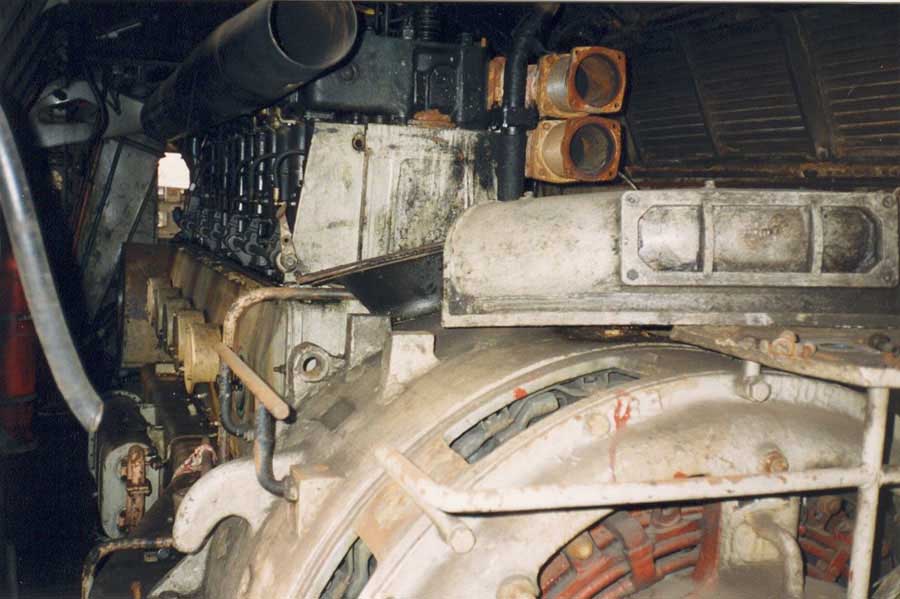
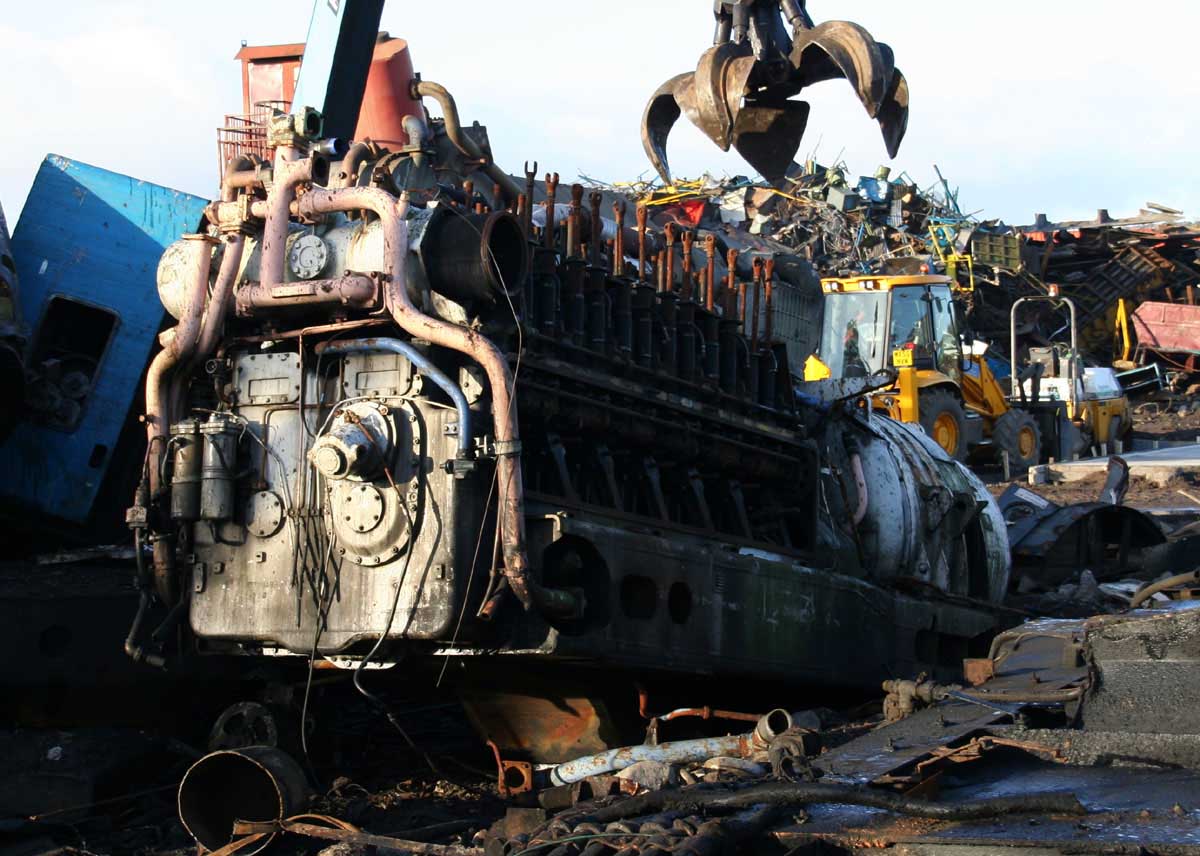
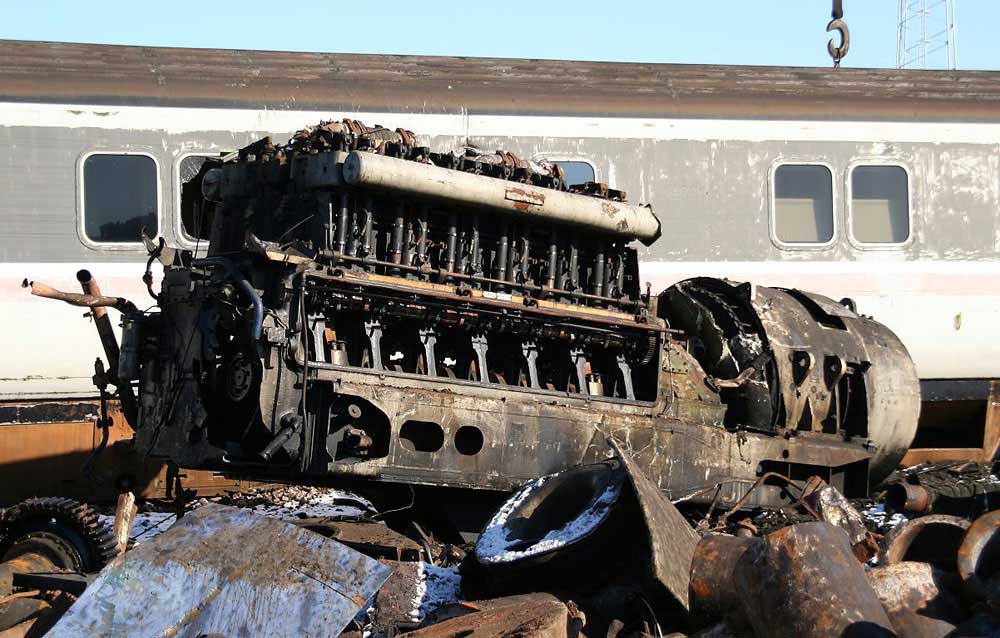
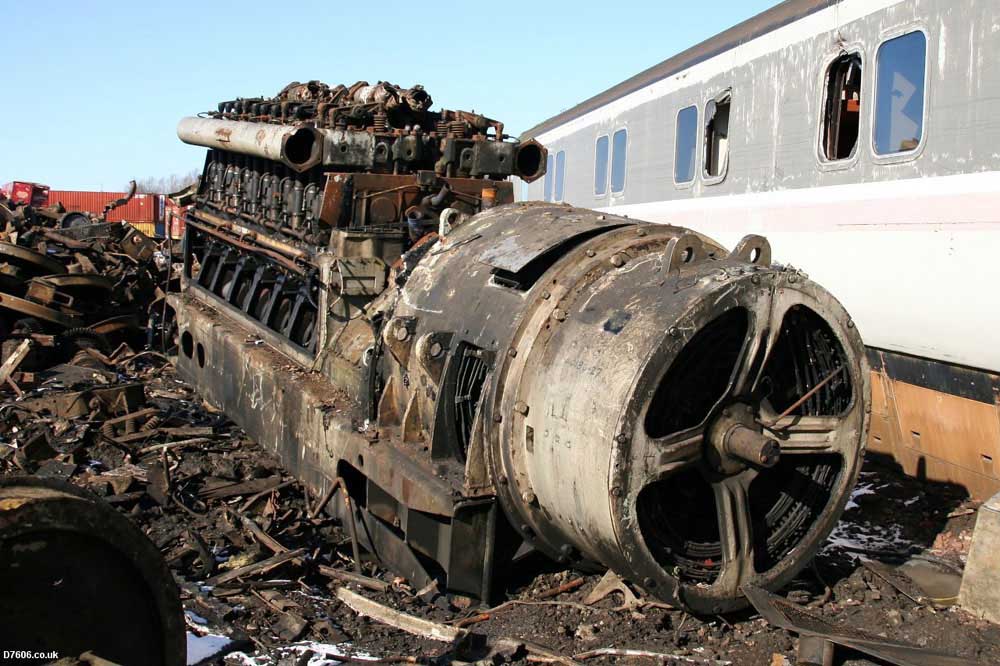
After many years of service the products of Winterthur and Barrow have lost their usefulness. Faded paint, rust and oil stains give clues to the many thousands of hours of service provided. But time has run its course, the new has become old & wearied and unecomical to operate against newer more fuel efficient & environmentally friendly engines. Most would end their days out of general sight in a railway workshops, dismantled for spares or scrapped on the premises without much fanfare. But for some that lingered awhile and ended their days in private scrapyards where this end would be a little more public and visible than elsewhere.
Not a glamerous portfolio of photographs for sure, but nevertheless part of the locomotive's history however you look at it.


Page added September 28th 2003.
Last updated December 13th 2011.
Return to Sulzer Global listing
Return to Picture menu