The former Great Central route from Sheffield Victoria to Manchester, crosses the backbone of England and avoids the higher ground through the use of the Woodhead Tunnel. On its western side the line made use of the Longdendale Valley, much of which is within the Derbyshire boundaries.
Upper Longdendale
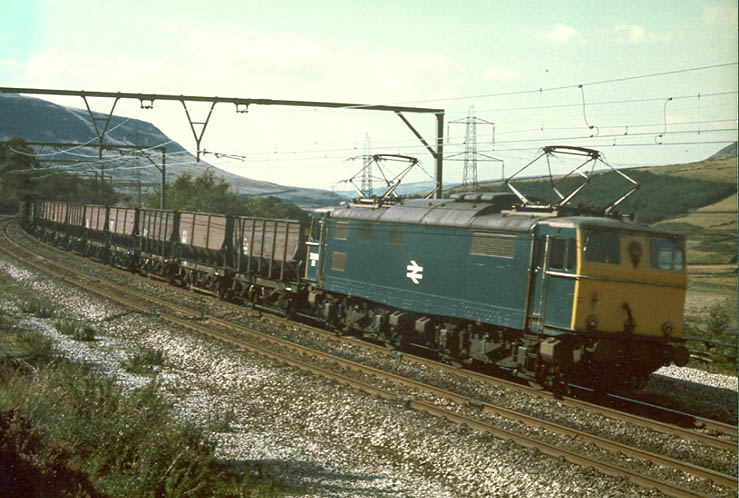
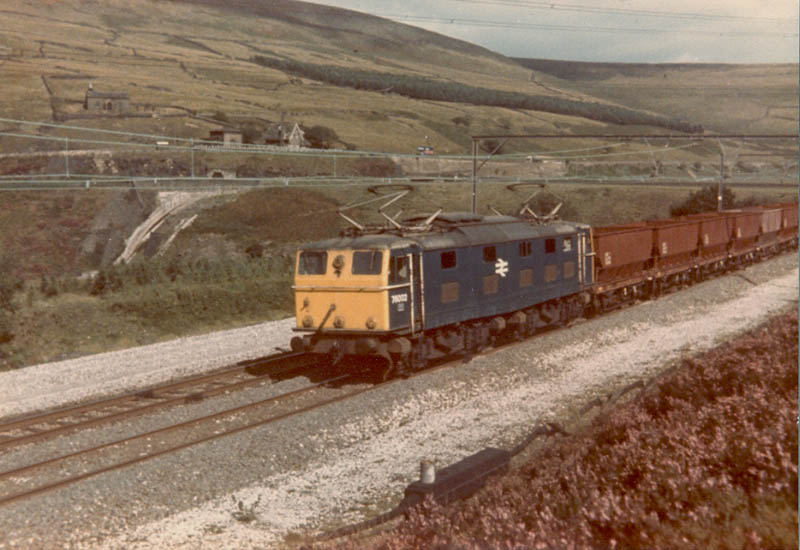
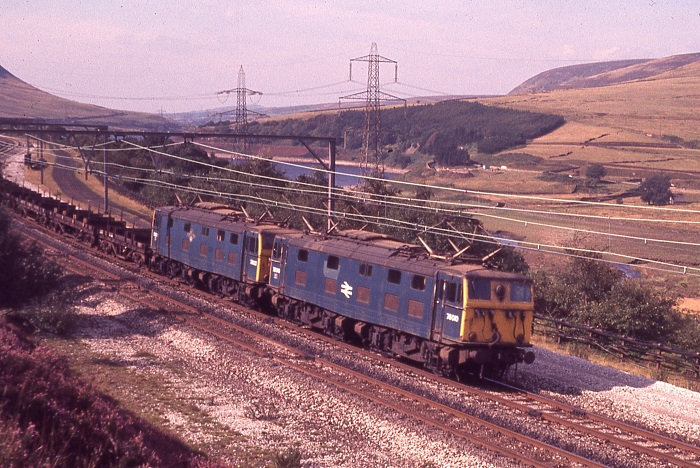
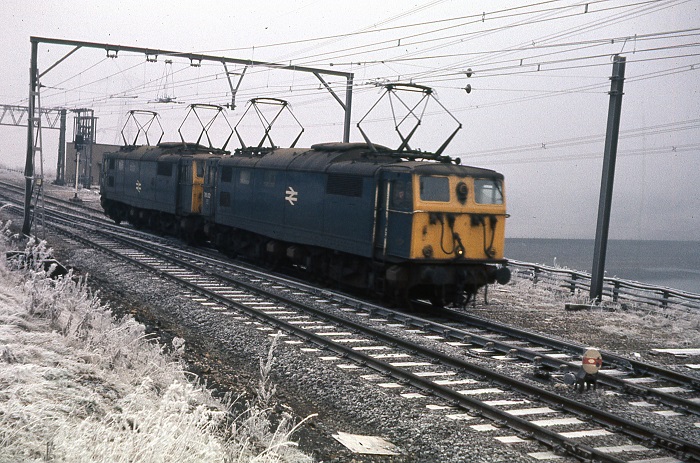
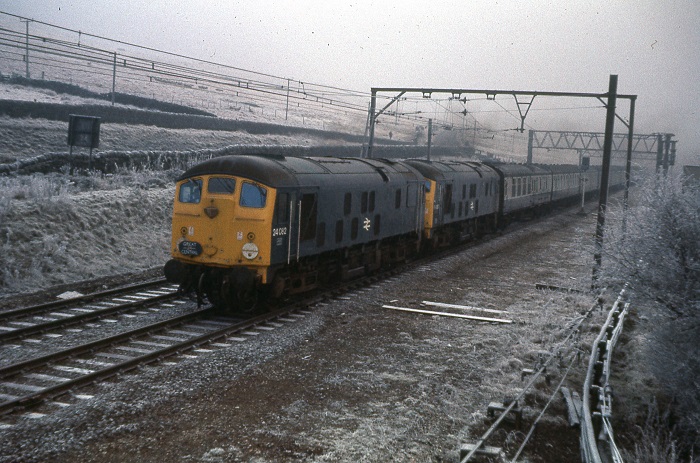
The photograph above and the two below all date from September 16th 1977. A quick look at my notebooks show a road trip was made on this day to Buxton, Peak Forest, Woodhead, Rotherwood, Tinsley and Beighton. It appears several hours were spent lineside at the same location somewhere alongside Woodhead Reservoir. Class 76's that were observed during this time included the first three, 76001/2/3, which all passed in succession and the others noted were 76006/10/14/21/22/31/32/34/41. No other types of locomotives were noted whilst here. Five Class 76s were seen at Rotherwood including 76031/32 previously seen at Woodhead.
Torside
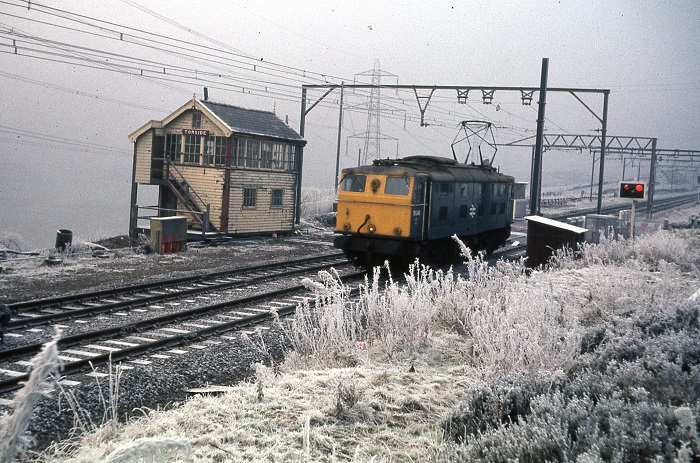
The above view, whilst not of the sharpest quality does contain quite a bit of detail about the line and its infrastructure. One detail overlooked by your webmaster for a long time is that the Class 76 is operating with only one 'pan' raised, which I'm told was not the normal operating practice for this route. And close investigation reveals why, the other 'pan' is missing! The EM1's had worked 'one pan up' on test freights on the Ilford - Shenfield line before the Woodhead route was opened to the electrics. Two 'pan' running would be necessary on the Woodhead route because the OLE did not have auto (wheel) tensioners, there were problems with contact wire stability.
Valehouse
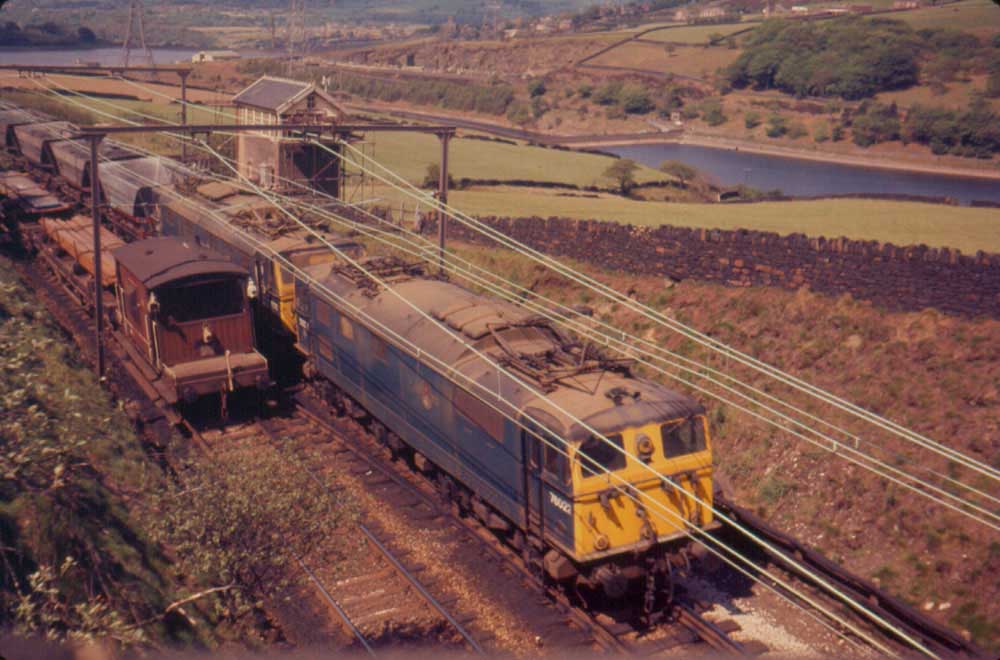

The views below are not in Derbyshire, the electrified line leaves the county at Broadbottom, they are included to complete the route.
Guide Bridge


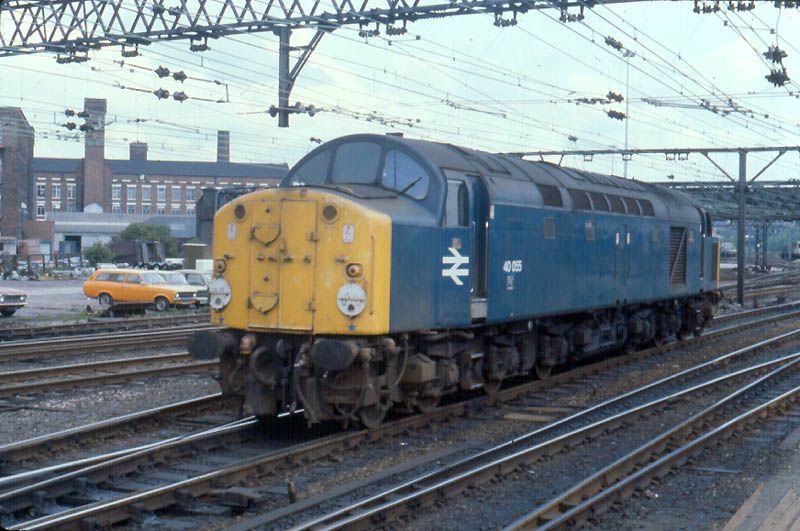
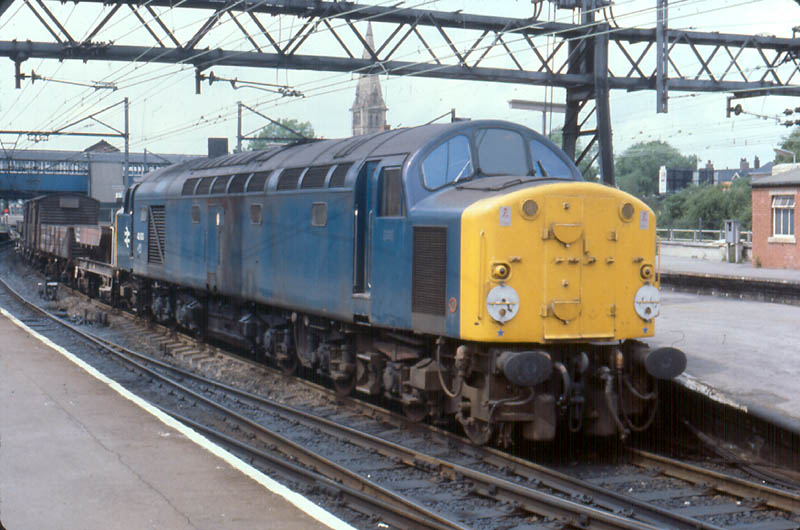
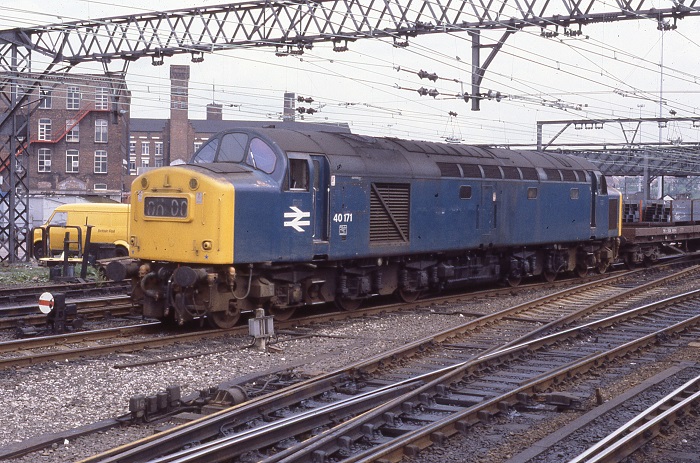
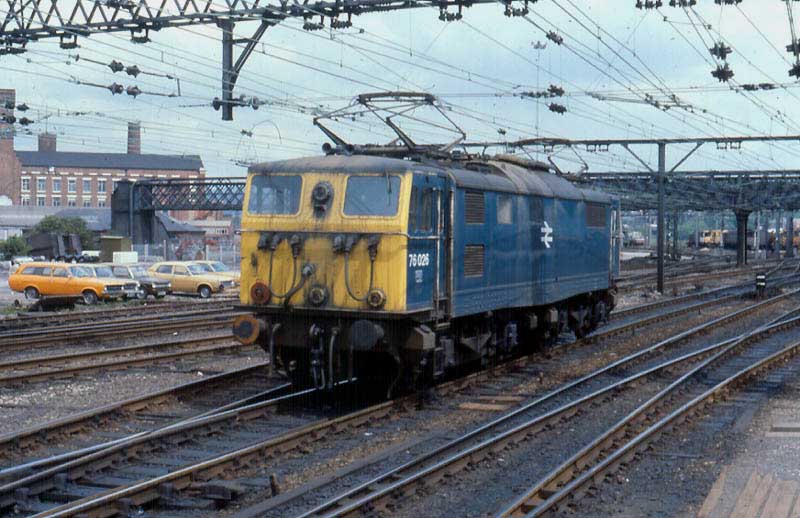
Times have changed at Guide Bridge since these views were taken. The locomotive sidings are no longer used, any that remain are now completely engulfed in bushes and small trees. The other yards in the area have also been substantially reduced, whilst the mainlines are now reduced to just two.
Reddish Depot
1954 - 1983
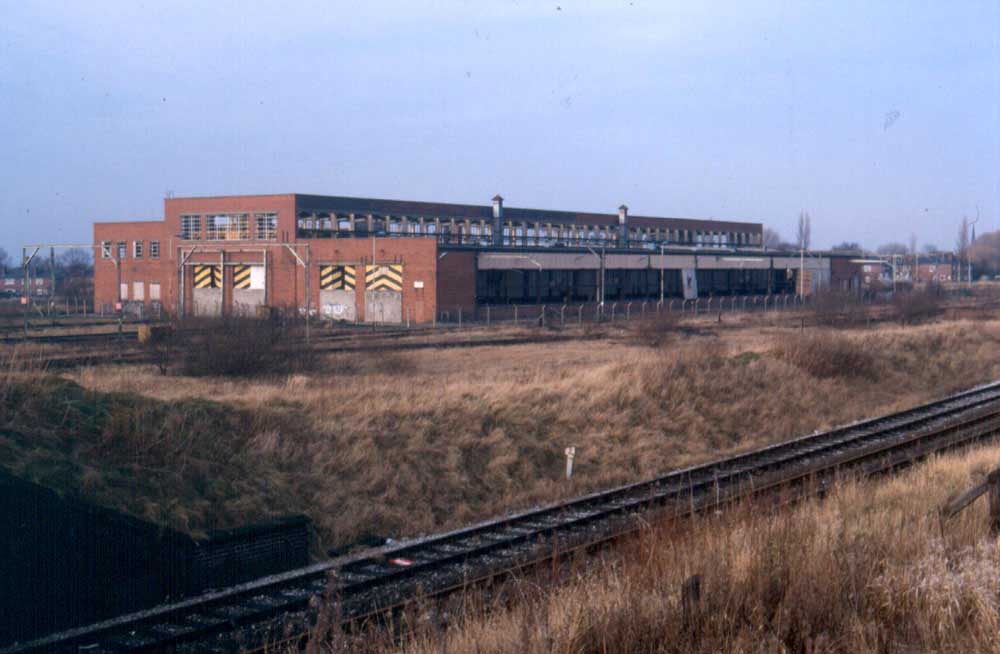
The depot at Reddish which opened in 1954, was the primary repair center for the 1500V DC electric locomotives that worked the Woodhead route. Facilities were also opened at Wath and Darnall, the latter moving east to Tinsley when that yard and depot opened in 1965. The heaviest of the classified repairs or any accident repairs were handled by Crewe or Doncaster. On the east side of the main building was a two track shed used for minor running repairs or stabling of locomotives. On the west side of the building was the administration block and stores area.
The depot was built with three principal spaces. The central section of the building carried two through tracks, which allowed access to the wheel lathe, overhead crane and jacks for lifting locomotives off their bogies.
The style of the depot was impressive, not something from the steam era, and it wasn't in keeping with the style of the diesel depots built onwards from the late 1950s. Its steel frame construction assisted by large quantities of brick work gave it a character all its own. And there was always the anticipation of what might be on the depot during my occasional visits there. It was not known for the quantity of stuff but rather the variety. The Class 76s were of course to be expected, with the Class 24/25/40s a virtual fixture. The presence of the wheel lathe led to visits by a variety of types not normally found here, from the AC electrics of the LMR to the Bury third rail multiple units and other DMU sets.
Views of the central section of the depot

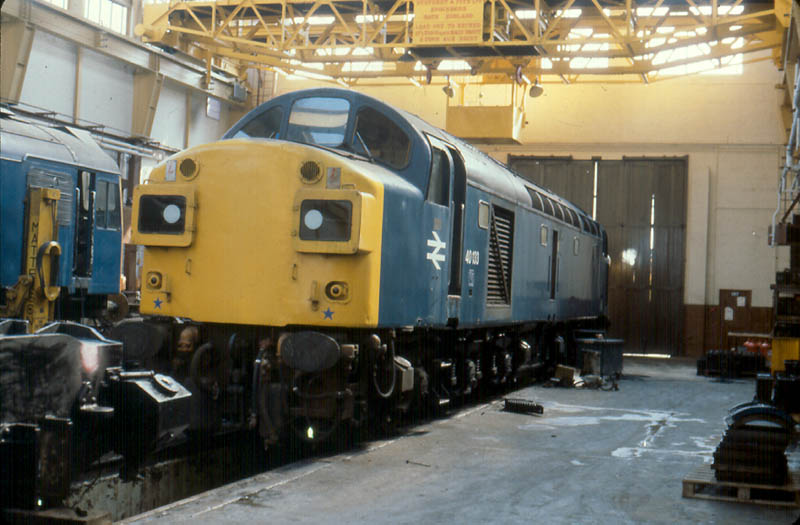
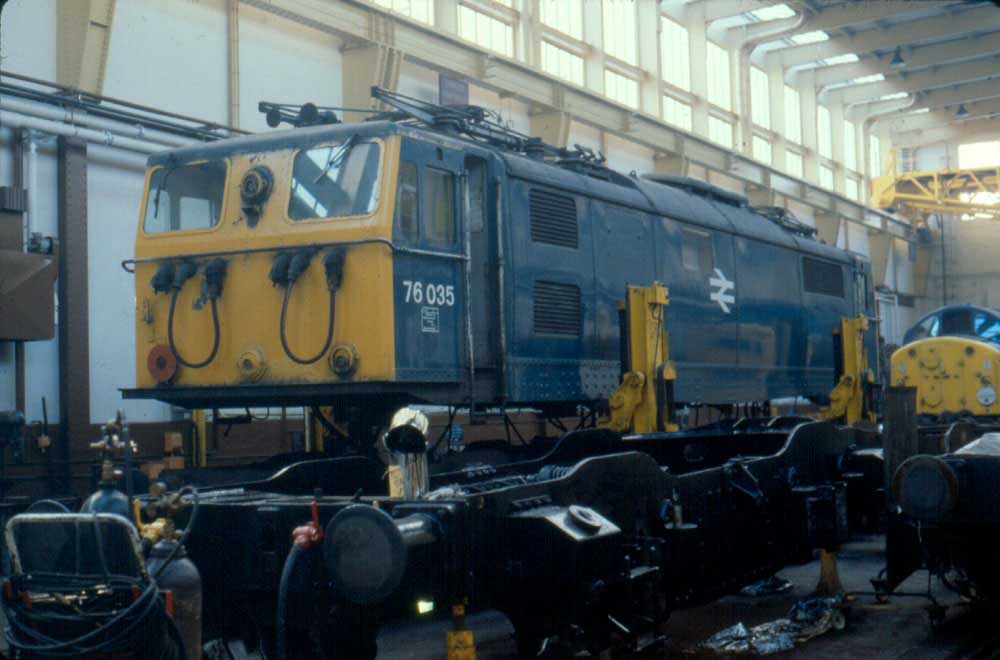
The Reddish views taken on January 16th 1977 were from a Sunday road trip which included Buxton, Reddish, Longsight, Northwich, Crewe Works and Cockshute. There were fifteen Class 76's present at Reddish as well as 24005/20/21/22/24 25277/317, 40119/120/141. Also present were two DMU's and two Class 504 Manchester - Bury sets.
The east side of the depot
On the east side of the building there was covered workspace running the whole length of the building. Two through tracks provided space for stabling locomotives or for minor repairs/servicing.
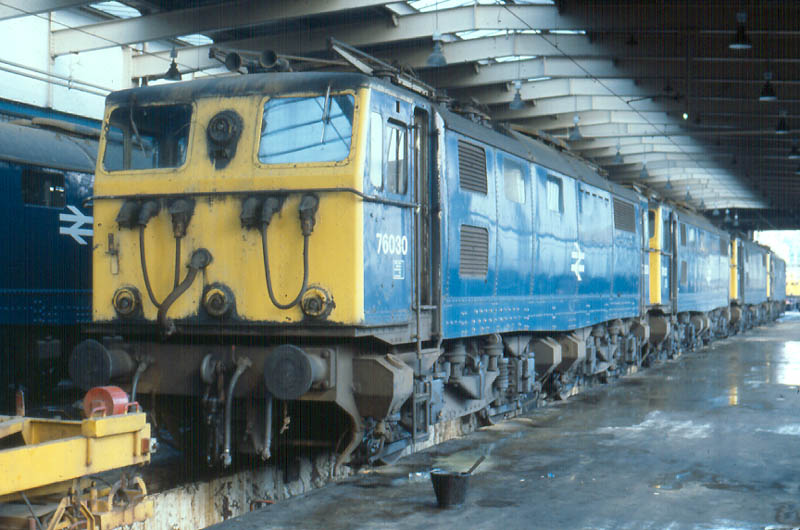
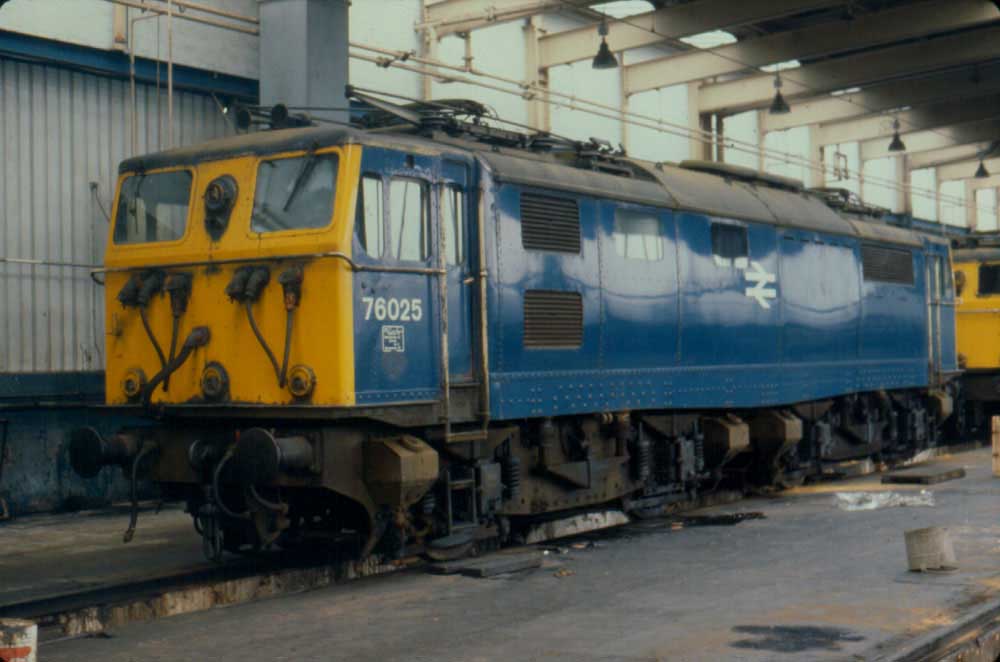
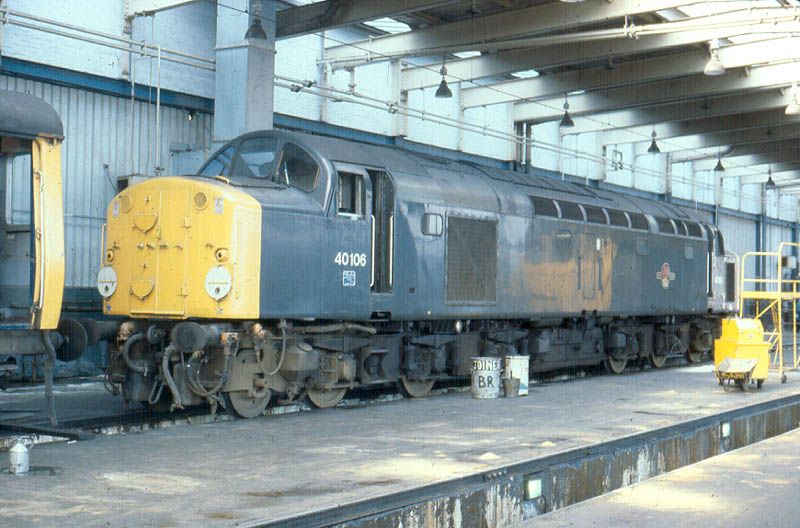
The view of 40106 above was from another road trip visiting Crewe Works, Northwich, Warrington, Longsight, Reddish & Buxton. Nineteen Class 76s were present at Reddish along with 08283, 25047/105, 40013/032/106/133, 47488, Class 304/2 set 030 and four of the Class 506 Hadfield sets. This was my last visit to Reddish.

76014 would work over the Woodhead route until the last day of service. On July 14th 1981 it was coupled to 76006 and worked east on the 6E85 Trafford Park - Parkeston Quay passing through Woodhead Tunnel shortly after 8.00pm, the pair returned about two hours later with the 6M46 Barnsley Junction - Fiddlers Ferry. The pair returned east about 3.00am with the 6E80 Ince - Barton on Humber and returned for the very last time with the 6M62 Parkeston Quay - Edge Hill, clearing Woodhead tunnel shortly after 5.00am.
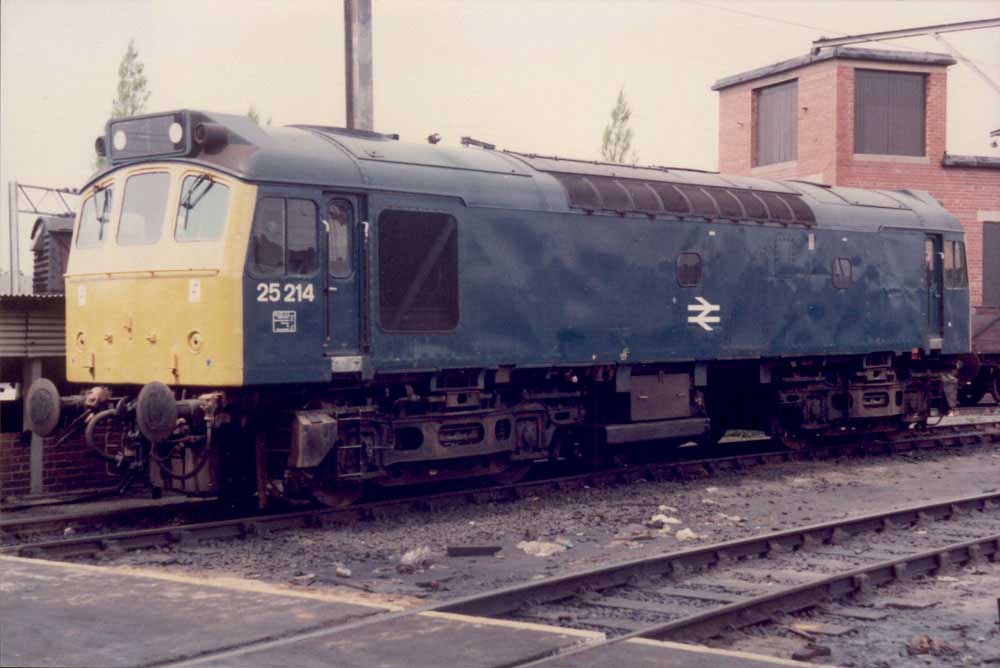
The January 21st 1978 trip to Reddish which included the above view started out visiting Buxton then across to Northwich, Birkenhead, Liverpool Edge Hill, Speke, Warrington, Newton Heath, Guide Bridge and finally Reddish. There were seventeen Class 76s present along with 08923, 24022, 25088/103/206, 40024/033/110/177, 87001, Class 304 set 009 and Bury units 65448 & 77181. The Class 87 was present for wheel turning and 24022 was the last Class 24 remaining at Reddish.
During May 1981 a wheel-turning lathe was constructed at Allerton depot. This would reduce some of the variety of locomotives and units visiting Reddish for tire turning.
Views outside the depot buildings
Rail access to the depot facilities was from the north end, lines ran around both sides of and through the building, all connecting up at the south side. A variety of sidings provided a large amount of storage space, either for the the Class 506 fleet laying over at the weekends or a variety of permanent way rolling stock, including stock used to service the overhead wires infrastructure.
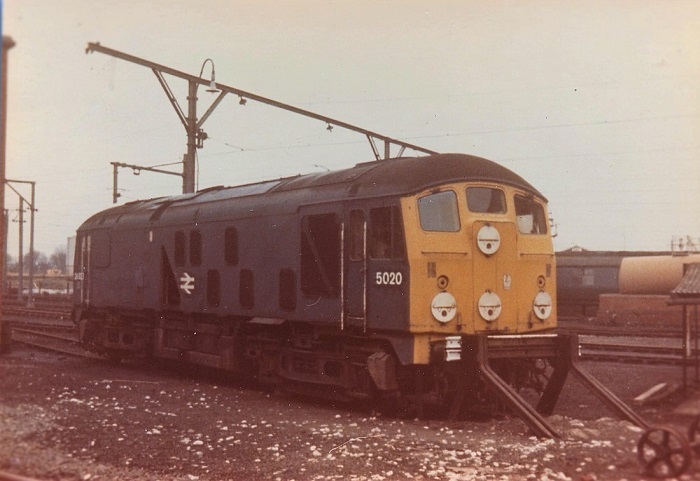
Although well remembered for its Class 76s there was a short time when several Class 24s were in the spotlight at Reddish. At the time of the mass withdrawals of the fleet in the summer of 1975 six of the class were still allocated to Longsight, of these six examples five would end their days stored at Reddish depot. These were 24005/20/21/22/24. Each had a different story to tell. 24005 was obviously the pioneer D5005, 24020 (pictured above) ended up displaying its pre-TOPS number on one cab, 24021 still carried a 'Lion & Wheel' emblem, as well as very faded paintwork. 24022 was left behind after the other four were moved down to Swindon for breaking up, 24022 would eventually end its days at Doncaster Works. And as for 24024, well there must be something to remember it by!
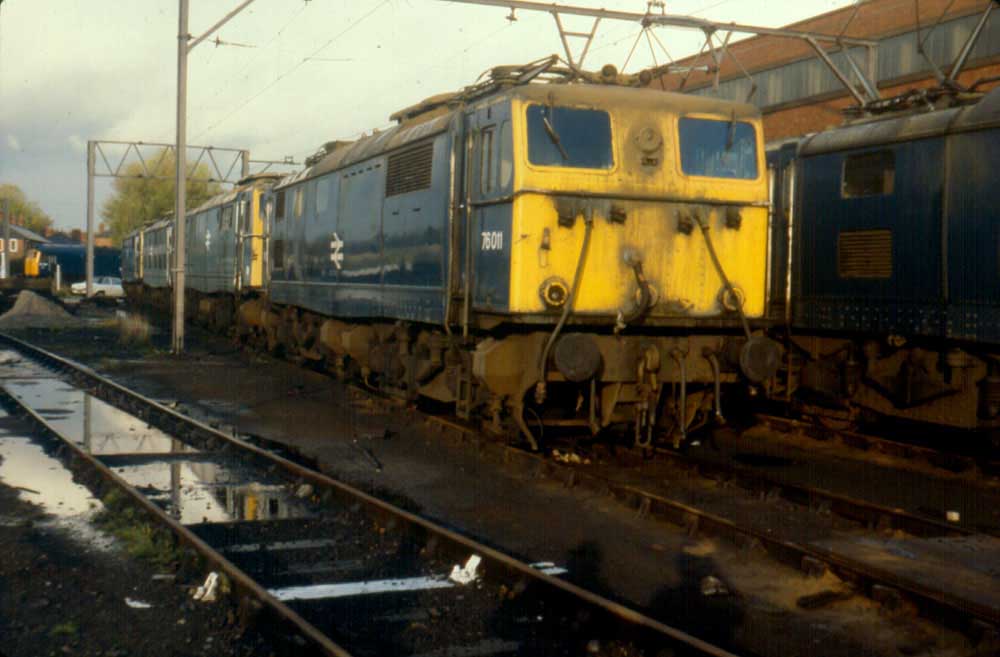
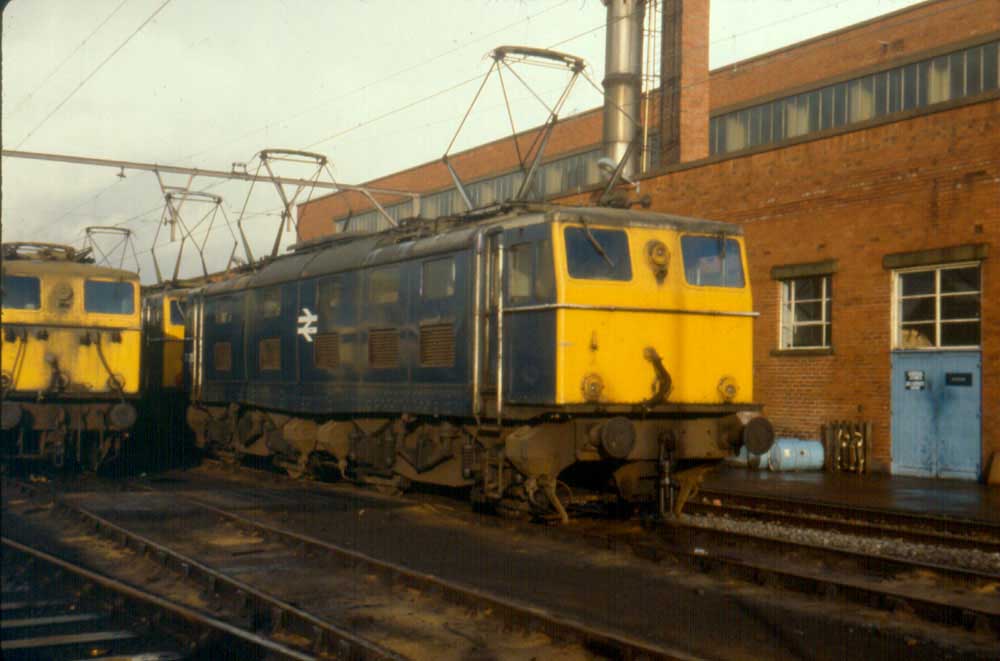
The views from November 10th 1979 come from another road trip, this one done in the reverse order to our usual routine. That is, we went out via Cockshute, then Crewe Works, Northwich, Warrington, Reddish & Buxton. There were twenty one Class 76s noted at Reddish with 76043/50/56/57 off their bogies. Also present were 25198, 40013/116/120/134, 47356, Bury EMUs 77167 & 65456 and four of the Hadfield Class 506 sets.

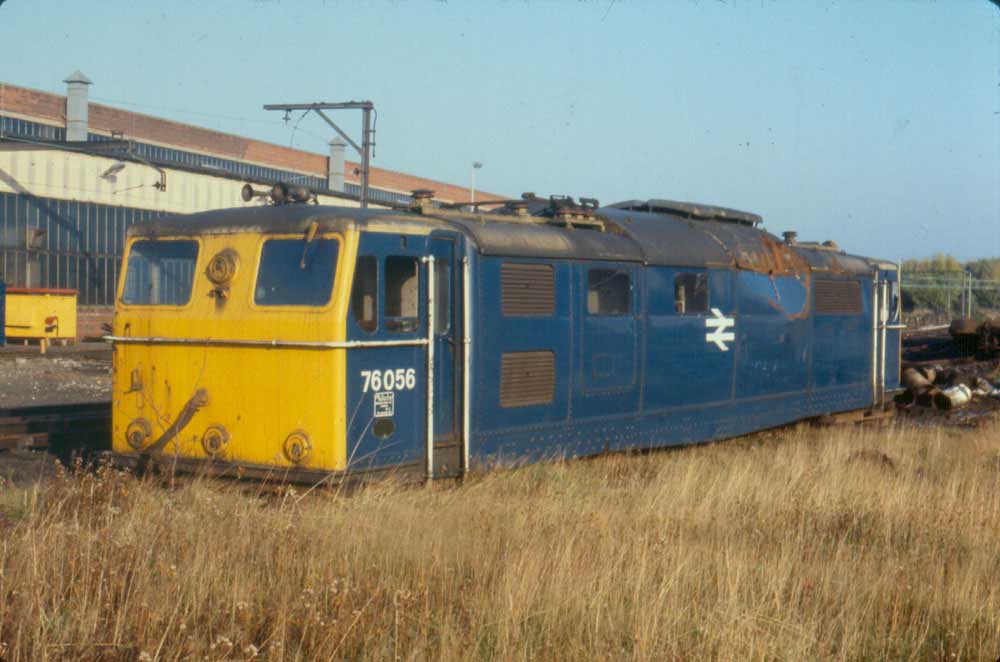
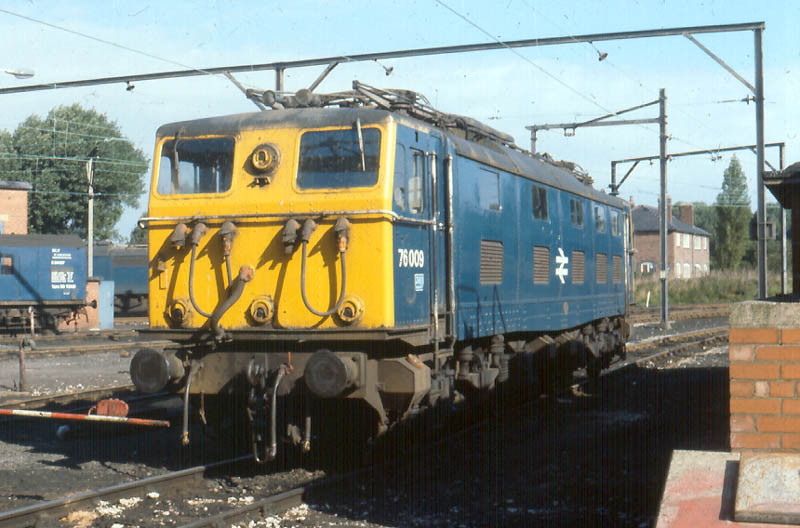
The sunny views of the grounded Class 76s came from a road trip on November 5th 1978 which included Reddish, Guide Bridge, Warrington, Northwich and Crewe Works. Their were seventeen Class 76s noted at Reddish including grounded 76050/56/57. Also present were 25097/194/242, 40042/117 and six of the Hadfield Class 506 sets. Guide Bridge produced another dozen Class 76s and one Class 506 set.


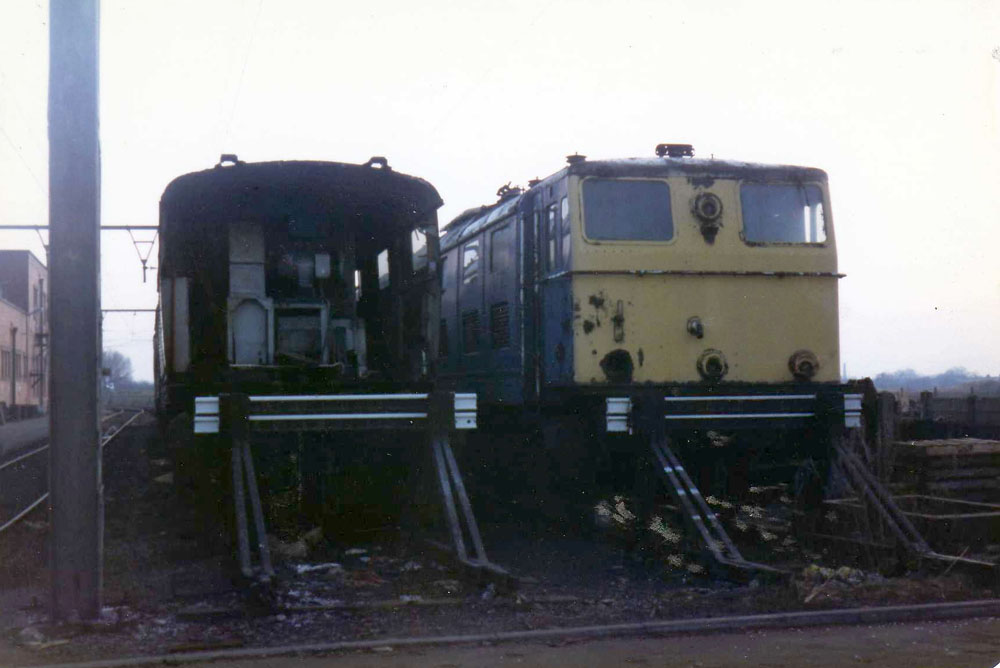
In the above view the cabless locomotive has been identified as 76039 (ex 26048 Hector), its cab being removed to provide an exhibit in the Science & Industry museum alongside EM1 27001 Ariadne.
Gordon Collinge writes: I seem to have had a somewhat magnetic attraction to doomed locomotives going back to my early spotting days in the 1950's. Having taken up spotting in the mid 1950's one of my lunchtime haunts as a pupil of Stretford Junior Tech College (opposite Old Trafford Cricket Ground ) was Trafford Park Shed behind the football ground. It is now the Freightliner terminal. Back in 1957/58 the sidings at the back of the shed were full of doomed engines including the Robinson Gorton built D11, 4-4-0 Directors named after the battlefields of the First World War. Regular visits at lunchtime would reveal the ever increasing number of scrappers until, eventually the tally took a turn in the opposite direction and the names became no more than entries in our ABC's. About a half mile from my office vantage point at Hyde Junction going towards Guide Bridge was the former GCR carriage works where the Tommies were fitted out by MetroVick with their motors. After this operation was completed the Globe Lane works at Dukinfield was commandeered for locomotive breaking but I have no records of the numbers involved. Following closure the works was occupied by Parker International and Conways Tiles (and perhaps other small unit occupants). The works still stands along the full length of Globe Lane today (2009).
I moved to Audenshaw (a half mile from Guide Bridge) in 1970 and used the station regularly to travel to work at Daniel Adamson's works at Hyde Junction where the Hyde loop left the electrified Woodhead lines. My office overlooked the lines and my colleague and I regularly watched the passage of the Tommies to and from the Woodhead tunnel route. Most coal trains dropped their Tommies at Mottram yard near Hyde with their diesel replacements taking the load down the Godley to Woodley loop to the Stockport connection with the south Manchester route to Fiddlers Ferry. After the closure of Reddish the remaining Tommies were stored at Clayton Hall sidings west of the Gorton Locomotive works site near Ashburys station. There they remained for some time in 1983 until we heard the approach of a heavy train one day from the direction of Guide Bridge. It turned out to be a diesel locomotive (possibly a class 56) hauling the stock of Tommies over the line through Hyde North station and out to the Romiley Junction with the Hope Valley route back to the Sheffield area. Thus we witnessed the moment when the Tommies finally left their once proud domain of Britain's first inter-city electric railway en route for the scrapper. Sadly we were not able to grab the numbers of the final line up as it passed at a fair rate of knots. Perhaps this is why one Tommy, defiant to the end, developed a hot box somewhere near Hope station and had to be shunted into a siding for later recovery.
In keeping with the general trend in the engineering industry in the 1980's Adamson's works closed down a few years later but not before we had witnessed several more steam locomotives hauling specials from Guide Bridge (ex Manchester Victoria) through the Hope Valley and also shunting down the electric line to Dinting Railway Centre which has now also closed.
Gordon had an article published in the Steam World April 1990 edition. It tells how Gordon became a spotter and terrorised the Shedmaster at Patricroft depot in the early days of my hobby. It was published with photos by Jim Carter the Patricroft driver and rail photographer. I met him a number of times on the bridge leading into the shed at the Eastern end of the Station in the days when there were six platforms at Patricroft. My dad worked at the R.O.F. which backed onto the station yards and shed and which was the former Nasmyth Wilson works until taken over by the War Department in the 1930s.
Woodhead Route Chronology Highlights
1936: plan prepared to electrify the Manchester - Sheffield - Wath route, at a cost of GBP2.5m for 75 route miles using 1,500 volts DC overhead scheme using 88 locomotives and eight three-car multiple unit sets for the Manchester - Glossop/Hadfield passenger service. Details of the 1936 plan were based on a proposal drawn up in 1926. Completion was scheduled for 1941.
1936: Mottram marshalling yard opened.
1939: work halted by World War II.
1941: LNER No. 6701 (BR No. 26000) completed at Doncaster Works.
1946: November - the LNER recommences work on the route electrification mothballed during 1939. However the total cost is now estimated at GBP12.25million, six years of wartime traffic with minimal maintenance has taken its toll, a replacement tunnel is required at Woodhead (GBP2.8million) as well as a new tunnel at Thurgoland.
1948: approval is received for a replacement Woodhead Tunnel. Cuts are made to reduce costs: there will only be one main locomotive depot (Reddish); the extension from Gorton to Manchester Central/Trafford Park is cut and the electric locomotive fleet is reduced to 65 (57 EM1 class & 7 EM2 class). These cuts brings the total costs to GBP10.96million.
1951: brand new EM1 No. 26020 is displayed at the Festival of Britain exhibition.
1952: February 4th, the first stage of the electrified route is opened between Wath & Dunford Bridge.
1953: October, the new Woodhead Tunnel was completed.
1954: June 14th, electrified services introduced over most of the route. Ceremonial inauguration of the passenger services between Manchester & Sheffield took place on September 15th 1954 with a special train of dignitaries and VIP's hauled by EM2 No. 27000. Regular services commenved one week later.
1955: January 3rd, Sheffield Victoria - Rotherwood section energised.
1963: Beeching Report targets the Manchester - Hadfield/Glossop service for closure. Guide Bridge & Hadfield would remain open serviced by the Manchester - Sheffield route.
1964: July 27th Woodhead station closed to regular passengers.
1965: February, Beeching Part Two confirms the Woodhead route's long term future in the BR Trunk Routes report. May 30th 1965, the extension to Tinsley Yard is opened, the catenary is built with conversion to AC in mind.
1965: October 4th, Sheffield Victoria lost half of its passenger services as they are rerouted over the new direct curve at Nunnery into Sheffield Midland.
1966: January 17th, decision announced to concentrate Manchester - Sheffield passenger services on the Hope Valley route.
1966: April 22nd, closure notice for the Manchester - Hadfield/Glossop service is rescinded as was the proposed closure of Penistone station.
1966: September 5th, Sheffield Victoria loses more services after the GCR London extension is closed.
1967: January, withdrawal of Woodhead route passenger services formally announced.
1968: September, the seven EM2 locomotives are withdrawn.
1969: August 13th, withdrawal of the Woodhead passenger services was finally approved.
1970: January 4th, the last scheduled passenger trains run over the Woodhead route, Sheffield Victoria & Dunford Bridge stations are closed.
1976: ER/LMR joint committee established to consider the future of the Woodhead route.
1979: October. To avoid closure of the Woodhead route, conversion costs for 25kV running would be GBP24 million, this excluded signalling and new locomotives. Retention of the 1500v DC central core railway over the next ten years would incur GBP14.4 million for line maintenance and locomotive refurbishment. In the event of full closure running costs of GBP1.663 million would be saved, as would the electricity bill of GBP0.5 million, whilst the sale of redundant materials would realise GBP2.26 million. A loss of about 180 jobs would be anticipated.
1980: October 7th, closure of the route is announced and will take place on June 1st 1981.
1981: Easter, the last railtour traverses the route.
1981: July 17th/18th, the last scheduled freight trains traverse the route. The copper overhead wires are quickly removed to prevent theft. All the remaining Class 76's are withdrawn during July.
1983: May 14th, Reddish depot closed, the Class 506's are transferred to Longsight.
1983: tracklifting and removal of the electrification masts commenced.
1984: December, the Manchester - Hadfield/Glossop route is converted to 25kV ac at a cost of GBP680,000, the Class 506's are retired.
1986: May 4th, the last train to pass through Woodhead tunnel is a track removal train hauled by 37024.
Now the following is in Derbyshire, but is not rail related, but as most railway enthusiasts have interests in other forms of transport and this point of interest was close to the electrified line, well here it is!!
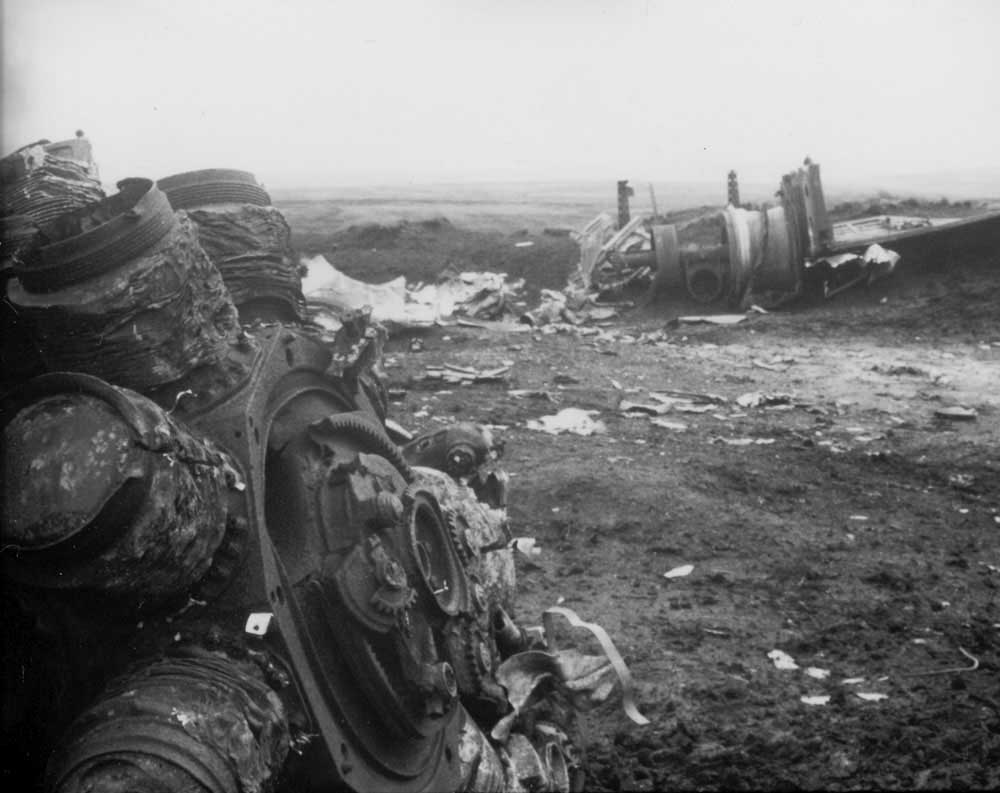
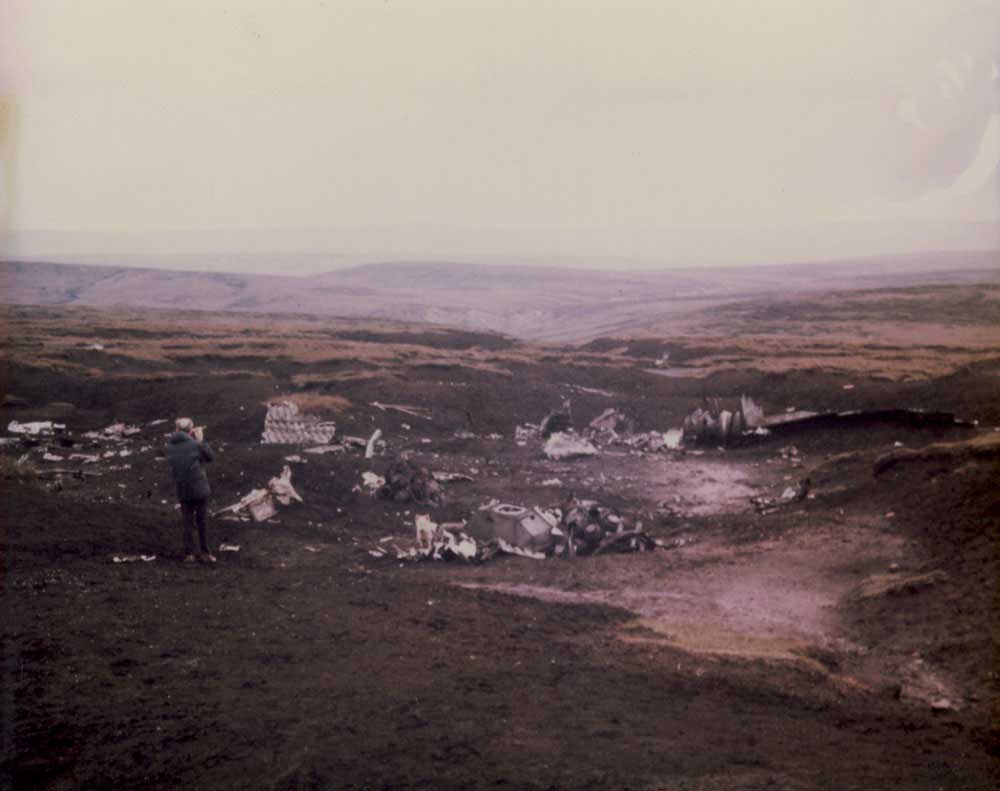
The construction of Woodhead Tunnel allowed the Great Central to avoid the bleak and often inhospitable windswept moors that form much of the Pennine chain. The edges of this moorland can be seen in a number of these views, impressive when viewed from the valleys, but deceptively innocuous when seen from the few roads and paths that cross them, especially on a fine summer's day. Several miles to the south of Woodhead lies one of the higher points in Derbyshire, Bleaklow Hill, a familiar stop-off point on the Pennine Way. A little further south lies the Higher Shelf Stones and the location of a crashed B29 'SuperFortress'.
Photo Reconnaissance Boeing Superfortress RB29A F13A #44-61999 'Over Exposed' crashed and burned near the Higher Shelf Stones on November 3rd, 1948. The aircraft was on a short flight from RAF Scampton to AAFB Burtonwood (Warrington), the flight crew and the photo-unit crew all perished in the crash, the remote location and the notoriously poor and changeable weather conditions no doubt hampered the rescue attempts. The remote location prevented for a long time the removal of the wreckage that 'survived' the crash, the four 18 cylinder Wright Cyclone radial engines, the substantial undercarriage components, as well as major portions of the wings and fuselage.
The views were taken about 1972 after the obligatory hike from the A57. Another famous bomber lies about
a mile to the west, although its crash was far more destructive leaving little of recognition for those visiting.
Avro Lancaster KB993/EQ-U of 408 Squadron fell victim to the summit of James Thorn on May 18th 1945, whilst just two
months later a Douglas C47 Skytrain fell very close by, just to the west of Ashton Clough. More of this machine
survived than that of the Lancaster, though much of what remains is slowly being swallowed up by the peaty soil.
Photos courtesy Mr L H Hills.
They shall not grow old, as we that are left grow old;
Age shall not weary them, nor the years condemn.
At the going down of the sun and in the morning,
We will remember them.
Last updated November 2nd 2018.